Do I need a water bath?
Not for this recipe. A water bath is extra insurance-smooth, but it adds steps and the risk of water sneaking into your crust. Here we use a moderate oven temp, a little flour, and a slow cool to help keep things creamy and minimize cracking.
If you love a water bath anyway: wrap the outside of the springform pan (bottom and sides) in 2 layers of heavy-duty foil, set it in a roasting pan, and add very hot water to come about halfway up the sides of the springform. Bake as directed.
Why does the recipe insist on room temperature cream cheese?
Because cold cream cheese stays lumpy, and lumpy batter makes you overmix, which adds too much air. Air expands, then collapses, and that is when cracks happen. Soft cream cheese blends fast and smooth.
Can I use pumpkin pie filling instead of pumpkin puree?
I would not. Pumpkin pie filling already has sweeteners and spices, so it throws off the balance and texture. Use 100% pumpkin puree (canned is totally fine).
My cheesecake cracked. Is it ruined?
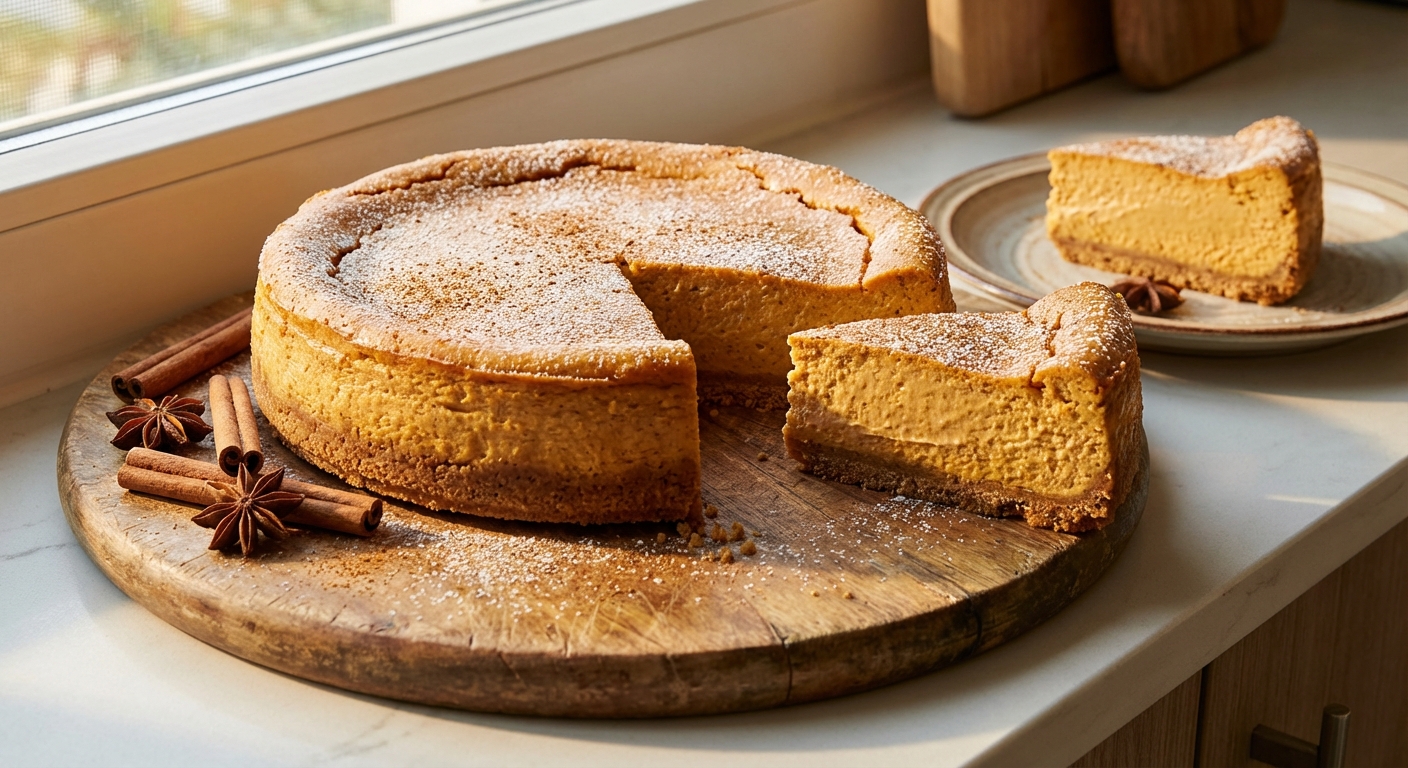
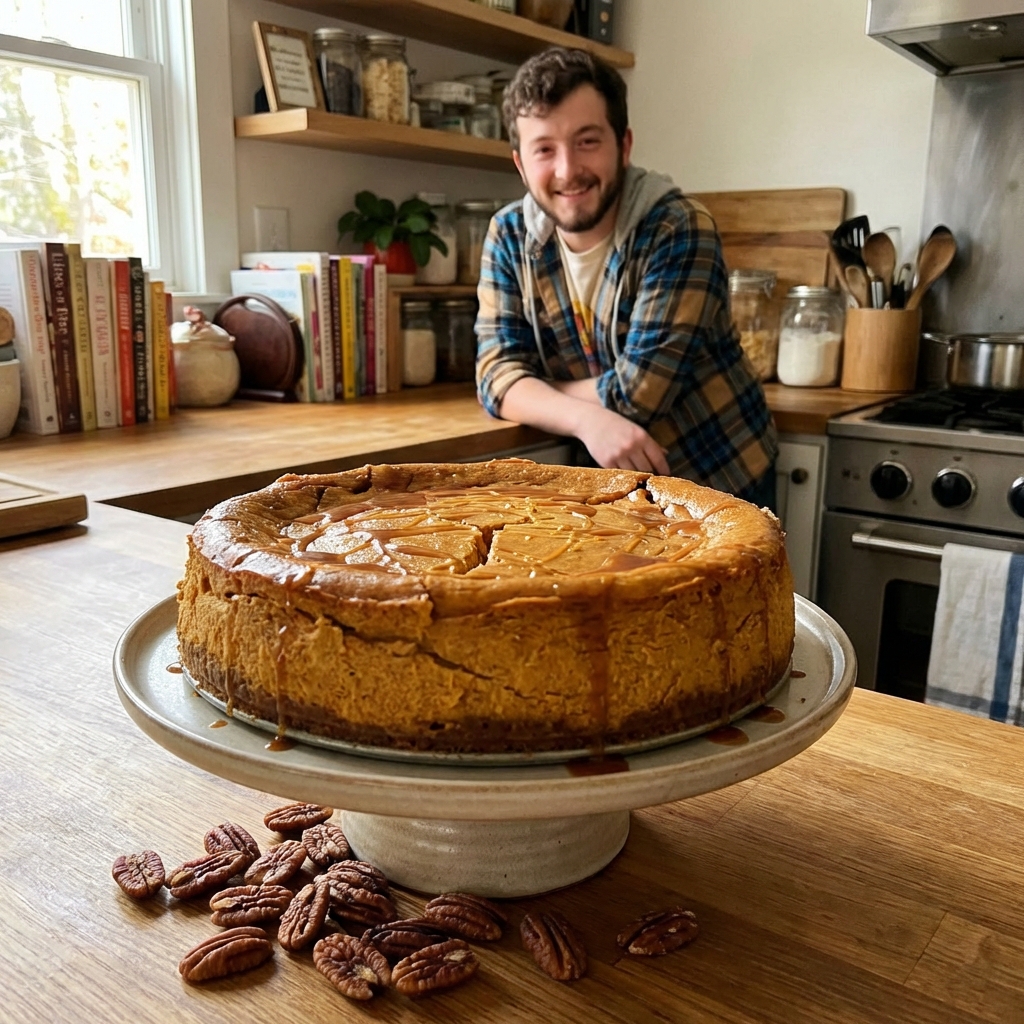
Absolutely not. Cover it with a dollop of whipped cream, a sprinkle of cinnamon, or a handful of toasted pecans. Also, rustic is right there in the title.
How do I know when it is done?
The edges should look set and the center should have a soft wobble (like set Jell-O, not like a wave). If you like a numbers-based answer, aim for a center temperature around 150 to 155°F.
What does overbaked vs underbaked look like?
Overbaked: it puffs up high, gets a lot of cracks, and can turn a bit dry around the edges. Underbaked: it looks very wet in the center and keeps sloshing when you gently nudge the pan. When in doubt, remember it continues to set as it cools.
Can I make this ahead for a holiday?
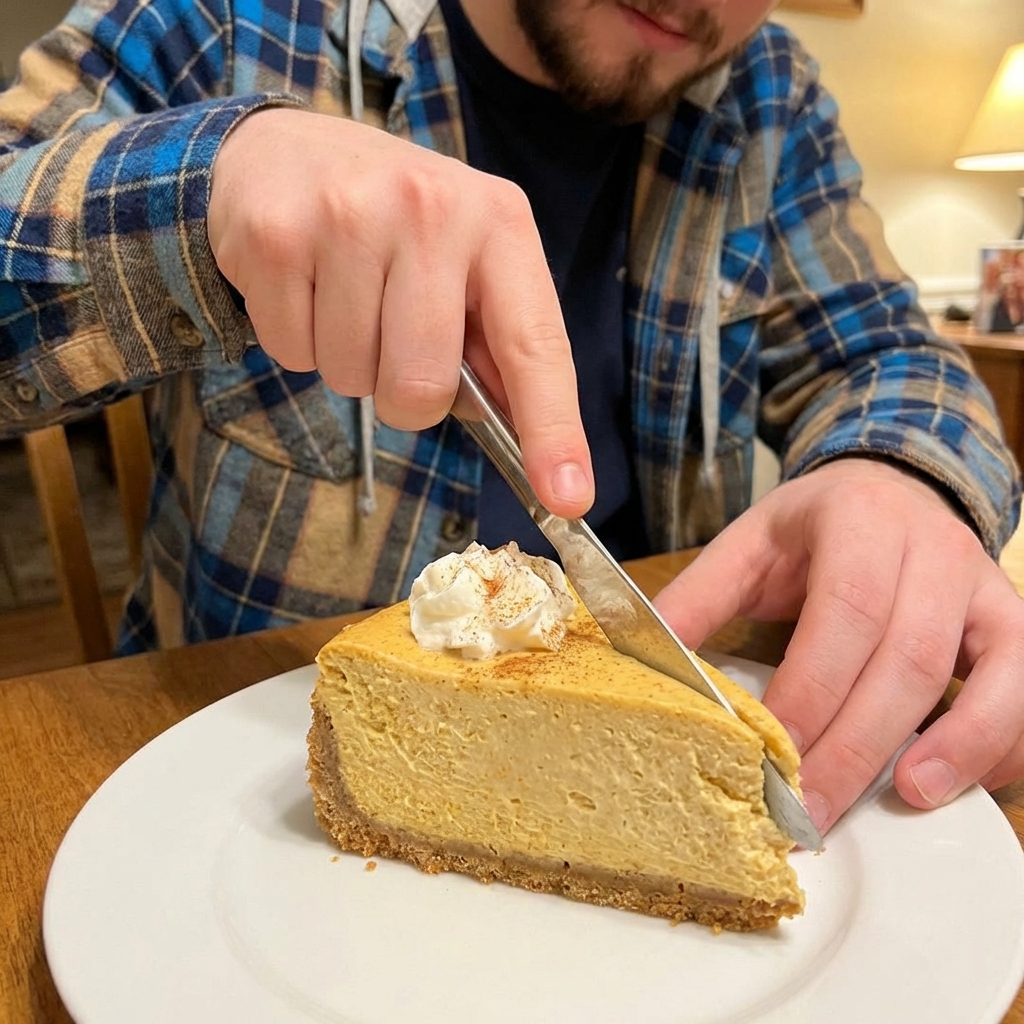
Yes, and you should. Bake it 1 to 2 days ahead, chill overnight, and you will get cleaner slices and a better set.