Common Questions
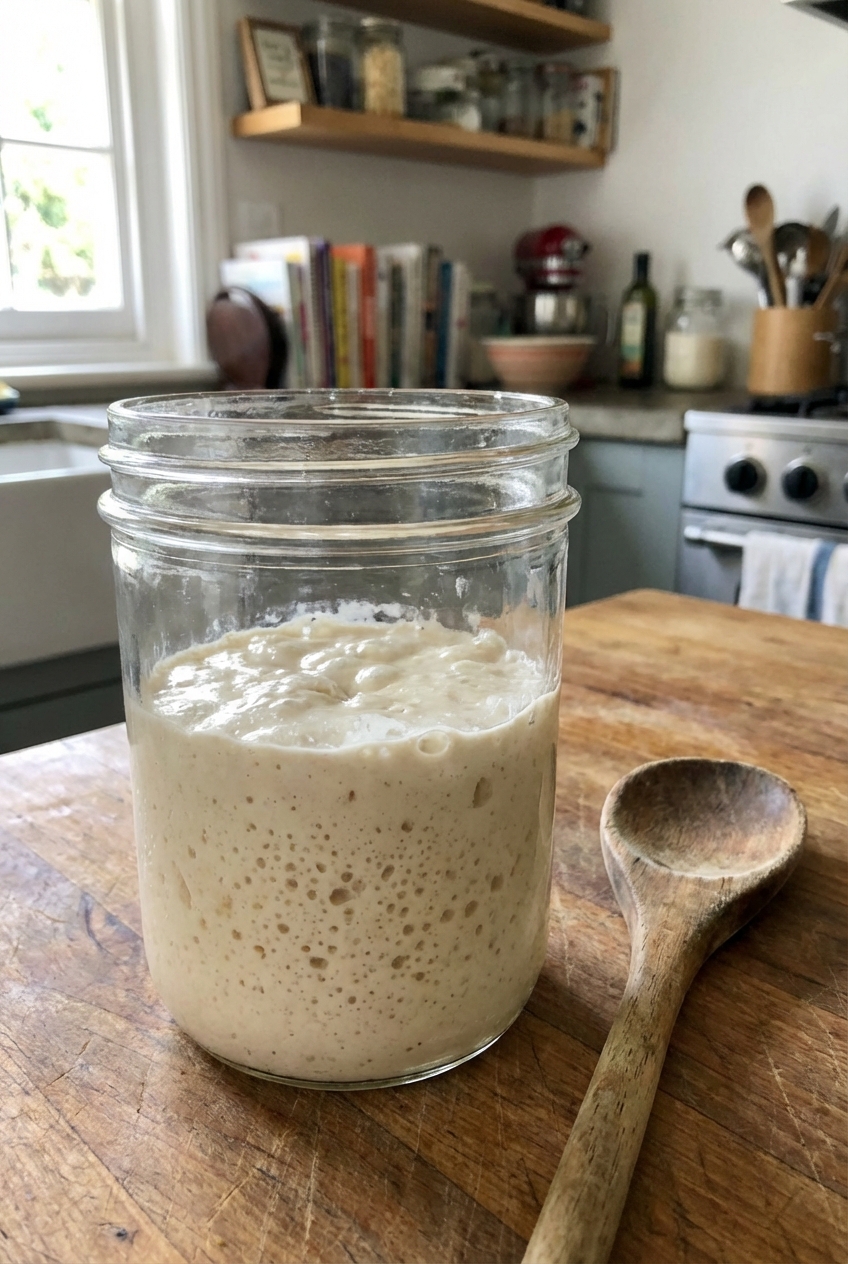
How do I know my starter is ready?
Your starter should be active and bubbly, ideally doubling in volume 4 to 8 hours after feeding (timing depends on temperature). For this recipe, assume a 100% hydration starter (fed with equal parts flour and water by weight). Use it when it is at or near peak: domed, airy, and smelling pleasantly tangy, not harshly acetone.
What if I do not have a Dutch oven?
You can bake on a preheated sheet pan or baking steel with steam. Place a sturdy metal pan on a lower rack. When the bread goes in, carefully add about 1/2 to 1 cup hot water (start with 1/2 cup if you are unsure). Please do this cautiously: steam burns are real, and some thinner pans can warp.
Why is my loaf dense?
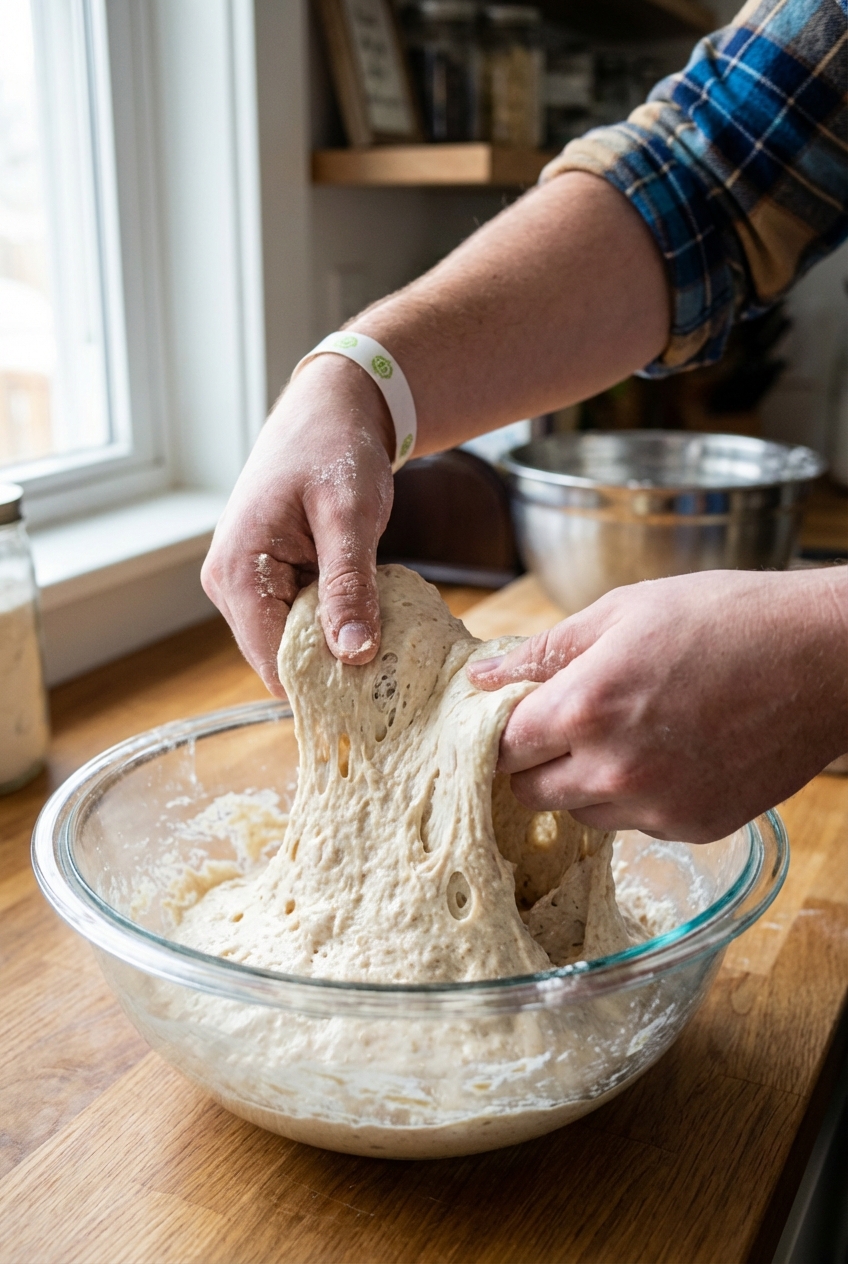
Most common causes are under-fermentation (bulk was too short), weak starter, or not enough gluten development. Next time, extend bulk fermentation until the dough looks puffy and shows bubbles along the sides. Readiness cues that help: the top looks slightly domed, the dough has a gentle wobble when you jiggle the bowl, and a wet hand can lift a stretchy edge without it tearing immediately. If you want an extra beginner-friendly trick, use a small straight-sided container or an aliquot jar to track rise more easily.
Can I use whole wheat flour?
Yes. Start by swapping in 10 to 20% whole wheat flour. Whole grains absorb more water, so you may need to add an extra 10 to 20 g water if the dough feels tight or stiff after the salt is mixed in. Add it gradually during the first fold or two.
Do I have to score the dough?
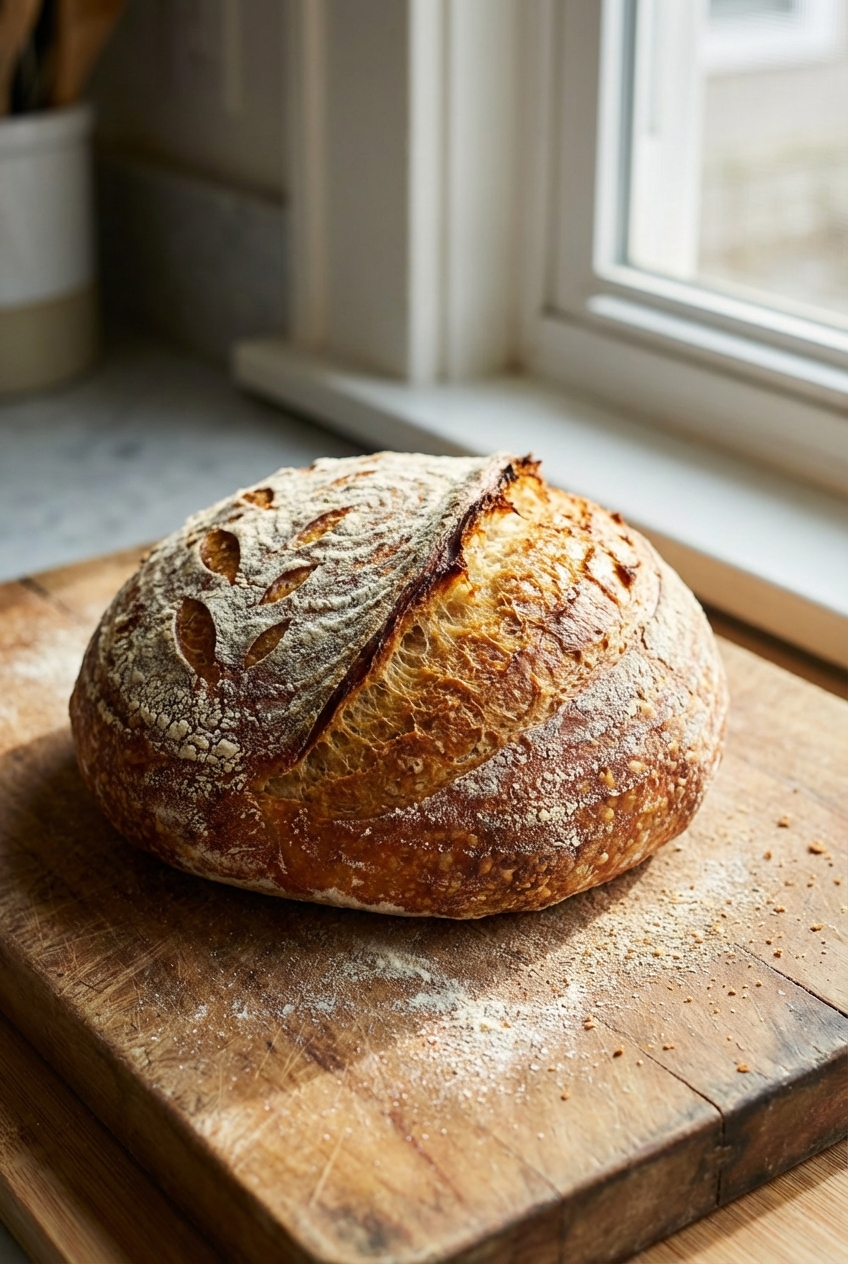
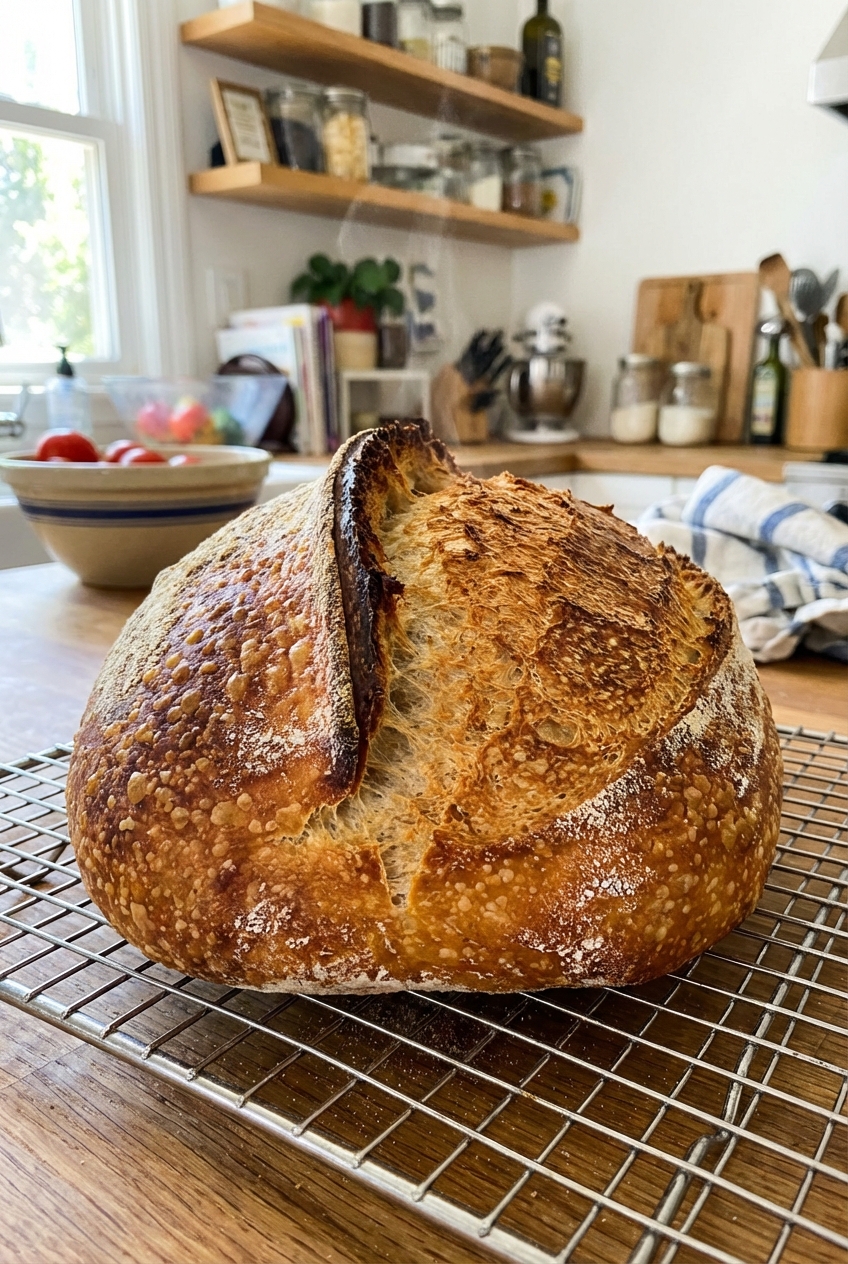
Scoring helps the loaf expand where you want. If you skip it, the bread will still bake, but it may burst at the side. Rustic, but chaotic.
What makes this loaf feel so “indulgent” if it is just flour, water, salt, and starter?
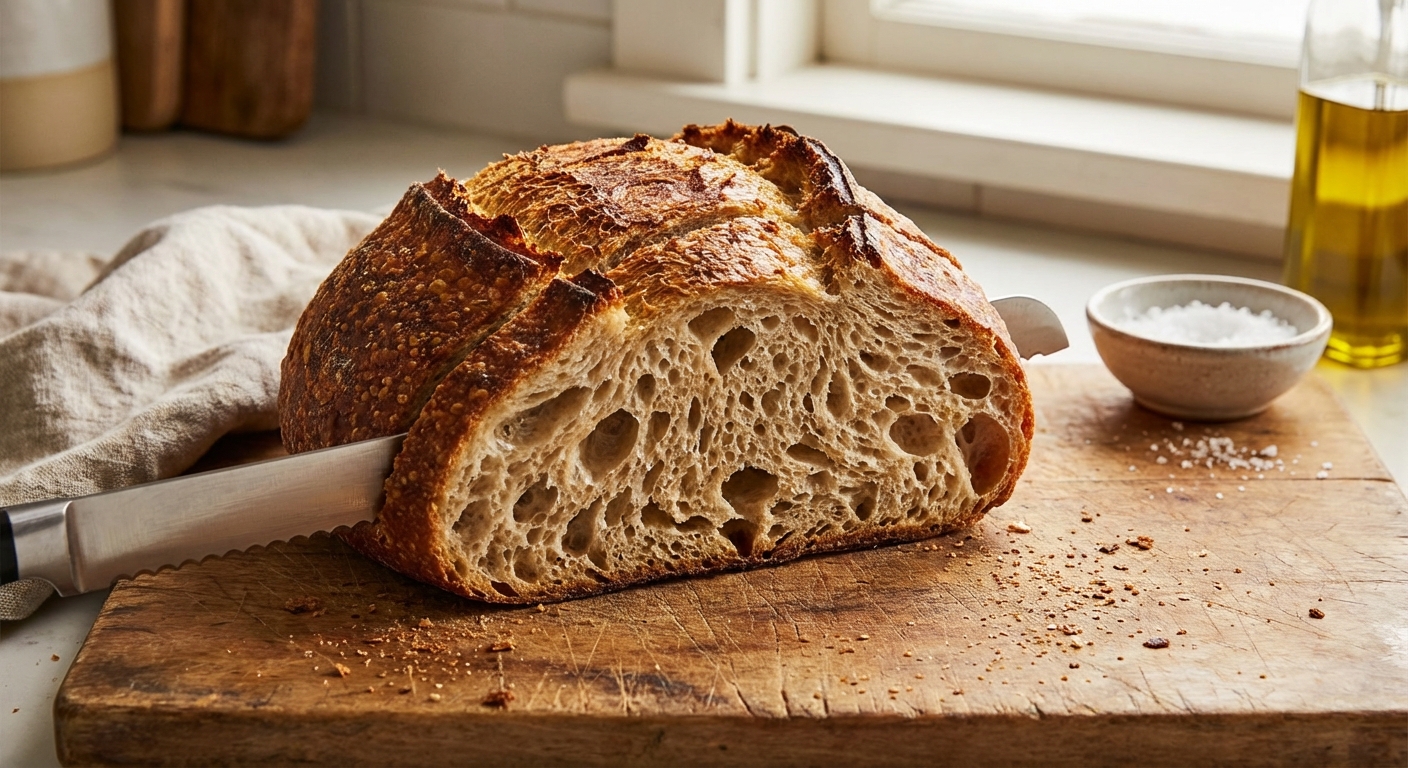
Two things: the overnight cold proof deepens flavor in a way that tastes fancy, and the darker bake gives you that thick, crackly crust that turns a simple slice into a whole experience.