What kind of tuna should I buy?
Look for high-quality ahi (yellowfin) or bigeye from a reputable fish counter. You will often see labels like “sushi-grade” or “sashimi-grade”, but those terms are not regulated in many places. Treat them as retailer language, not a guarantee. What matters is sourcing, handling, and freshness. The tuna should smell clean like the ocean (not fishy), and the flesh should look moist, not dried out.
Is it safe to eat tuna rare?
Many people eat tuna rare, but safety depends on sourcing and handling. For extra peace of mind, ask the fishmonger if the fish was handled for raw or rare consumption, and whether it was previously frozen (freezing is commonly used for parasite control in some seafood). If you are pregnant, immunocompromised, elderly, or cooking for a young child, food-safety agencies generally recommend eating fully cooked seafood. When in doubt, cook it through.
How do I know when the tuna is done?
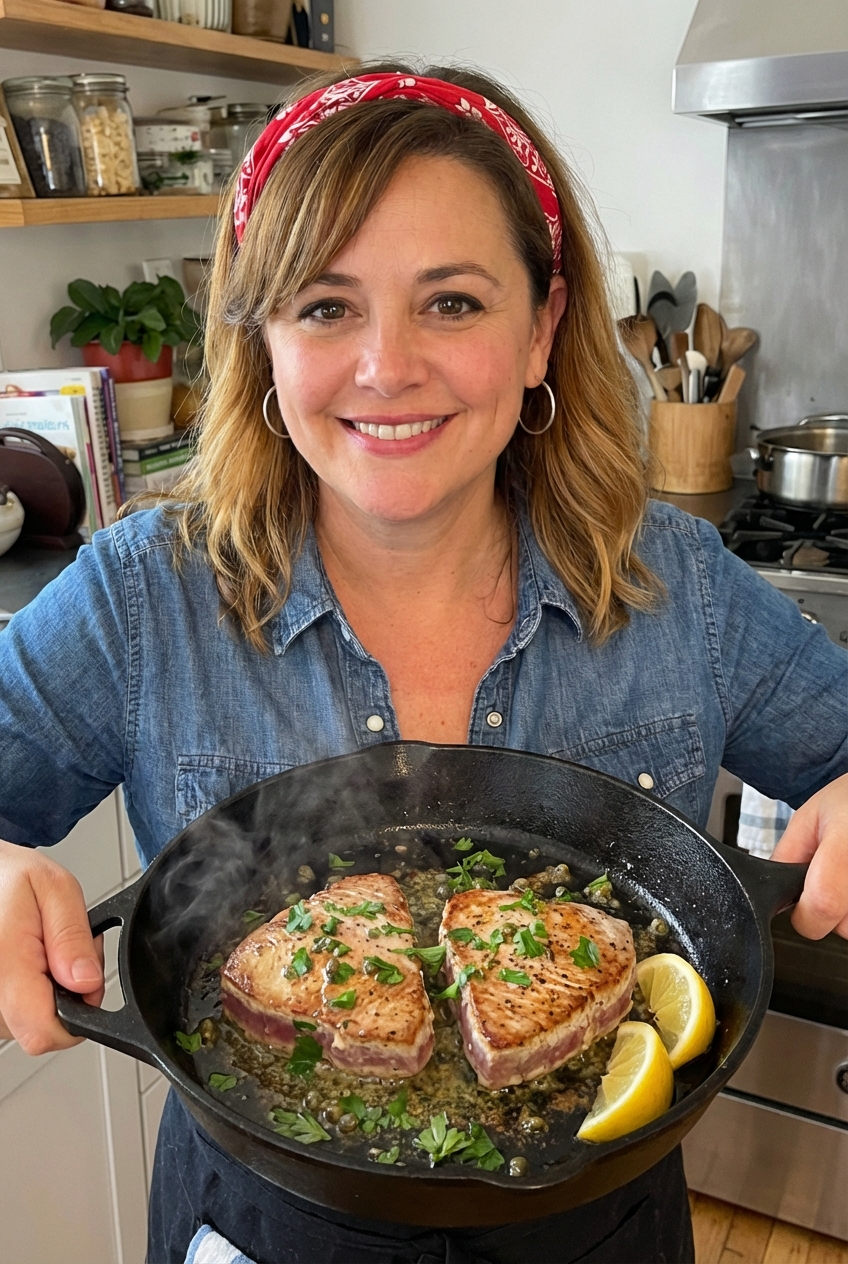
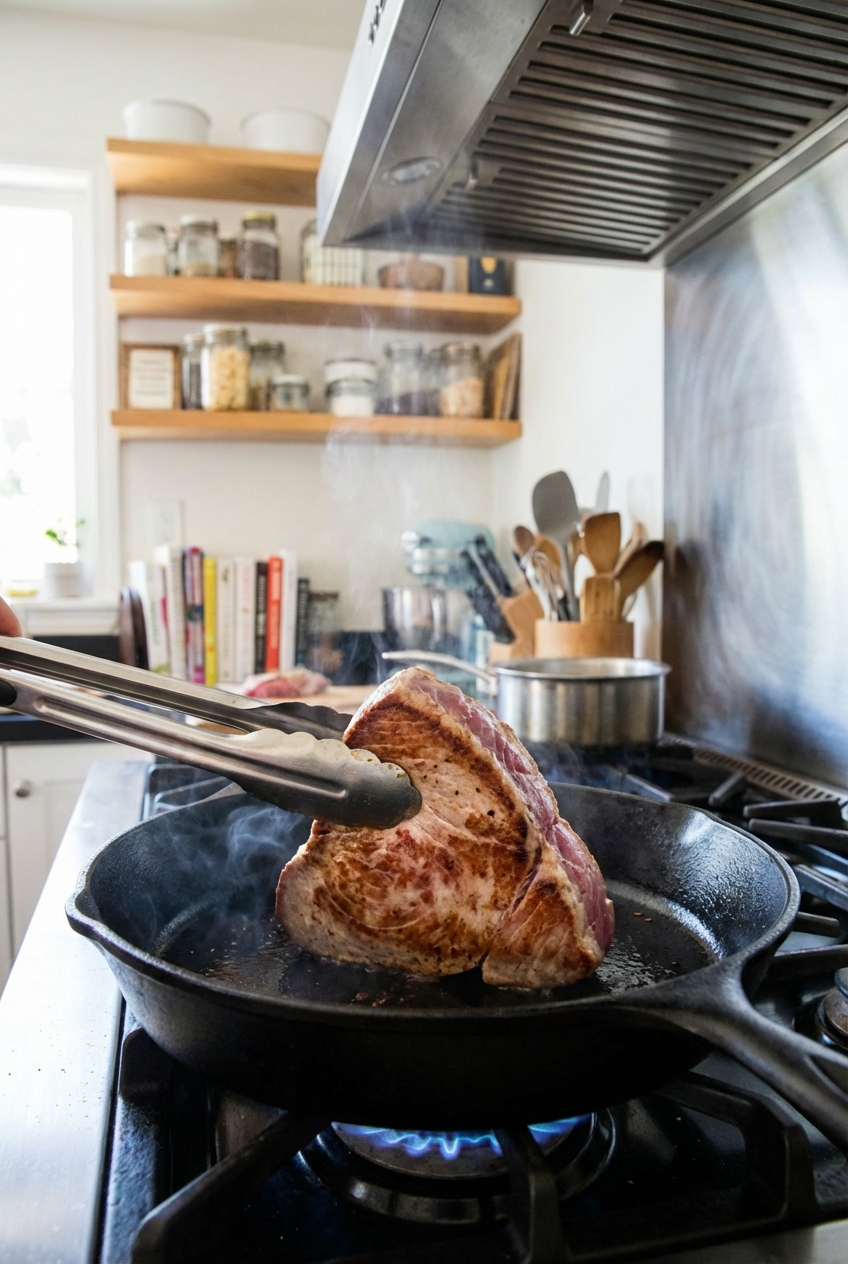
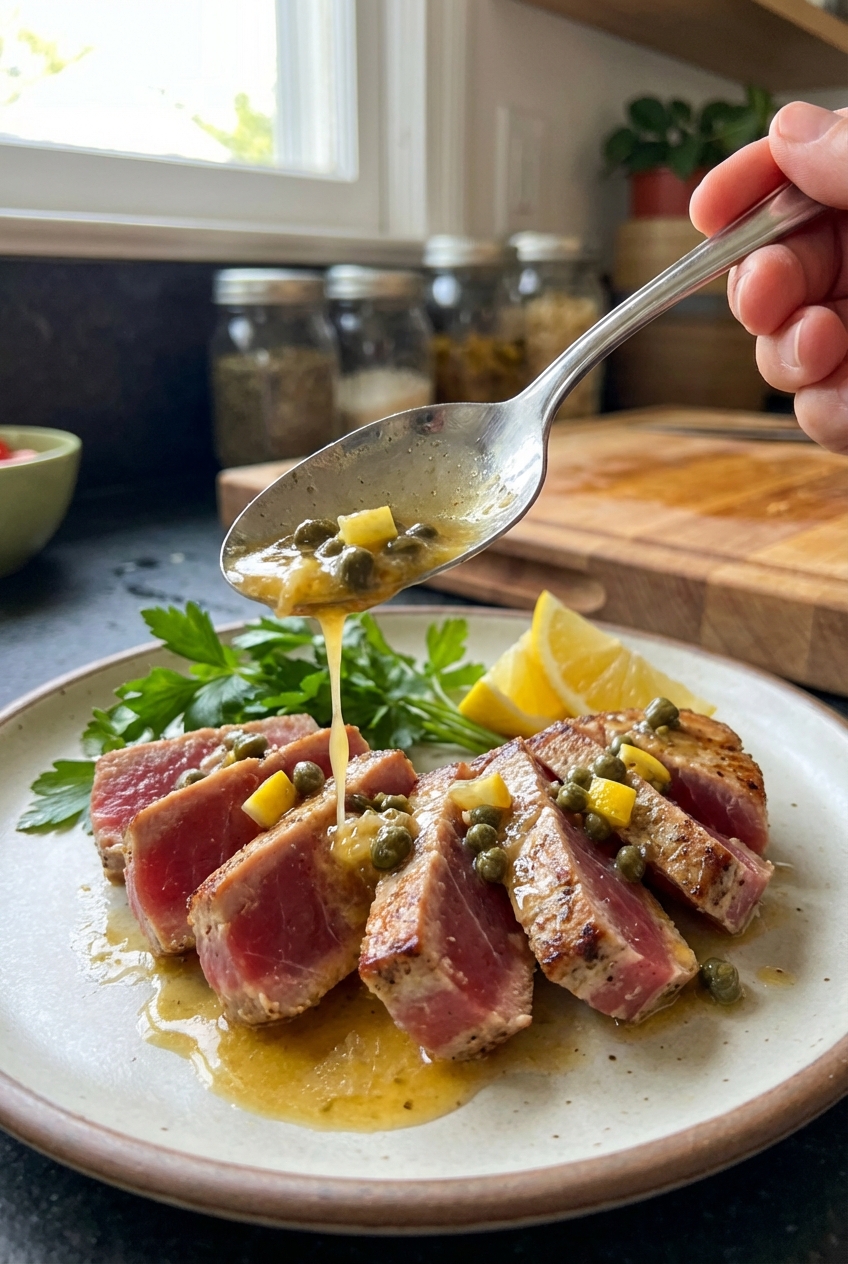
For rare to medium-rare, the outside will be seared and the center should still be pink. A quick thermometer check helps: aim for about 115°F to 125°F in the center for that classic seared-tuna texture, remembering it rises a little while resting. Note: this is a chef preference range, not a “safe minimum temperature” guideline.
Can I grill this instead?
Yes. Oil the grates well, sear over high heat, and keep the timing similar. Make the lemon caper butter in a small pan on the side or indoors on the stovetop.
My sauce broke and looks greasy. Can I fix it?
Yep. Take it off the heat, then whisk in 1 to 2 teaspoons warm water or lemon juice until it comes back together. Keep the heat low when you return it to the pan.