Mom's Best Recipes
Recipe

Rustic Vinaigrette Recipe

A bold, decadent, pantry-friendly dressing with Dijon, garlic, herbs, and a silky olive oil finish.

Author By Matt Campbell
4.8
Rustic vinaigrette in a small glass jar with visible minced garlic and herbs on a wooden counter, with a lemon and whisk nearby

If you have ever eaten a salad at a restaurant and thought, why does theirs taste like something I would actually crave, the answer is usually dressing. Not a fussy one, either. A lot of the time it is a punchy, slightly imperfect, rustic vinaigrette that clings to leaves, sneaks into crouton corners, and makes the whole bowl feel like a real meal.

This is my go-to: bright acid, Dijon for grip, garlic for attitude, herbs for that “I totally planned this” vibe, and enough good olive oil to feel indulgent. It is rustic on purpose, meaning you will see little bits of shallot and herbs, and that is exactly the point.
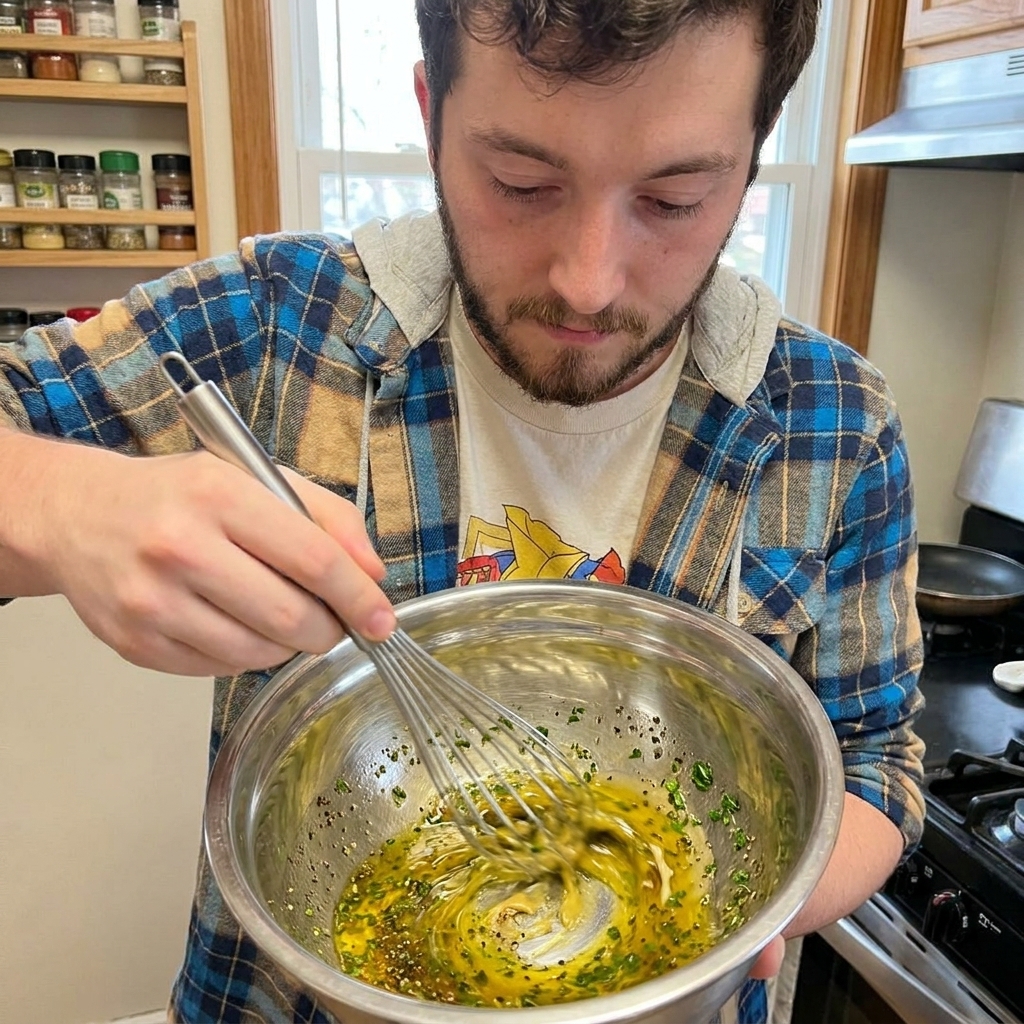
Vinaigrette being whisked in a stainless steel mixing bowl, with glossy olive oil ribbons and specks of black pepper and chopped herbs

Why It Works

  • Restaurant-style cling: Dijon mustard helps the dressing emulsify, so it stays silky longer instead of splitting the moment you set the whisk down.
  • Decadent, not heavy: A little honey (or maple) rounds out the acidity, and optional Parmesan adds a savory, indulgent finish without turning it into a creamy dressing.
  • Rustic texture that tastes intentional: Minced shallot and herbs give you bursts of flavor in every bite.
  • Flexible flavor: Swap the vinegar, switch the herbs, add chili, or make it lemony. The base ratio stays reliable.

Pairs Well With

Storage Tips

Fridge: Store in a tightly sealed jar for 5 to 7 days, depending on freshness and clean handling. If you add Parmesan, aim for the earlier end of that range for best quality.

Separation is normal: Olive oil will solidify a bit when cold and the dressing can split. Let it sit at room temp for 10 minutes, then shake hard or whisk to bring it back.

Best flavor tip: If you are adding fresh herbs, this tastes brightest in the first 3 to 4 days. After that, it is still great, just a little less “green.”

Freshness and safety note: This dressing is acidic, which helps. Still, treat it like a fresh food: keep it refrigerated, use clean utensils, and discard it if it has been sitting out for hours or smells off.

Common Questions

What makes a vinaigrette “rustic”?

Texture. Instead of straining or blending until perfectly smooth, you keep the little bits: minced shallot, garlic, herbs, pepper. It looks casual and tastes more layered.

What is the best oil to use?

Use extra-virgin olive oil you actually like. If yours is super bitter or aggressively peppery, cut it with a neutral oil (like avocado) using half and half.

Can I make it without Dijon?

You can, but it will separate faster and taste a little flatter. If you do not have Dijon, try whole grain mustard, a small spoon of mayo, or a tiny dab of tahini to help it emulsify.

How do I make it less acidic?

Add another tablespoon of olive oil, a pinch more salt, or an extra half teaspoon honey. Acid is loud, but salt and fat are the bouncers that keep it in check.

Is it okay to use dried herbs?

Yes. Use about one third the amount of dried herbs compared to fresh. Let the dressing sit 10 minutes so the dried herbs can rehydrate.

What is the base ratio for vinaigrette?

A classic starting point is 1 part acid to 3 parts oil. This recipe lands closer to 1 to 2 for a punchier, restaurant-style bite. If you want it softer, add a splash more oil.

How do I make it vegan?

Use maple syrup instead of honey, and skip the Parmesan or swap in nutritional yeast for a savory, cheesy vibe.

I started making vinaigrettes when I realized I was buying salad kits like they were a personality trait. The “dressing packet” life is convenient, but it never tastes like the salads I actually want to eat. This rustic version is what I reach for when I want dinner to feel a little more put-together without doing anything dramatic. It is the kind of kitchen chaos I like: chop, shake, taste, adjust, and suddenly you have something that makes even leftover roasted vegetables feel like a plan.