1) Heat the oven
Heat oven to 400°F. Cut 4 large sheets of parchment paper, about 15 x 20 inches each. Place them on a rimmed baking sheet (you may need two sheets).
Quick fold trick: Fold each sheet in half like a book, then open it back up. That crease is your guide for building on one side and folding cleanly on the other.
2) Cut vegetables evenly
Keep everything thin so it cooks in the same window as the salmon.
- Zucchini: thin half-moons, about 1/4-inch thick
- Carrots: very thin coins, 1/8-inch if possible, or shaved ribbons
- Bell pepper: thin strips
- Tomatoes: halved
3) Make the sauce
Pick one sauce and whisk it in a small bowl. (If you want to make two sauces, do it. This recipe supports chaos.)
Sauce tip: Plan on 1 to 2 tablespoons of sauce inside each packet, then save the rest for serving.
4) Build the packets
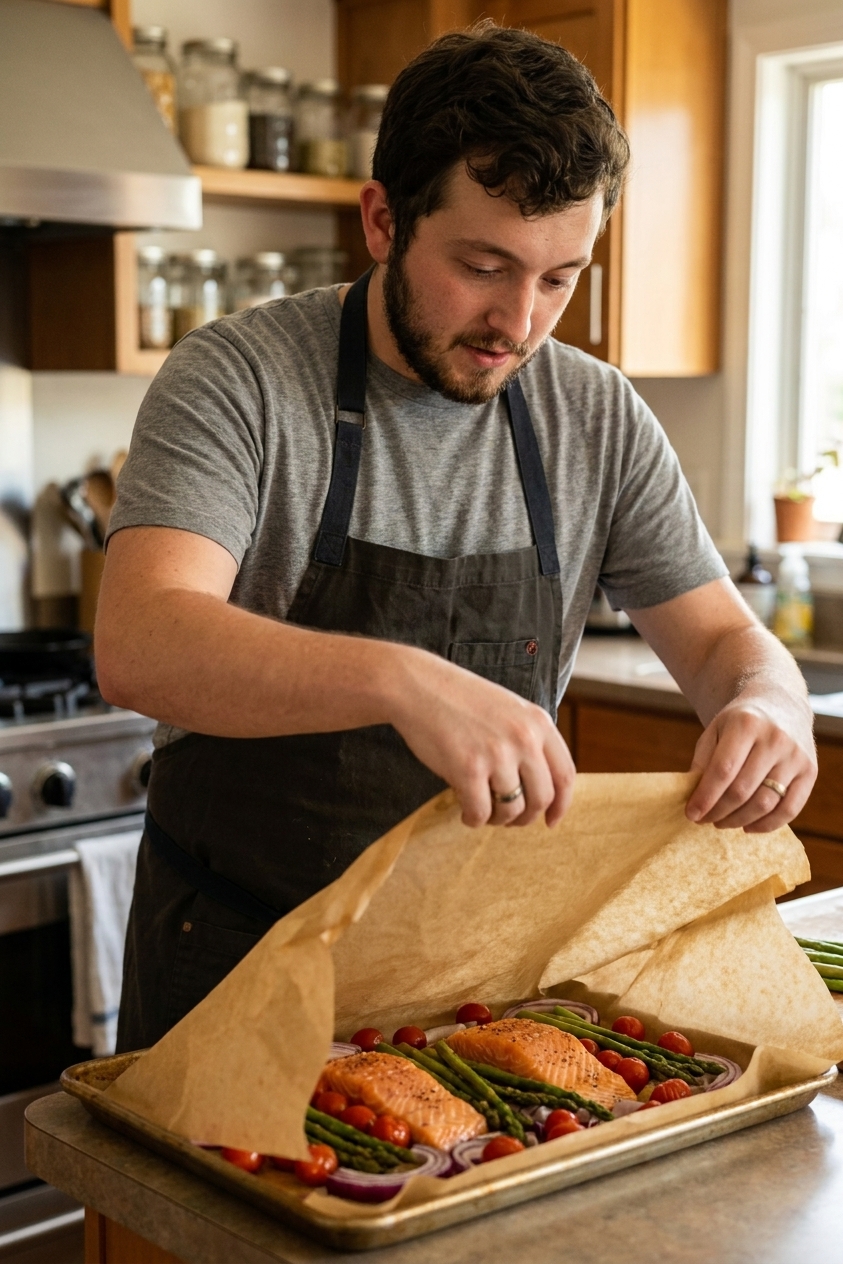
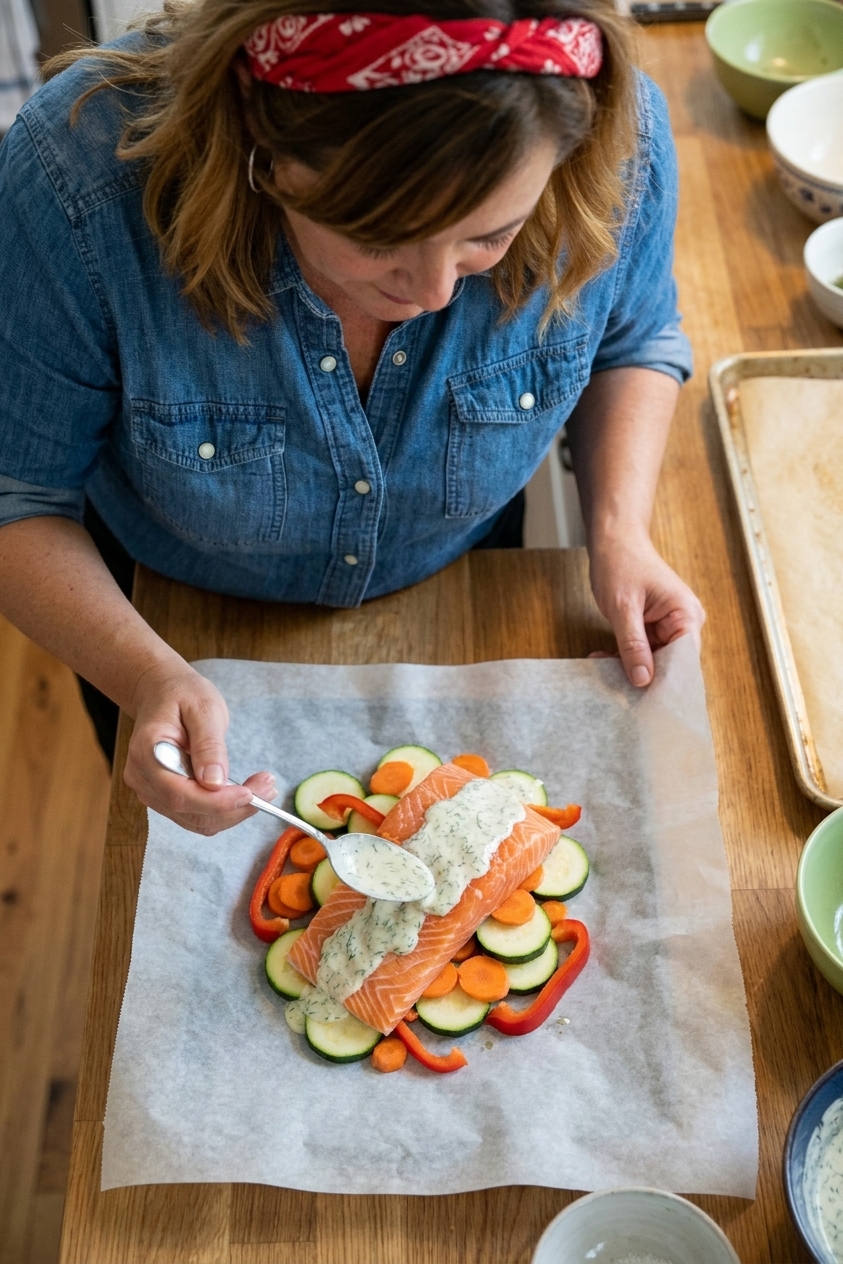
On one half of each parchment sheet, make a small bed of vegetables (about 1 to 1 1/2 cups per packet). If using spinach, tuck a small handful under the vegetables so it wilts gently.
Toss the vegetables with a bit of the 2 tablespoons olive oil (you can do this in a bowl, or just drizzle a little on each pile). Place a salmon fillet on top and season with salt and pepper.
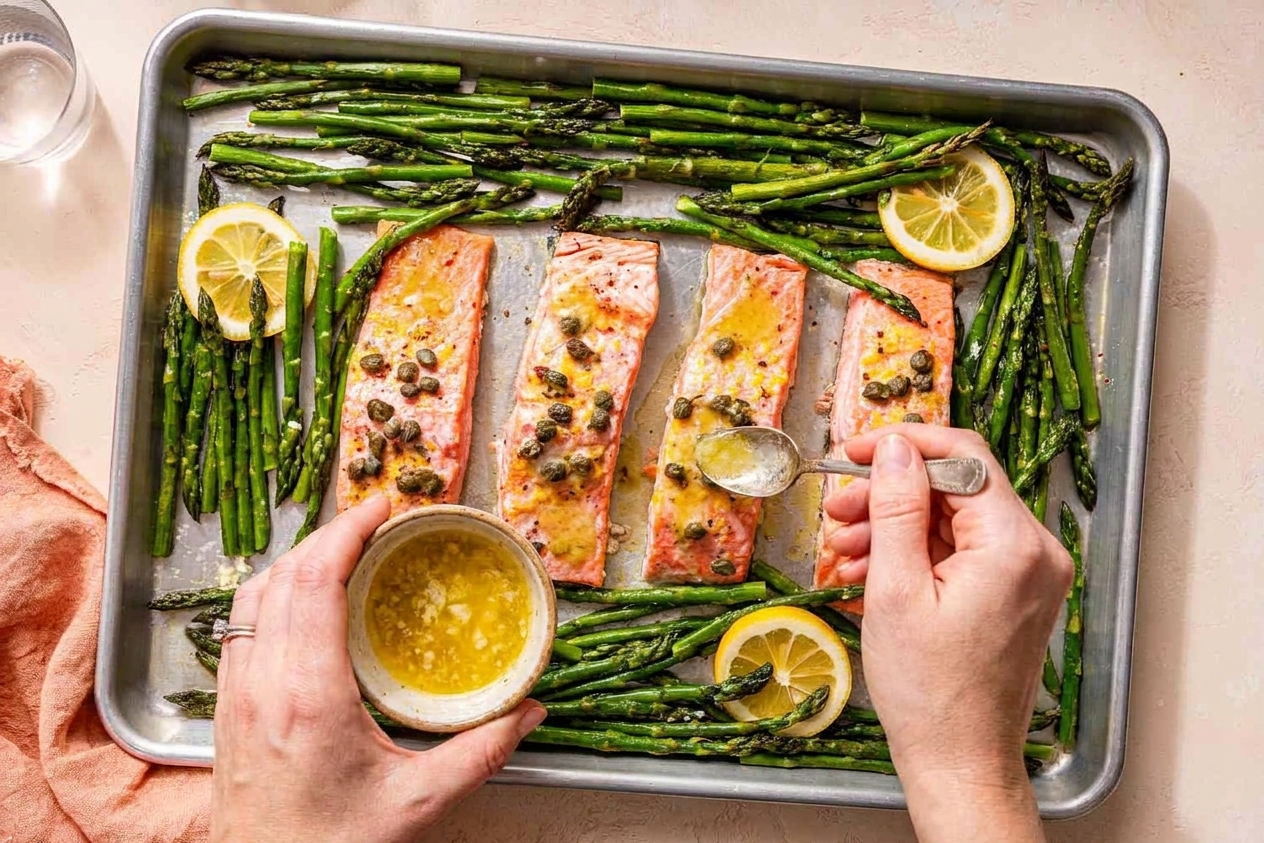
Spoon 1 to 2 tablespoons sauce over the salmon and a little over the vegetables. If your sauce is on the leaner side, a tiny extra drizzle of olive oil is welcome, but not required.
5) Seal the packets
Fold the parchment over the salmon. Starting at one corner, crimp and fold the edges over themselves in small overlapping folds, working your way around until sealed. The goal is a tight packet that traps steam.
If it will not seal: Fold the edge over one more time and crimp again, or tie the packet gently with kitchen twine. You can also set the packet seam-side up on the baking sheet to help it stay closed. Avoid staples.
6) Bake
Bake at 400°F for 10 to 14 minutes, depending on thickness.
- Thinner fillets (3/4-inch): start checking at 10 minutes
- Thicker fillets (1-inch): 12 to 14 minutes
The packets will puff a bit as steam builds, which is what you want.
7) Check doneness
Do not keep opening and closing packets. Steam escapes and the timing gets weird.
- At the end of the cook time, pull the tray and open one packet carefully (hot steam!).
- Check the thickest part of the salmon with an instant-read thermometer.
- Many cooks prefer 120°F to 125°F for medium, or 130°F to 135°F for more done but still juicy. The USDA guideline for fish is 145°F for fully cooked fish. Use your judgment, and consider the diners at your table.
If it needs more time, loosely fold it back over and return to the oven for 1 to 2 minutes, then recheck.
8) Serve
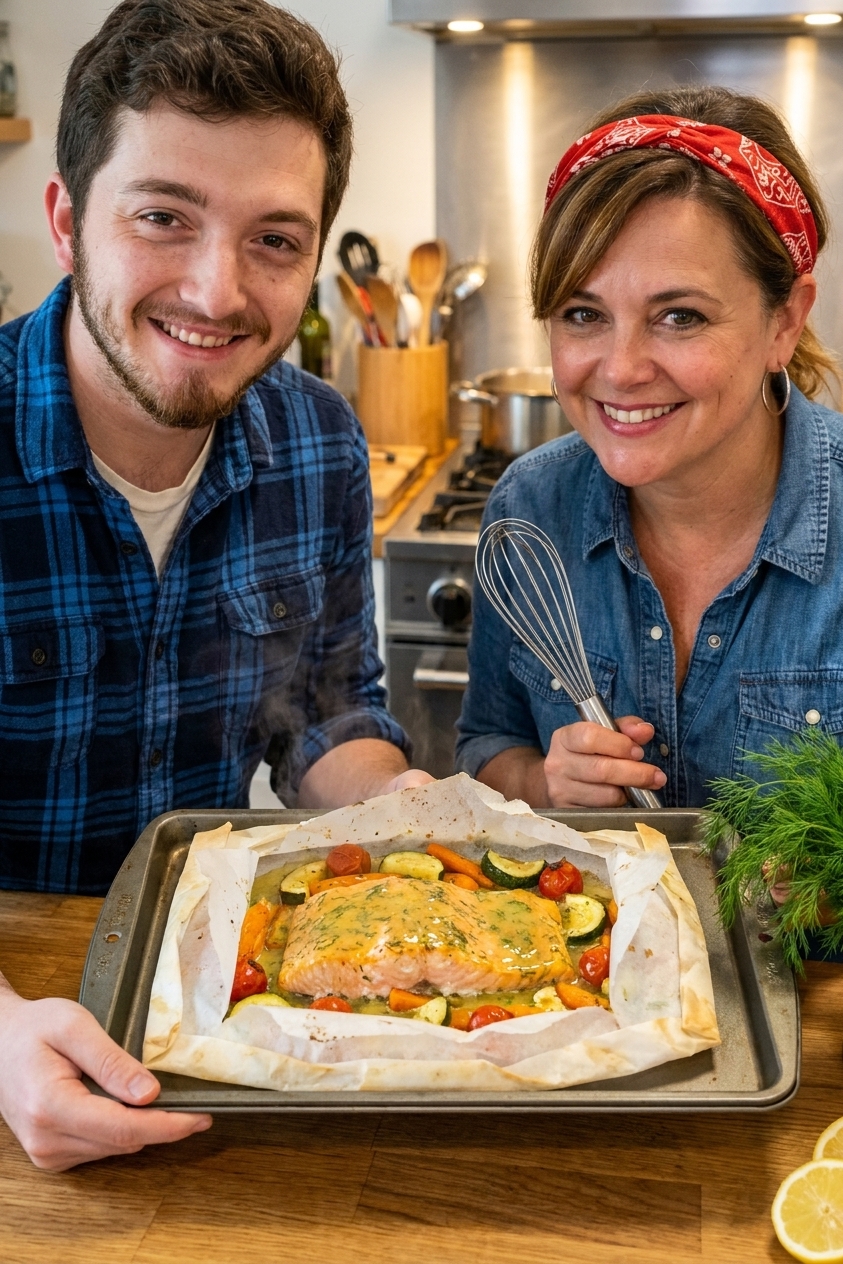
Let packets rest for 2 minutes, then open them carefully. Finish with lemon, herbs, or a spoonful of the extra sauce you saved. Serve right in the parchment for peak no-dish energy, or slide everything onto a plate.