Common Questions
What makes salsa verde traditional?
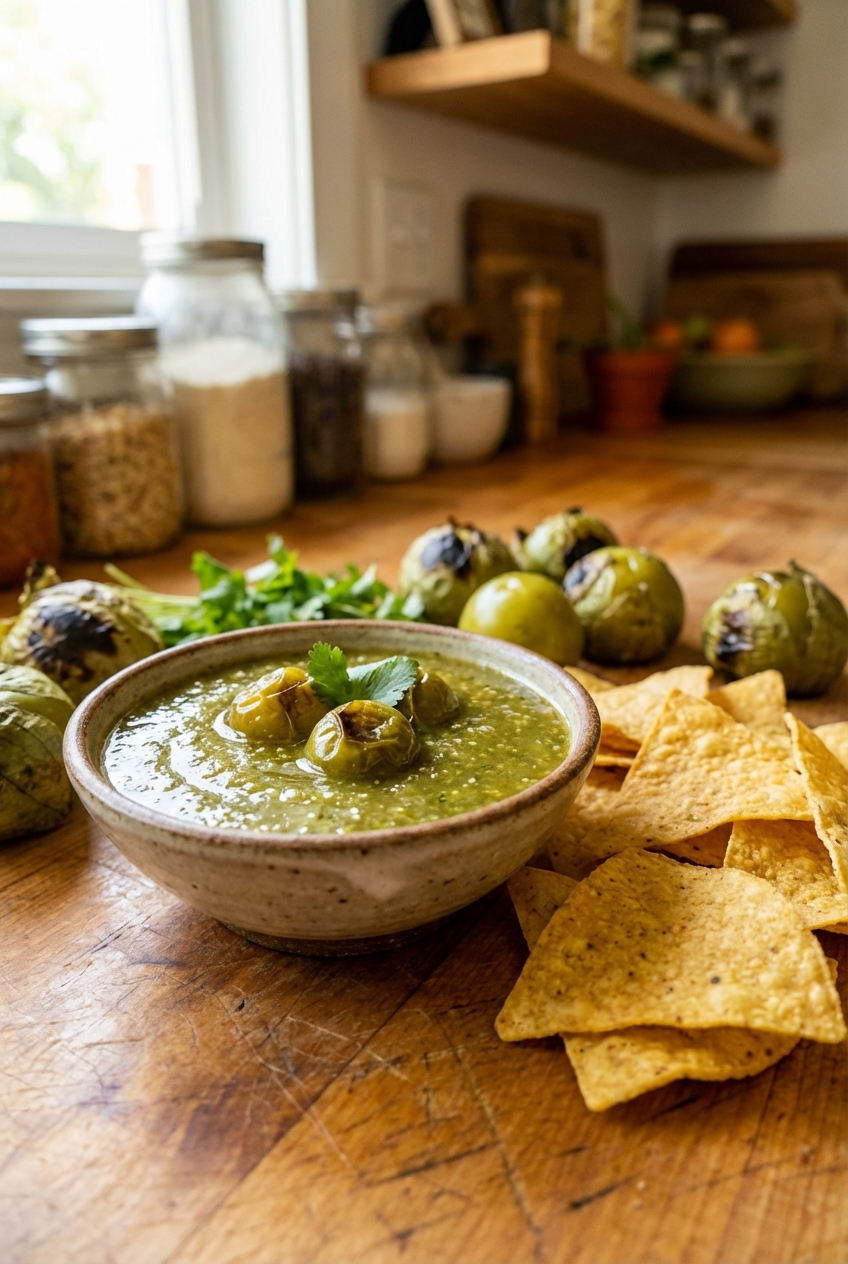
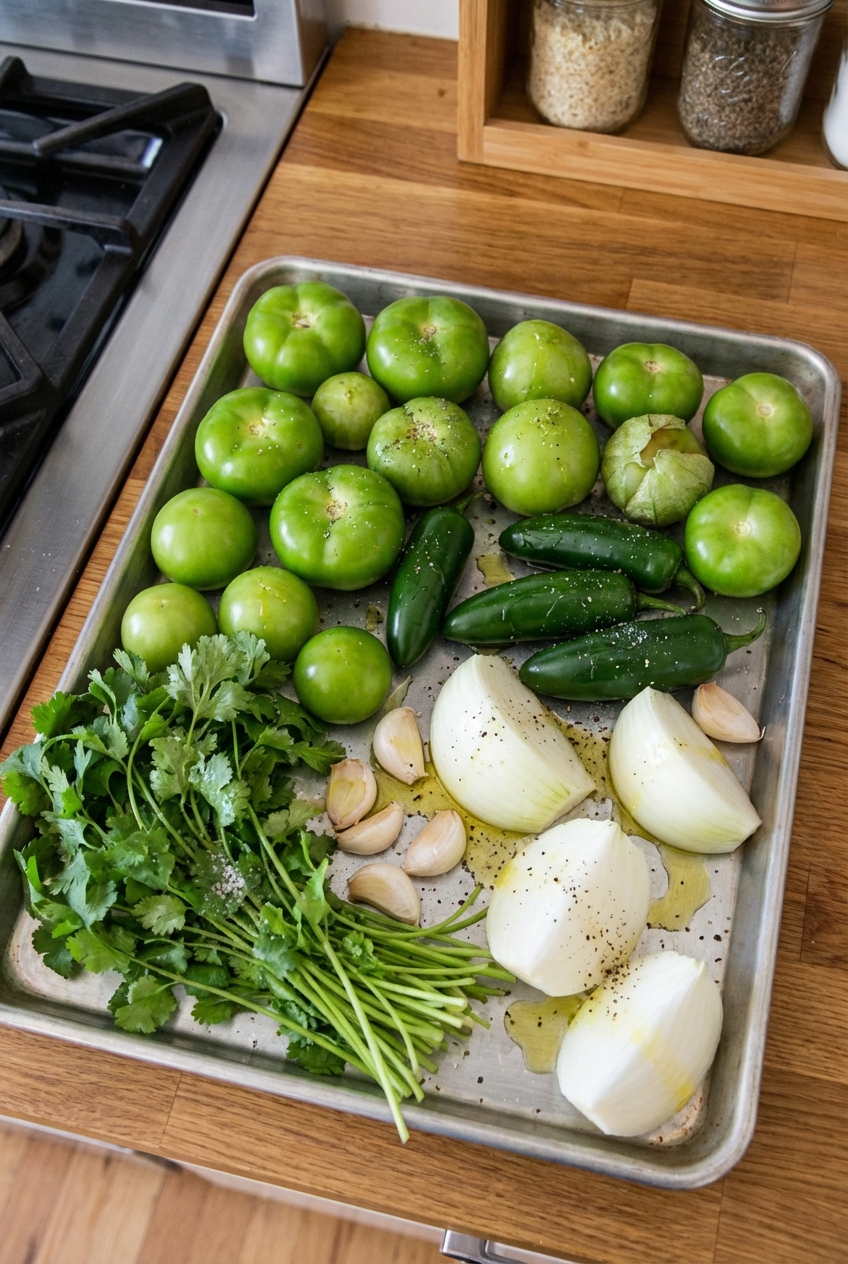
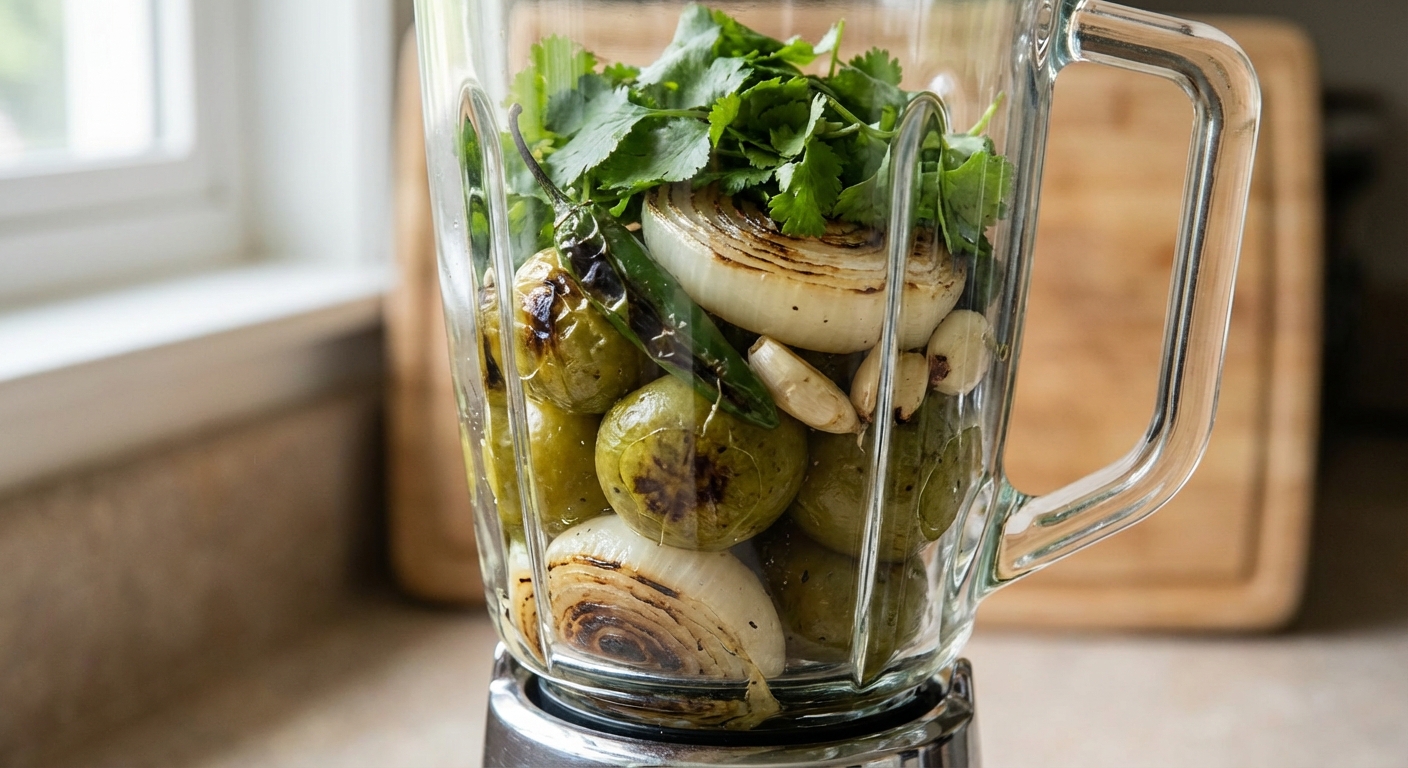
Many Mexican salsas verdes are built on tomatillos (not green tomatoes), plus chiles (often serrano or jalapeño), garlic, onion, and salt. Cilantro and lime are common, but not required in every regional or family version. Some salsas are boiled, some are roasted, and both are legit. This recipe goes the roasting route for extra depth.
Is salsa verde spicy?
It can be. For mild, use jalapeños and remove the seeds and ribs. For hotter, use serranos or keep more of the pepper intact. You can also blend in avocado for a creamy, mellow effect.
Why is my salsa verde bitter?
Bitterness usually comes from too much heavy char (especially on peppers) or over-processing herbs (stems included) until they go a little too intense. Blend just until it is the texture you want, and if your peppers got very black, peel or scrape off the loosest burnt bits before blending.
Why is my salsa verde watery?
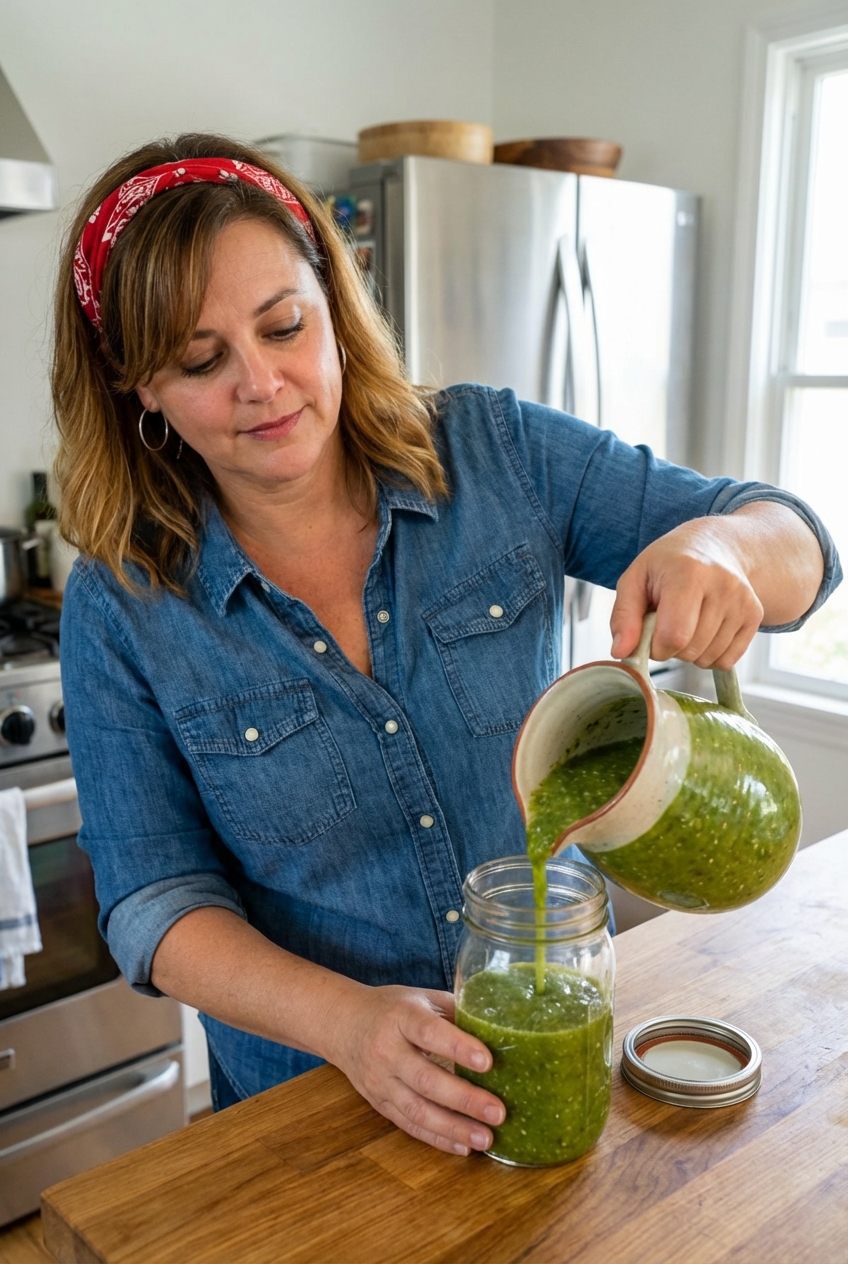
Tomatillos hold a lot of moisture. Roast them long enough to evaporate some liquid, and pour the roasted pan juices into the blender for body and flavor. After blending, you can also simmer the salsa for 2 to 3 minutes to tighten it up. Try not to add water unless you truly need it for blending.
Can I make this without cilantro?
Yes. It will taste different, but still good. Swap in a handful of flat-leaf parsley plus an extra squeeze of lime to keep it bright.
Can I use canned tomatillos?
You can, in a pinch. Drain well and roast briefly to drive off moisture and add flavor. Fresh tomatillos will give you the cleanest tang and best texture.
Can I freeze salsa verde with avocado?
You can, but it is not my favorite. Avocado versions tend to darken and can get a little weird in texture after thawing. If you want to freeze some, freeze the salsa without avocado, then blend in fresh avocado after thawing.