What is the best cheese for savory fondue?
Classic Swiss-style fondue uses Gruyère and Emmental. Gruyère brings nutty depth, Emmental brings mellow sweetness and melt. If you want a slightly sharper bite, you can swap in some aged white cheddar, but keep at least half of the cheese Swiss-style for the smoothest texture.
Do I have to use wine?
Wine adds acidity and a liquid base that helps keep the mixture smooth and stable. If you prefer no alcohol, use low-sodium chicken or vegetable broth plus 1 to 2 teaspoons lemon juice. You can also use non-alcoholic dry white wine, or try apple cider plus a little extra lemon for a bright (slightly sweeter) twist.
Why did my fondue get stringy or clumpy?
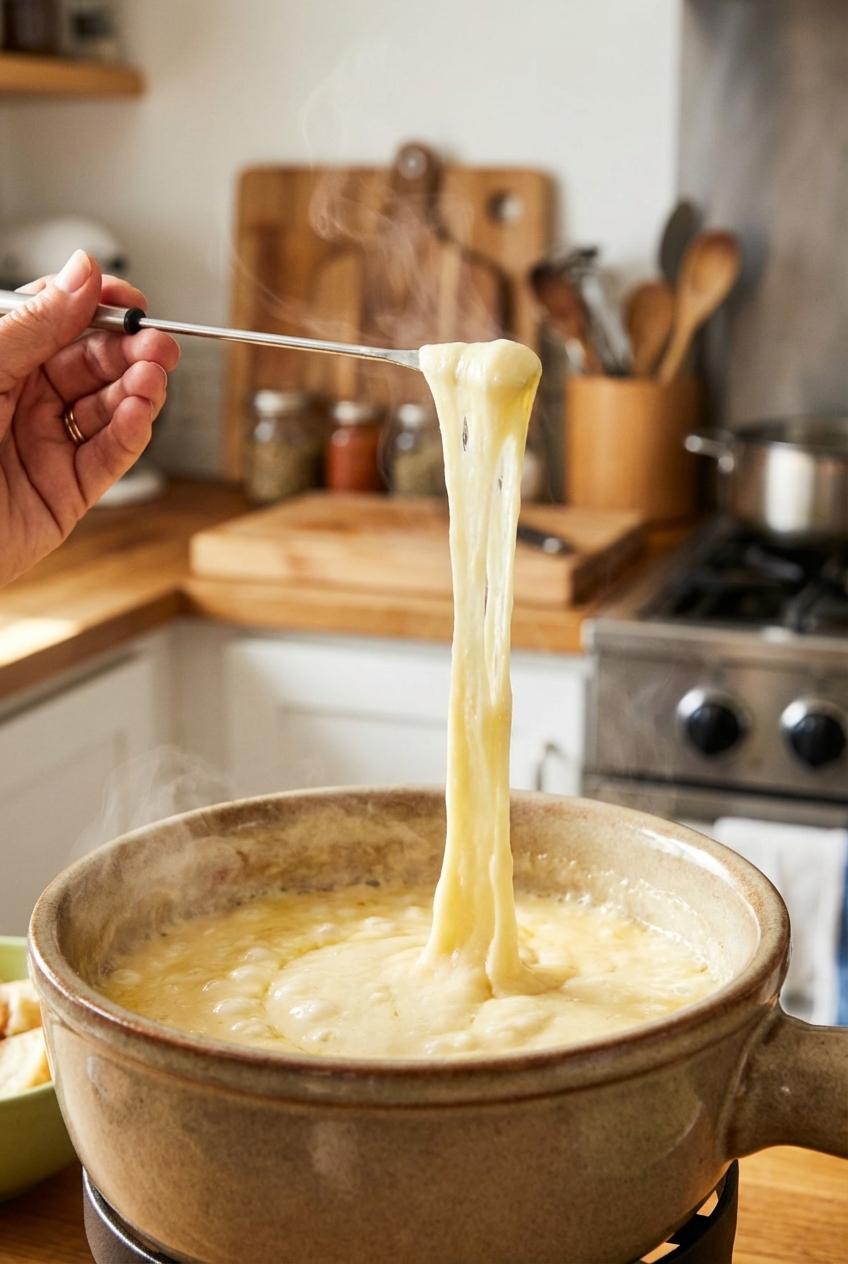
Usually one of three things: the heat was too high, the cheese was added too fast, or the cheese was pre-shredded with anti-caking agents. Keep the pot at a gentle simmer, add cheese in small handfuls, and shred your own if possible. Do not boil. Boiling is the fastest way to turn silky fondue into a weird science project.
How do I fix fondue that is too thick?
Whisk in warm liquid a tablespoon at a time. Warm white wine or warm broth is best. Milk works too, but keep the heat very low so it does not tighten or dull the flavor. Give it 30 seconds of whisking before deciding it needs more.
How do I fix fondue that is too thin?
Mix 1 teaspoon cornstarch with 1 tablespoon cold wine (or cold water), then whisk it in and gently simmer for 1 minute.
Can I make fondue ahead of time?
You can shred the cheese, toss with cornstarch, and prep everything up to 24 hours ahead. For serving, fondue is best cooked fresh, but you can reheat gently with a splash of warm wine or broth if needed.
How much does this make?
This recipe makes enough for 6 as an appetizer or 2 to 3 as a fondue dinner, depending on how dip-happy your table is. If you are serving it as the main event for a larger group, double it (and keep the heat low).