Mom's Best Recipes
Recipe

Savory Chicken and Potato Recipe

Crisp-edged chicken thighs, golden potatoes, and a bright garlic lemon pan sauce that tastes like you worked harder than you did.

Author By Matt Campbell
4.8
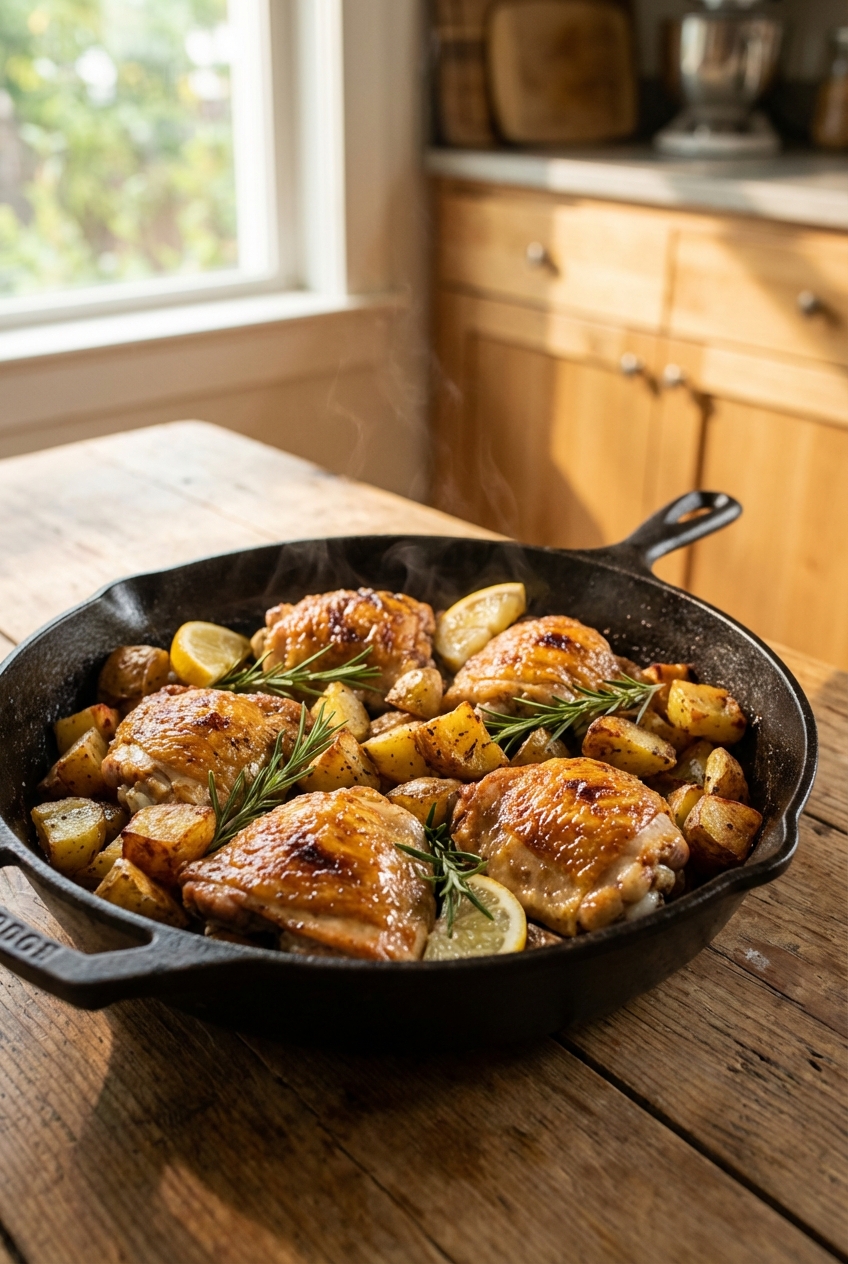
A cast iron skillet filled with golden roasted chicken thighs and crispy potato chunks, with rosemary and lemon wedges, on a wooden table in warm window light

Some dinners just understand the assignment. This savory chicken and potato situation is toasty, warm, and aggressively comforting, with the kind of crisp edges that make you hover near the stove “just to check on it” and accidentally eat three potato chunks.

We are doing it in one pan, keeping ingredients easy, and building flavor fast: a little paprika for warmth, garlic for obvious reasons, rosemary for that cozy roast-chicken energy, and a lemony pan sauce that wakes everything up at the end. It tastes like Sunday dinner, but it behaves like a weeknight.
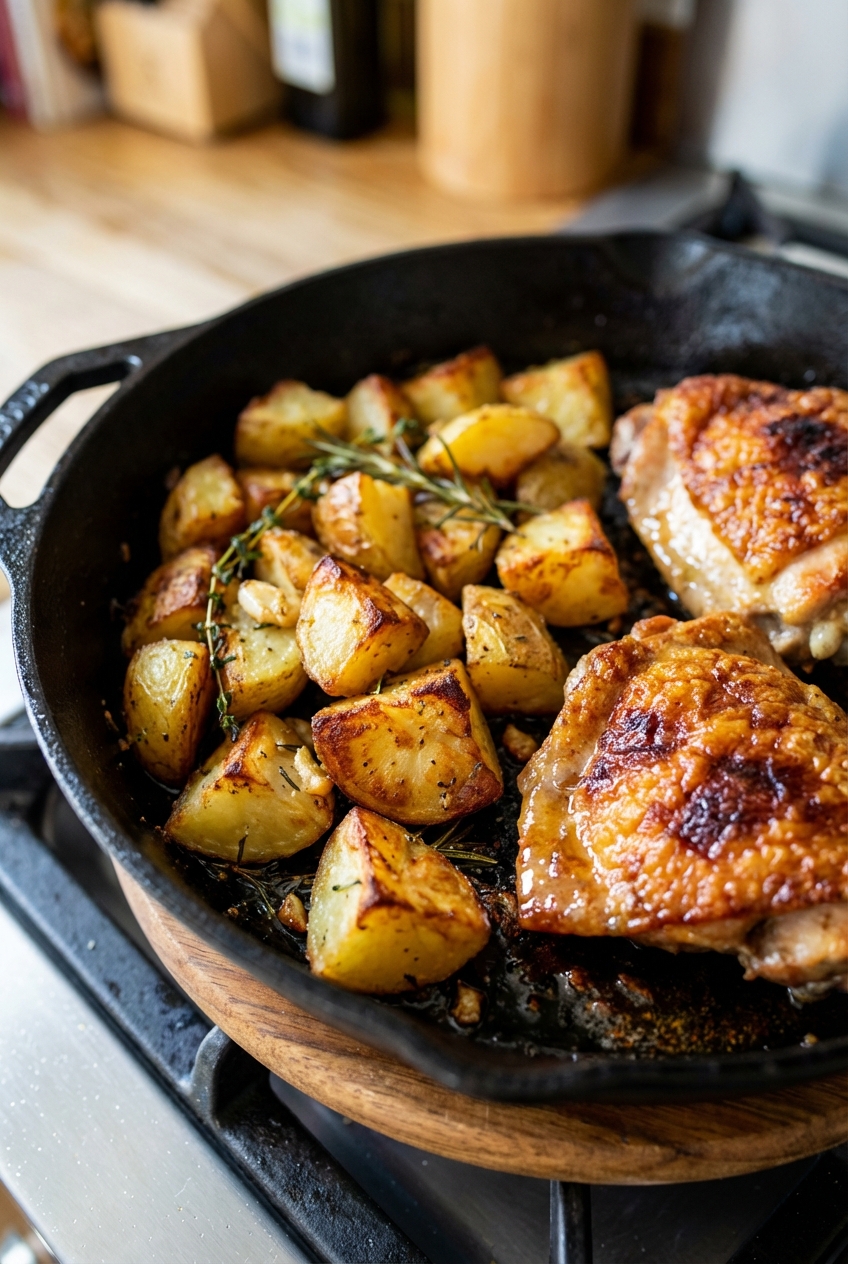
A close-up of crispy roasted potato pieces with browned edges in a skillet next to browned chicken skin

Why It Works

  • Toasty texture everywhere: Potatoes roast in chicken drippings, so they come out crisp outside and creamy inside.
  • Juicy chicken, no babysitting: Thighs stay forgiving and flavorful, even if your timer discipline is not perfect.
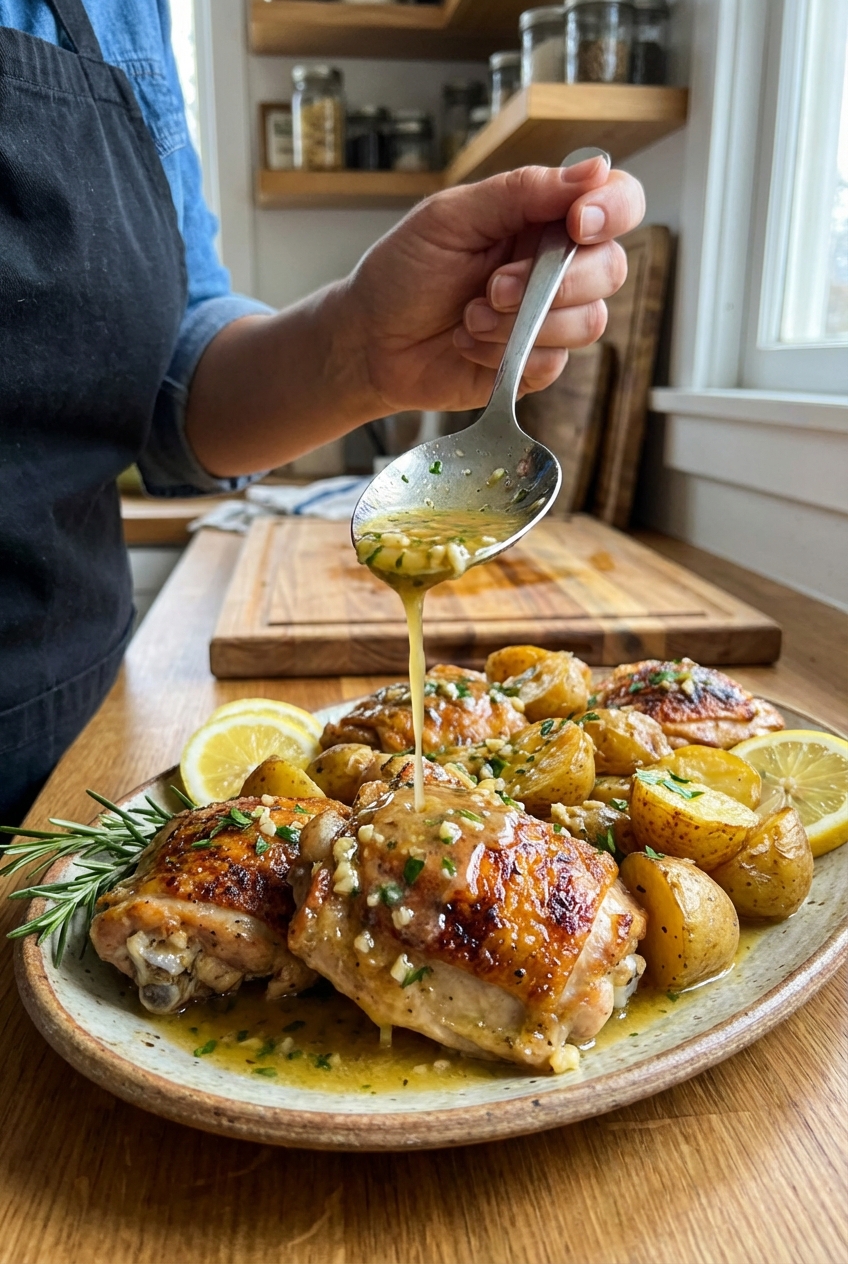
  • Bright finish: A quick lemon garlic pan sauce cuts the richness and makes the whole pan taste alive.
  • One-pan logic: Sear, roast, sauce. Minimal dishes, maximum reward.

Pairs Well With

Storage Tips

How to Store Leftovers

  • Fridge: Cool leftovers, then store chicken and potatoes in an airtight container for up to 4 days.
  • Reheat (best texture): Spread on a sheet pan and warm at 400°F for 10 to 15 minutes until the potatoes re-crisp and the chicken is hot.
  • Reheat (fast): Microwave in short bursts, then finish potatoes in a hot skillet for a minute or two to bring back the edges.
  • Freeze: You can freeze it up to 2 months, but the potatoes soften. If freezing, consider using the leftovers for a soup or hash later.
  • Leftover upgrade: Chop everything, crisp in a skillet, and top with a fried egg. Breakfast is handled.

Common Questions

Common Questions

Can I use chicken breasts instead of thighs?

Yes, but they cook faster and can dry out. Use bone-in, skin-on breasts if possible. Roast until the thickest part hits 160°F, then rest to 165°F (carryover cooking depends on size and how long you rest). If using boneless breasts, add them later in the roast so the potatoes still get time to brown.

What potatoes work best?

Yukon Gold are my favorite for creamy insides and great browning. Red potatoes hold their shape well. Russets get very crisp, but can crumble a bit more, which is not a bad problem to have.

My potatoes are not getting crispy. What did I do wrong?

Usually one of three things: the pan is crowded, the oven is not hot enough, or the potatoes have too much moisture. Give them space, roast at 425°F, and pat the potatoes dry after cutting if they look wet.

Do I have to use cast iron?

Nope. Any oven-safe skillet or a roasting pan works. Cast iron just gives you excellent browning and heat retention.

Can I make this dairy-free and gluten-free?

It is naturally gluten-free, but check labels on broth and Dijon since brands vary. For dairy-free, swap butter for olive oil in the sauce finish.

Is 165°F enough for chicken thighs?

165°F is safe, and you can absolutely stop there. That said, thighs often get even more tender around 175 to 190°F because the connective tissue has more time to relax. If you have a few extra minutes, letting them ride a little higher is a very good idea.

This is the meal I make when I want the house to smell like I have my life together. The first time I tested it, I was aiming for “cozy roast chicken,” but what I really wanted was crispy potatoes that tasted like chicken drippings and a sauce that made me stop mid-bite and do that quiet, respectful nod. Now it is my go-to when friends show up hungry, or when I need a weeknight win that still feels like a little event.