Mom's Best Recipes
Recipe

Savory Quiche

A custardy, savory quiche with a crisp crust, creamy center, and just enough salty bite to keep you going back for “one more sliver.”

Author By Matt Campbell
4.8
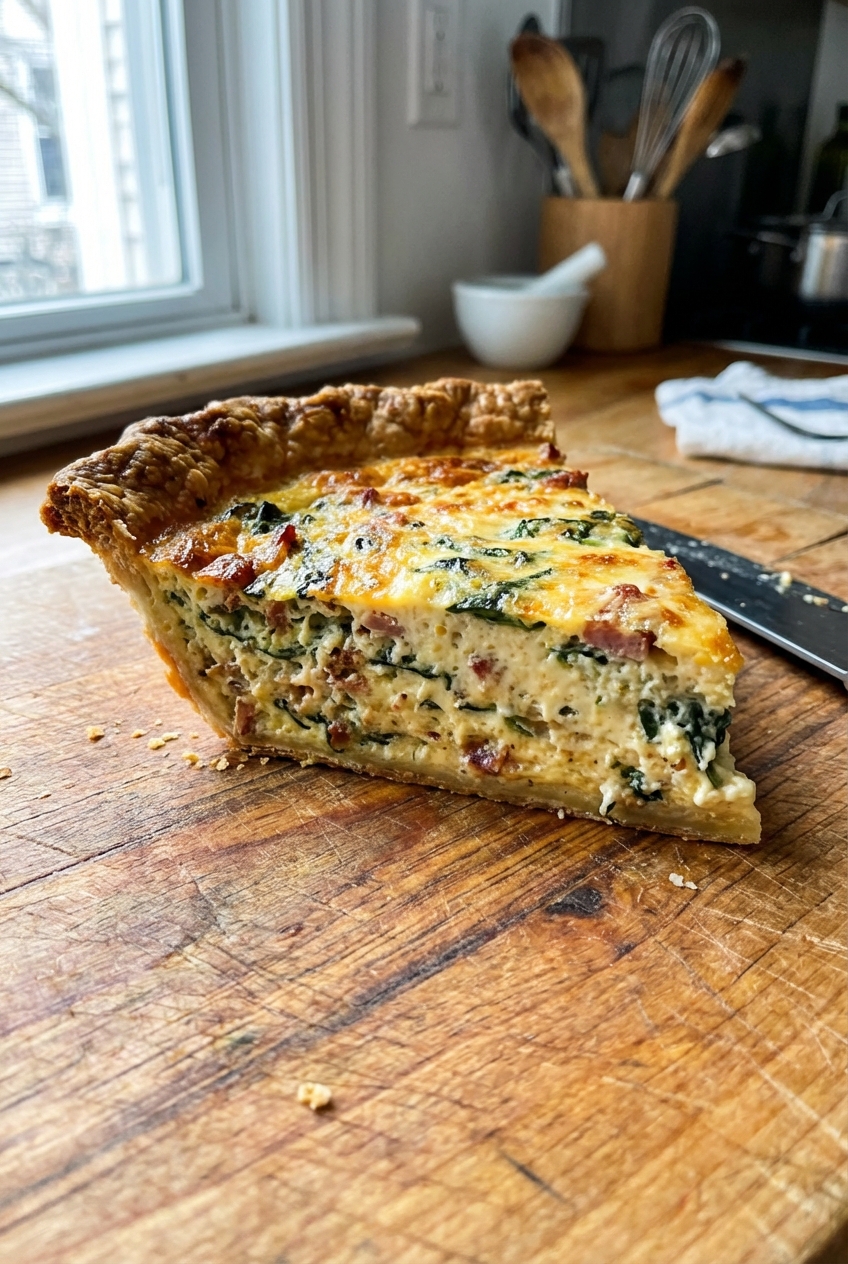
A golden-brown savory quiche sliced on a wooden cutting board with a creamy custard center and flaky crust, lit by natural window light

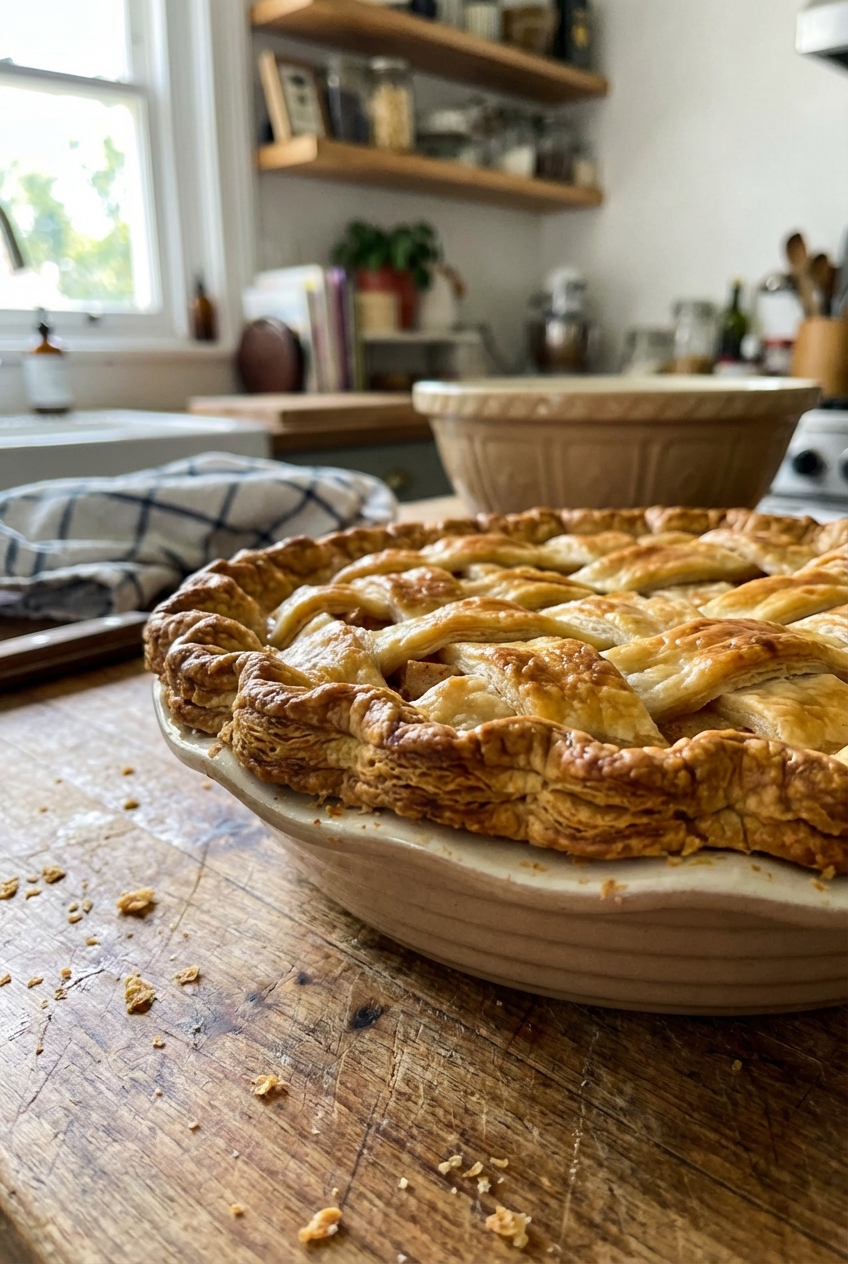
Quiche has a reputation for being fussy, but honestly it’s just eggs and dairy learning how to behave in a hot oven. When it goes right, you get that silky, barely-set custard with a crisp, buttery crust and a filling that tastes like it had way more effort behind it than it did.

This savory quiche is my go-to when I want brunch energy on a Tuesday. The flavor is classic: sautéed shallot, spinach, and ham (or bacon), plus a good melty cheese. The technique is what makes it special: my preferred custard ratio, gentle baking, and a couple small moves that keep the center smooth instead of rubbery.
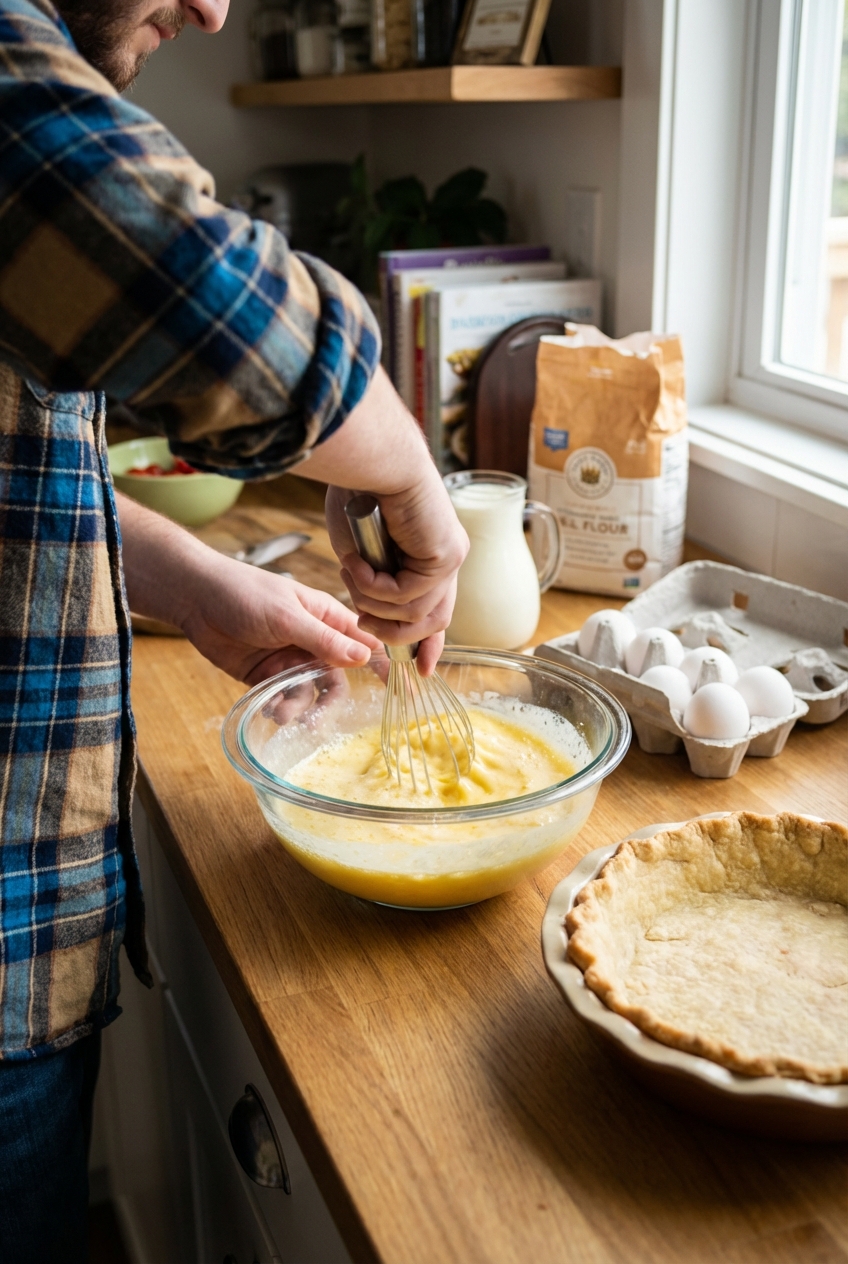
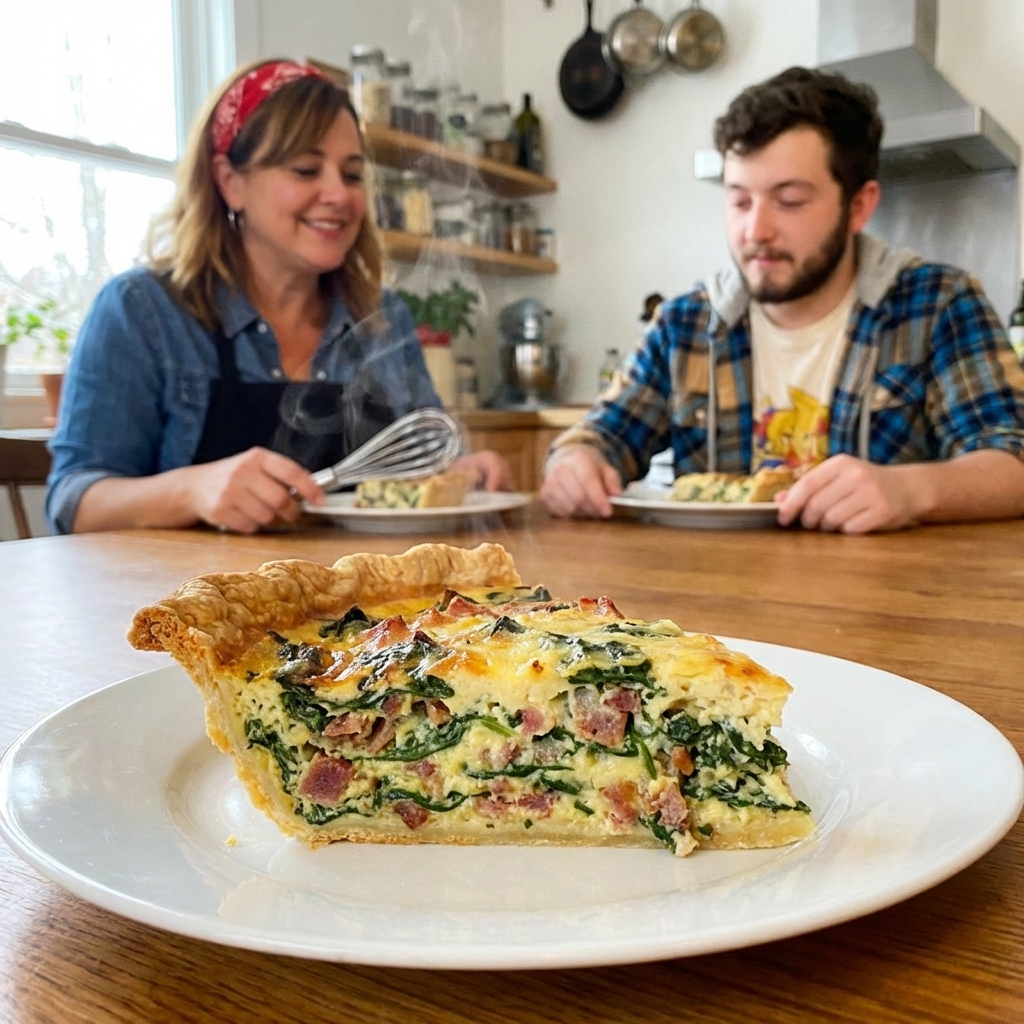
Hands whisking eggs and cream in a glass bowl on a kitchen counter with a pie crust nearby

Why It Works

  • Silky texture, not scrambled eggs: My go-to ratio (4 eggs to 1 1/4 cups dairy) and a moderate oven temp create a custard that sets tender.
  • No soggy bottom: A quick blind-bake and an egg wash seal help the crust stay crisp, even with juicy fillings.
  • Big flavor with normal groceries: Shallot, Dijon, nutmeg, and a salty mix-in like ham build depth fast without a long ingredient list.
  • Make-ahead friendly: It reheats beautifully for breakfast, lunch, or the “I forgot to plan dinner” moment.

Pairs Well With

Storage Tips

Refrigerator: Cool quiche completely, then cover and refrigerate for up to 4 days. Slices reheat faster and more evenly than a whole wedge.

Freezer: Cool completely (this helps prevent condensation and ice crystals), then wrap individual slices tightly in plastic wrap and place in a freezer bag. Freeze up to 2 months. Thaw overnight in the fridge for best texture.

Reheating (best method): Warm slices on a sheet pan at 325°F for 12 to 18 minutes until the center is hot. If the crust is getting too brown, tent loosely with foil.

Microwave method: It works in a pinch, but the crust softens. Use 50 to 70% power and short bursts to avoid overcooking the custard.

Common Questions

How do I know when quiche is done?

The edges should look set and slightly puffed, and the center should still have a gentle wobble when you jiggle the pan. For the cleanest check, use an instant-read thermometer: you are looking for about 170 to 175°F in the center. (If you do the knife test, slide it in about 1 inch from the center; it should come out mostly clean, but it can leave a small mark.) It will finish setting as it cools.

Why did my quiche turn out watery?

Usually it’s moisture from fillings. Cook off water from spinach, mushrooms, and onions, then squeeze or drain well. Also let hot fillings cool slightly before adding. Using lower-fat dairy can set less creamy and sometimes weep more, especially if the quiche is overbaked.

Can I use milk instead of half-and-half?

Yes, but the texture will be a bit less rich. For a smooth custard, aim for at least 2% milk, or do a mix of milk and heavy cream. Avoid fat-free dairy if you can.

Do I have to blind-bake the crust?

You can skip it, but you’re rolling the dice on a soggy bottom. Blind-baking is the easiest way to guarantee that crisp base that makes quiche feel bakery-level.

Can I make it crustless?

Yep. Butter a 9-inch pie dish and bake the filling directly in it. Start checking around 30 to 35 minutes since it can set a little faster.

I started making quiche when I realized it’s basically the kitchen equivalent of showing up to a potluck in a clean shirt. It looks impressive, it slices like a dream, and nobody needs to know you mostly just whisked things and told the oven to do the rest. The first time I nailed the texture, that smooth custard that holds together but still feels creamy, I genuinely paused mid-bite like, okay wow, we’re doing this now. Ever since, this has been my “use what you have, but make it feel intentional” recipe.