Mom's Best Recipes
Recipe

Savory Tteokbokki Recipe

A cozy, savory tteokbokki with a silky, smooth sauce that clings to every chewy rice cake. Weeknight-friendly, customizable, and dangerously scoopable.

Author By Matt Campbell
4.8
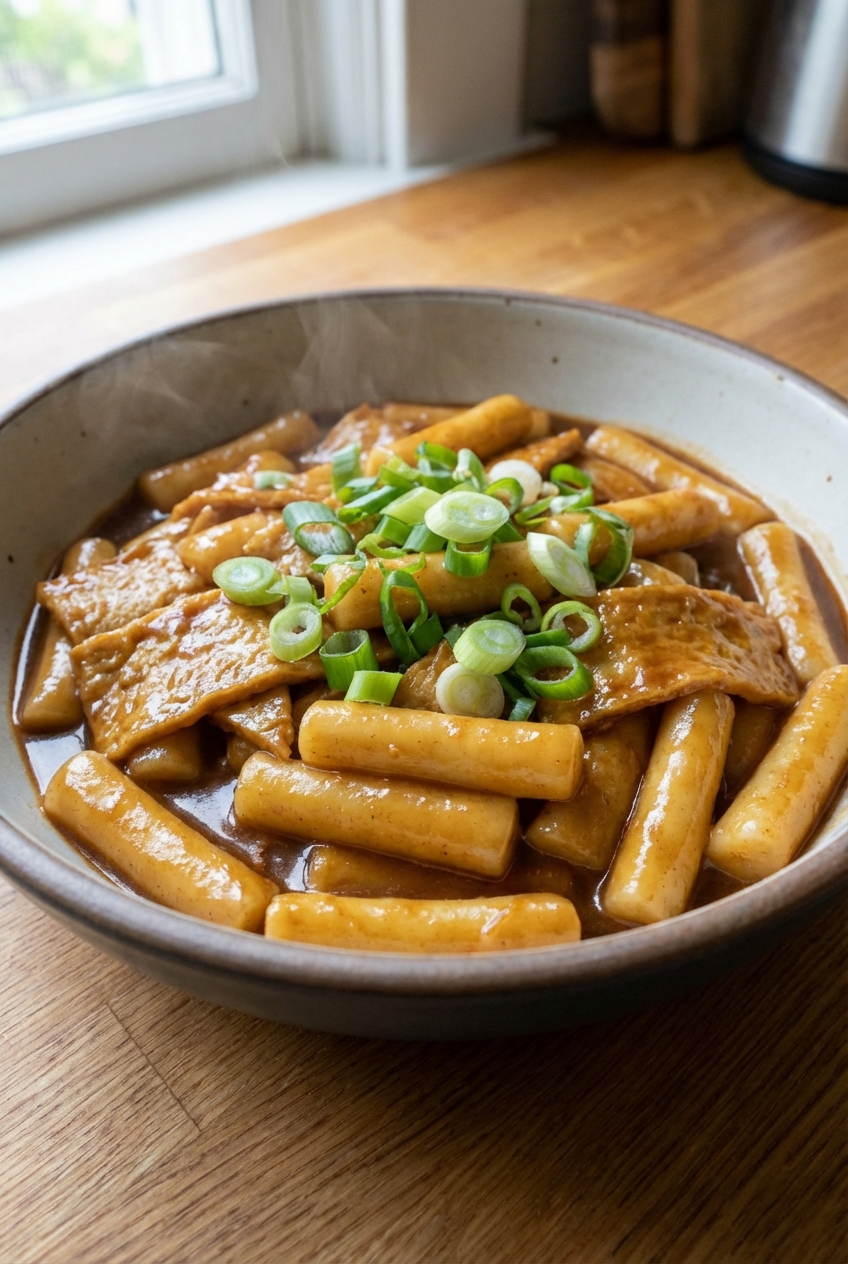
A steaming bowl of savory tteokbokki with chewy rice cakes and fish cakes coated in a glossy brown sauce, garnished with sliced scallions

Tteokbokki usually shows up loud and proud in a red, spicy gochujang sauce. Love that for us. But sometimes you want the savory version, often called Gungjung Tteokbokki (Royal Court Tteokbokki): glossy, soy-forward, gently sweet, and so smooth it feels like it belongs on a spoon and not just on a rice cake.

This is that recipe. Think of it as the cozy-carb cousin of spicy tteokbokki, built on a quick, weeknight broth (store-bought is totally fine) and thickened just enough so every bite is lacquered. The goal is silky sauce, chewy tteok, and zero chaos. Well, minimal chaos.
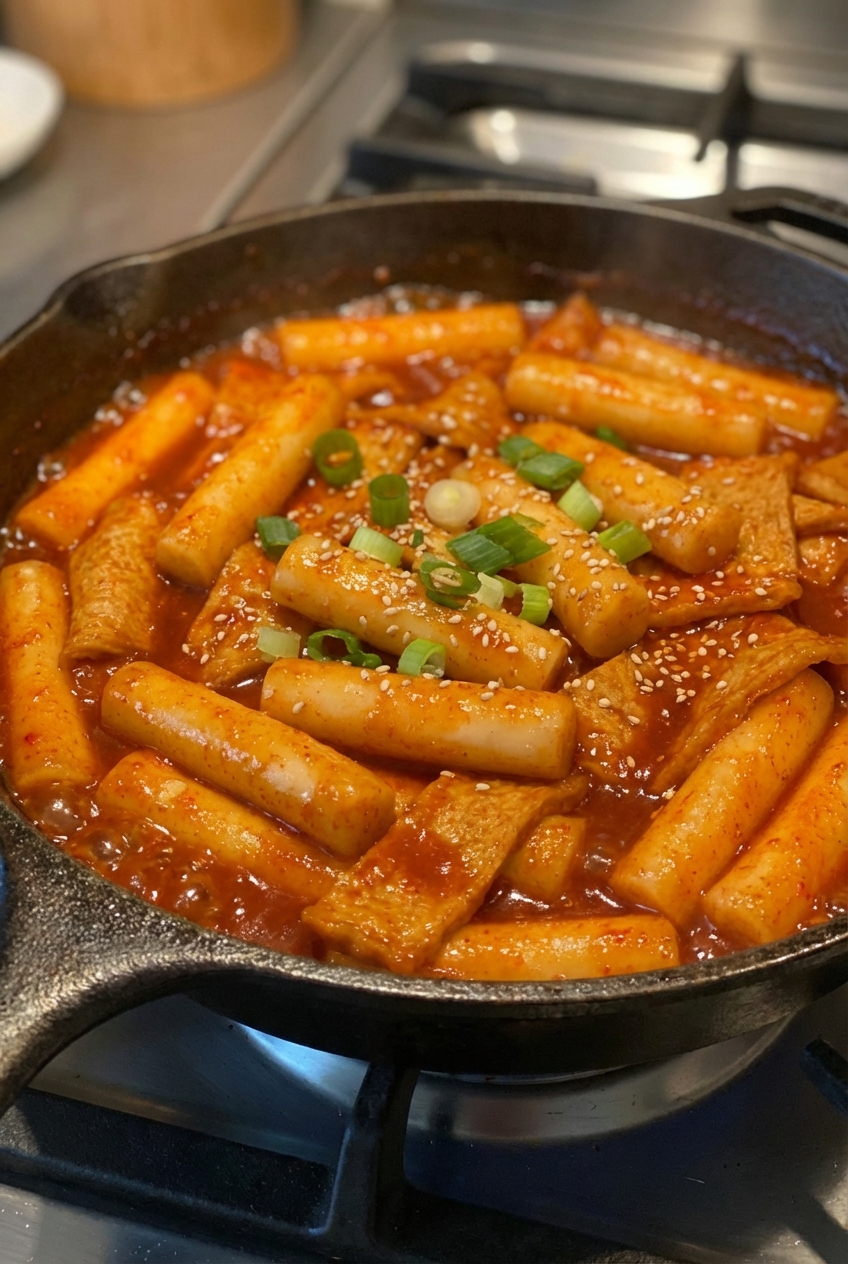
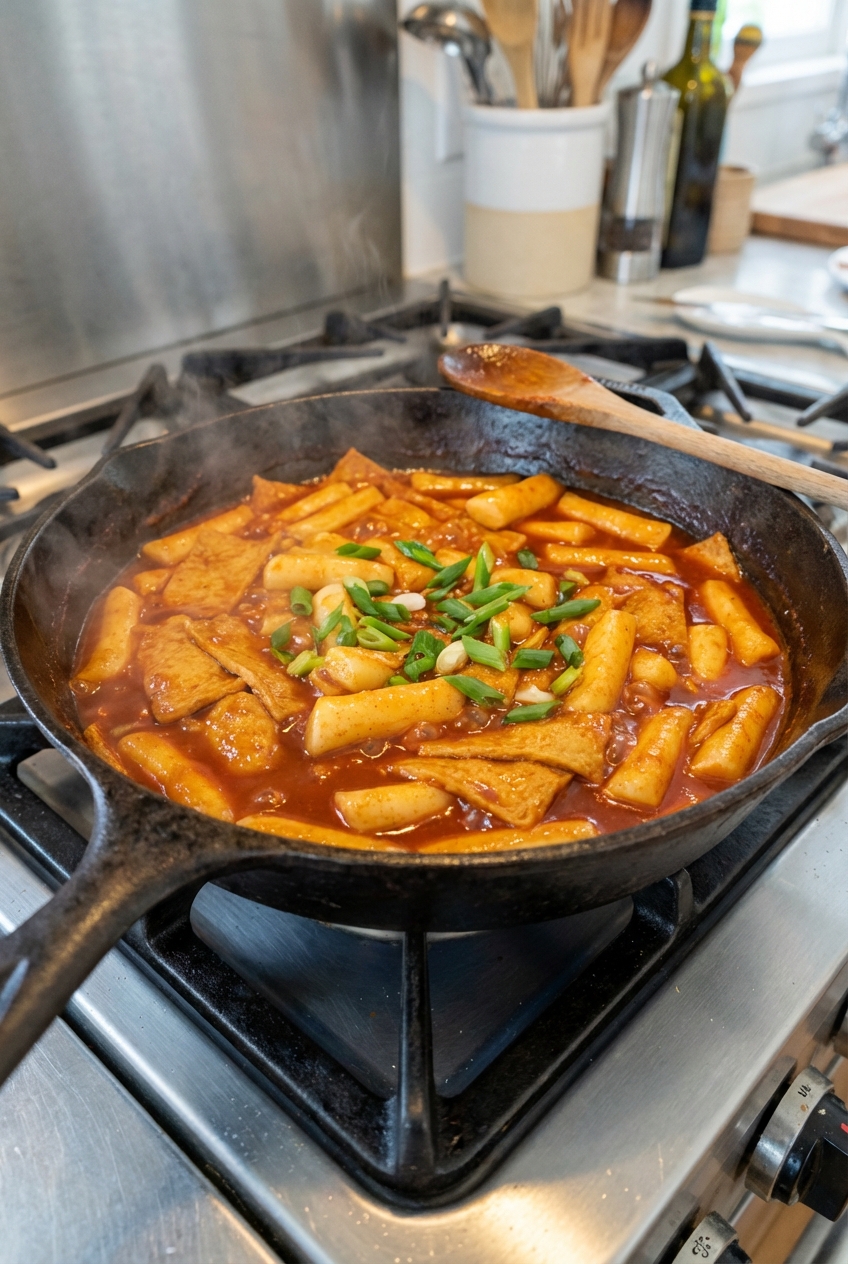
Close-up of glossy tteokbokki rice cakes in a pan, showing the sauce clinging to the surface

Why It Works

  • Silky texture: A small cornstarch slurry gives you that smooth, glossy finish fast. Traditionally, the sauce thickens more slowly from the rice cake starch, so this is the quick route.
  • Balanced savory flavor: Soy sauce, garlic, and a touch of sweetness hit that Korean street-snack sweet-salty zone.
  • Chewy rice cakes that stay tender: A quick soak and gentle simmer keeps tteok bouncy, not chalky.
  • Flexible add-ins: Fish cake, mushrooms, dumplings, or a soft egg all play nicely here.

Pairs Well With

Storage Tips

Tteokbokki is best fresh, but leftovers are still really delicious if you treat them right.

Refrigerate

  • Cool completely, then store in an airtight container for 2 to 3 days (best texture in the first 2).
  • The rice cakes will firm up as they sit. Totally normal.

Reheat

  • Stovetop is best: add leftovers to a pan with a splash of water or broth (2 to 4 tablespoons) and warm over medium-low, stirring gently until the sauce loosens and the tteok turns chewy again.
  • Microwave works: cover and heat in 30-second bursts, stirring between, adding a splash of liquid as needed.
  • Note: cornstarch-thickened sauces can tighten up after chilling, so add liquid gradually and keep the heat gentle.

Freezing

  • I do not recommend freezing finished tteokbokki. The sauce can separate and the rice cakes can turn weirdly spongy.
  • If you want to prep ahead, freeze uncooked rice cakes and keep the sauce ingredients ready to go.

Common Questions

What is savory tteokbokki called?

This soy-based version is often called Gungjung Tteokbokki (Royal Court Tteokbokki). It is savory, gently sweet, and usually not spicy.

Is this tteokbokki spicy?

Nope. This one is savory and mild. If you want heat, add 1 to 2 teaspoons gochujang or a pinch of gochugaru at the end and taste your way up.

What kind of rice cakes should I buy?

Look for Korean cylindrical rice cakes labeled tteokbokki tteok. Fresh or refrigerated ones get tender fastest. Frozen works great too, just soak a bit longer.

Why is my sauce not silky?

Two common reasons: the slurry did not simmer long enough, or you added too much slurry. Keep it at a gentle simmer (not a hard boil) and let it bubble for 30 to 60 seconds after adding. Start with half the slurry and add more only if needed.

Why are my rice cakes hard in the middle?

They likely needed a longer soak or a gentler simmer. Soak in warm water, then simmer until they bend easily and there is no hard core. If the sauce gets too thick before the tteok softens, add a splash of broth and keep going.

Can I make it vegetarian?

Yes. Use vegetable broth or water plus 1 teaspoon miso for depth (optional). Skip fish cake and add mushrooms, cabbage, or pan-seared tofu. Use vegetarian oyster sauce, too.

Can I add cheese?

You can, but it turns the vibe into something else. If you want that, add a small handful of shredded mozzarella right at the end and cover for 1 minute to melt.

I love spicy tteokbokki, but this savory version is what I make when I want comfort without the full forehead-sweat experience. It is the kind of dish that makes you hover over the pan, “just tasting,” until suddenly half the rice cakes are gone and you are pretending it was all quality control. The first time I nailed the silky sauce, I knew it was a keeper: glossy, smooth, and clingy in the best way, like it had no plans to leave your spoon.