Mom's Best Recipes
Recipe

Signature Powerwash-Style Recipe

A tangy, bright DIY Powerwash-style spray that can help cut grease fast and leave your kitchen smelling clean and citrusy. Mix it in minutes with simple ingredients.

Author By Matt Campbell
4.8
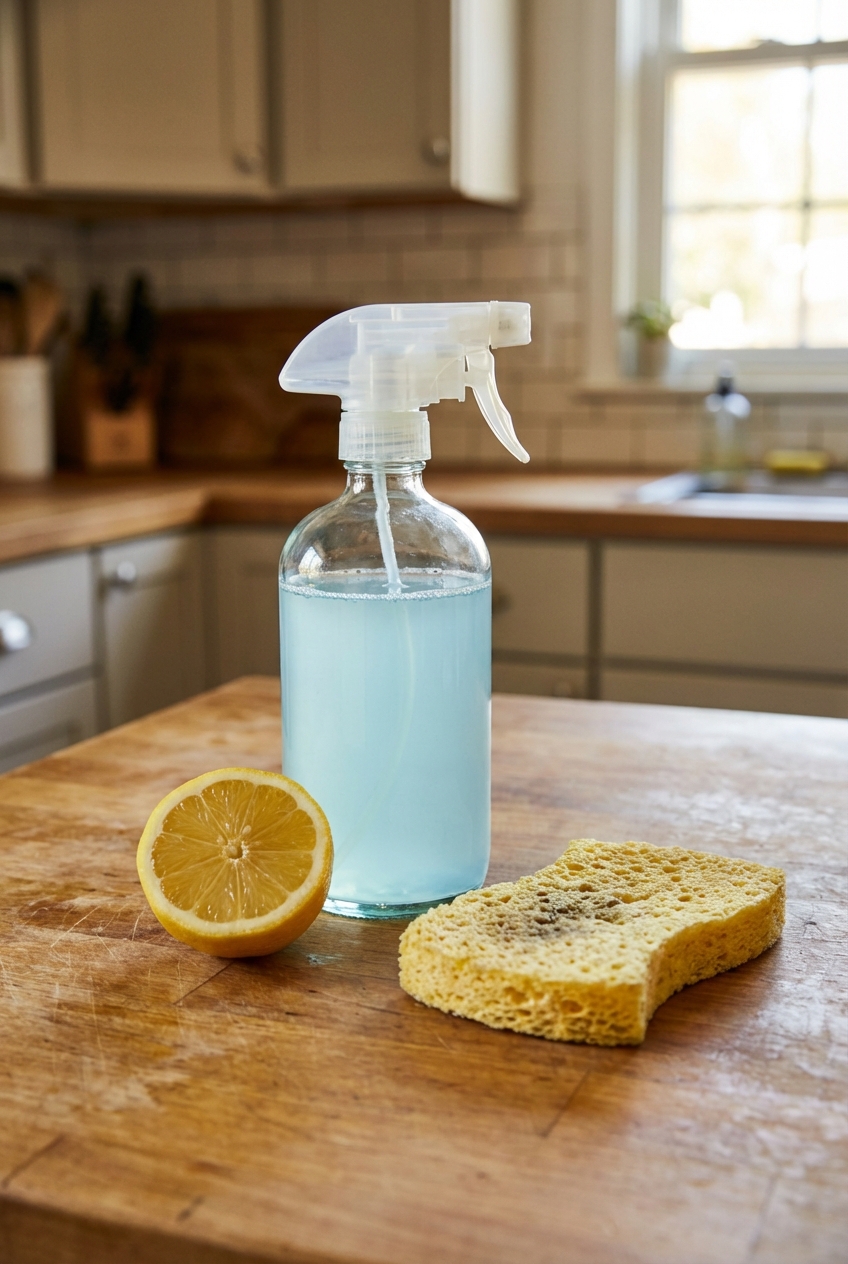
A clear refillable spray bottle filled with pale blue DIY dish spray sitting on a kitchen counter next to a halved lemon and a sponge

If you cook with any amount of joy, you also cook with a little chaos. Splattery stovetops, olive oil fingerprints on cabinet pulls, that one sheet pan you swear was clean yesterday. This is the spray I keep within arm’s reach when my kitchen needs to go from greasy to handled in a hurry.

This Powerwash-style mix is built on three things: a concentrated dish soap base for grease, a little alcohol for faster drying and extra lift (in my experience), and an optional hit of citrus for that tangy, bright finish that makes the whole room feel reset. It is accessible, fast, and honestly satisfying to use.

Important note: This is a homemade cleaner inspired by popular dish spray formulas. Label your bottle, keep it away from kids and pets, avoid mixing it with other cleaners, and be careful with surfaces that do not play nicely with vinegar (acid) or alcohol.

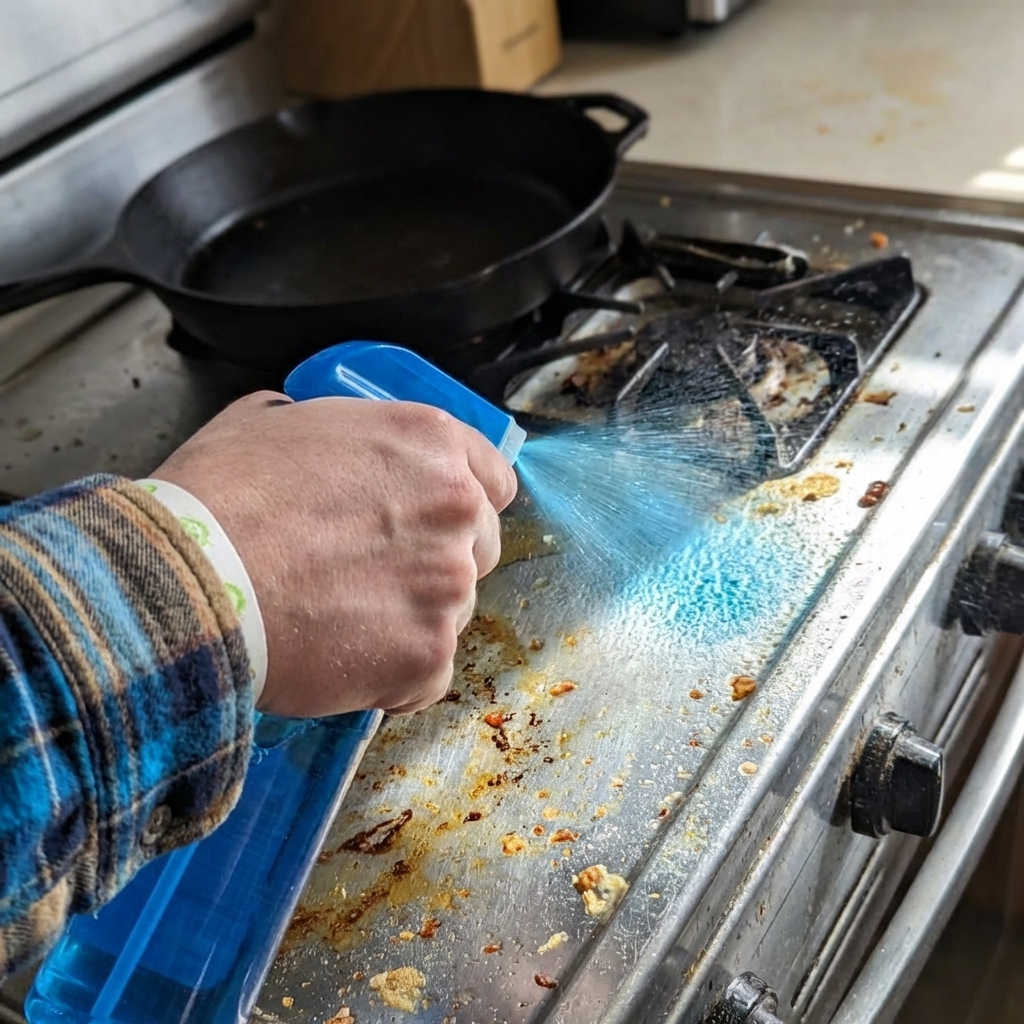
A hand spraying a fine mist of blue dish spray onto a greasy stovetop with a skillet in the background

Why It Works

  • Grease-cutting help: Dish soap does the heavy lifting, while alcohol can help the solution spread and lift oily messes more easily.
  • Faster drying, often less streaking: Alcohol evaporates faster than water, which can help on many washable surfaces. Results vary by finish and how much product you use.
  • Simple, repeatable ratios: Easy to scale up or down depending on your bottle size.
  • That “clean kitchen” vibe: Lemon plus a tiny bit of vinegar brings a tangy freshness that reads clean without smelling like a science experiment.

Pairs Well With

  • 5-minute kitchen reset checklist (wipe, spray, sweep)
  • How to degrease a range hood filter without drama
  • Stainless steel cleaning tips for fewer streaks
  • Weekly sink and drain freshening routine

Storage Tips

This recipe makes a cleaner, not leftovers, but storage still matters because the mixture can separate a bit over time.

  • Store in: A clean, clearly labeled spray bottle. Reusing an empty dish spray bottle works great.
  • Label idea: “Dish soap + water + isopropyl alcohol (and optional vinegar). Mixed: ____.”
  • How long it keeps: For best performance and scent, I remix about every 3 to 4 weeks. If it starts smelling off, looks strange beyond normal separation, or the sprayer gets funky, dump it and make a fresh batch.
  • Mix before each use: Especially if you included vinegar. Separation is normal.
  • Keep away from heat: Store under the sink or in a cool cabinet, not next to the stove.

Surface note: Avoid using on unsealed natural stone. Vinegar (acid) can etch stones like marble and limestone, and alcohol can dull some finishes. When in doubt, spot-test.

Safety note: Do not use near open flames, and do not mix with bleach, ammonia, or other cleaners.

Common Questions

Is this the exact Dawn Powerwash formula?

No. The commercial product uses a proprietary blend. This is a practical homemade version that mimics the idea: soap plus a solvent booster plus water, with an optional bright scent.

Do I have to use Dawn Platinum?

No, but a concentrated grease-cutting dish soap helps. Dawn Platinum is a common choice because it is strong and consistent. If your soap is thinner or gentler, you may need a little more soap and a little less water.

What kind of alcohol should I use?

Use isopropyl alcohol (rubbing alcohol) at 70% if possible. It is easy to find and works well. 91% also works. Do not mix this with bleach, and do not use it near open flames.

Can I use vinegar instead of alcohol?

Not really. Vinegar brings mild acid and deodorizing help, but it does not replace alcohol’s quick-evaporation vibe. If you want a vinegar-forward version, you can keep the vinegar and skip the alcohol, but expect slower drying and less punch on heavy grease.

What can I clean with it?

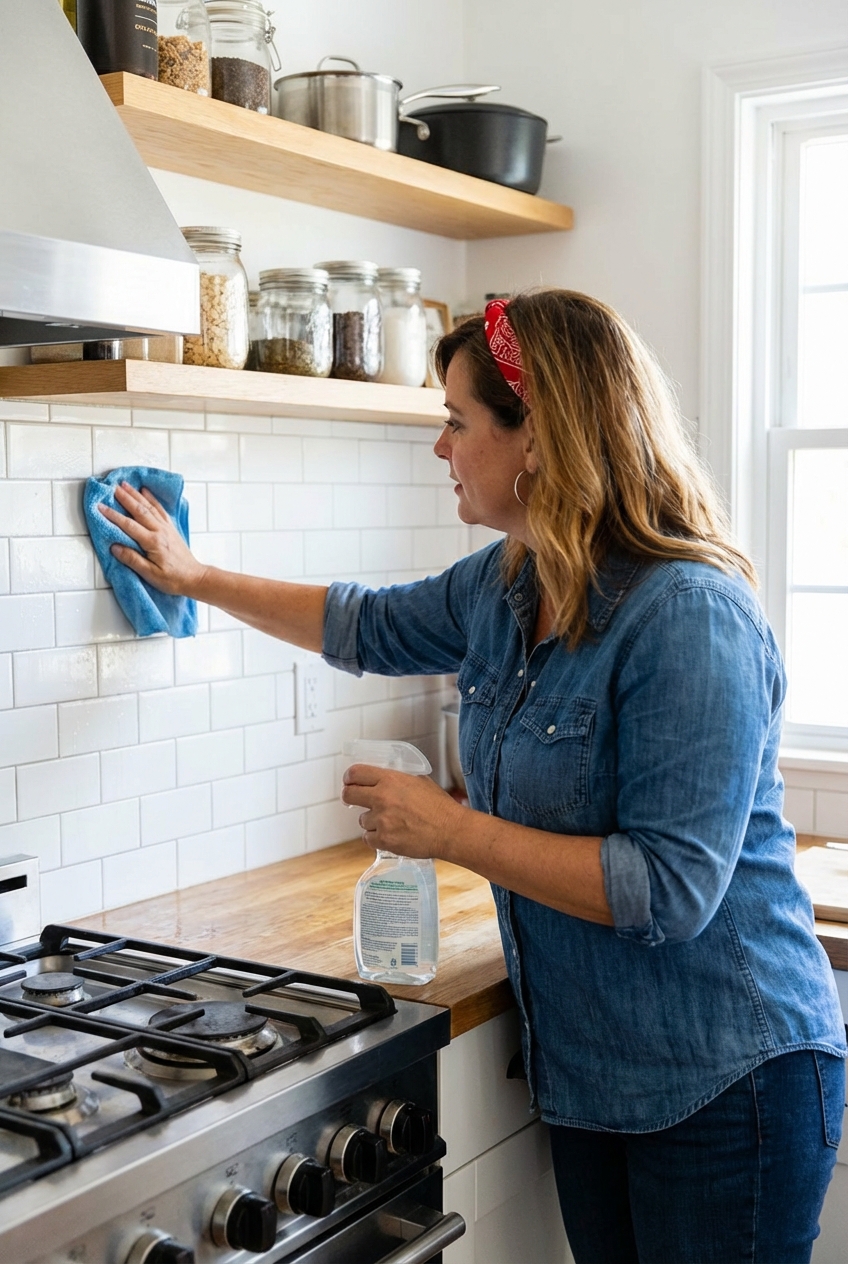
In my experience, it works best on greasy, washable surfaces like sealed countertops, stovetops, range hoods, cabinet fronts (test first), appliance exteriors, sink basins, trash can lids, and sealed tile backsplash. Always spot-test first, especially on painted cabinets and specialty finishes.

What should I not clean with it?

Avoid unsealed stone and delicate finishes. Specifically:

  • Natural stone like marble, limestone, and travertine: vinegar (acid) can etch and dull.
  • Some painted, coated, or specialty finishes: alcohol can dull or haze. Spot-test.
  • Waxed wood, unfinished wood, and unsealed surfaces: can stain or strip.
  • Screens and electronics: skip it.

Do I need to rinse after using it?

For general kitchen surfaces, wipe with a damp cloth after. For food-contact surfaces (cutting boards, counters where you prep food, high chair trays), follow with a clean water wipe and let dry. I do not use this as a final step on cookware or dishes. It is a cleaner, not a dishwashing rinse.

Can I mix this with other cleaners?

No. Do not combine with bleach, ammonia products, or other cleaners in general. Keep it simple and label it clearly.

Why is my mixture cloudy or separating?

Normal. Soap plus water plus alcohol can look cloudy, and vinegar can encourage separation. Gently tilt and roll the bottle before spraying.

Is lemon essential oil or lemon extract necessary?

No. They are optional for scent. Essential oils can irritate sensitive skin and can affect some plastics or finishes, so keep the amount low and avoid overspraying delicate surfaces. Lemon extract varies by brand and is often alcohol-based. Use a tiny amount or skip it if you want truly no-fuss.

I love cooking, but I am not the guy who wants to spend his whole night scrubbing. The first time I made a DIY dish spray, it was because I had just finished a greasy, glorious dinner and realized my cleanup energy was already gone. I wanted something that made the mess feel manageable.

This tangy, bright version is what stuck. It smells like you actually opened a window, even if you did not. A few mists on a splattered stovetop, a quick wipe, and suddenly the kitchen feels like a place you want to be again. That is the goal.