Mom's Best Recipes
Recipe

Signature French Toast

Golden, custardy French toast with cozy spices, crisp edges, and a quick maple butter that tastes like a weekend.

Author By Matt Campbell
4.9
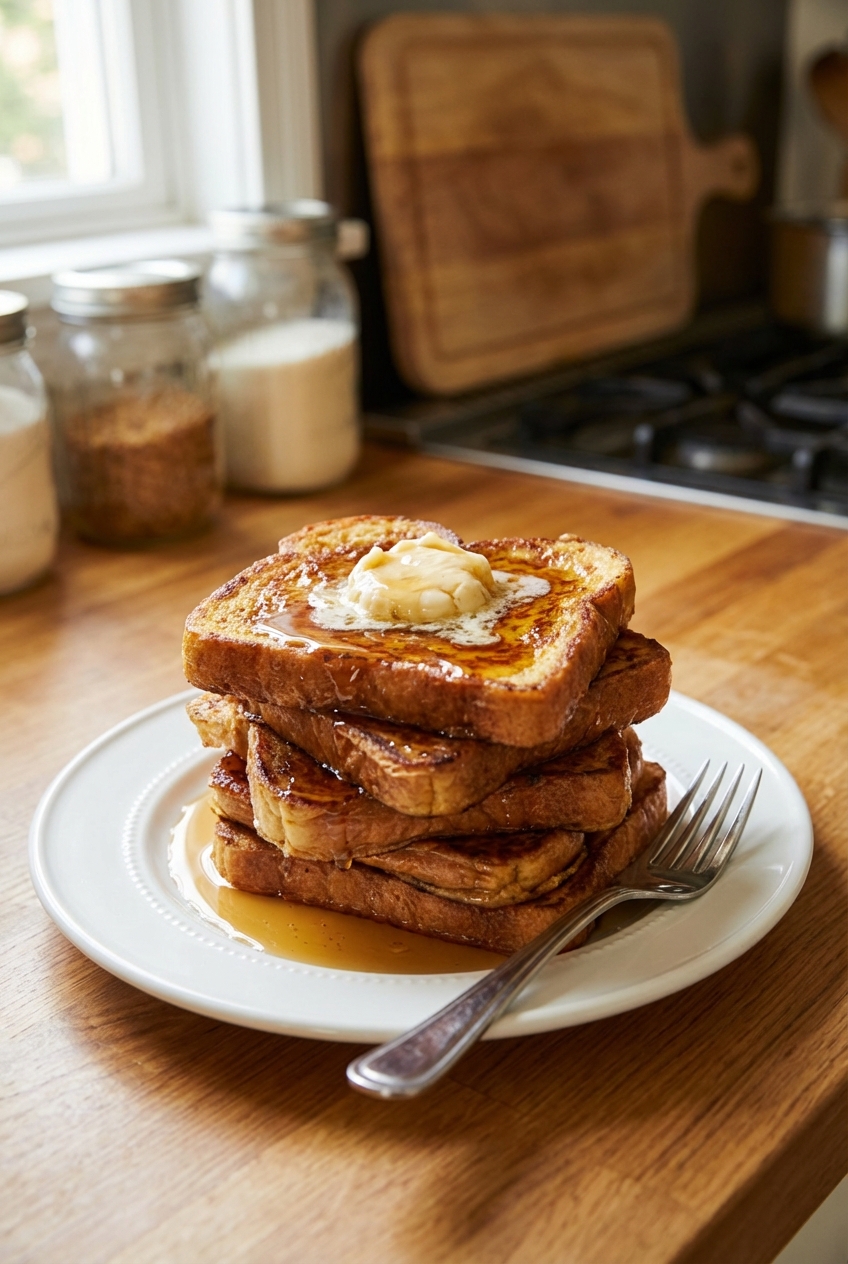
A stack of golden French toast topped with melting maple butter on a white plate with a fork nearby

If French toast has ever let you down, it was not you. It was the bread, the soak, or the heat. This signature version is the one I make when I want cusp-of-crisp edges and a middle that stays soft and custardy, not soggy and sad.

We are going warm and spiced here. Think cinnamon plus a tiny pinch of nutmeg, vanilla, and a little brown sugar to help the crust caramelize. The real secret is giving the custard a quick minute to get friendly with the bread and cooking it low enough to set the center, then finishing with a slightly hotter pan for that golden snap.
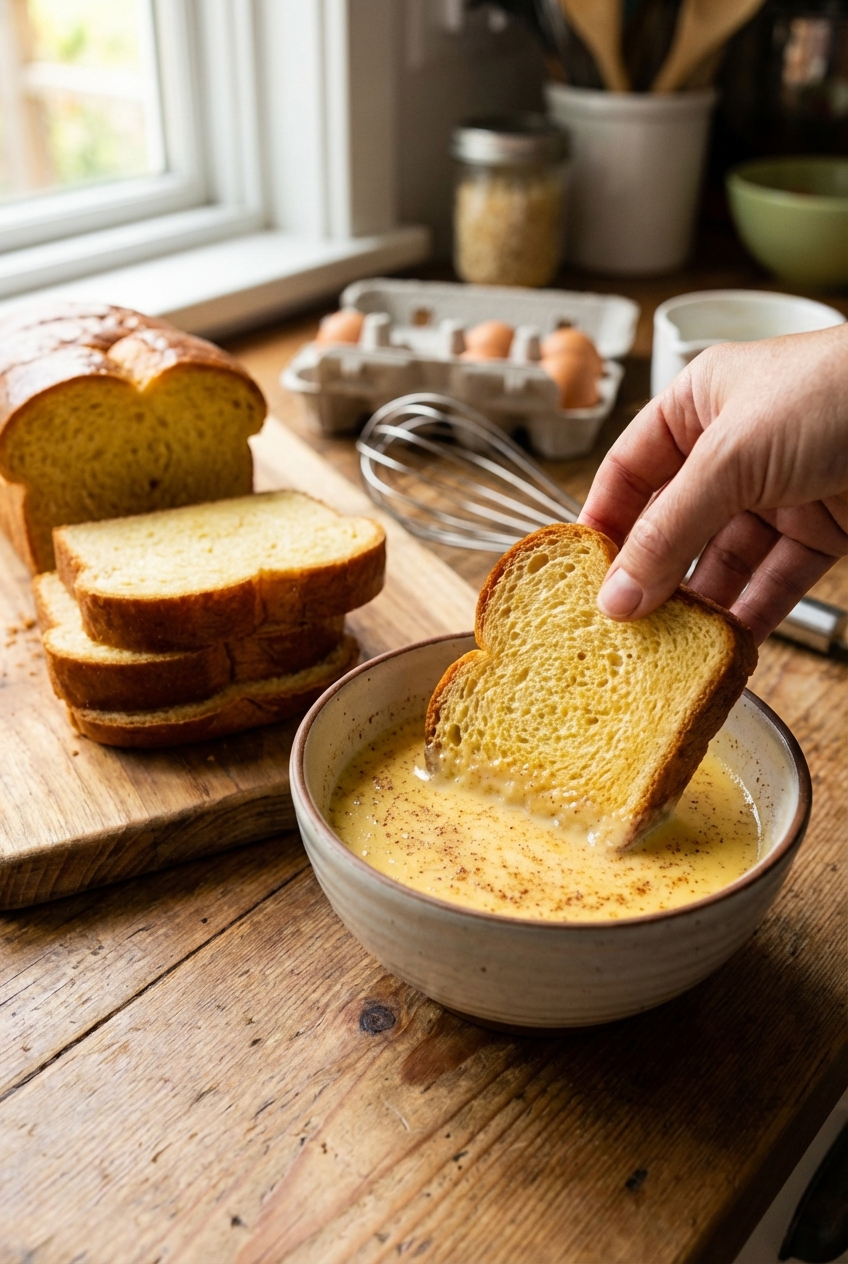
Thick slices of brioche being dipped into a bowl of spiced egg custard on a kitchen counter

Why It Works

  • Custardy middle, crisp edges: Using sturdy, slightly stale bread and a thicker custard that clings instead of pooling.
  • Balanced spice: Cinnamon and nutmeg give warmth without tasting like a candle aisle.
  • No sog zone: A short soak plus a brief rest lets the custard absorb evenly before it hits the pan.
  • Golden crust every time: Butter for flavor, a touch of neutral oil for higher heat, and steady medium heat so the inside cooks before the outside burns.

Pairs Well With

Storage Tips

How to Store Leftover French Toast

  • Fridge: Cool completely, then store in an airtight container with parchment between slices for up to 3 days.
  • Freezer: Freeze slices in a single layer on a sheet pan until firm, then transfer to a freezer bag with parchment between slices for up to 2 months.
  • Reheat (best texture): Pop in a 375°F oven for 8 to 12 minutes (from fridge) or 12 to 16 minutes (from frozen), flipping once. A toaster works too for thinner slices.
  • Microwave: It will reheat fast, but you will lose the crisp edges. If you must, microwave briefly, then finish in a pan for 1 minute per side.

Common Questions

Common Questions

What bread is best for French toast?

Brioche, challah, or Texas toast are the easiest wins. You want something thick and sturdy. If your bread is super fresh, lightly toast it first or leave it uncovered for an hour so it drinks the custard without collapsing.

Why is my French toast soggy?

Usually one of three things: the bread is too thin, the pan is not hot enough, or the slices are soaked too long. Use 3/4 to 1 inch slices, preheat the pan, and keep the soak short. Let excess custard drip off before cooking.

Can I prep the custard ahead of time?

Yes. Whisk the custard, cover, and refrigerate up to 24 hours. Whisk again right before dipping because the spices like to settle.

How do I keep French toast warm for a crowd?

Keep cooked slices on a wire rack set over a sheet pan in a 200°F oven. Do not stack them, or the steam will soften those crisp edges you worked for.

Can I make it dairy-free?

Yep. Swap in unsweetened oat milk (or almond milk) and use a plant-based butter. The texture stays great, especially with thicker bread.

I started making French toast as a “use up the bread” move, which is basically how half of my favorite recipes begin. The first versions were fine, but fine is not the goal at breakfast. I wanted the kind you get at a diner where the edges crackle a little and the middle tastes like warm vanilla custard. This is the version that finally clicked for me: thick bread, a properly seasoned soak, and a pan that does not rush. It is low drama, high reward, and it makes your kitchen smell like you have your life together even if you absolutely do not.