What temperature should baked salmon be?
The most foolproof way is a thermometer. For tender, flaky salmon with a slightly buttery center, aim for 125°F to 130°F in the thickest part, then rest 2 minutes (carryover usually adds about 2°F to 5°F). If you prefer it more well done, pull it at 135°F.
Food safety note: The FDA recommends cooking fish to 145°F. That is the official guidance. Many home cooks and restaurants choose lower temps for a moister texture. Use your judgment and cook to the temperature you are comfortable with.
How long do I bake salmon at 400°F?
For individual fillets, plan on 10 to 14 minutes, depending on thickness. Thick, center-cut fillets take longer. Thin tail pieces cook fast, so keep an eye on them.
Should I bake salmon covered or uncovered?
Uncovered gives you better browning and less steaming. If your fillet is very lean or you are nervous about dryness, you can loosely tent with foil for the first half, then uncover to finish.
Can I use frozen salmon?
Yes, but for best texture, thaw overnight in the fridge and pat dry before seasoning.
If you bake from frozen, remove any ice glaze you can (a quick rinse helps, then pat dry), and add roughly 5 to 10 minutes, depending on thickness. Expect more liquid on the pan. The thermometer is your best friend here.
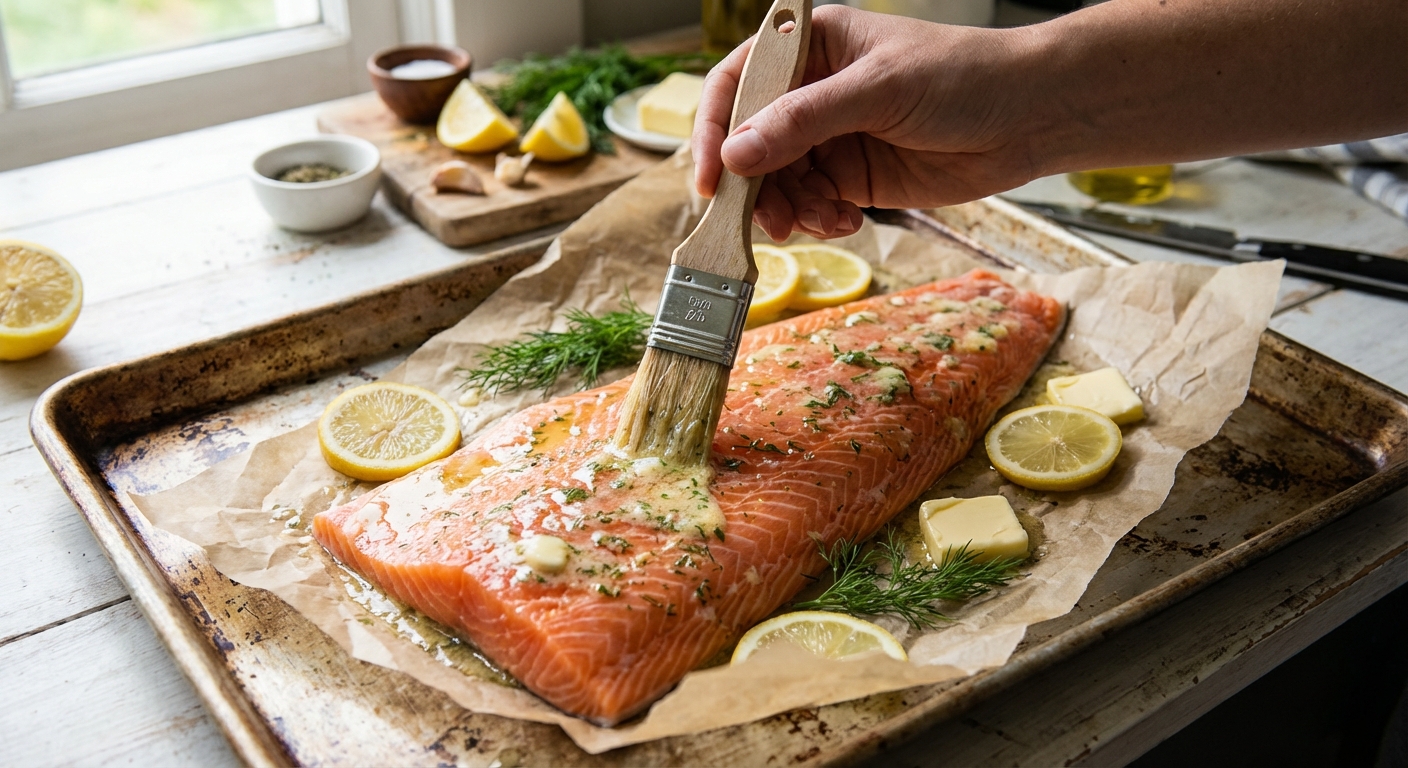
What if I do not have butter?
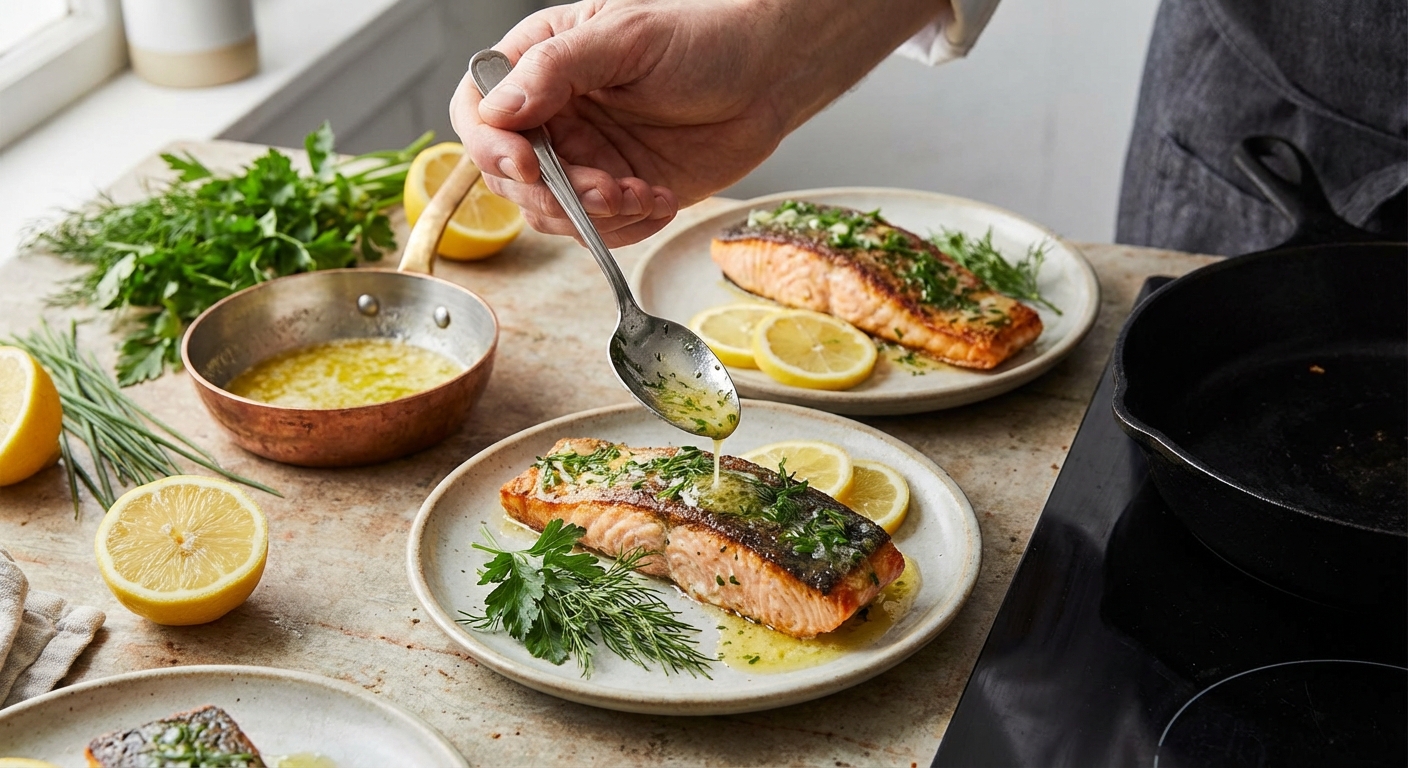
Olive oil works great. You will lose a little of that rich finish, so consider adding a bit more lemon zest and a pinch of extra salt to compensate.
How do I know when salmon is done without a thermometer?
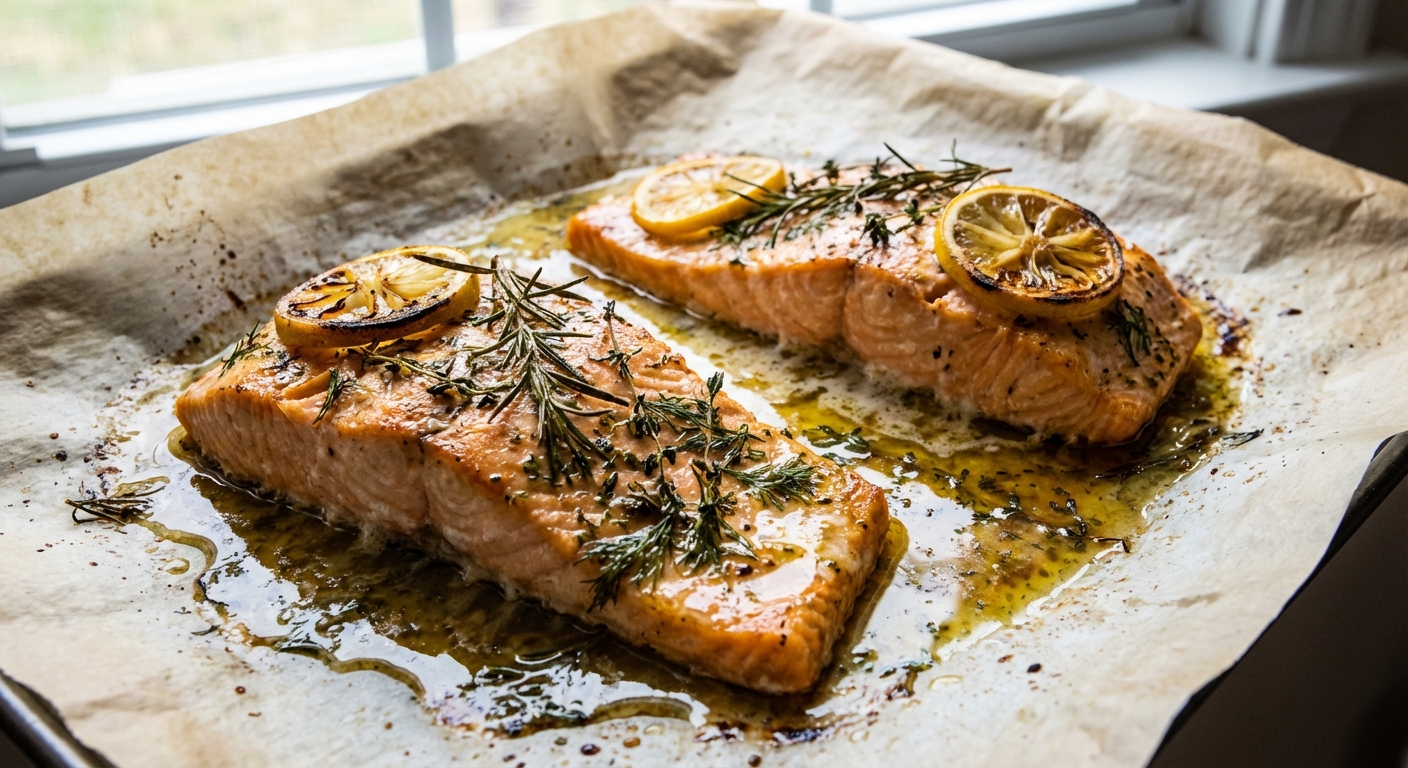
Look for salmon that flakes easily with a fork and has turned opaque on the outside, with a slightly more translucent center if you like it tender. If white stuff (albumin) is pouring out aggressively, it is a sign the fish is cooking past its comfort zone.