Mom's Best Recipes
Recipe

Simple Hamburger Bun Recipe: Juicy & Tender

Soft, golden homemade buns with a tender crumb and just enough structure to hold a juicy burger without falling apart. No fancy ingredients, just reliable results.

Author By Matt Campbell
4.8
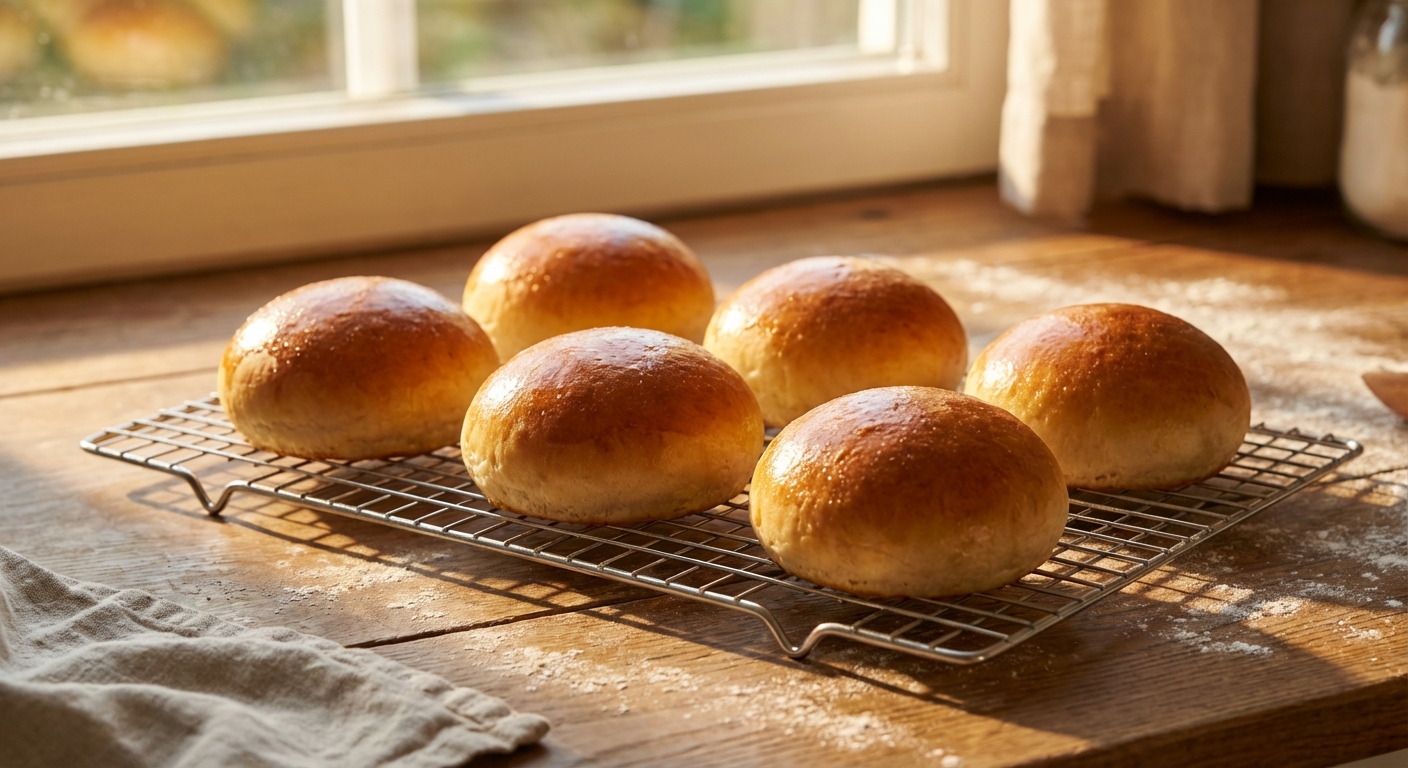
Six glossy homemade hamburger buns cooling on a wire rack on a wooden counter in soft afternoon light

Store-bought buns do their job, but they rarely show up for a truly juicy burger. You know the scene: the bottom bun turns into a sponge, the top bun cracks, and suddenly you are basically eating a salad with your hands.

These homemade hamburger buns are my fix for that. They bake up soft and tender, with a lightly chewy edge that can handle sauces, patties, and all the “just one more topping” decisions. They are enriched with milk and butter for that cozy pull-apart vibe, and they stay pillowy even after a quick toast.

If you can stir, knead a little, and wait for dough to rise, you can absolutely make these. And yes, you should taste test one warm with butter. It is basically the chef tax.
Why It Works

  • Tender, not dry: Milk and butter keep the crumb soft, while bread flour (or all purpose with a small tweak) gives enough strength to hold fillings.
  • Moisture resistant in the best way: A tight, fluffy crumb helps, and toasting the cut sides creates a simple barrier against sauces and burger juices.
  • Beginner-friendly dough: The dough is slightly tacky but easy to handle, and the shaping is forgiving.
  • Reliable rise and bake: One egg wash for color, optional sesame seeds for vibes, and an even bake from an enriched dough that browns beautifully.

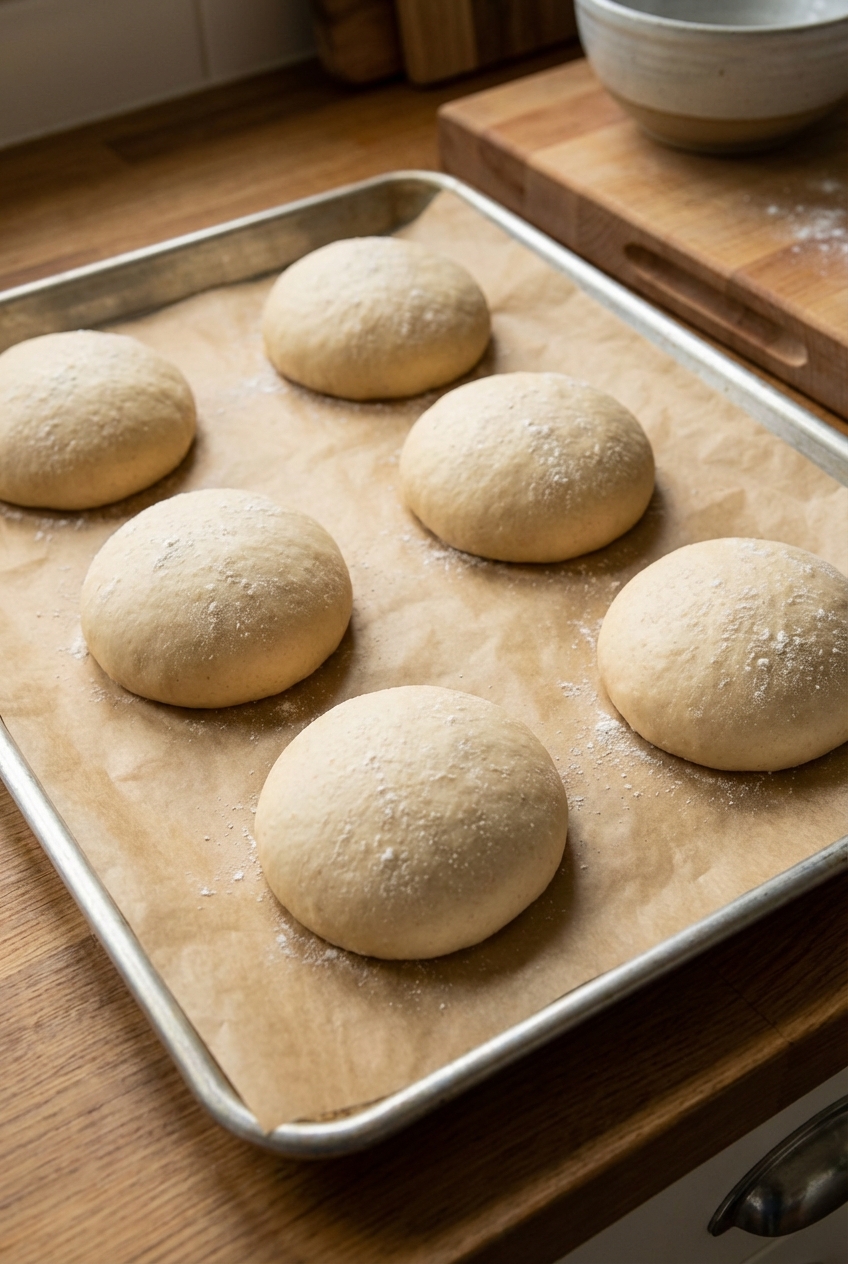
Hamburger bun dough portions shaped into smooth balls on a parchment-lined baking sheet before rising

Pairs Well With

  • Smash burgers with crispy edges and melted cheese
  • BBQ pulled chicken sandwiches
  • Classic sloppy joes
  • Grilled portobello burgers with garlic mayo

Storage Tips

Room temperature (best for 1 to 2 days)

Let buns cool completely, then store in a sealed bag or airtight container. If your kitchen is very warm, keep them out of sunlight so they do not sweat.

Freeze (best for longer storage)

Slice buns in half once fully cooled, wrap, and freeze for up to 2 months. Slicing first means you can toast straight from frozen without thinking too hard.

How to refresh

  • Toaster: Best for burger night. Toast the cut sides until lightly golden.
  • Oven: Warm whole buns at 325°F for 6 to 8 minutes. If they feel a little dry, wrap in foil for the first half.

Heads up: Refrigeration dries bread out faster. Freezer is the better move.

Common Questions

Can I use all purpose flour instead of bread flour?

Yes. Bread flour gives a slightly chewier bun that holds up well to juicy burgers. If using all purpose, start by holding back 1 to 2 tablespoons of the milk and add it only if the dough feels dry. Different brands absorb differently, so dough feel is the goal.

Why is my dough so sticky?

This dough should be slightly tacky. If it is unmanageable, add flour 1 tablespoon at a time while kneading. Too much flour makes dry, dense buns, so go slow.

Do I need a stand mixer?

Nope. A bowl, a spoon, and 8 to 10 minutes of hand kneading works. The dough should become smooth and elastic, and it should pass a simple windowpane test when stretched gently.

How do I make them more “squishy” like classic diner buns?

Use all purpose flour, do not over flour the dough, and bake until just golden. Overbaking is the #1 squish killer. Also, brushing warm buns with a little melted butter softens the crust.

Can I make these ahead?

Yes. Bake the day before, cool, and store airtight. For peak burger performance, split and toast right before serving.

Can I make sliders instead of full size buns?

Absolutely. Divide into 12 pieces, bake a few minutes less, and keep an eye on color.

Why did my buns turn out dense?

Usually one of three things: too much flour, not enough kneading, or the dough did not rise long enough. The dough should look puffy (not just “bigger-ish”) before you bake. Also make sure your oven is fully preheated.

Why are the tops wrinkly after baking?

That can happen if the buns overproof on the second rise. Next time, bake when they look puffy and spring back slowly when you gently press one with a fingertip.

The first time I tried to “upgrade” burger night, I did the whole thing: juicy patties, sharp cheddar, bright sauce, pickles that actually snapped. Then I grabbed a bag of sad buns and watched my masterpiece collapse like it had given up on life.

So I started making buns at home, chasing that sweet spot: soft enough to sink your teeth into, sturdy enough to survive a loaded burger, and golden on top like it knows it is the main character. These are the buns I keep coming back to, because they are simple, reliable, and they make even a basic weeknight burger feel like you planned ahead.