Do I need to boil the water?
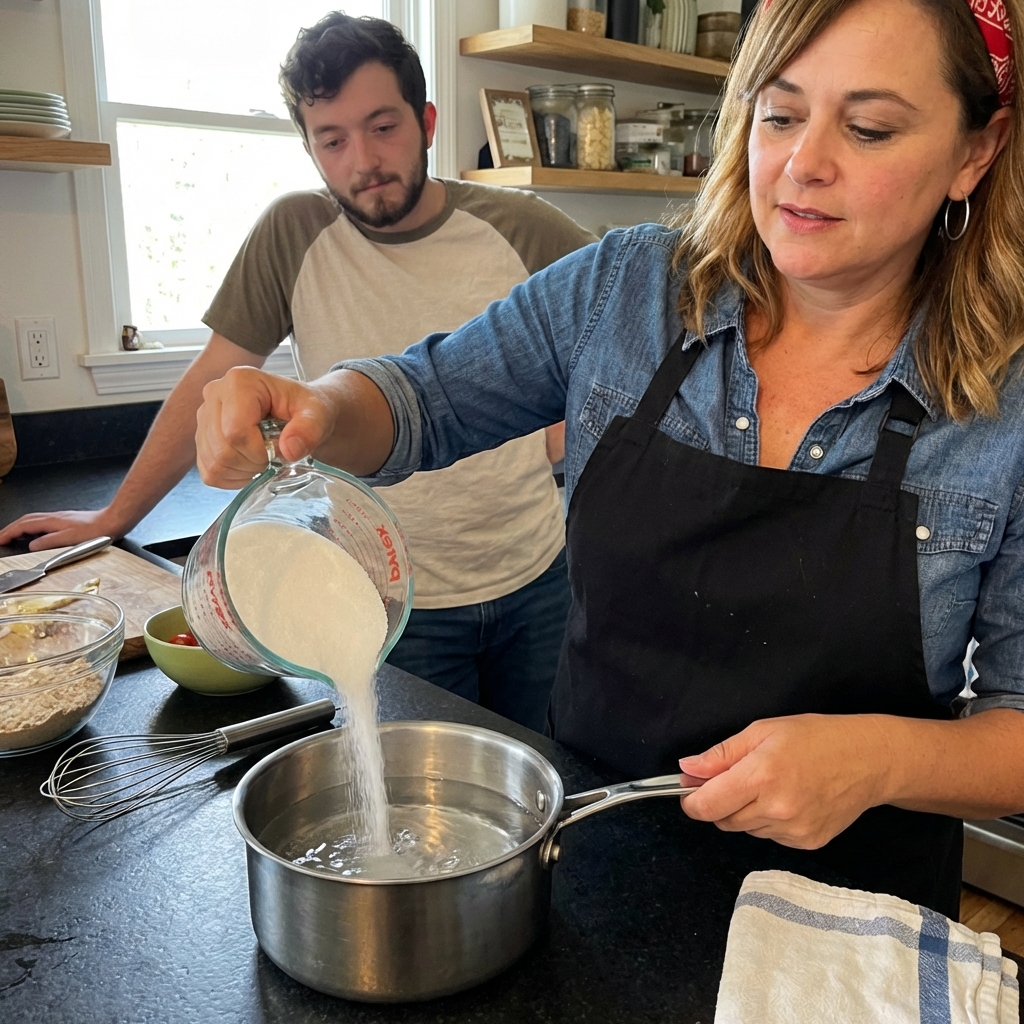
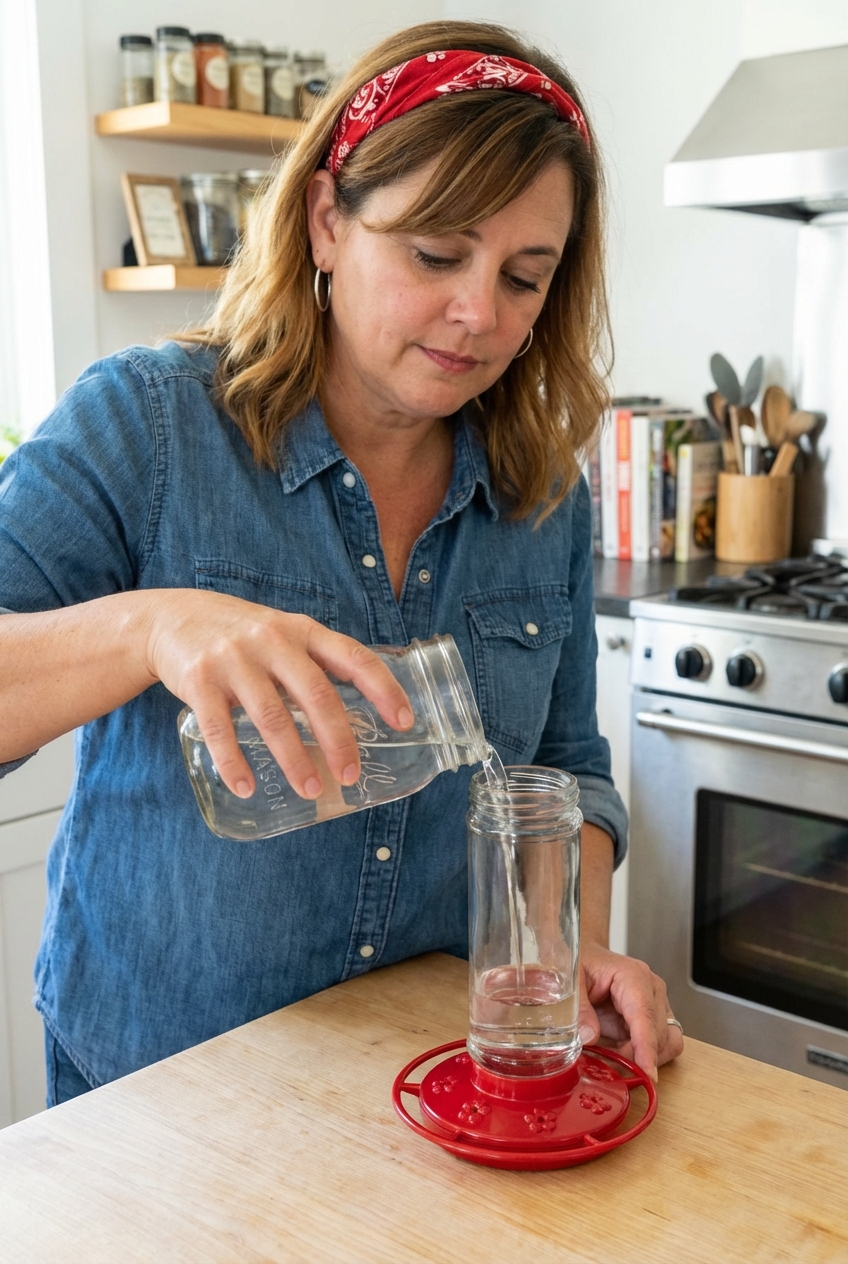
You do not have to do a rolling boil. Warming the water helps the sugar dissolve fast, and a brief simmer can help reduce microbes. That said, the biggest safety wins are a clean feeder and frequent nectar changes. Let it cool completely before filling the feeder.
What is the correct sugar-to-water ratio?
For everyday hummingbird nectar, most experts recommend 1 cup white sugar to 4 cups water. Stir until fully dissolved. A stronger mix (like 1:3) is sometimes used in specific situations like migration or cold snaps, but it is best to stick with the standard ratio unless local wildlife guidance suggests otherwise.
Can I use brown sugar, honey, or coconut sugar?
No. Stick to plain white granulated sugar. Honey can ferment quickly and may promote dangerous mold growth. Brown sugar and other sweeteners contain minerals and compounds that are not recommended for hummingbirds.
Should I add red food coloring?
No. Skip it. It is not necessary and it is best to keep nectar as simple as possible. A feeder with red accents is enough to catch their eye.
What kind of water should I use?
Tap water is usually fine. If your water has a strong taste or smell, using filtered water can help. Avoid using softened water if it seems extra salty or off tasting.
How often should I clean the feeder?
Ideally, every time you refill. At minimum, clean it when you change the nectar, especially in hot weather. Use hot water and a bottle brush. If you need a deeper clean, a mild vinegar and water soak works well, then rinse thoroughly.
Why is my nectar cloudy?
Cloudiness usually means it is starting to spoil or ferment. Dump it, scrub the feeder, rinse well, and refill with fresh cooled nectar.