Mom's Best Recipes
Recipe

Easy Pan-Seared Chicken Breast

A no-stress, stovetop chicken breast that stays juicy and tender with crisp edges, a quick pan sauce, and zero fancy ingredients.

Author By Matt Campbell
4.8
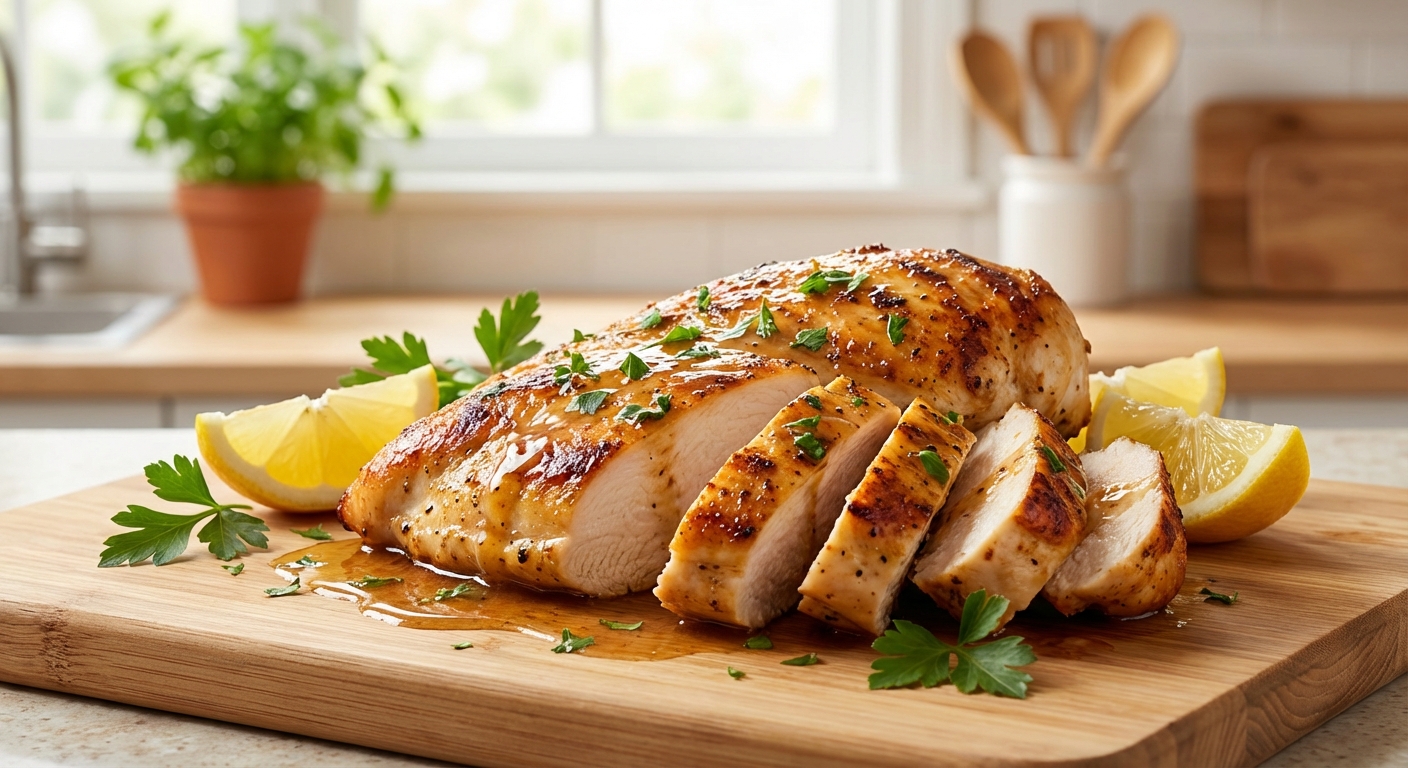
A golden-brown seared chicken breast sliced on a cutting board with a glossy pan sauce and lemon wedges in a bright home kitchen

Chicken breast gets a bad rap because it is easy to overcook. One minute it is fine, the next it is giving “chew toy.” This recipe is my weeknight fix for that: a quick dry brine (aka salt it early), a fast sear for crisp edges, then a gentle finish so the center stays tender.

It is also built for real life. No obscure ingredients, no oven gymnastics, and no guessing games. You will use a skillet, a lid, and a couple of smart little moves that make the difference between dry chicken and the kind you actually want to eat again tomorrow.
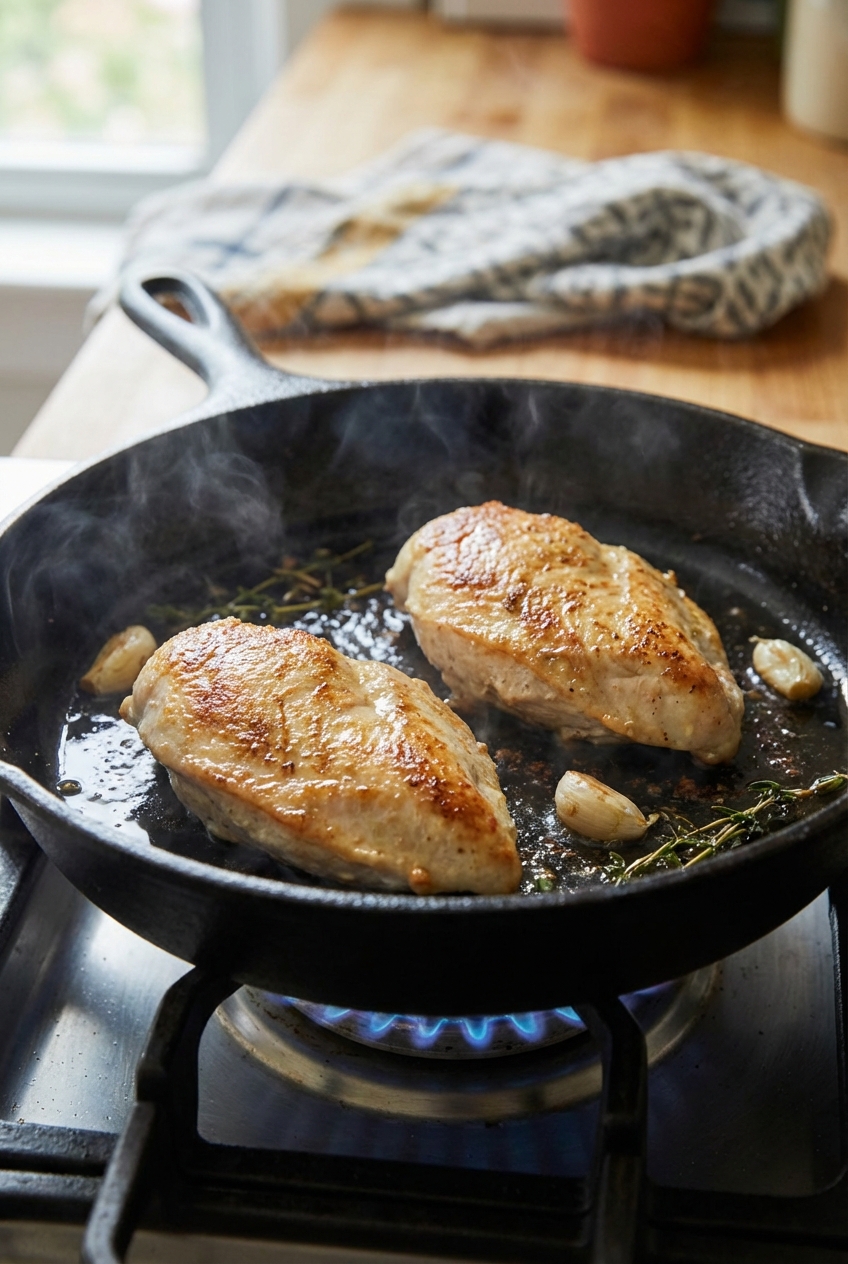
A cast iron skillet with two chicken breasts browning in a light sheen of oil with a few garlic cloves nearby

Why It Works

  • Juicier chicken with minimal effort: Salting ahead of time helps the meat hold onto moisture as it cooks.
  • Crisp, golden edges: A hot skillet plus patting the chicken dry equals real browning, not pale steaming.
  • No dry, chalky center: You finish with gentle heat and a rest, letting carryover cooking do the work.
  • Bonus pan sauce: A quick splash of broth and lemon lifts all the browned bits into something you will want to spoon over everything.

Pairs Well With

Storage Tips

Refrigerate: Cool chicken completely, then store in an airtight container for up to 4 days.

Freeze: Freeze sliced or whole breasts in a freezer bag with as much air pressed out as possible for up to 3 months. If you can, freeze with a spoonful of the sauce to help protect it from drying out.

Reheat without drying it out:

  • Skillet (best): Add a splash of broth or water, cover, and warm over low heat until just hot.
  • Microwave (still fine): Slice first, add a teaspoon of water or sauce, cover loosely, and heat in short bursts.
  • Cold uses: Slice for salads, wraps, grain bowls, and quick chicken sandwiches.

Common Questions

How do I keep chicken breast from drying out?

Three things: salt it ahead of time, do not overcook it, and let it rest. Salt helps the meat retain moisture, and resting lets juices redistribute so they do not spill out when you slice.

What internal temperature should chicken breast be?

For safety, chicken is done at 165°F. For the juiciest results, I pull it around 160 to 162°F and let it rest 5 to 10 minutes to coast up to 165°F.

Can I use frozen chicken breasts?

Yes, but thaw first for even cooking. Thaw overnight in the fridge, or use a sealed bag in cold water (change the water every 30 minutes).

Why pound chicken breasts?

Thickness is the enemy of even cooking. Pounding to an even thickness helps the whole piece finish at the same time, so you do not get dry edges and a barely-done center.

Can I bake this instead?

You can, but this recipe is designed for stovetop control and better browning. If you want to bake, sear first, then finish in a 400°F oven until it hits 160 to 162°F, then rest.

I used to treat chicken breast like a chore. It was the thing you cook because you are “being good,” not because it is exciting. Then I started chasing the small wins: salt it early, get the pan truly hot, and stop cooking it like it owes me money. Add a quick lemony pan sauce and suddenly this is not sad protein. It is the kind of dinner you make on autopilot that still tastes like you tried.