Mom's Best Recipes
Recipe

Singapore Curry Noodles

Cantonese takeout style rice vermicelli stir-fried with a savory curry sauce, crunchy veg, and your choice of shrimp, chicken, or char siu.

Author By Matt Campbell
4.8
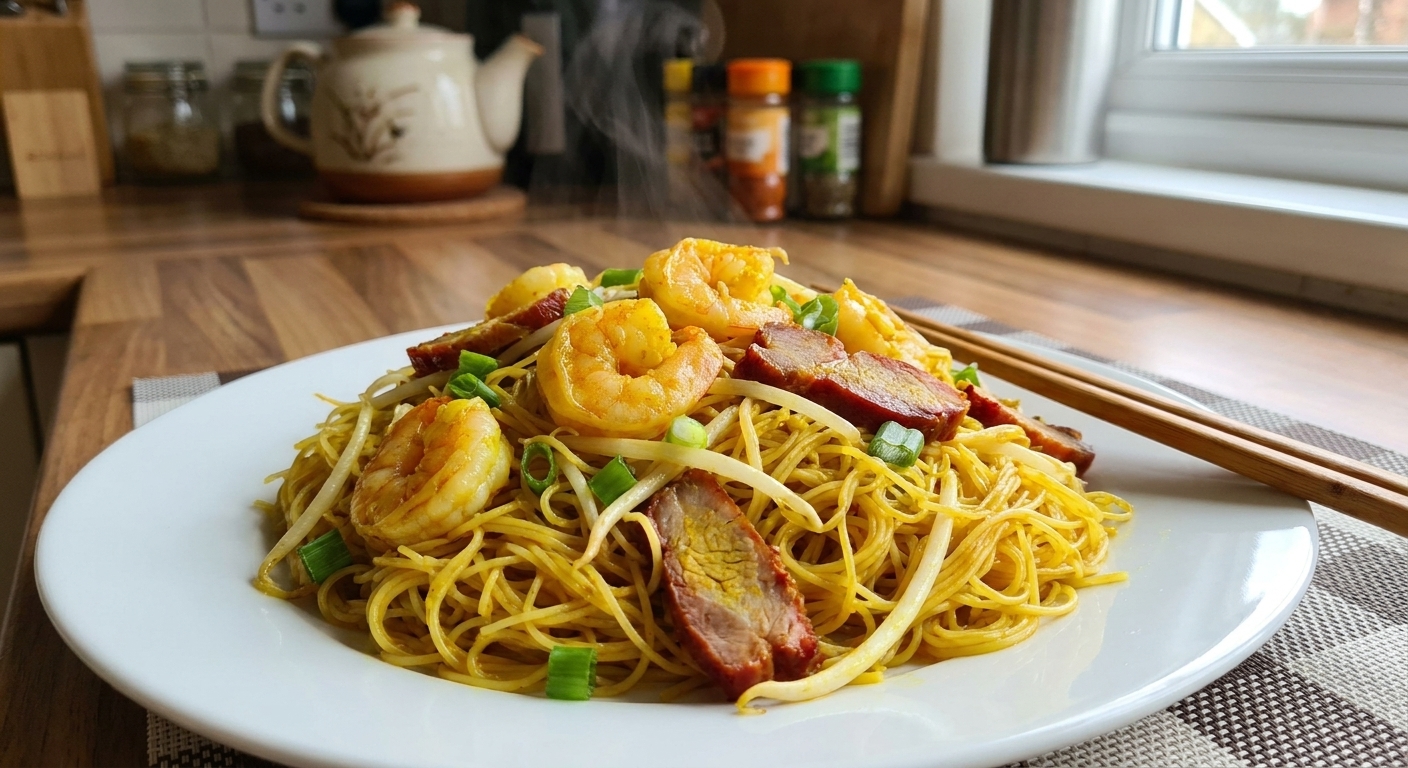
A steaming plate of Cantonese takeout style Singapore curry noodles with rice vermicelli, pink shrimp, sliced char siu, bean sprouts, and scallions in warm yellow curry sauce, photographed on a kitchen counter

If you have ever opened a takeout clamshell and found a mountain of golden noodles that smell like curry and garlic, you already know the vibe. Singapore curry noodles are the kind of dish that makes a Tuesday feel like you did something with your life. Bright, savory, a little spicy if you want it, and loaded with crisp vegetables and whatever protein you have on hand.

Quick note because the name loves to confuse people: this is a Cantonese takeout classic, widely understood as a dish popularized in Hong Kong and Cantonese restaurants, not a dish you would typically find as a national staple in Singapore. Think fast stir-fry technique plus curry powder, rice vermicelli, and a sauce that clings without turning the noodles into mush.

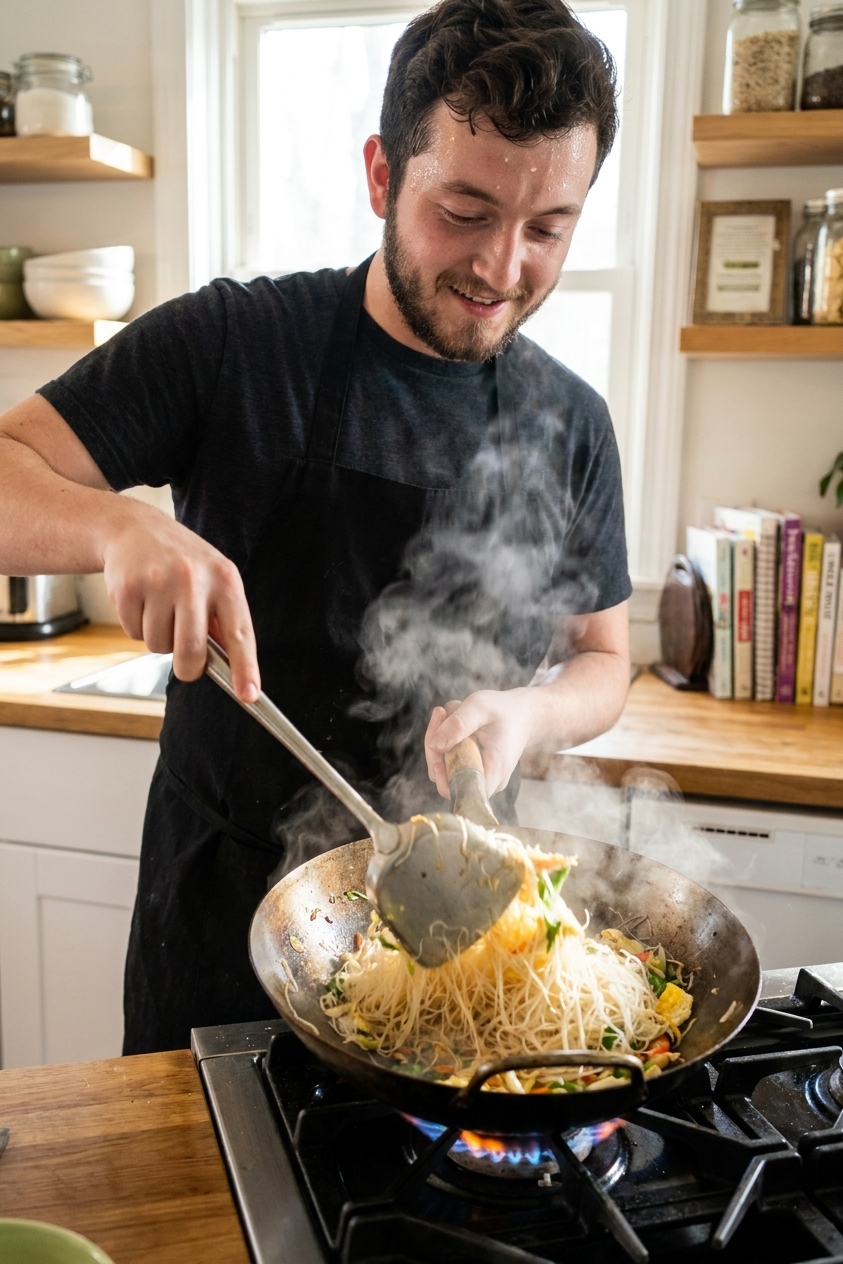
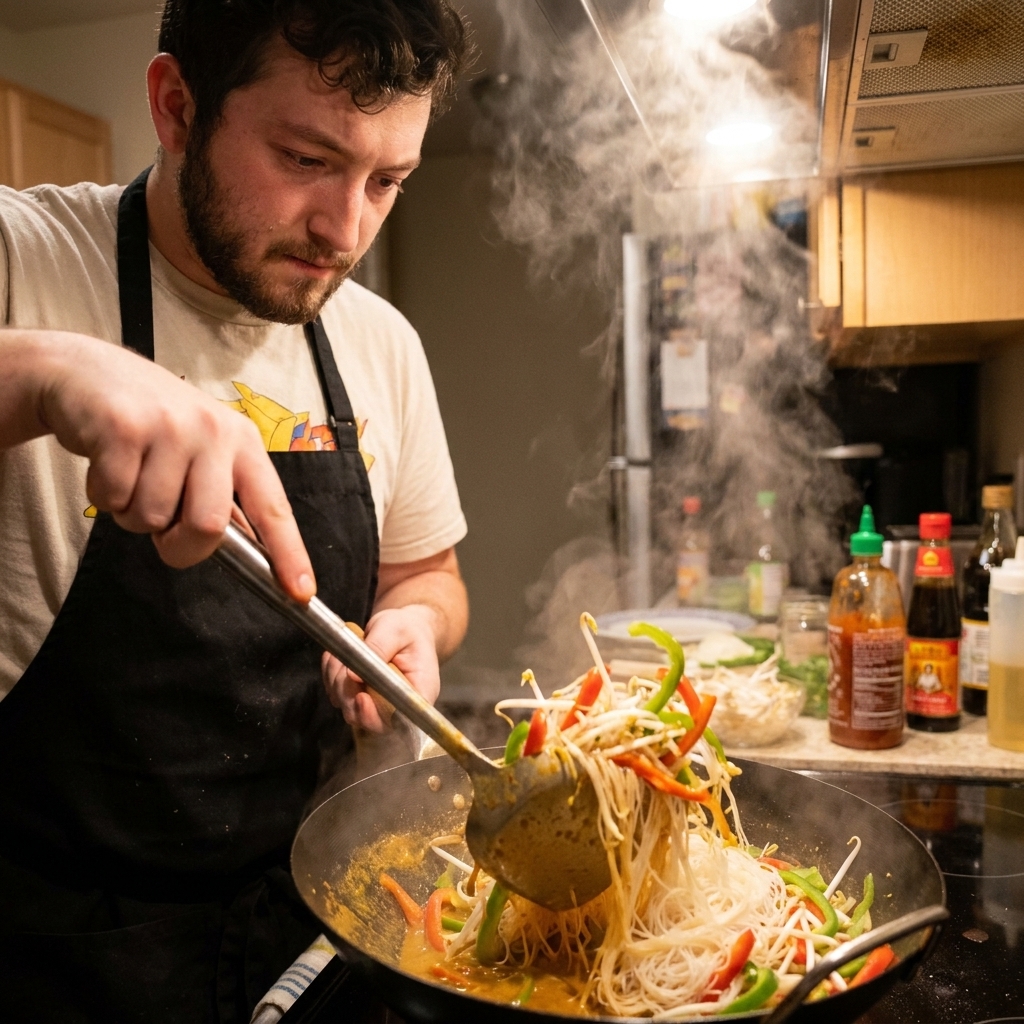
A home cook stir-frying thin rice vermicelli in a carbon steel wok over high heat with a metal spatula, steam rising in a bright kitchen

Why It Works

  • Real takeout texture: We soak vermicelli just until flexible, then finish in the wok so the noodles stay springy, not soggy.
  • A curry sauce that actually sticks: Curry powder is whisked into a quick mix of soy, stock, and oyster sauce, then hits the hot wok and turns glossy fast without turning the noodles to mush.
  • Choose your own protein adventure: Shrimp, chicken, char siu, tofu, or leftover roast pork all work, and the timing tells you exactly when to add each.
  • Crisp veggies, not steamed sadness: Quick high heat stir-fry keeps peppers and bean sprouts snappy.

Pairs Well With

Storage Tips

Storage and Reheating

  • Fridge: Store in an airtight container for up to 3 days. Vermicelli keeps best when cooled quickly.
  • Reheat (best): Wok or skillet over medium-high heat with 1 to 2 tablespoons water or stock. Toss constantly until hot and glossy again.
  • Microwave: Add a splash of water, cover loosely, and heat in 30-second bursts, tossing between. It works, but the skillet keeps the noodles bouncier.
  • Freezing: Not my favorite. Rice vermicelli can break and go soft when thawed. If you must, freeze up to 1 month and reheat in a skillet from thawed.

Meal prep tip: Prep the sauce and chop the veggies ahead, but cook the noodles and stir-fry right before eating for the closest takeout texture.

Common Questions

Common Questions

Is this actually from Singapore?

Not in the “national staple” way the name suggests. Singapore noodles (星洲炒米) are widely understood as a dish popularized in Hong Kong and Cantonese restaurants, and it is now a common item on Chinese takeout menus internationally. The curry powder plus rice vermicelli combo is the signature.

What makes Singapore curry noodles different from lo mein?

Lo mein usually uses wheat egg noodles and a soy-forward sauce. It is typically tossed after boiling, though some restaurants do stir-fry it too. Singapore curry noodles typically use rice vermicelli or thin rice noodles and get their signature flavor and color from curry powder plus savory sauces like soy and oyster sauce. The texture is lighter and more springy, and the curry aroma is the headline.

How is this different from pad thai?

Pad thai is sweet-tangy and nutty, built with tamarind, fish sauce, palm sugar, and often peanuts. Singapore curry noodles are savory and curry-forward, usually no tamarind, no peanut finish, and the sauce leans soy, stock, and aromatic curry spices.

Do I need a wok?

No, but it helps. A large skillet works great. The key is space so moisture can evaporate instead of steaming the noodles.

What curry powder should I use?

Any standard yellow curry powder works, but blends vary a lot. Some are heavy on turmeric, some are salty, and some are spicier (Madras-style often brings more heat). If you are unsure, start with 1 1/2 tablespoons, then add more at the end to taste. If yours is mild, add chili garlic sauce or a pinch of cayenne.

My vermicelli keeps clumping. How do I fix it?

Two moves: soak just until flexible, then drain well. In the wok, add noodles in loose handfuls and toss with sauce immediately. If it is already clumped, sprinkle in a tablespoon or two of hot water or stock and keep tossing until it loosens.

Is Singapore curry noodles supposed to be spicy?

It can be, but it does not have to be. Many takeout versions are mild. You control heat with chili garlic sauce, sambal, or fresh chiles.

Any allergy notes?

Common allergens here include soy (soy sauce), shellfish (shrimp, and often oyster sauce), and fish (fish sauce). For gluten, use gluten-free tamari and confirm your oyster sauce label, since some contain wheat.

The first time I made Singapore curry noodles at home, I got cocky and boiled the vermicelli like pasta. Instant regret. I ended up with curry-flavored noodle wallpaper. Now I treat rice noodles like they are fragile little divas: warm soak, quick drain, then straight into a screaming hot pan with a sauce that is ready before the noodles even walk in the room. When it works, it hits that takeout sweet spot where the noodles are light, the edges of the proteins get a little sear, and the whole kitchen smells like you definitely know what you are doing.