Mom's Best Recipes
Recipe

Skillet Browned Ground Beef (Not Steamed)

Get real browning, crisp edges, and deep savory flavor in under 15 minutes. This is the weeknight foundation for tacos, pasta, bowls, and meal prep.

Author By Matt Campbell
4.9
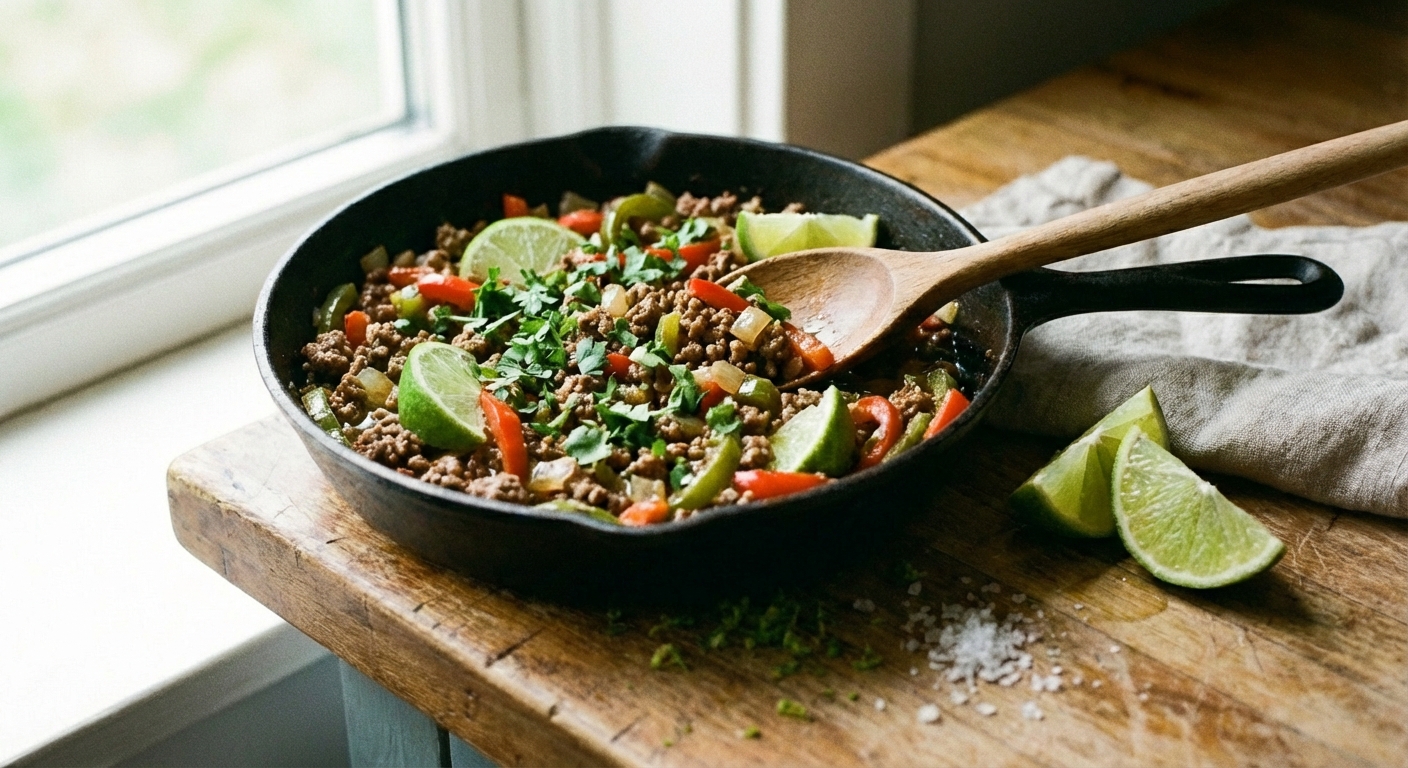
A cast iron skillet with browned ground beef in crumbles, crisp edges visible, with a wooden spoon resting in the pan on a kitchen stovetop

Ground beef should taste like beef, not like it took a lukewarm bath in its own juices. If you have ever ended up with gray, watery crumbles that somehow smell fine but taste like nothing, you did not do anything “wrong.” You just got set up by the two big culprits: too much beef in the pan and moving it too soon.

This method is my go-to for flavor-forward ground beef that actually browns. We are talking little crispy bits, a clean skillet sear, and seasoning that sticks instead of sliding off into steam. Make it once and you will start using it as your base layer for everything: tacos, sloppy joes, lasagna, rice bowls, chili, you name it.
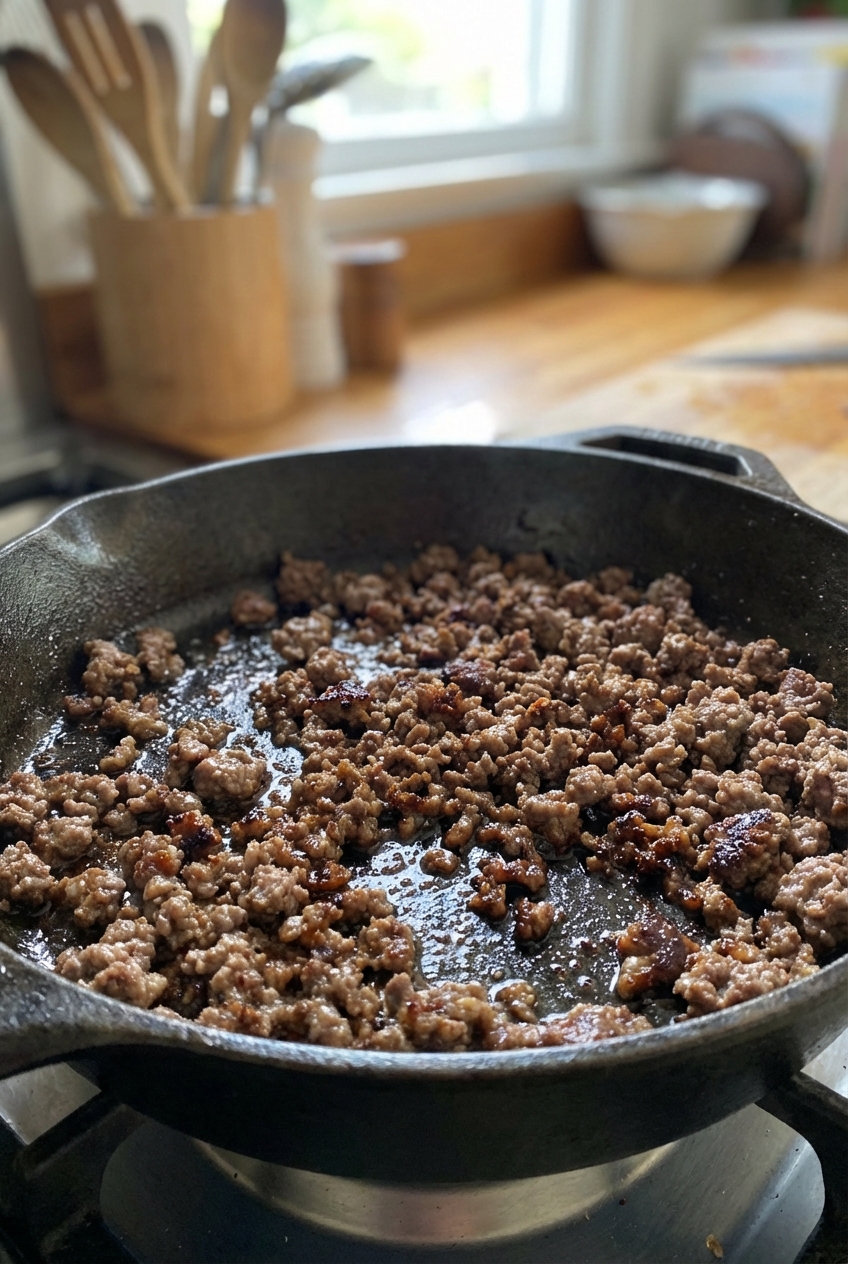
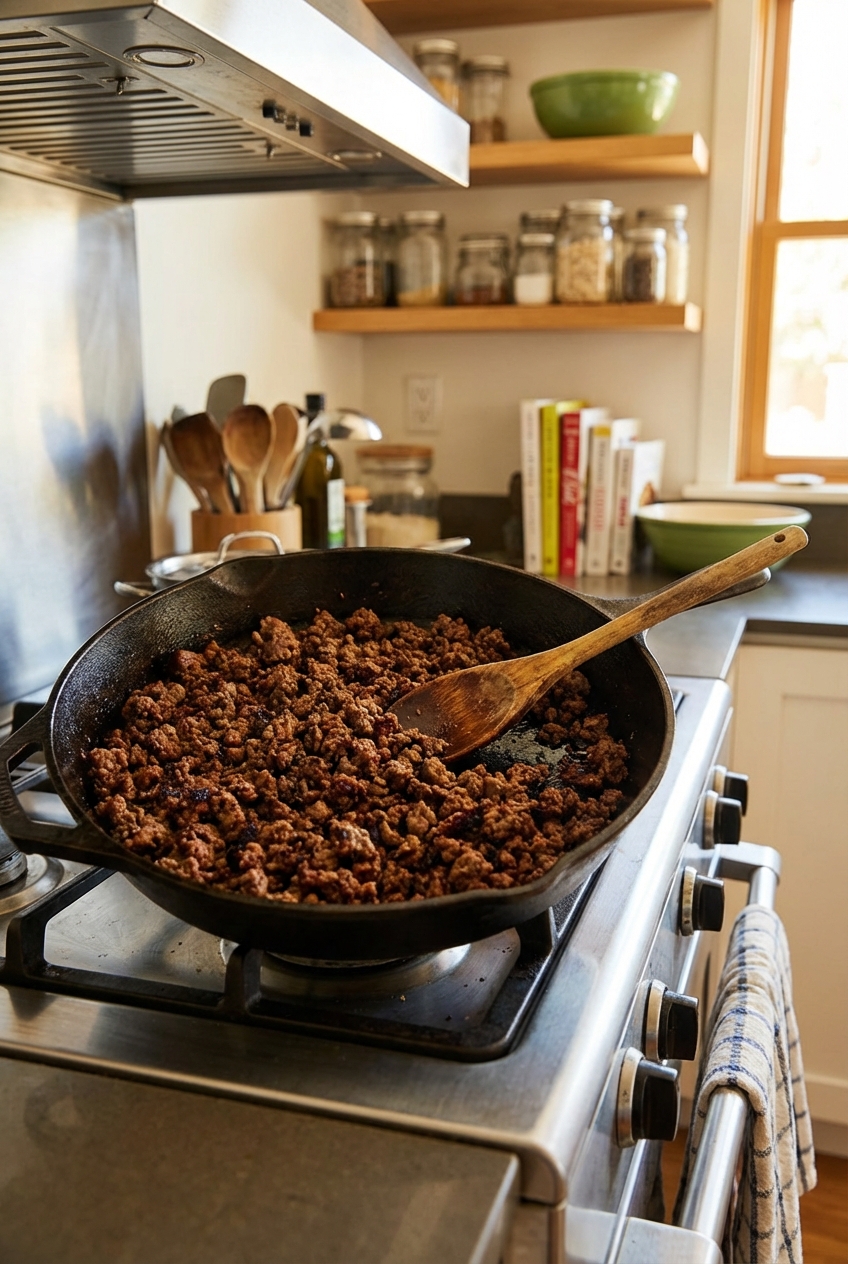
A close-up photo of browned ground beef crumbles with browned bits and a light sheen of fat in a skillet

Why It Works

  • High heat plus space equals browning. Crowded beef steams. A roomy pan and a hot surface create the Maillard reaction, which is where the savory magic lives.
  • Press, then leave it alone. Starting in a flat layer builds contact with the skillet. Waiting a few minutes before stirring lets real crust form.
  • Season after the first flip. Salt too early can pull moisture to the surface. Add it once browning has started so you keep the sizzle.
  • Optional deglaze builds instant sauce. A splash of broth, wine, or even water lifts the browned bits so nothing good gets left behind.

Storage Tips

How to Store It

  • Fridge: Cool, then store in an airtight container for up to 4 days.
  • Freezer: Freeze in flat bags or containers for up to 3 months. Flattening helps it thaw fast.
  • Reheat: Warm in a skillet over medium heat with a small splash of water or broth, just enough to loosen it. Microwave works too, but the skillet keeps the edges from going sad.
  • Meal prep tip: Portion into 1 cup servings so you can grab exactly what you need for tacos, pasta, or a quick bowl.

Common Questions

Common Questions

Why does my ground beef always turn out gray?

Gray beef usually means it steamed. The pan was not hot enough, the pan was crowded, or you stirred constantly. Use a wider skillet, preheat it, and let the beef sit untouched to brown before breaking it up.

Should I drain the fat?

It depends. For tacos, chili, and sauces, a little fat carries flavor. If there is more than about 1 to 2 tablespoons in the pan after browning, spoon off some. If you are using very lean beef, you may not need to drain at all.

Do I start with cold beef or room temp?

Cold from the fridge is fine. Just make sure the skillet is hot and you do not crowd the pan. If you have time, letting it sit out for 10 minutes can help it cook a touch more evenly, but it is not required.

What pan is best?

A cast iron or stainless steel skillet browns the best. Nonstick works in a pinch, but it typically gives you less browning.

When do I add garlic, onion, or taco seasoning?

Brown the beef first. Then push it to the sides, sauté aromatics in the center, and stir everything together. Add spice blends after browning so they toast in the fat instead of getting wet and clumpy.

How do I keep the beef in crumbles, not big chunks?

After the first brown on the bottom, break it up with a wooden spoon or a sturdy spatula. If you want very fine crumbles, a potato masher works surprisingly well.

When I first started cooking for myself, I thought “browning” ground beef meant cooking it until it was no longer pink. So I would toss it in a pan, stir like my life depended on it, and wonder why tacos tasted flat unless I drowned them in hot sauce.

The fix was almost annoyingly simple: bigger pan, hotter skillet, and a little patience. Now I treat ground beef like I treat a good sear on a steak. I press it down, let it do its thing, and only start breaking it up once the bottom has earned some color. The payoff is immediate. Suddenly your “basic” beef becomes the part people notice.

{recommendations:3} {recommendations:6}