Mom's Best Recipes
Recipe

Slow-Simmered Sunday Gravy

Cozy Italian-American tomato sauce simmered all afternoon with browned meatballs and pork until silky, rich, and spoon-coating.

Author By Matt Campbell
4.8
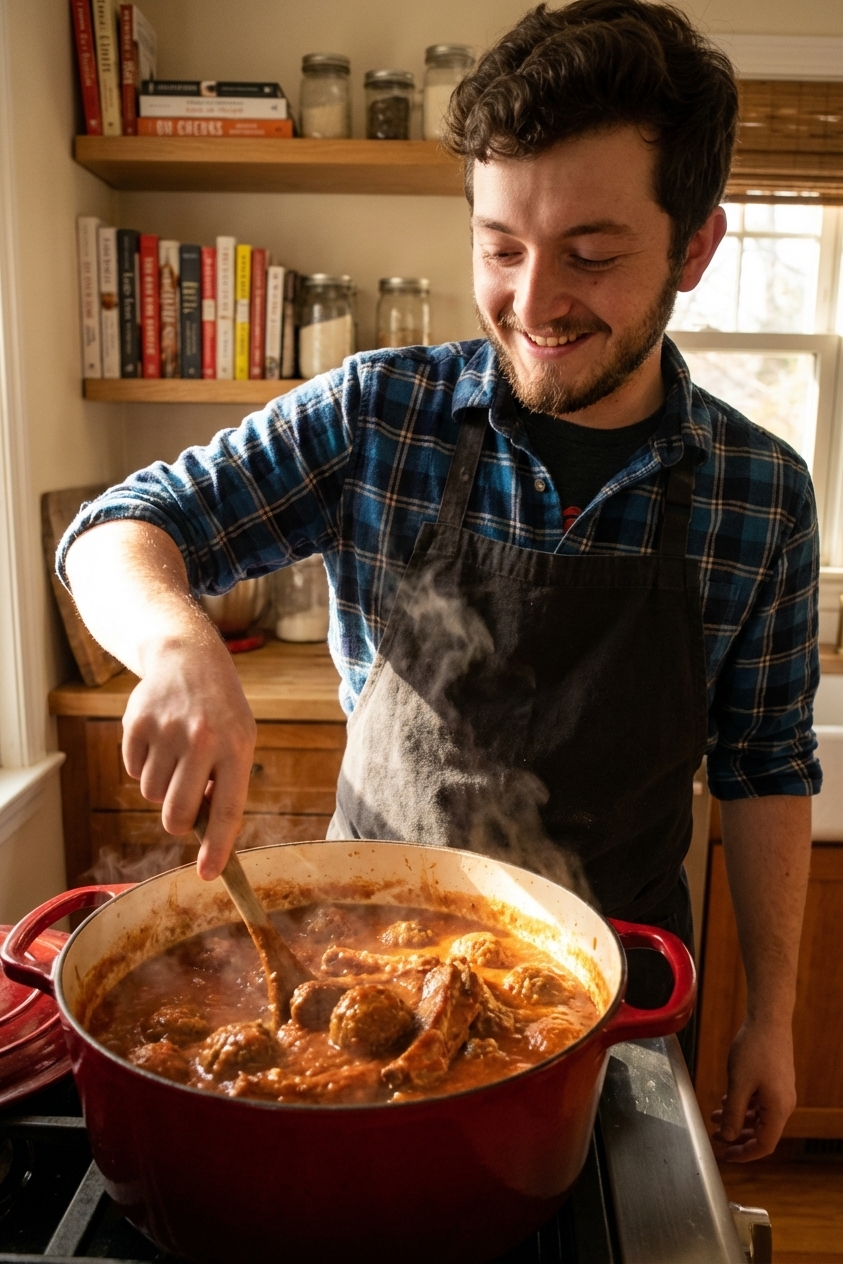
A large Dutch oven of deep red Italian-American Sunday gravy gently simmering on the stovetop with meatballs and pork pieces visible, steam rising in warm kitchen light, real food photography

Sunday gravy is not a “quick sauce” situation. It is the kind of pot that starts early, perfumes the whole house, and makes you wander back to the stove every 20 minutes just to stir and taste. The payoff is a tomato sauce that tastes like it has stories. Deep, mellow, a little sweet from slow-cooked onions, and rich from the browned meats that hang out in the pot for hours.

This version keeps things accessible and realistic for home cooks: meatballs plus a simple pork element (ribs, shoulder chunks, or sausage), a straightforward browning method, and a simmer schedule that gives you that all-day flavor without turning your kitchen into a stress test.
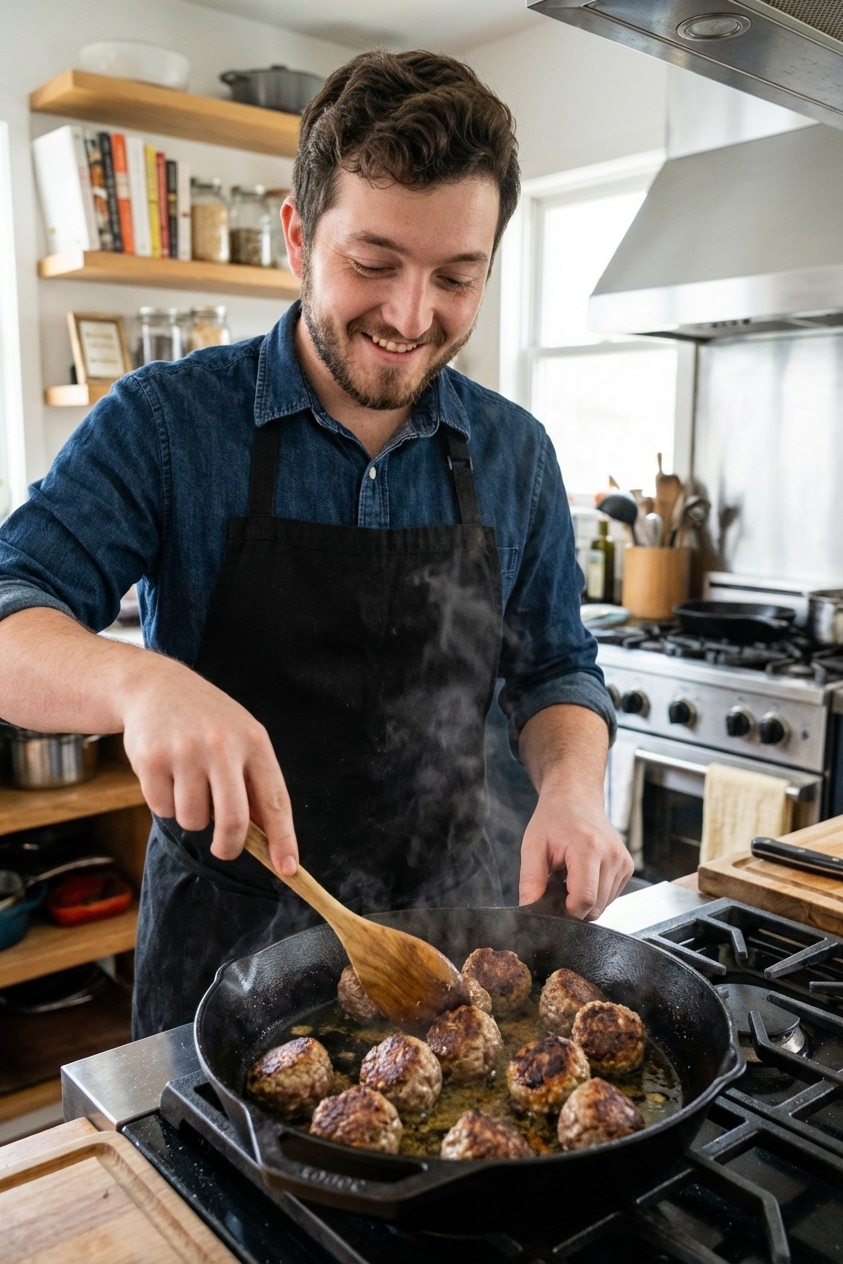
Meatballs searing in a cast iron skillet with crisp browned edges, a thin sheen of olive oil, and a wooden spoon nearby, real food photography

Why It Works

  • Browning builds the base. Searing meatballs and pork first creates fond, which melts into the sauce for that restaurant-level depth.
  • Low simmer, long time. Gentle bubbling keeps the sauce glossy and prevents bitterness or scorching.
  • Skim and stir for a cleaner finish. A quick skim of fat plus occasional stirring gives you a rich sauce that still tastes bright and balanced.
  • Make-ahead friendly. Sunday gravy gets better overnight, and it freezes like a champ.

Pairs Well With

Storage Tips

How to Store Sunday Gravy

Refrigerator

  • Cool gravy down quickly, then refrigerate in airtight containers for up to 4 days.
  • The fat will rise and solidify on top. You can leave it as a protective “cap” or lift some off before reheating.

Freezer

  • Freeze sauce (with or without meat) for up to 3 months.
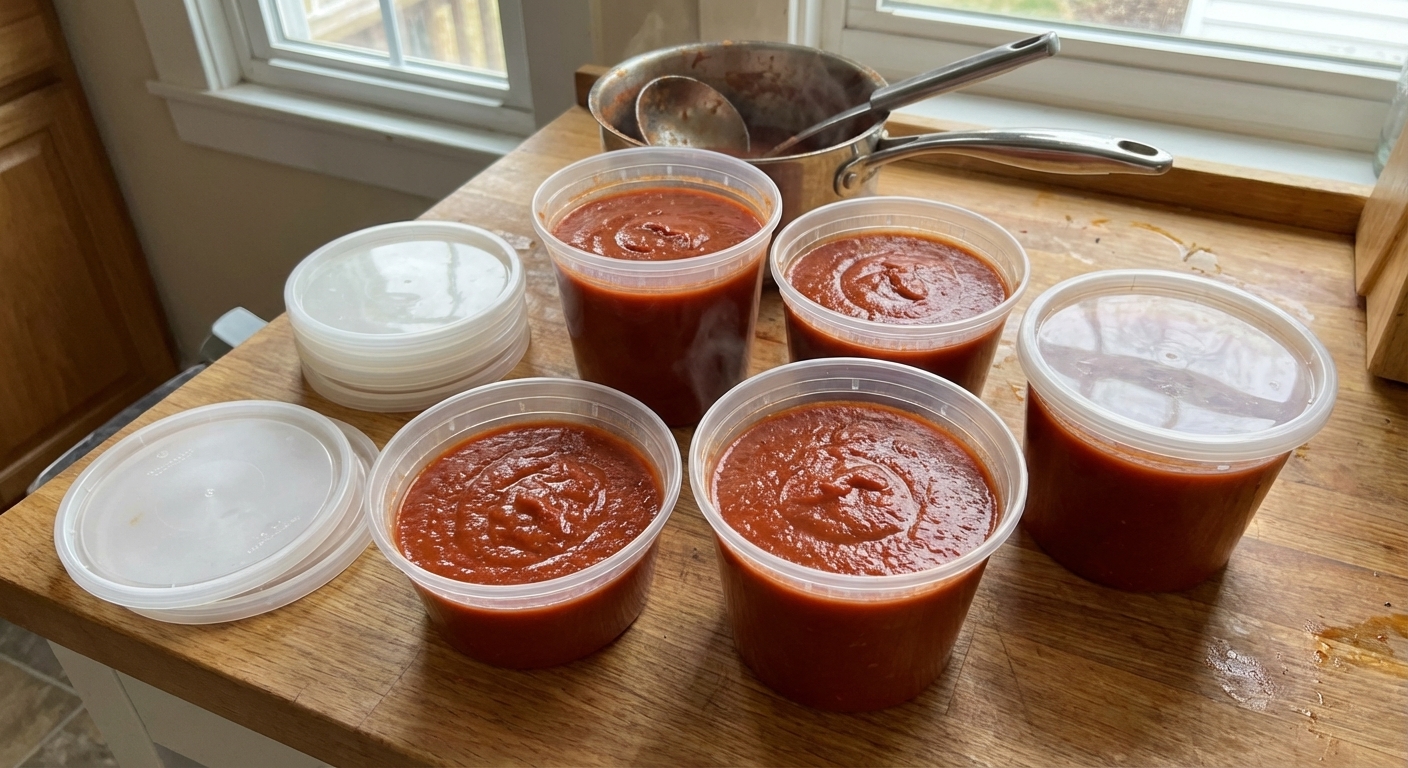
  • For easiest weeknights, portion into 2-cup containers or freezer bags laid flat.
  • If freezing with meatballs, make sure they are fully submerged in sauce to prevent freezer burn.

Reheating

  • Warm gently in a pot over low heat, stirring occasionally. Add a splash of water if it has thickened too much.
  • Microwave works too. Cover loosely and heat in bursts, stirring between rounds.

Portioned containers of red tomato gravy cooling on a counter with lids nearby, ready for refrigeration and freezing, real food photography

Common Questions

Common Questions

What is Sunday gravy, exactly?

In a lot of Italian-American kitchens, “gravy” means a long-simmered tomato sauce cooked with meat, usually started earlier in the day and served for a big family meal. The meat flavors the sauce, and the sauce flavors the meat. Everybody wins.

Do I have to use ribs?

Nope. Use what is easy to find. Pork ribs give great flavor, but pork shoulder chunks (country-style ribs work well) are easier to brown and eat. Sweet or hot Italian sausage is also classic.

Can I simmer it all day without drying it out?

Yes, but keep it at a bare simmer and add small splashes of water if it gets too thick. Also keep the lid slightly ajar to control evaporation.

Why does my sauce taste acidic?

Tomatoes vary. Fix it by simmering longer, adding a small grated carrot (or a pinch of sugar), and finishing with a knob of butter. Also make sure you are not boiling hard, which can concentrate sharpness.

Should I put basil in from the start?

You can, but I like a split approach: a little during simmer for aroma, then a fresh handful at the end for brightness.

Can I blend the sauce?

Yes. For sanity and safety, pull the meats out first, then blend just the sauce. Once it is as smooth as you like, slide everything back in and keep simmering.

I love recipes that give you little “checkpoints” throughout the day. Sunday gravy is basically that, but edible. Brown some meat, stir some onions, crack open tomatoes, then let time do the heavy lifting. The first time I made a real all-afternoon pot, I kept expecting some complicated chef trick to show up. It never did. The trick was just paying attention and tasting as I went. Now it is my favorite kind of kitchen chaos: a slow simmer, a spoon in hand, and the strong possibility that I am “just going to taste it once more” until dinner magically happens.