Mom's Best Recipes
Recipe

Smoky Black-Eyed Peas

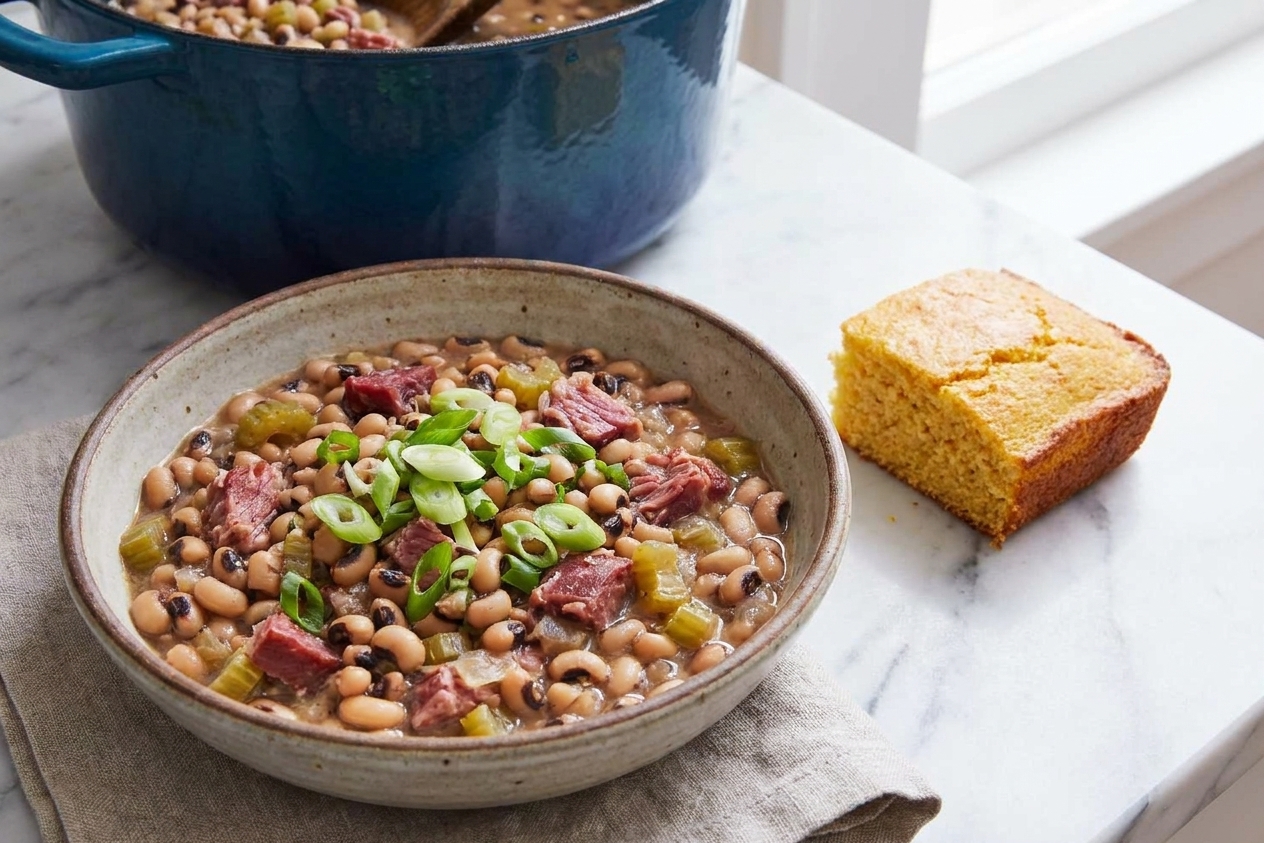
Tender, savory black-eyed peas simmered with bacon, aromatics, and a vinegar finish for big comfort with bright edges.

Author By Matt Campbell
4.8
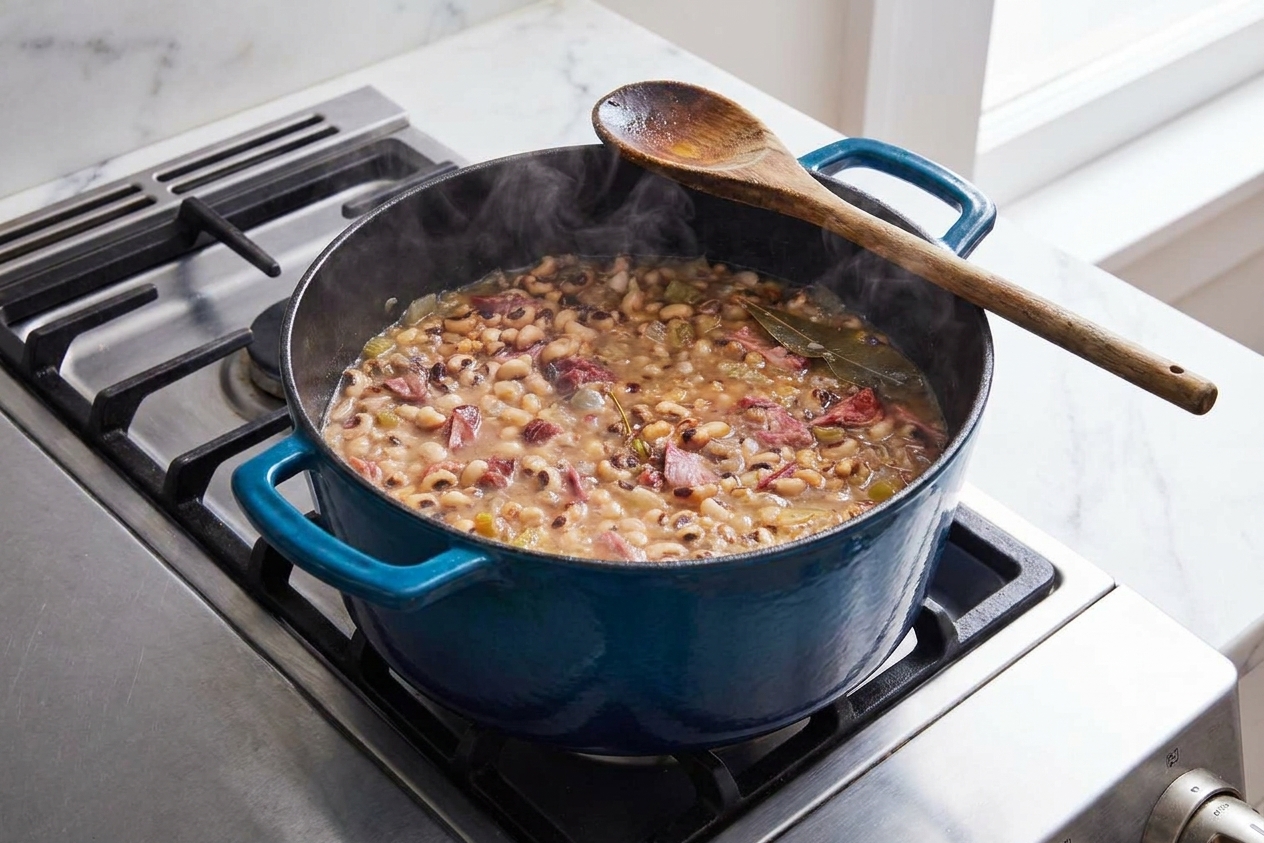
A Dutch oven filled with smoky black-eyed peas and bits of bacon, gently simmering on a stovetop with steam rising in a cozy home kitchen

Black-eyed peas are one of my favorite pantry flexes. They cook up creamy without turning to mush, they love a smoky pot, and they are begging for one last splash of something bright right before you eat.

This is my go-to stovetop version: bacon for the base, onion and garlic for the obvious good decision, a little paprika for warmth, and then a quick vinegar finish that makes the whole pot taste like it woke up and chose flavor.

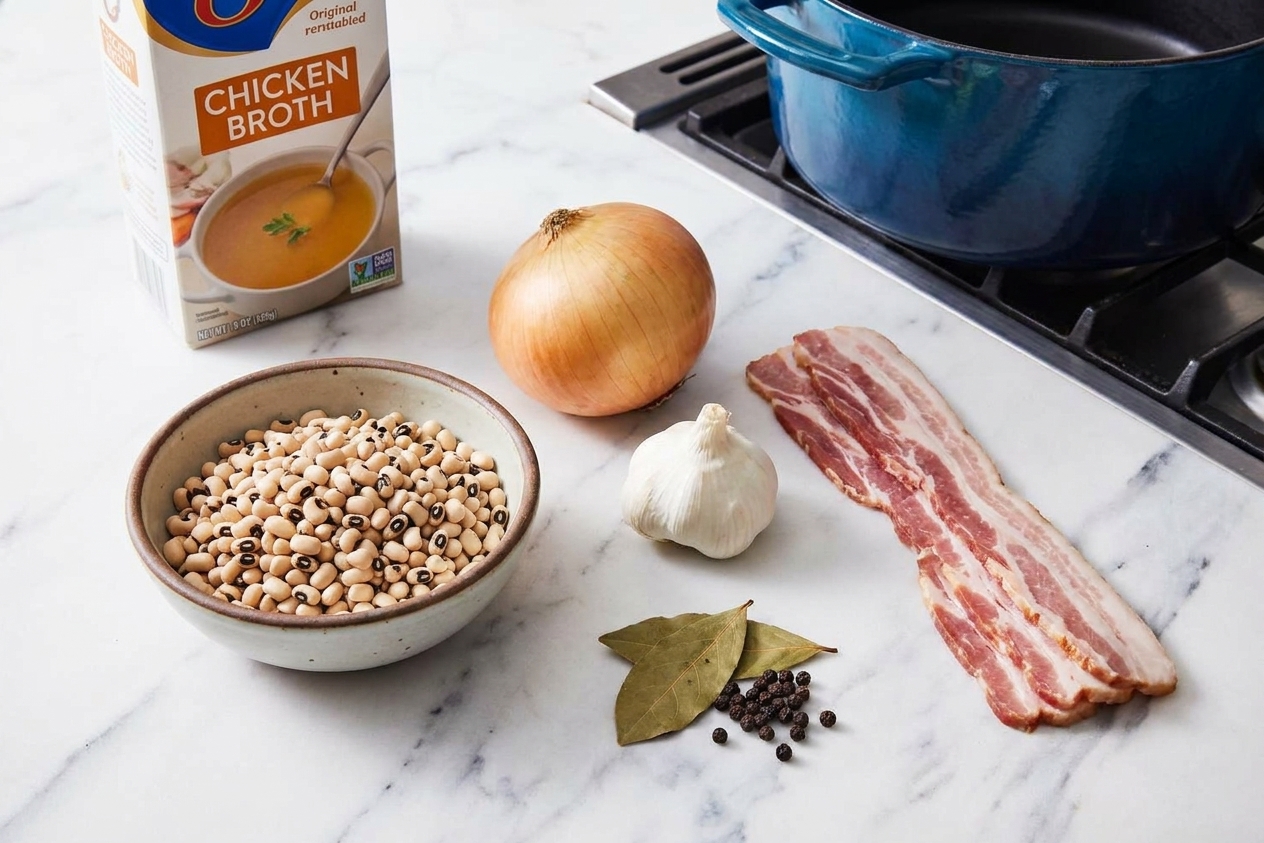
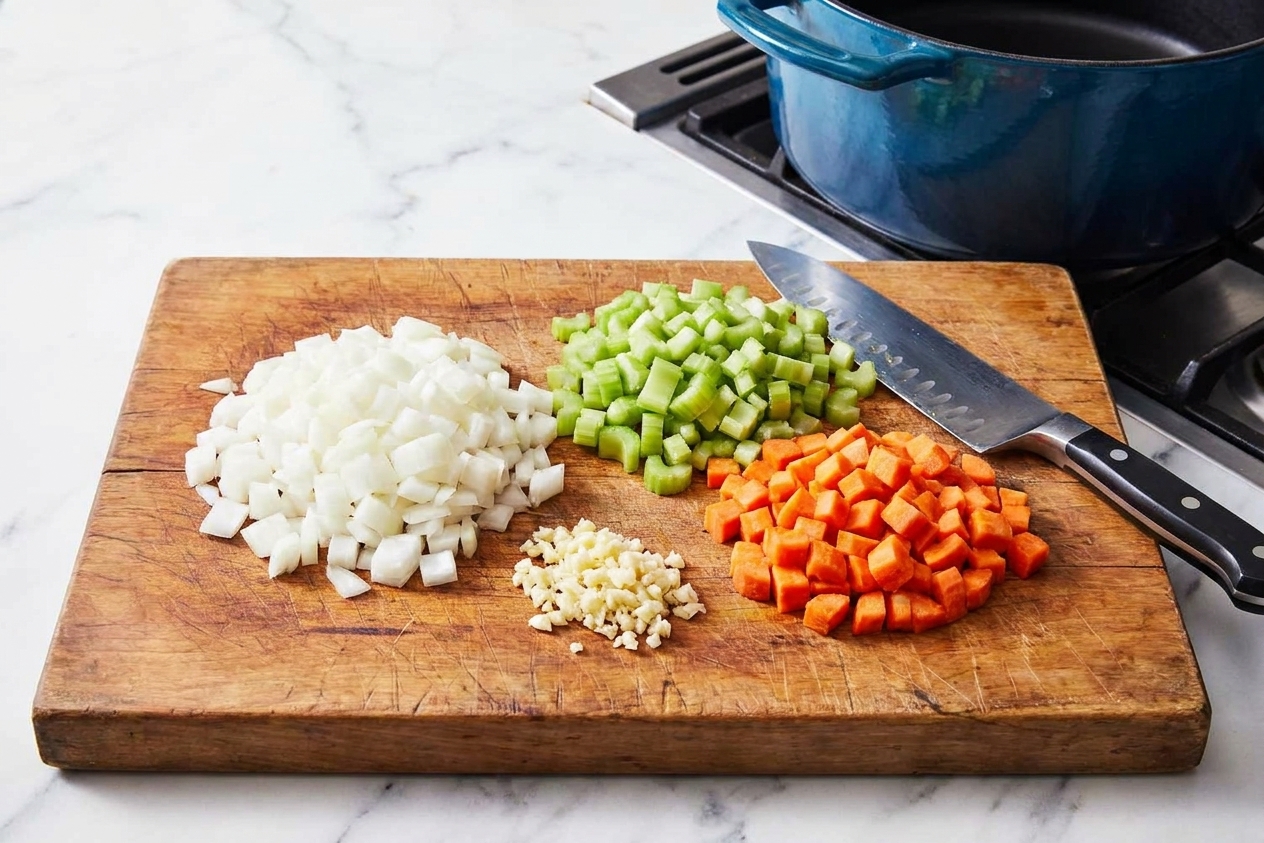
Dried black-eyed peas measured in a small bowl on a kitchen counter beside onion, garlic, bacon, spices, and a carton of broth

Why It Works

  • Big flavor from simple steps: Rendering bacon and sautéing the aromatics builds a savory base without extra ingredients.
  • Creamy, tender peas: A gentle simmer keeps the peas intact while still giving you that cozy, spoonable texture.
  • A bright finish: Vinegar at the end lifts the whole pot so it tastes rich but not heavy.
  • Flexible: Eat it as a bowl with cornbread, spoon it over rice, or turn leftovers into next-day soup.

Pairs Well With

Storage Tips

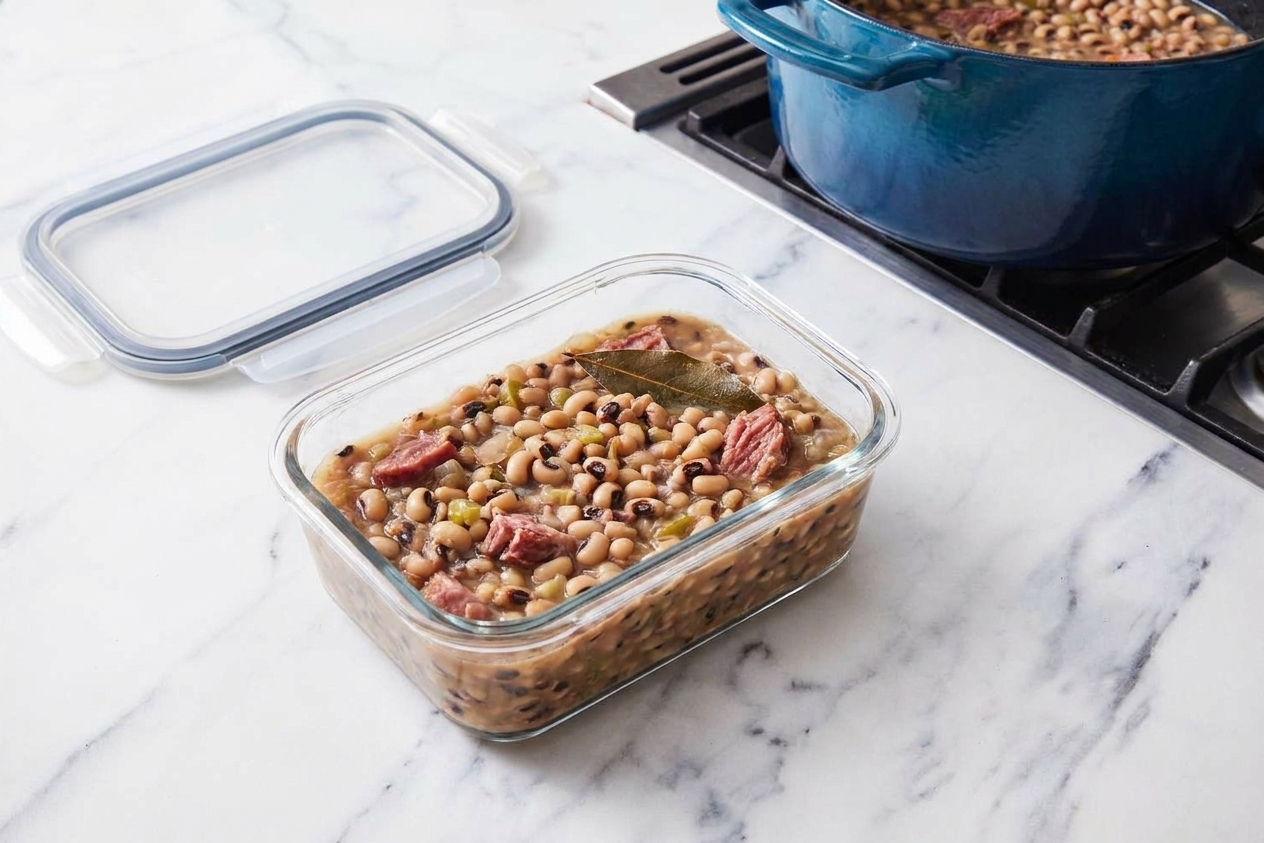
Refrigerate: Cool completely, then store in an airtight container for up to 4 days. The peas will thicken as they sit. That is normal and honestly kind of nice.

Reheat: Warm on the stovetop over medium-low with a splash of water or broth, stirring occasionally. Taste and add another tiny splash of vinegar or a pinch of salt if it tastes flat.

Freeze: Freeze in portions for up to 3 months. Thaw overnight in the fridge, then reheat gently. If the peas look a little dry after thawing, add broth a few tablespoons at a time until they loosen up.

A glass meal-prep container filled with leftover black-eyed peas on a kitchen counter with a lid set beside it

Common Questions

Do I need to soak black-eyed peas?

Not usually. Black-eyed peas (they are a type of cowpea) cook faster than many other dried beans. If you have time, a quick soak (1 to 2 hours) can shave off some simmering time, but this recipe is written to work without soaking.

How long do black-eyed peas take to cook?

Most dried black-eyed peas become tender in about 35 to 55 minutes of gentle simmering, depending on how fresh they are. Older peas can take longer, sometimes 60 to 90+ minutes. Keep the pot at a steady simmer, not a rolling boil.

Why are my peas still hard?

Usually it is one of three things: the peas are old, the simmer is too low, or the liquid reduced too much. Add more hot broth or water, keep a gentle simmer going, and give them time. Also wait to add any acidic ingredients (like vinegar) until the end.

Can I make this vegetarian?

Yep. Swap the bacon for 2 tablespoons olive oil. Use vegetable broth, and add 1 teaspoon smoked paprika plus 1 to 2 teaspoons soy sauce or miso (optional) for deeper savory flavor.

What is the best vinegar to finish peas?

Apple cider vinegar is my favorite here. Red wine vinegar also works. Start small, taste, and stop when the flavor feels brighter but not sour.

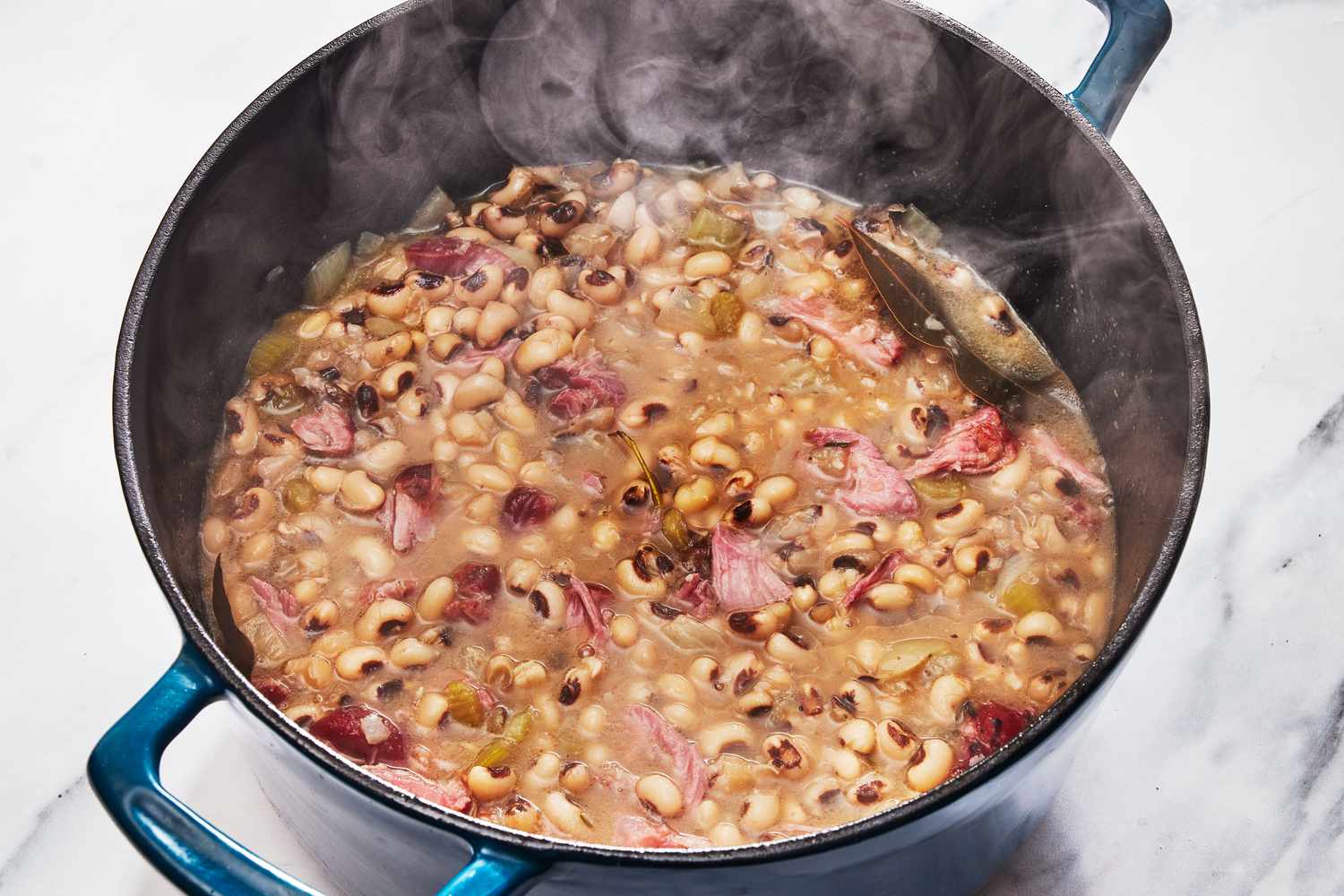
I started making black-eyed peas when I realized I wanted “long-simmer comfort” on a weeknight schedule. This pot is my compromise in the best way: it tastes like you planned ahead, even if you absolutely did not. The vinegar finish is the little trick I learned from messing up one too many bland bean pots. Now I do it every time, and I catch myself tasting straight from the spoon like I am “just checking” when I am definitely snacking.