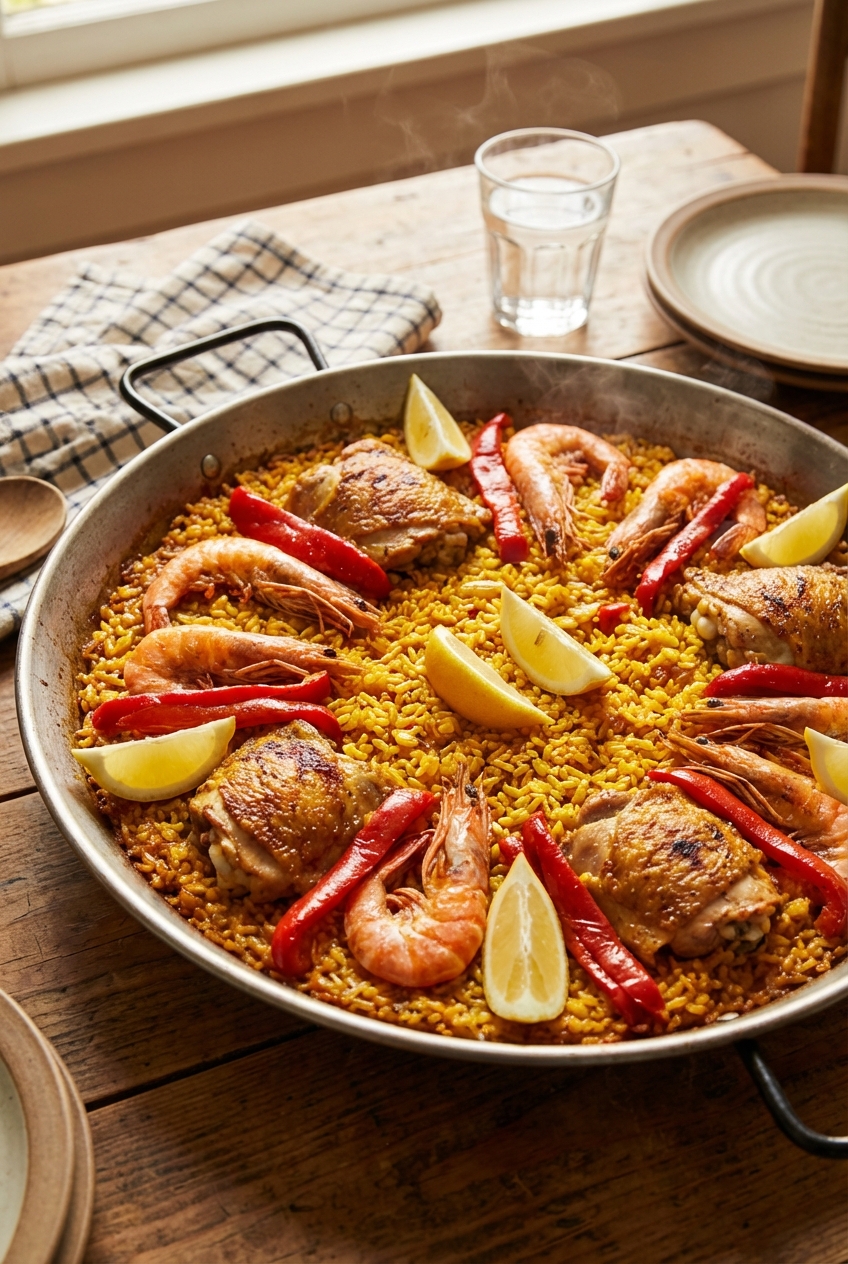
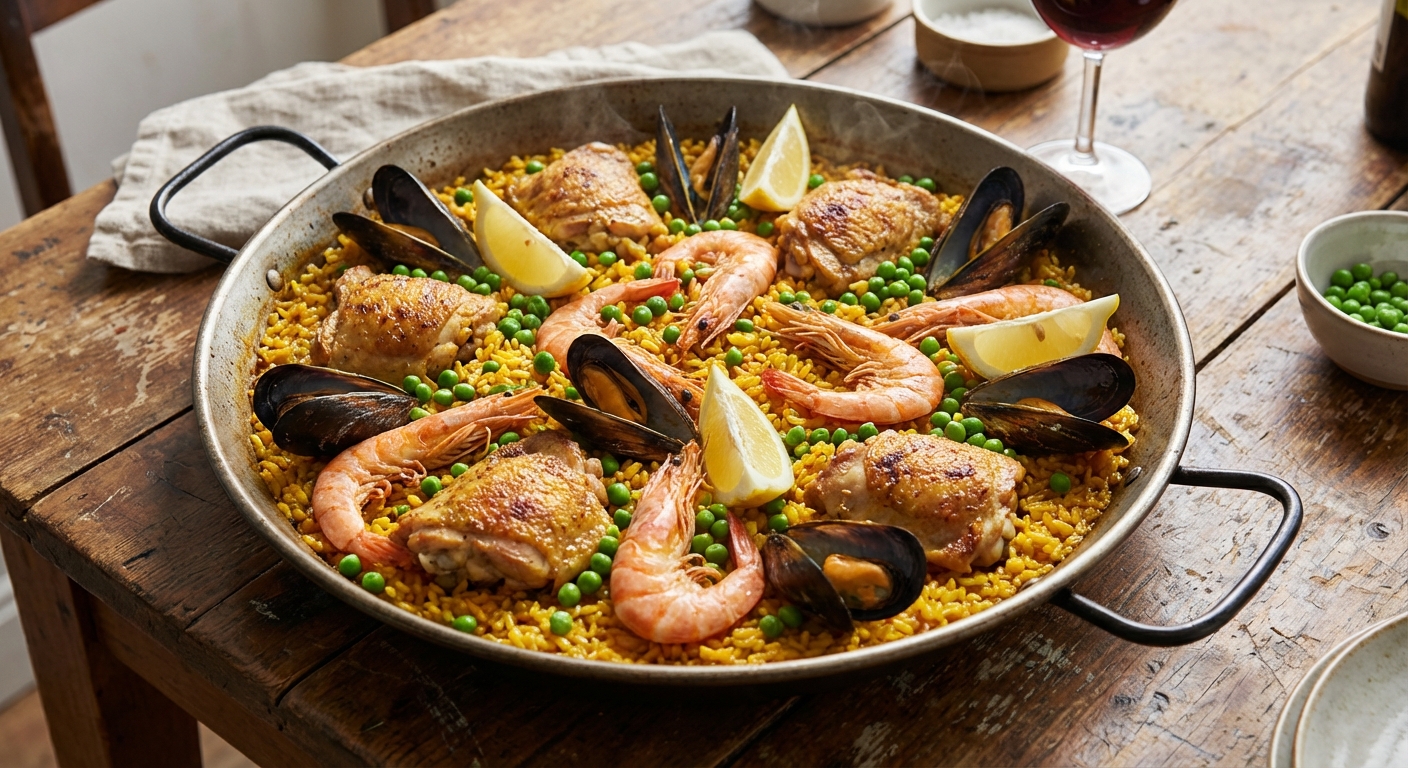
Do I need a paella pan?
No. A 12 to 14-inch skillet works great, ideally stainless steel or cast iron. Nonstick is not my favorite here because socarrat is harder to develop.
Pan size matters: try to keep the rice in an even layer, roughly 1/2 to 3/4-inch deep. If your pan is smaller and the layer is thicker, expect a little more cook time and you may need extra broth.
What rice is best for paella?
Traditional options are bomba or calasparra because they absorb liquid without turning mushy. If you cannot find those, Valencia rice is a great option.
If you are in a pinch, medium-grain rice like arborio will work, but expect a slightly creamier texture (more risotto-adjacent). Avoid long-grain rice, which cooks up too separate for this style.
Can I make it less spicy?
Yep. Skip the cayenne, use a mild sausage, and keep the smoked paprika but choose sweet smoked paprika instead of hot.
Why is my rice crunchy?
Most often it needs more liquid and a little more time. Pan size, burner strength, and how hard your simmer runs can change evaporation a lot. Add a splash of warm broth, cover, and simmer gently for 5 to 8 minutes.
Other common culprits: the rice layer was too thick, or the heat was high enough to evaporate liquid too fast before the grains finished cooking.
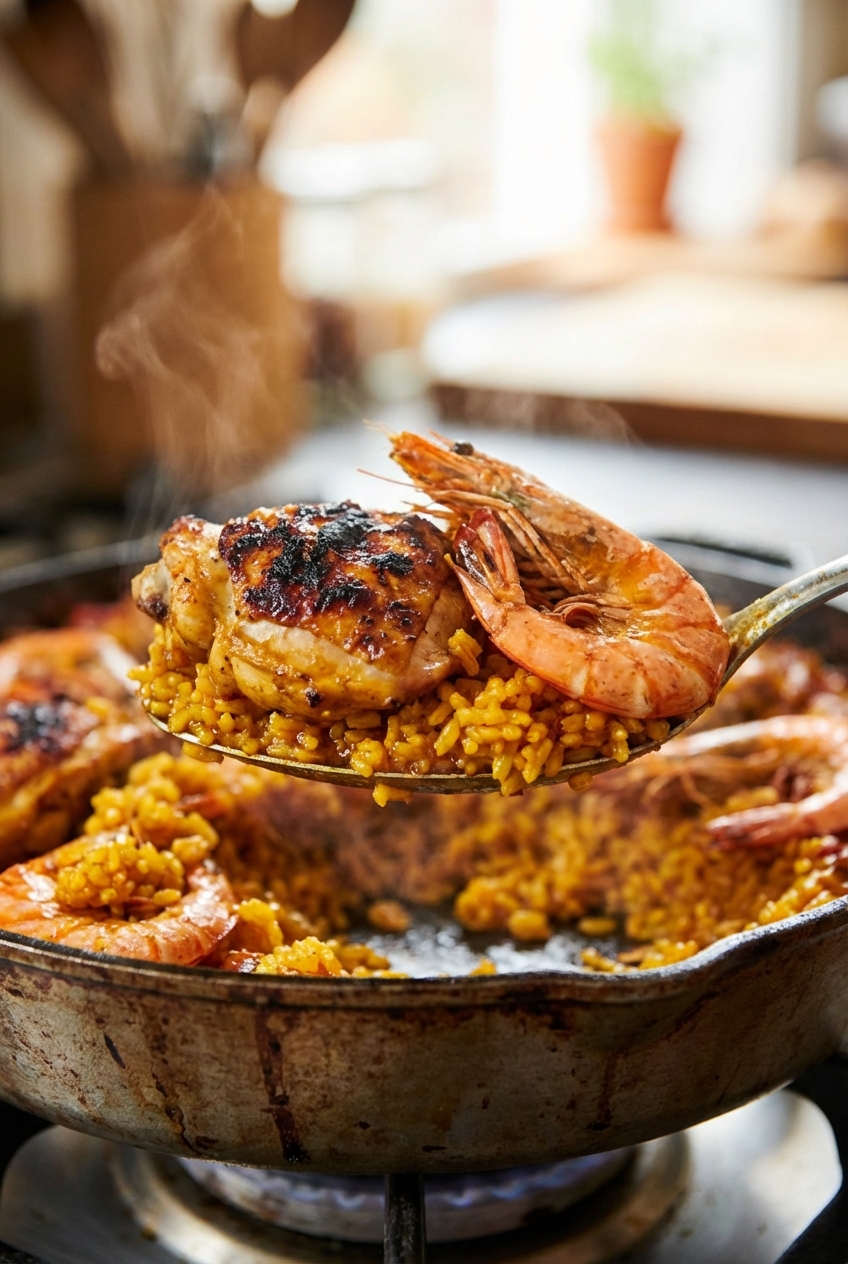
How do I know when socarrat is happening without burning it?
You will smell a toasty, nutty aroma and hear more crackling as the liquid finishes. Give the pan a short blast over medium-high at the end, then stop.
If you want extra confirmation, slide a spoon under the rice near the edge and peek. You want deep golden and crisp, not black. If it smells sharp or acrid, you went too far.
What kind of chorizo should I use?
Use Spanish-style cured chorizo (firm, sliceable) or a smoked sausage like andouille. Avoid raw Mexican-style chorizo here unless you plan to fully cook and crumble it first, because it behaves like fresh sausage.