What makes this charoset soft and chewy?
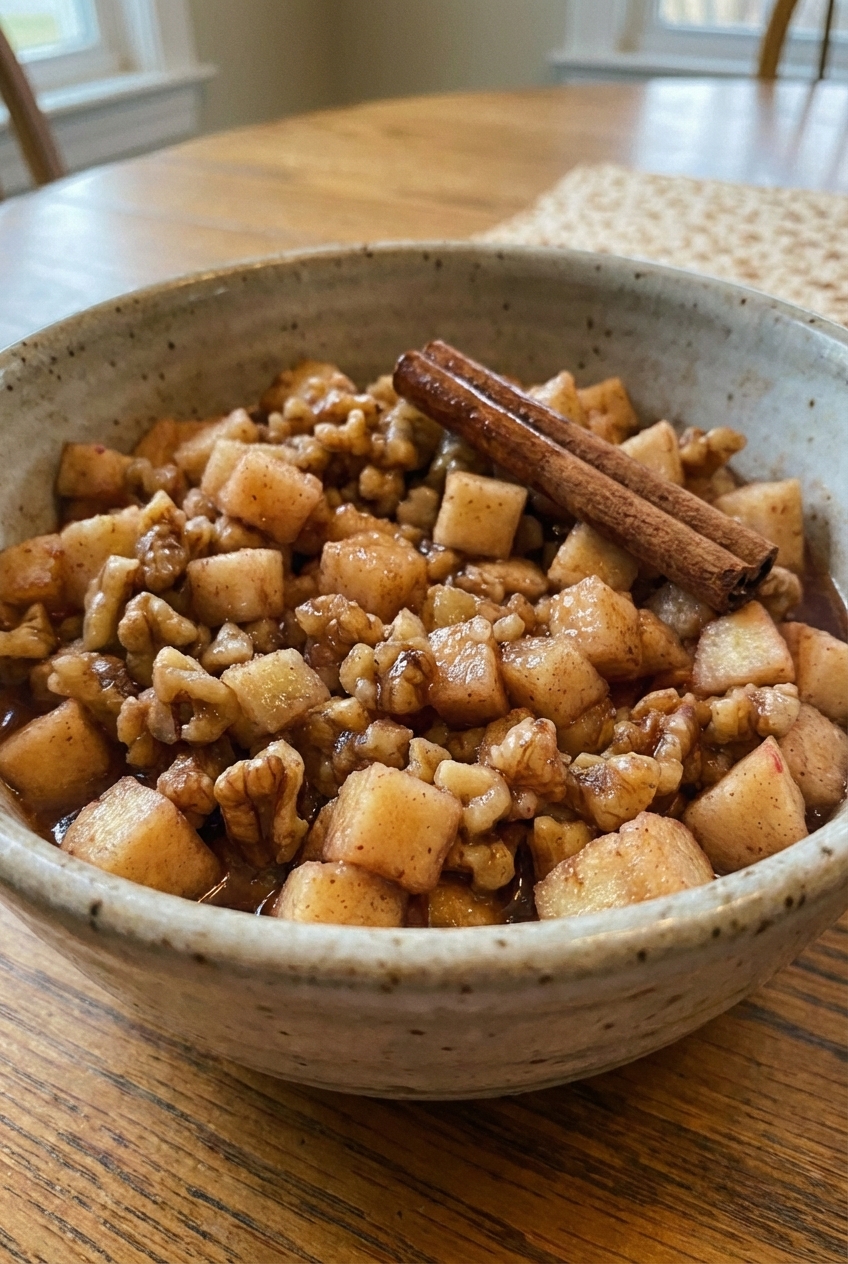
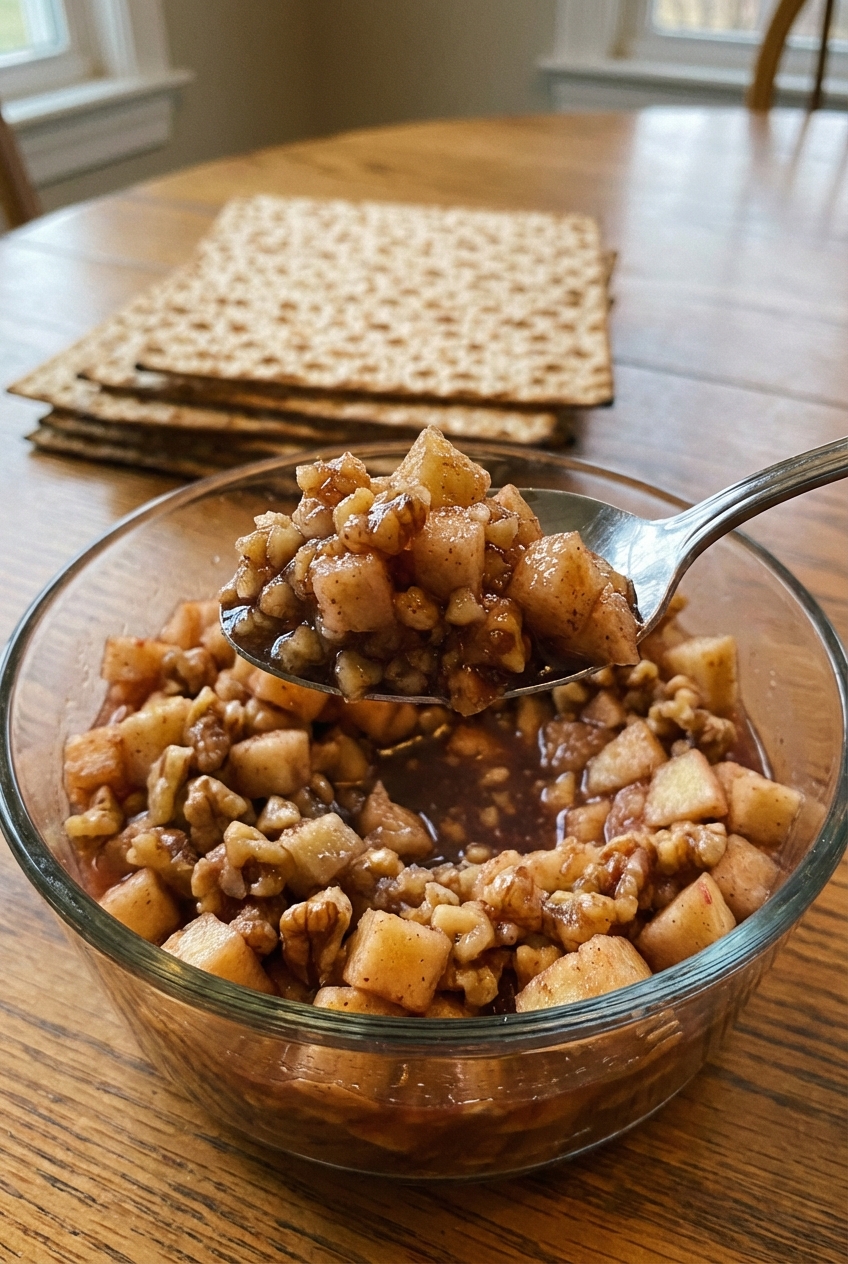
Two things: grating some of the apple for a jammy base, and letting it rest so the apples release a little juice and the mixture binds together. You still get small chunks, but the overall vibe is plush.
Do I have to use wine?
Nope. Use grape juice for a kid-friendly version, or even a splash of apple cider. The liquid is there for flavor and moisture, not for the recipe to work.
What kind of wine should I use?
Go for a sweet red that tastes fruity on its own, like a Manischewitz-style sweet kosher wine or a Concord-style sweet red. Dry reds can make the charoset taste a little sharp and grown-up in the wrong way.
Which apples are best?
Go with crisp, sweet-tart apples like Honeycrisp, Gala, Fuji, or Pink Lady. If your apples are extra crisp, chop them a bit smaller. If they are super juicy, you can lightly blot the grated apple, or squeeze it gently once before mixing.
My charoset turned watery. Can I fix it?
Yes. Stir in another tablespoon or two of chopped nuts, or add 1 to 2 tablespoons of matzo meal. You can also refrigerate it partially covered for 20 to 30 minutes (and stir once halfway) to thicken it up without drying the top into a little crust.
Can I make it nut-free?
Yes. Swap nuts for toasted sunflower seeds or pumpkin seeds. The flavor shifts, but the crunch still hits.
Is this kosher for Passover?
It can be. If you keep kosher for Passover, check that your wine or grape juice, vanilla extract, and any packaged add-ins (like brown sugar, dried fruit, or matzo meal) have kosher-for-Passover certification.
Is this the only style of charoset?
Not at all. Charoset varies a lot by tradition and region. This one is an apple-forward, Ashkenazi-style approach with a soft, clingy texture.