Mom's Best Recipes
Recipe

Soft and Chewy Baked Beans

Sweet, smoky baked beans with tender beans, sticky edges, and a cozy, slow-baked chew. The kind of side dish that steals the spotlight.

Author By Matt Campbell
4.8
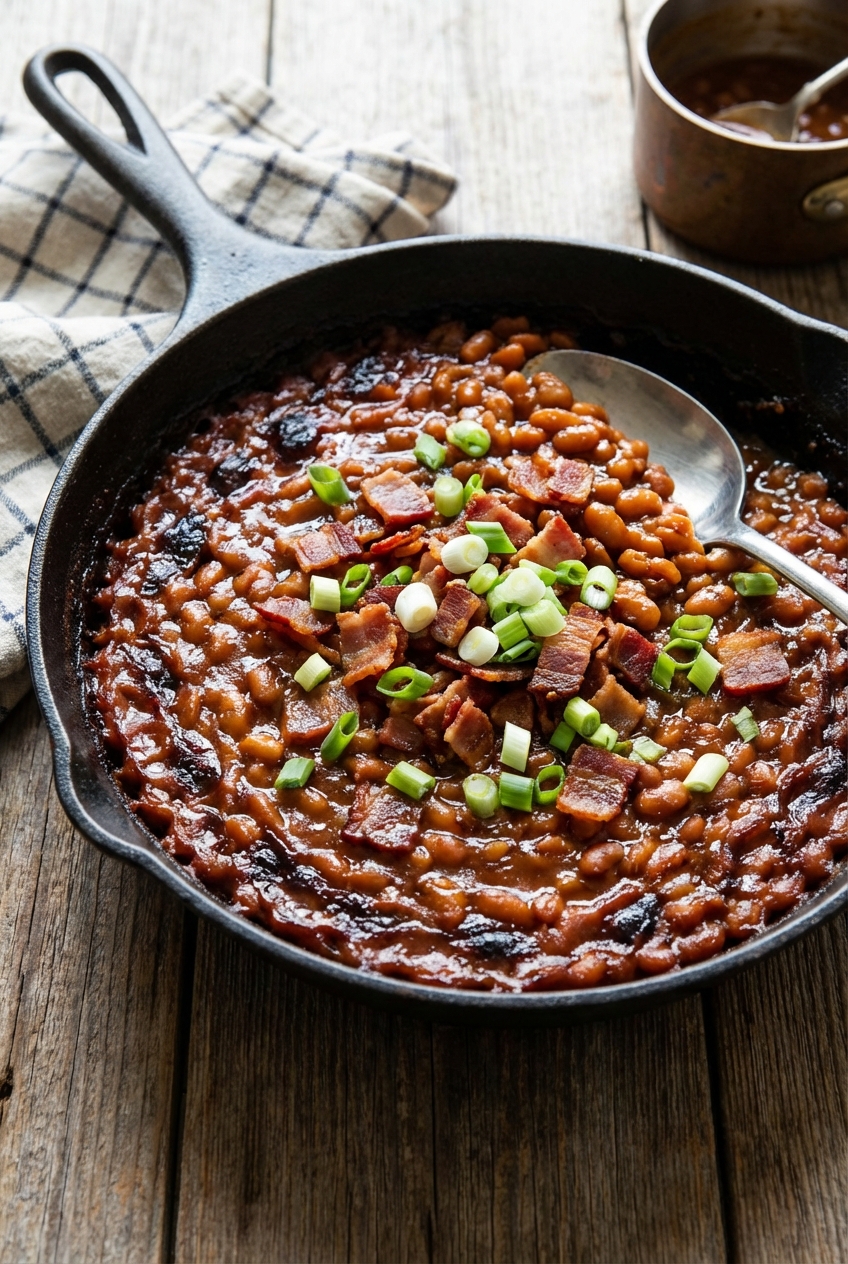
A cast iron skillet filled with glossy baked beans with caramelized edges, topped with crispy bacon and chopped scallions on a rustic wooden table

If baked beans have ever felt like an afterthought, this is your redemption arc. These are decadent baked beans with two key vibes: soft beans that melt when you bite them, and chewy caramelized bits around the edges that make you keep “just checking” the pan with a spoon.

The secret is building a bold, balanced sauce first, then letting the oven do the heavy lifting. You get sweetness from brown sugar and molasses, tang from mustard and vinegar, and smoky depth from bacon and paprika. It tastes like a cookout side dish that grew up and got really good at seasoning.
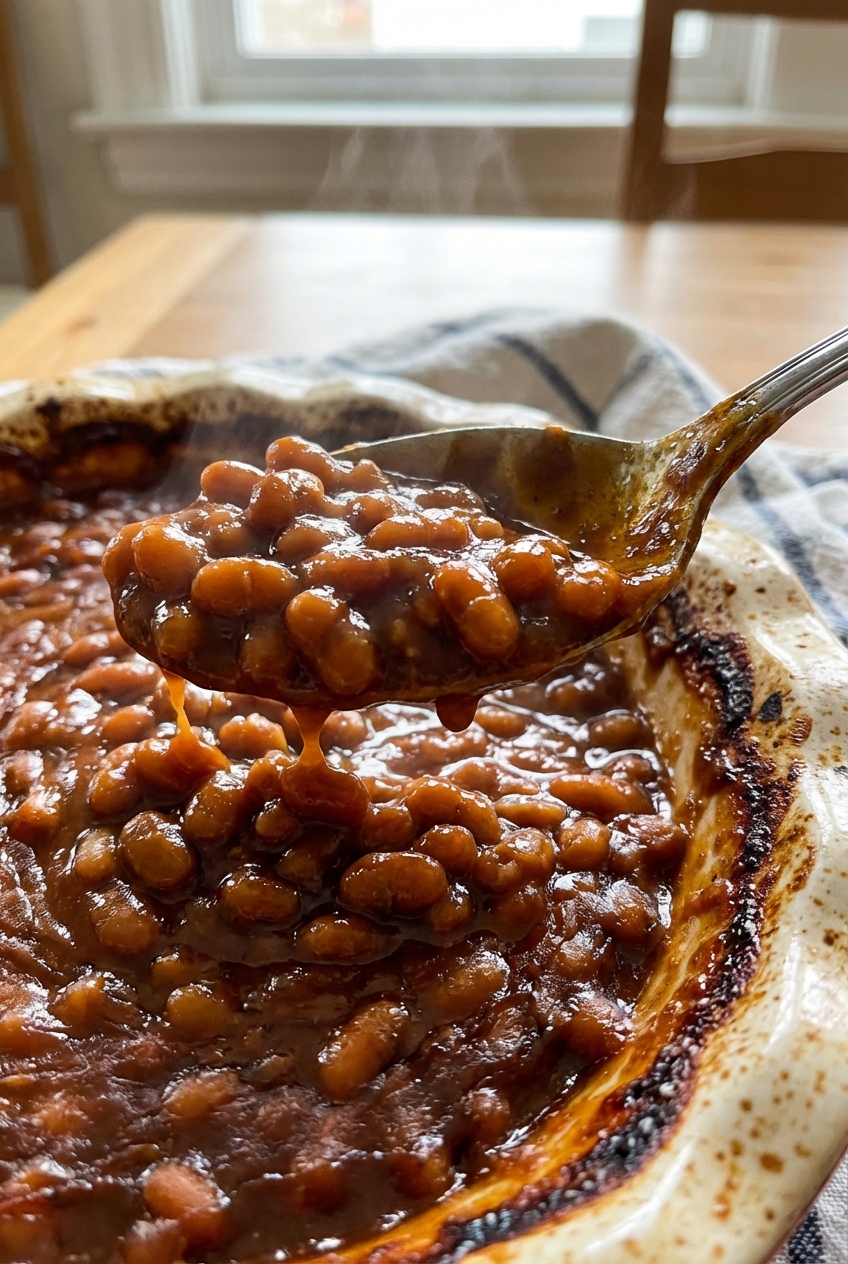
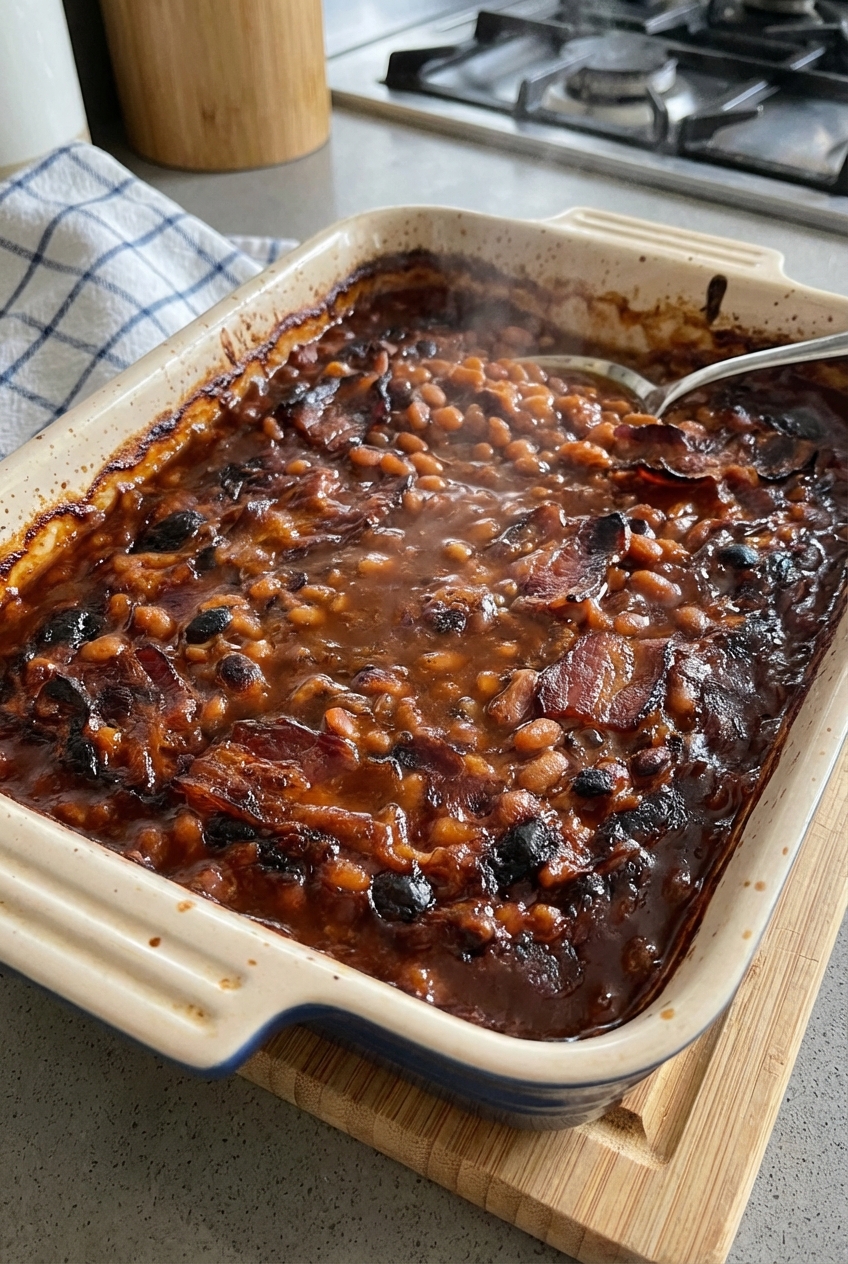
A spoon scooping thick, glossy baked beans from a baking dish, showing the sauce clinging to the beans

Why It Works

  • Soft beans, chewy edges: Baking uncovered for part of the time concentrates the sauce and creates those sticky, caramelized corners.
  • Big flavor without fancy ingredients: Pantry staples like ketchup, mustard, molasses, and vinegar do most of the work.
  • Not too sweet: A little acidity and mustard keep everything balanced so it tastes rich, not candy-like.
  • Make-ahead friendly: These reheat like a dream and honestly get better after a night in the fridge.

Pairs Well With

Storage Tips

Refrigerate: Cool completely, then store in an airtight container for up to 4 days.

Freeze: Portion into freezer-safe containers and freeze up to 2 months. Thaw overnight in the fridge for best texture.

Reheat: Warm on the stovetop over medium-low with a splash of water if it looks too thick. Or bake at 350°F covered for 15 to 20 minutes, then uncover for 5 minutes to bring back the sticky edges.

Pro tip: If you want that chewy rim again, reheat in a shallow baking dish so more surface area gets hot.

Common Questions

What does “soft and chewy” mean for baked beans?

Soft means the beans are tender and creamy, not chalky. Chewy means the sauce reduces enough to get sticky and caramelized, especially around the edges and on top.

Can I use canned beans?

Yes. That is the point of this recipe. Use canned navy or great northern beans. Rinse and drain well so the sauce is bold instead of watery.

How do I keep baked beans from being runny?

Three fixes: drain the beans well, simmer the sauce for a few minutes before baking, and bake uncovered for the last stretch so excess moisture evaporates.

Can I make these vegetarian?

Absolutely. Skip the bacon, use 2 tablespoons olive oil instead, and add 1 teaspoon smoked paprika plus 1 tablespoon soy sauce to replace some of that smoky, savory depth. Also, use vegetarian Worcestershire (many classic versions contain anchovies) or swap in 1 teaspoon extra soy sauce plus a small squeeze of lemon for that tangy-salty edge. Use water or vegetable stock instead of chicken stock.

My beans got too thick. Now what?

Stir in a splash of hot water, vegetable stock, chicken stock, or even a little apple juice, then warm gently. Beans are forgiving as long as you add liquid slowly.

I started making baked beans the way a lot of us do: open a can, heat it up, hope nobody notices. Then I cooked in kitchens where sides were treated like the main event, and it clicked. Beans are basically a sauce delivery system, and if you give them a little attention, they turn into something people talk about.

This version is my favorite kind of home cooking: low drama, big payoff. You stir a glossy sauce on the stovetop, dump in beans, and let the oven do that slow, sticky magic. The best part is the moment you scrape the corner of the pan and get that caramelized bite. That is the chew I am chasing.