FAQ
What potatoes are best for gnocchi?
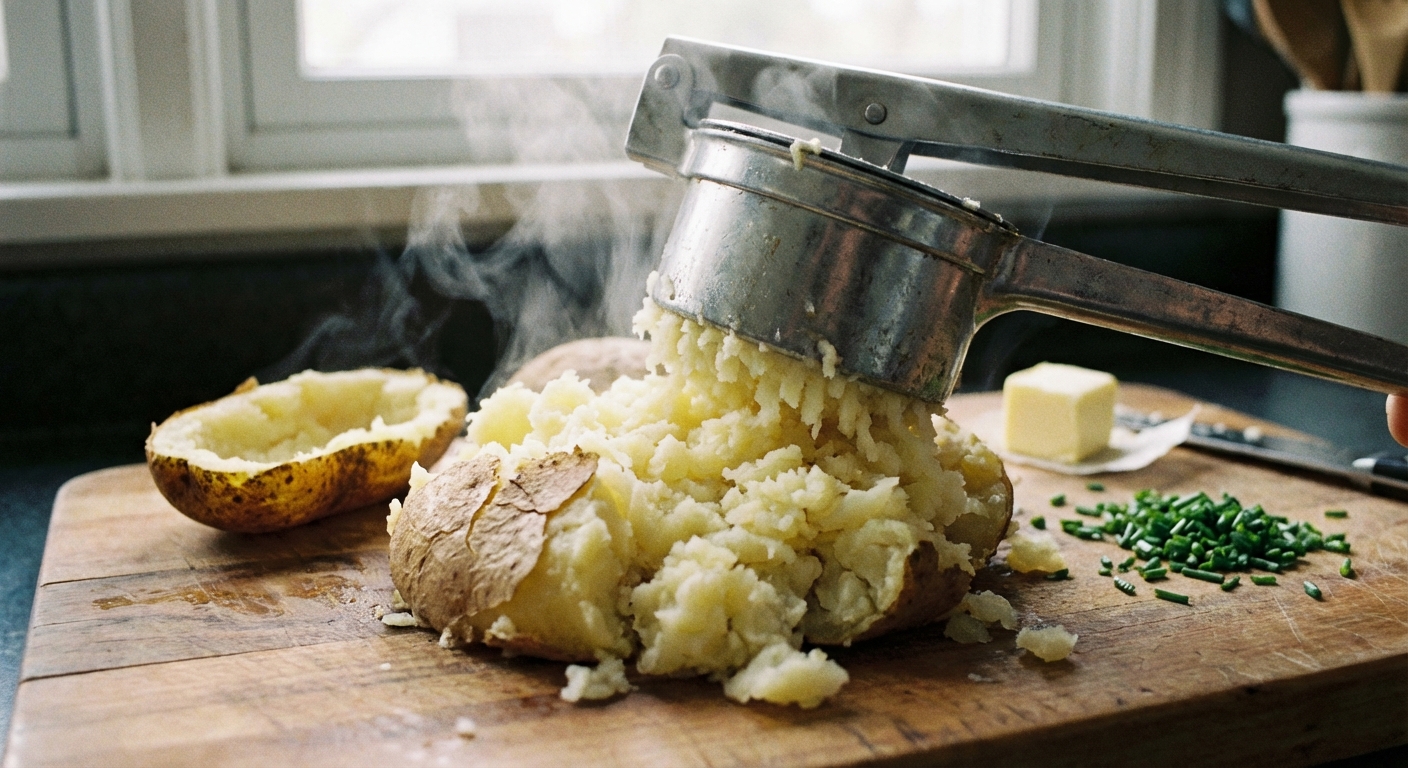
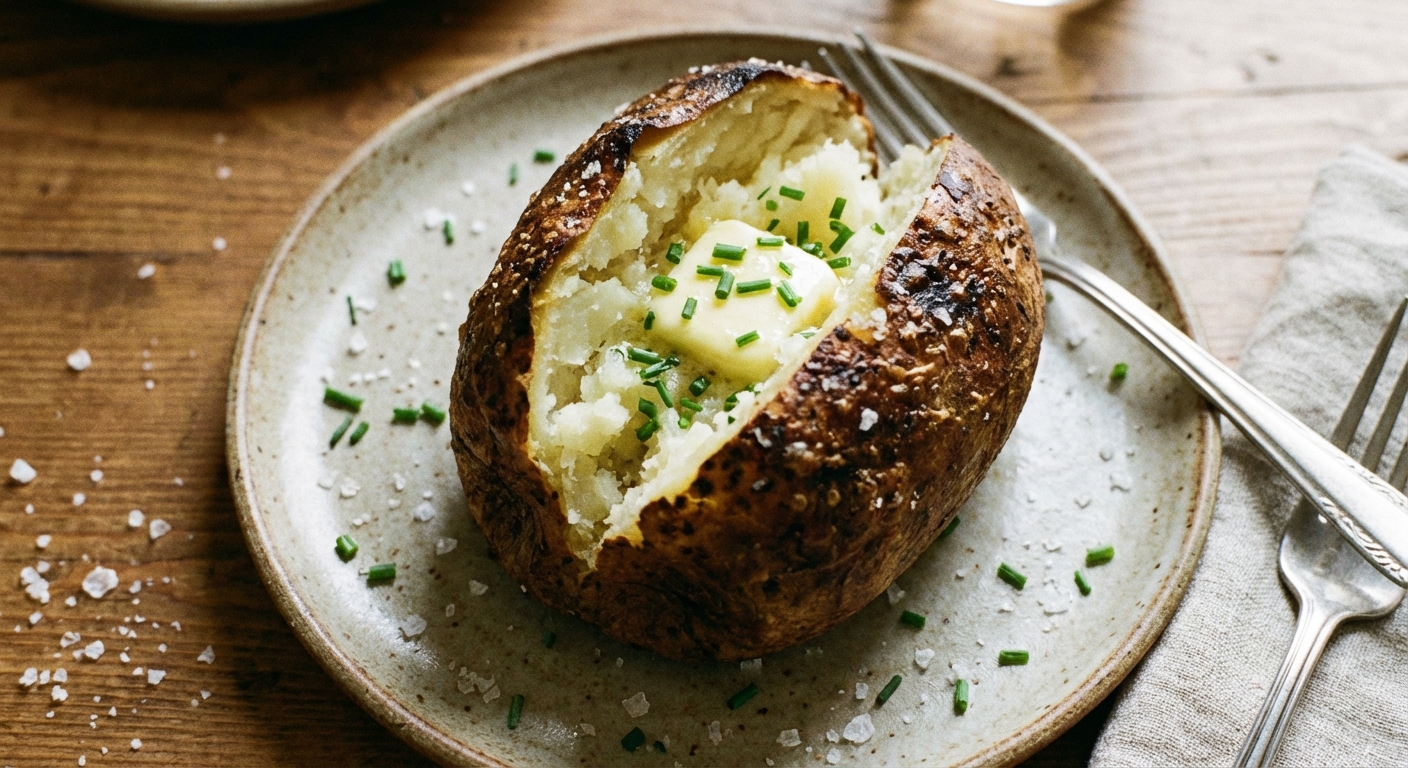
Use russet potatoes if you can. They are starchy and dry, which makes fluffy gnocchi easier. Yukon Golds work too, but they hold more moisture, so you may need a bit more flour and a lighter hand.
Why bake the potatoes instead of boiling?
Boiling pushes water into the potato. Baked potatoes dry out in the best way, giving you a dough that needs less flour. Less flour equals softer gnocchi.
How do I know if my gnocchi dough needs more flour?
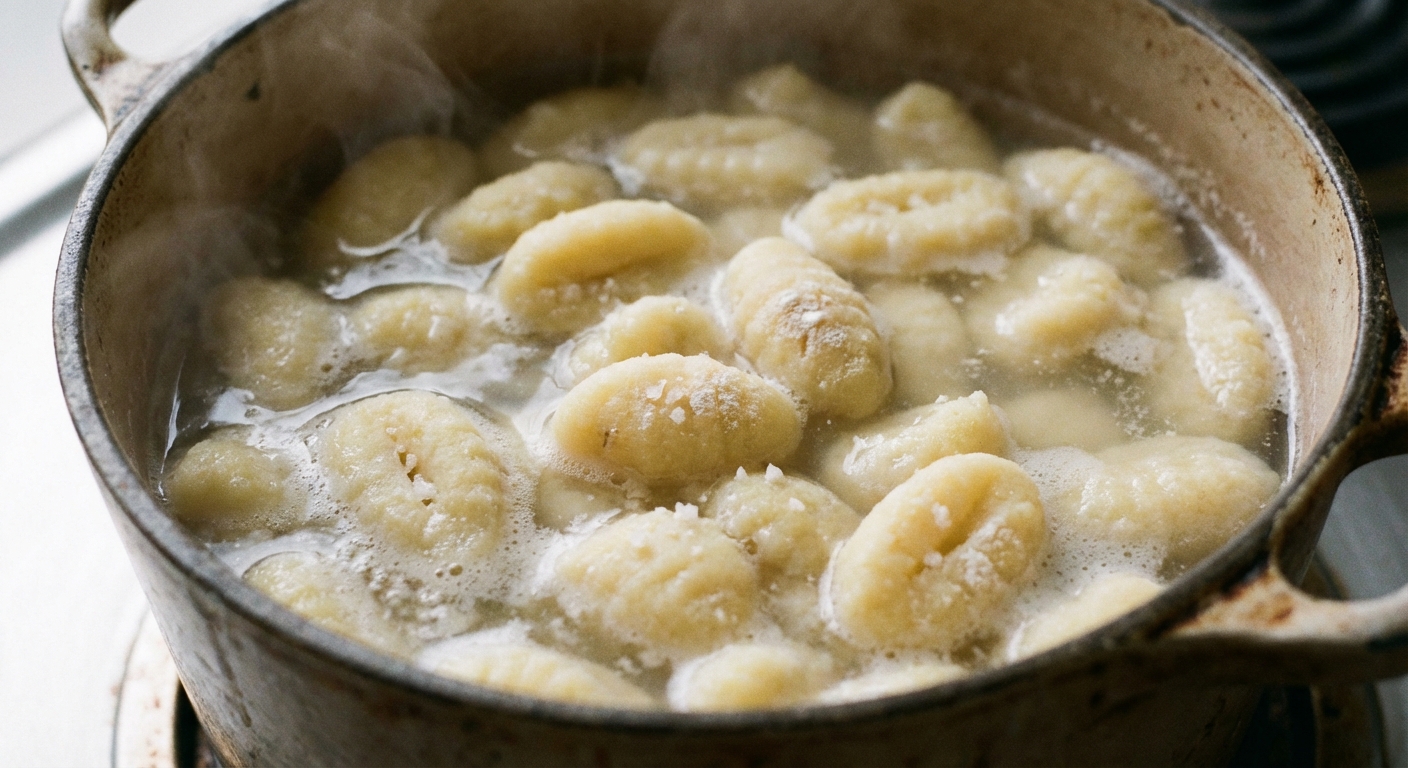
Do a test boil: pinch off a small piece, roll it into a little dumpling, and boil it. If it falls apart, mix in flour 1 tablespoon at a time and test again. The dough should feel slightly tacky but not smear all over your hands.
Can I make gnocchi without a ricer?
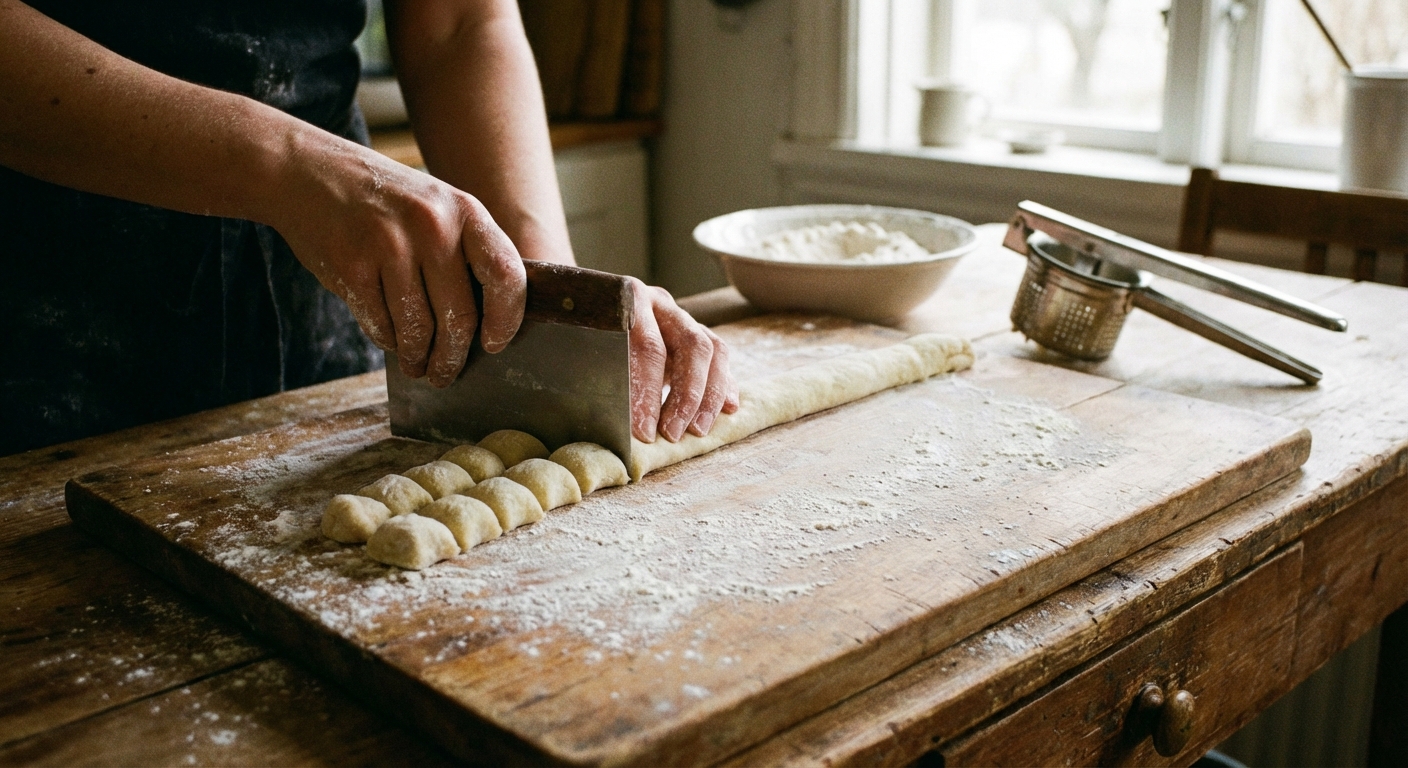
Yes. A ricer is the easiest route to fluffy texture, but you can use a food mill or mash very thoroughly while the potatoes are hot. Avoid a food processor, which can turn potatoes gluey fast.
Why is my gnocchi gummy or dense?
- Too much flour.
- Potatoes were too wet (often from boiling).
- Overworked dough.
- Dough sat too long before shaping and cooking.
The fix is always the same vibe: drier potatoes, less flour, gentler mixing, and faster shaping.
Do I have to use ridges?
Nope. Ridges help sauce cling, but smooth gnocchi is still delicious. You can press a small indentation with your thumb and call it rustic. Rustic is a valid lifestyle.
How do I serve soft potato gnocchi?
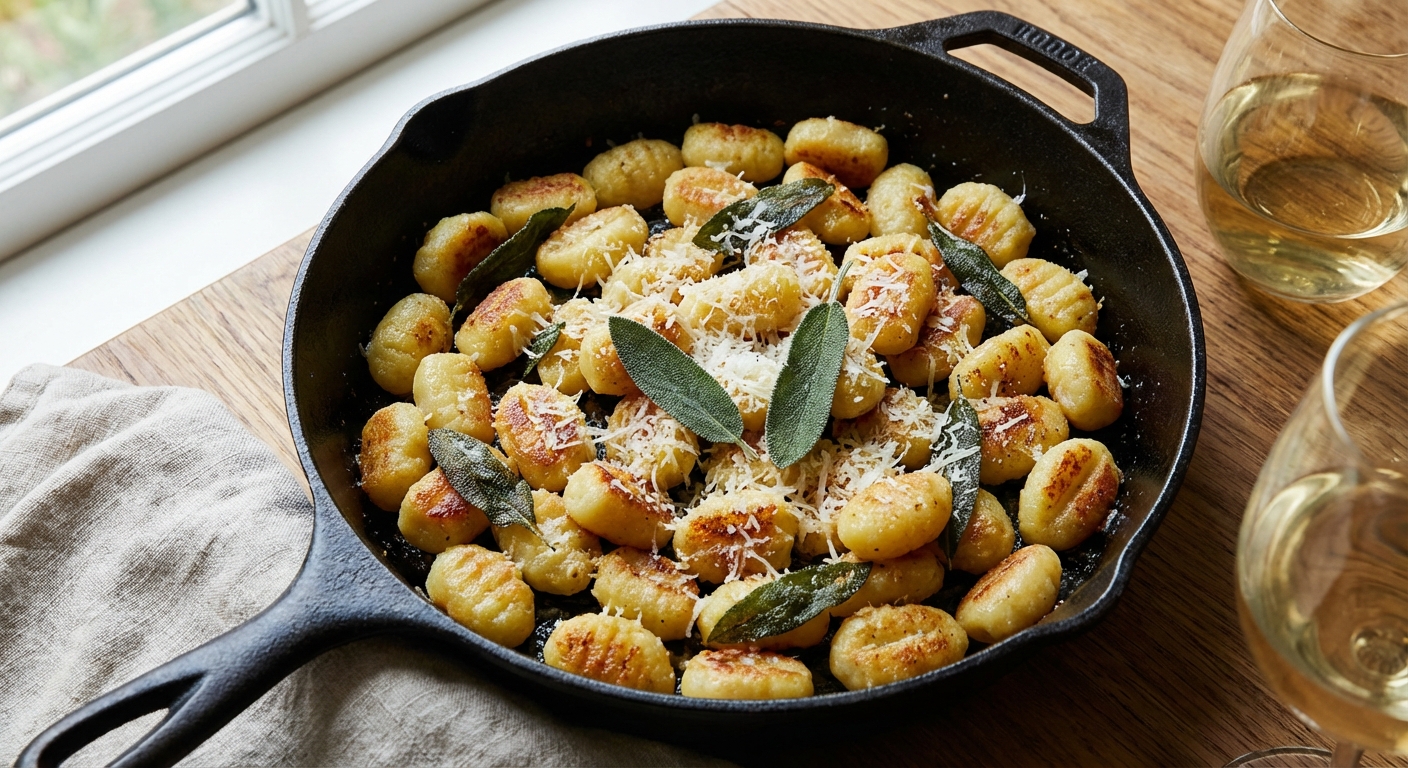
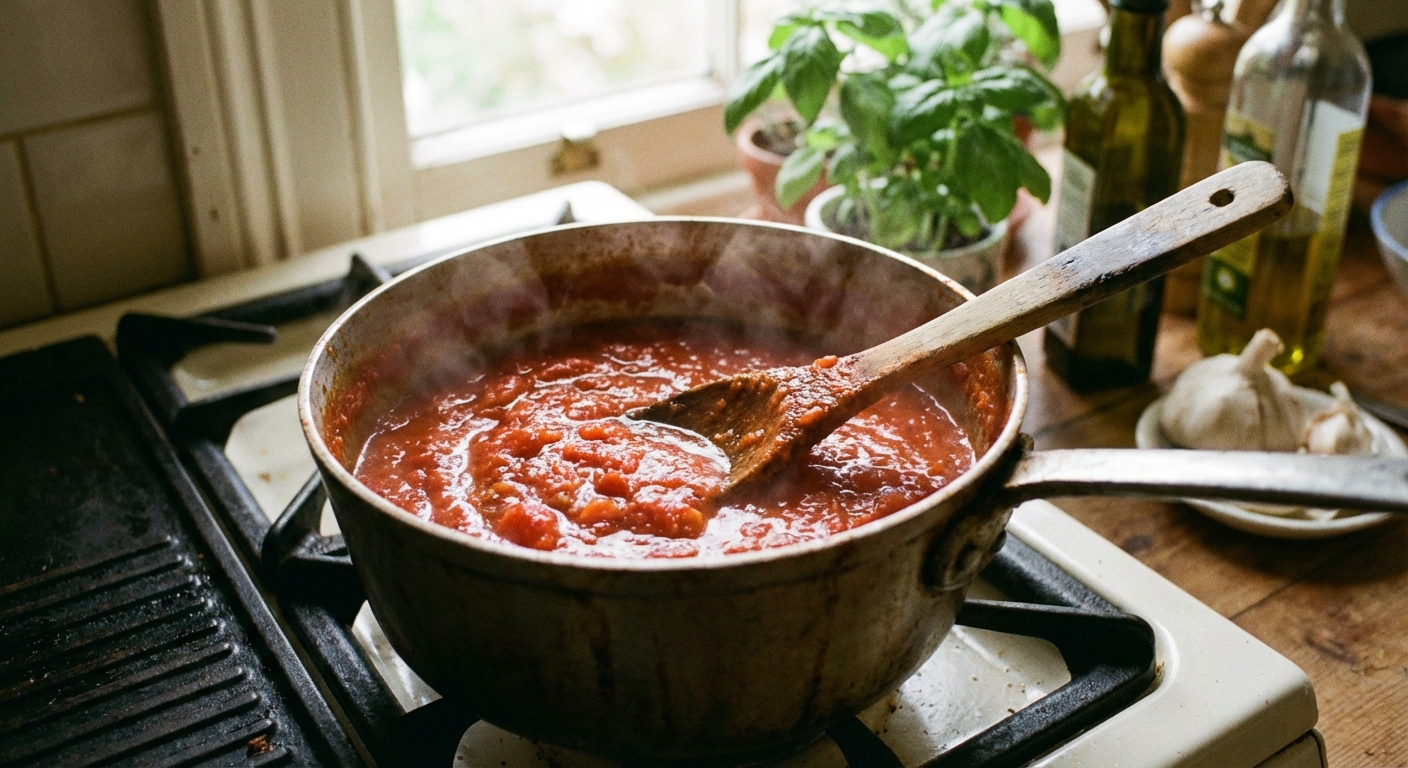
They love simple sauces: browned butter and sage, marinara, pesto, or a quick lemon Parmesan cream. If you are pan-searing, give them space in the skillet so they actually crisp instead of steaming.