Common Questions
Do I have to use crescent roll dough?
No, but it’s the easiest and most consistent. You can use puff pastry in a pinch, but it bakes differently and can “shatter” when slicing. If you use puff pastry, thaw it first (if frozen), work with it cold, and watch the bake closely. You want a deep golden top and a center that looks set. You may also want to dock it lightly with a fork to reduce big air pockets.
Why did my filling turn runny?
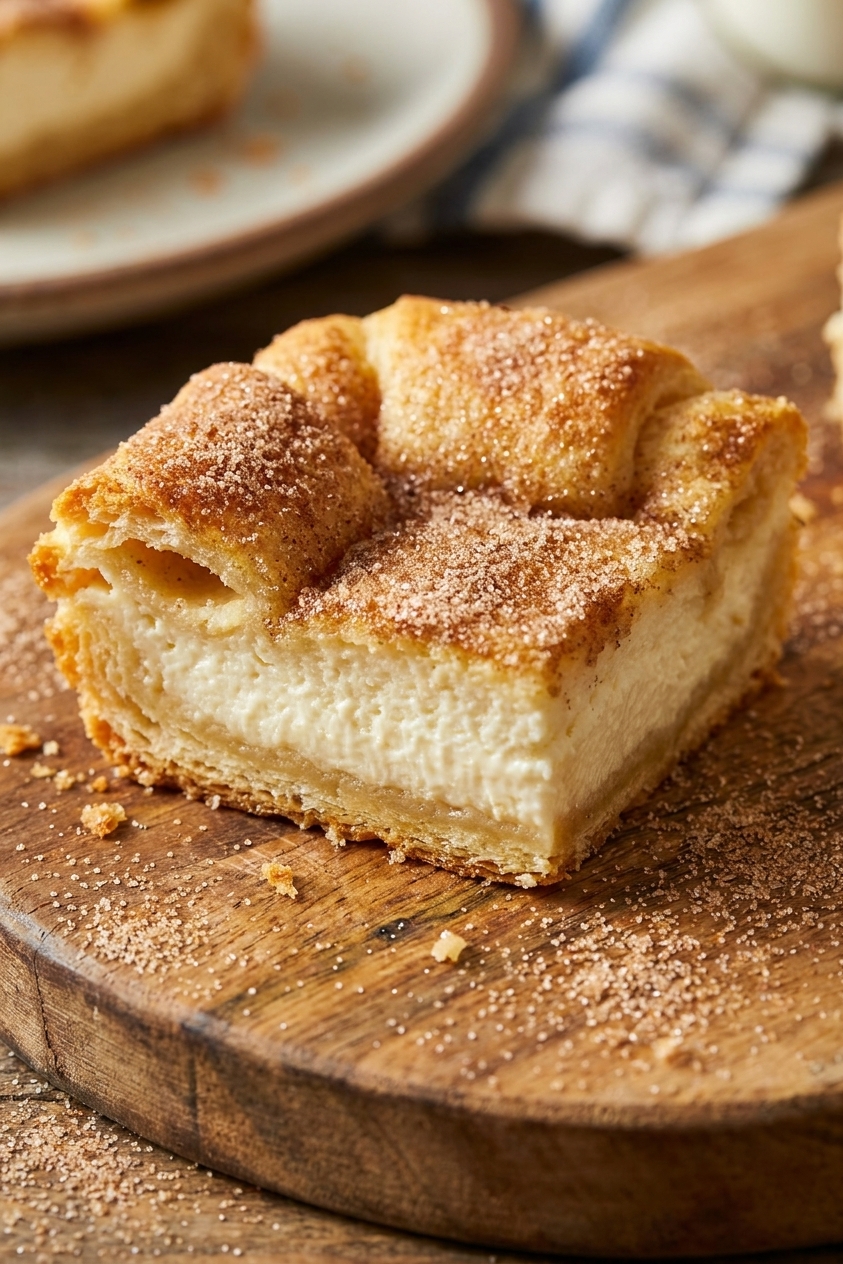
Most often it’s one of these: the bars were cut warm, the filling was underbaked, or the cream cheese was not fully softened so it never blended smooth. (Overmixing can add air, but that usually shows up as puffing or cracking, not a truly runny center.) For the cleanest set, use room-temperature cream cheese, mix just until smooth, and chill thoroughly before slicing.
How do I get the top layer on without tearing it?
Unroll the dough, then press it gently into a rough rectangle on a lightly floured surface. Lift with your hands and lay it over the filling like you’re tucking in a blanket. Then press the perforations and seams gently to seal. Small gaps are fine, they bake together.
Can I make this ahead for a party?
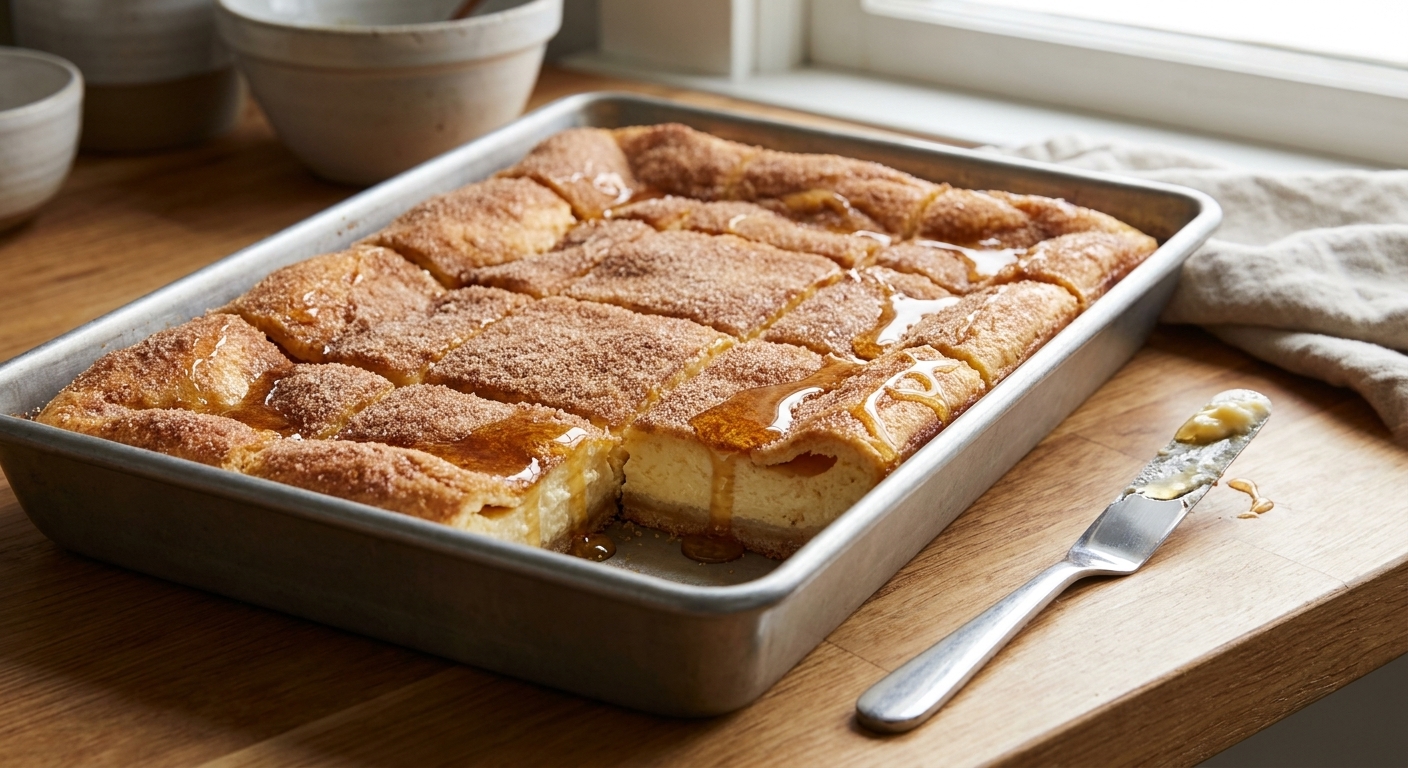
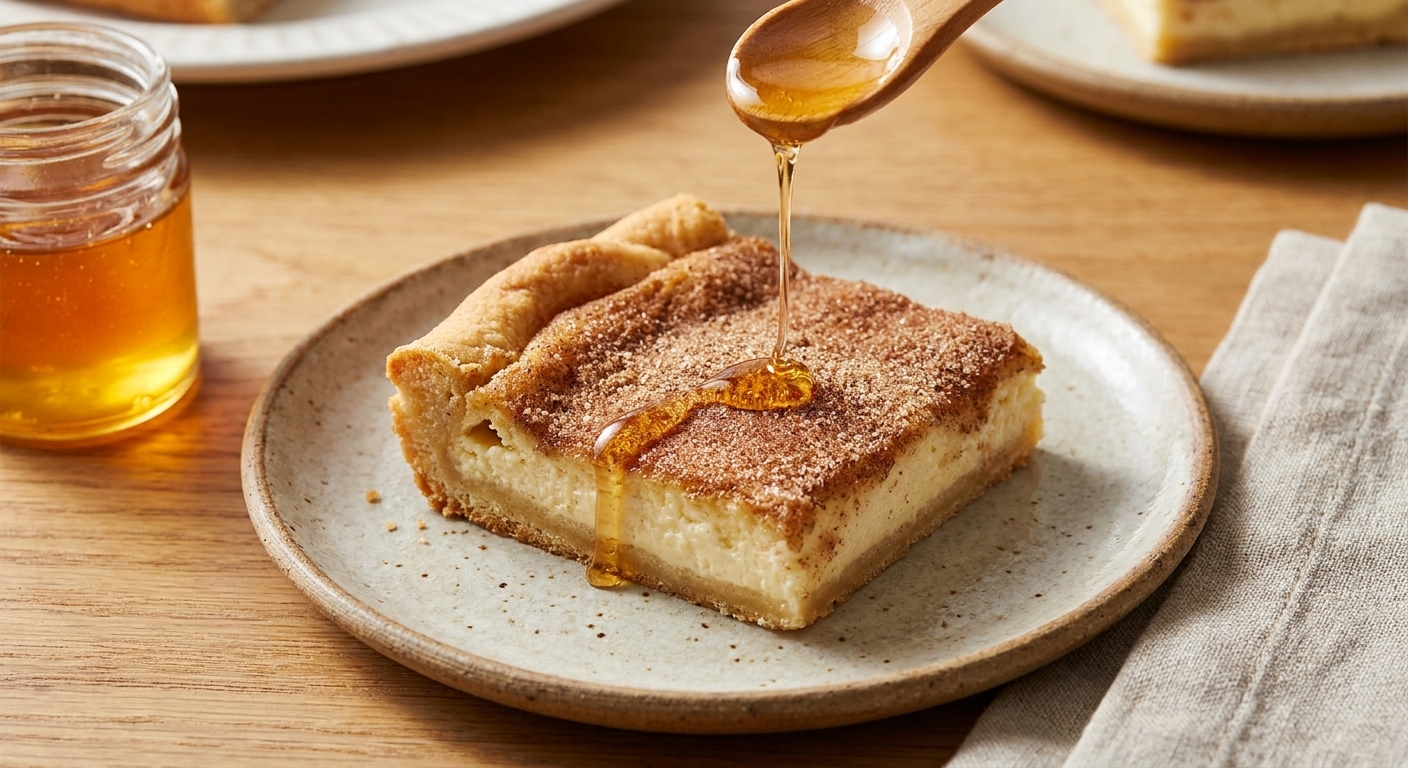
Yes. Bake the day before, refrigerate overnight, slice the next day, then drizzle honey right before serving.
Is this the same as traditional sopapillas?
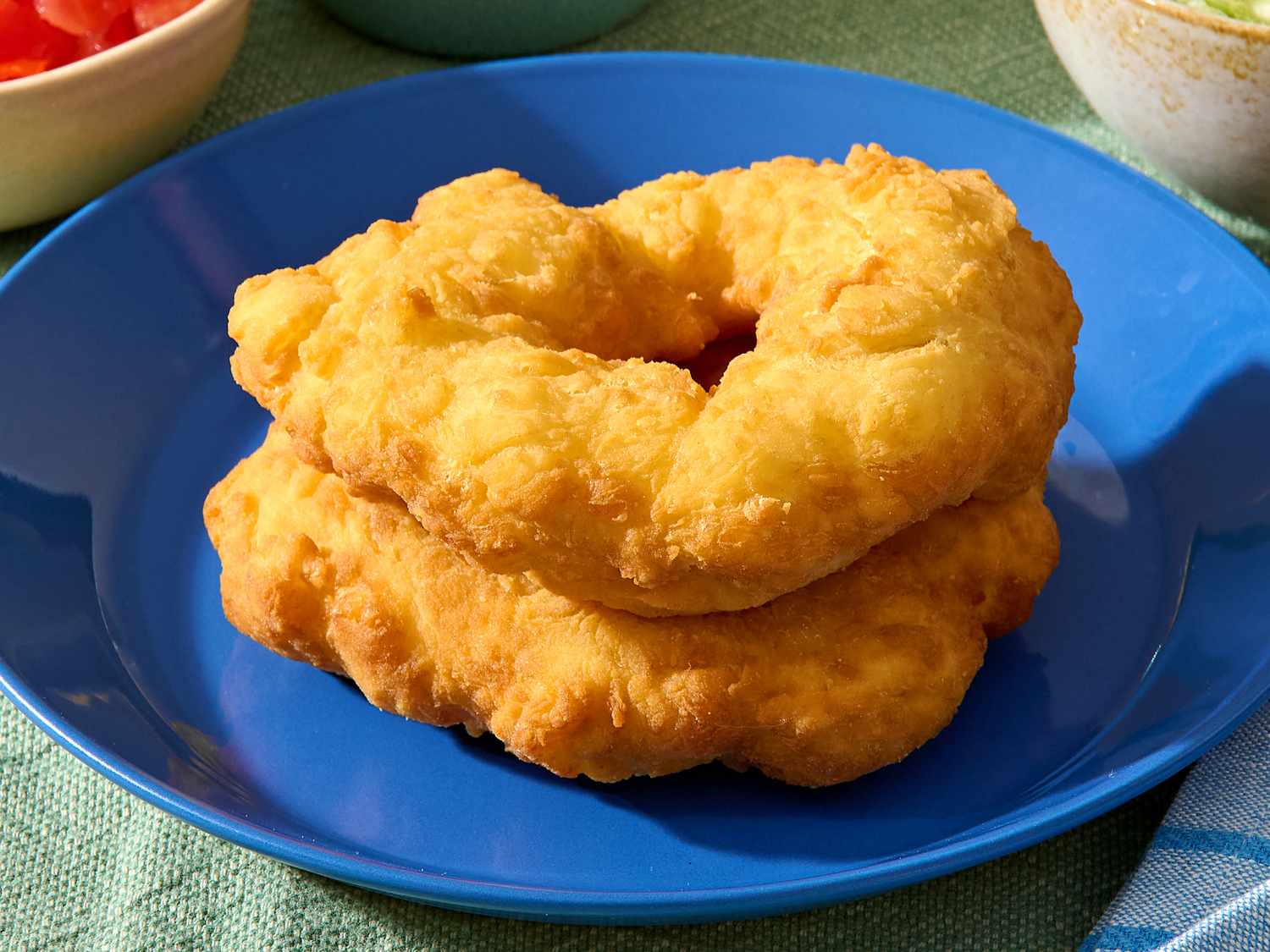
Not exactly. Classic sopapillas are fried, airy pillows from New Mexican and Tex-Mex traditions, often served with honey. These bars are a potluck-style hybrid that borrows those cinnamon and honey flavors without being the same dessert as honey sopapillas.
Any honey safety notes?
If you are serving little ones, remember honey is not recommended for infants under 1 year old.