Mom's Best Recipes
Recipe

Sourdough Discard Bagels

New York style chew, crisp edges, and that extra-tasty tang from sourdough discard. Includes plain, everything, and cinnamon raisin variations.

Author By Matt Campbell
4.8
A tray of freshly baked sourdough discard bagels with glossy browned crusts on parchment paper, a few sliced open to show a dense chewy interior, soft morning window light, realistic kitchen photography

If you have sourdough discard hanging out in your fridge, this is your sign to turn it into something that feels like a small miracle: chewy, crisp, New York style bagels that taste way more complex than the effort suggests.

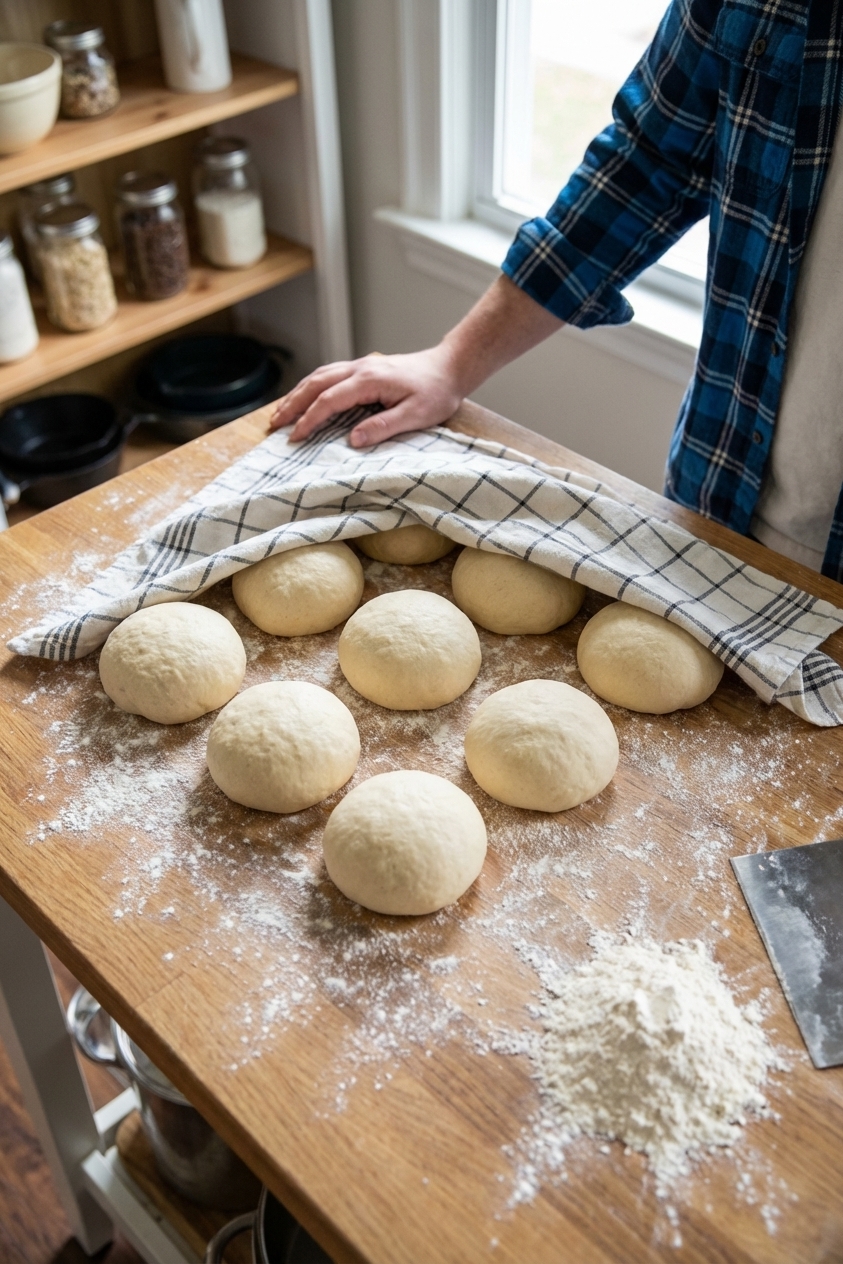
This recipe leans on a classic bagel method: a stiff dough, a short rest, an overnight (or same-day) cold ferment, a quick malt-water boil, then a hot bake. The discard does not replace yeast here. It brings flavor and a little extra tenderness while we still use yeast for reliable rise.

And because bagels should fit your mood, you get three paths: plain (for egg sandwiches), everything (because salt plus crunch is a love language), and cinnamon raisin (for when you want cozy carbs that smell like a bakery).

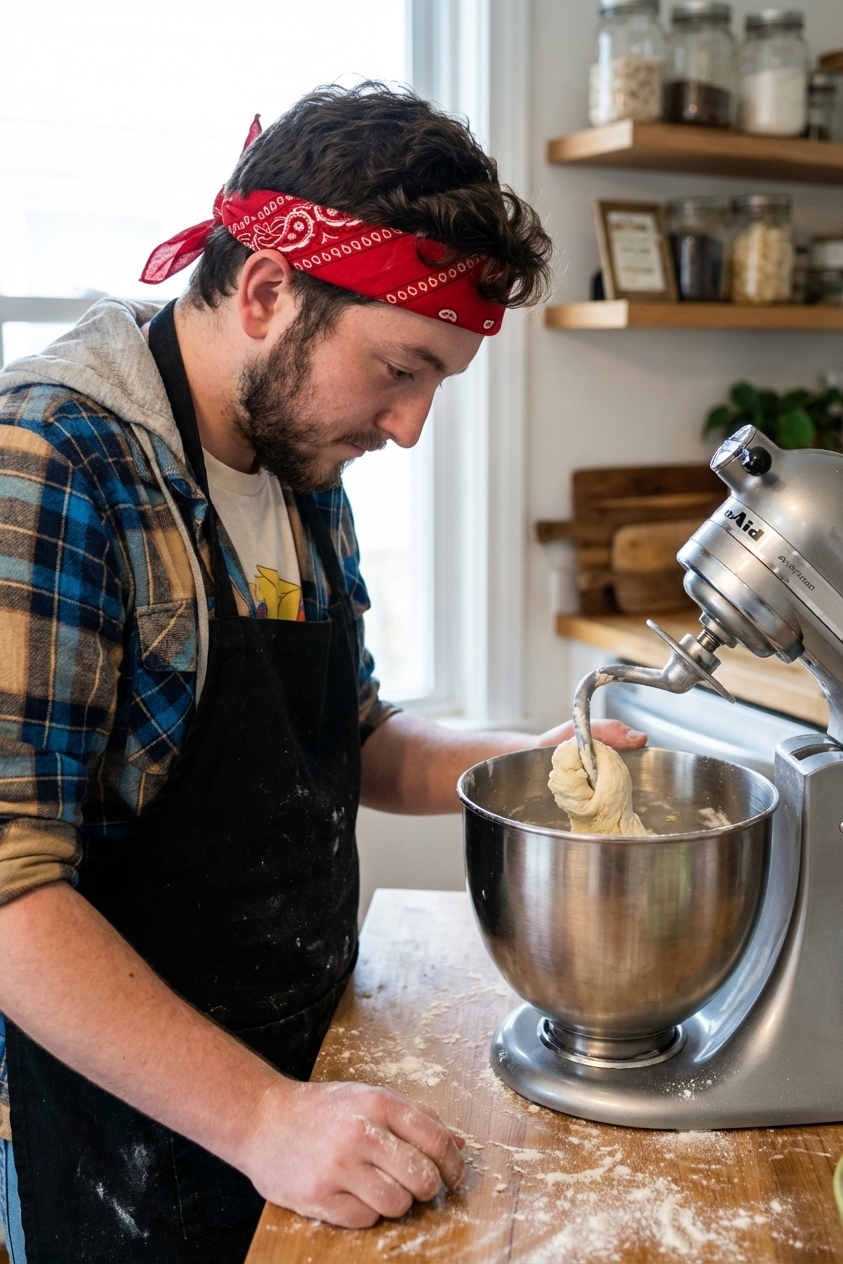
A stand mixer bowl with a stiff bagel dough being kneaded with a dough hook, flour dusted on the counter nearby, realistic home kitchen photo

Why It Works

  • Sourdough discard adds depth: that gentle tang makes these taste like they took all weekend, even if you start after dinner.
  • High-protein flour builds chew: bread flour gives you that signature pull instead of a soft roll vibe.
  • Cold fermentation improves texture: a chill in the fridge makes shaping easier and the crumb tighter and more bagel-like.
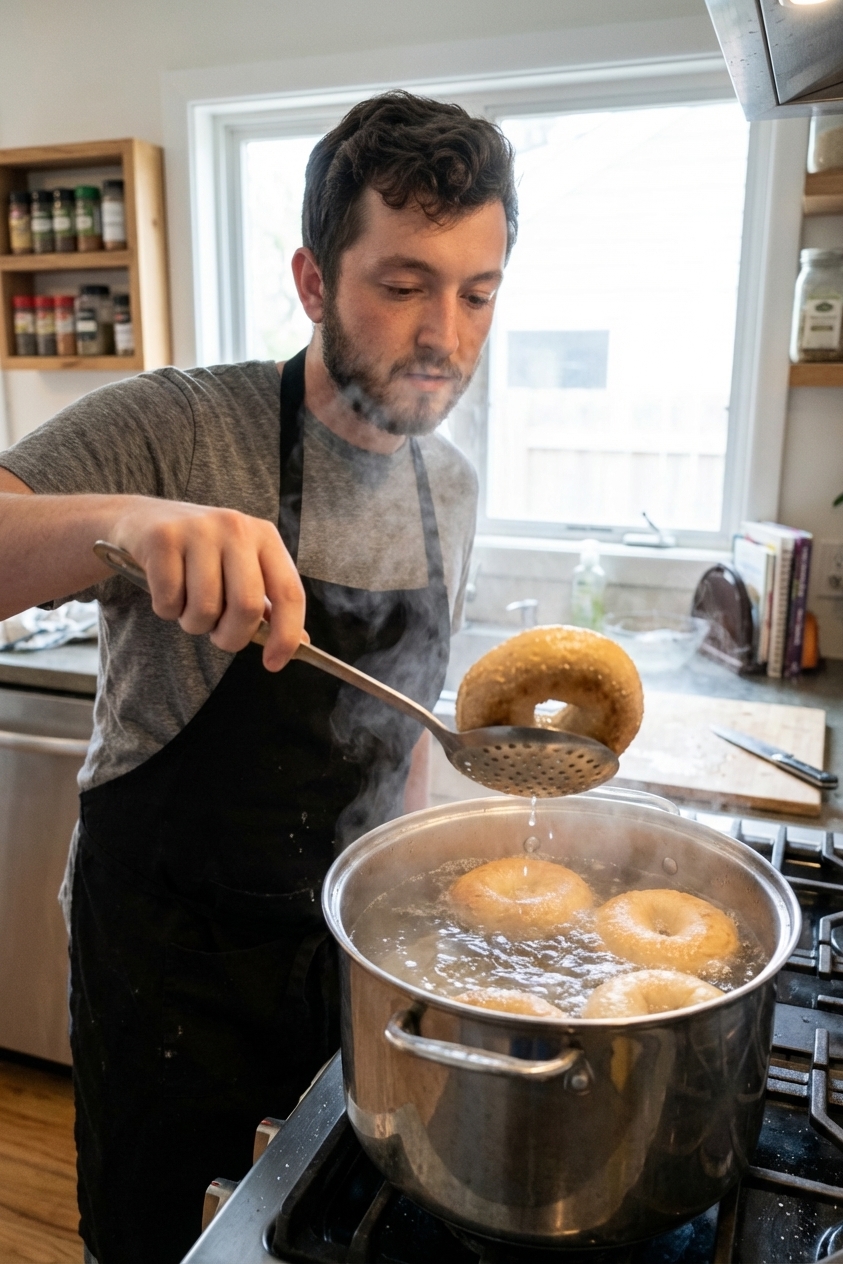
  • Malt-water boil sets the crust: a quick dip gelatinizes the surface so you get glossy, crackly edges and a dense interior.
  • Steam plus heat finishes the job: a hot oven browns fast, keeping the inside tender without drying out.

Pairs Well With

Storage Tips

Bagels are best the day they’re baked, but you can keep them great with one simple move: slice and freeze.

  • Room temperature (1 to 2 days): Cool completely, then store in a paper bag inside a loosely closed plastic bag. This helps avoid both staling and sogginess.
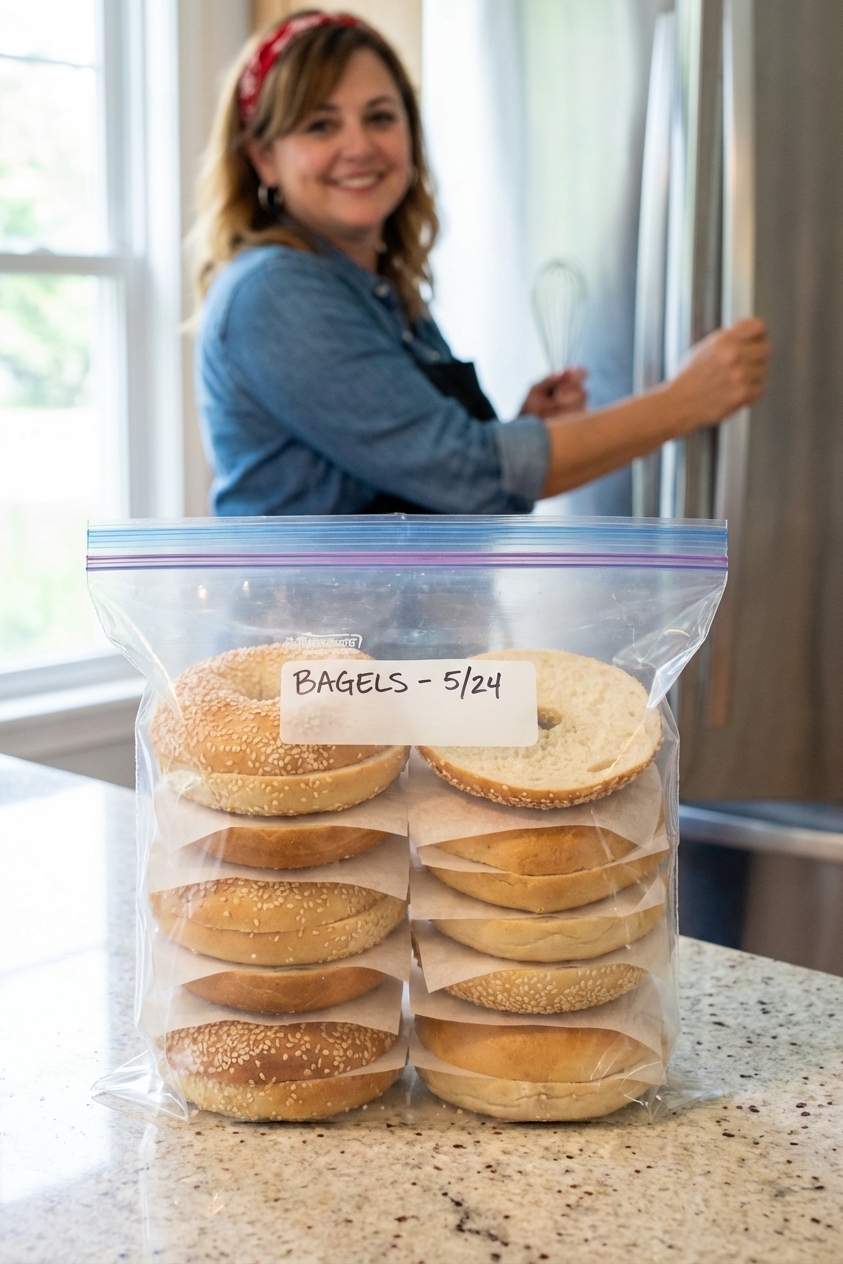
  • Freeze (up to 2 months): Slice first, then freeze in a zip-top bag with parchment between halves if you are feeling organized.
  • To reheat: Toast from frozen, or bake at 350°F / 177°C for 8 to 10 minutes to re-crisp the crust.
  • Avoid: Storing in the fridge. Refrigeration makes bread products stale faster.
Sliced bagel halves stacked with parchment in a freezer bag on a kitchen counter, realistic food storage photo

Common Questions

Do I need active starter for this?

No. This recipe is designed for sourdough discard, straight from the fridge is fine. We use a little yeast for consistent rise and timing, and the discard brings flavor.

What if I do not have barley malt syrup?

You have options. Barley malt syrup is the most classic for New York style bagels, but you can substitute dark brown sugar or honey in the boil. The crust will still brown nicely, just slightly different flavor.

Why are my bagels flat?

Common causes: over-proofing (they get fragile and collapse), too-warm fermentation, or weak shaping. Keep the dough fairly tight when shaping, and do the float test before boiling.

What is the float test?

Drop one shaped bagel in a bowl of room temperature water (not the boiling pot). If it floats fairly quickly, you are good to boil. If it sinks, let the tray rest 10 to 20 more minutes and try again.

Should I boil bagels straight from the fridge?

Usually, yes. Cold dough is easier to handle and holds its shape better. Pull the tray from the fridge, do a quick float test, then boil and bake. If they do not float yet, let them sit at room temperature 15 to 30 minutes, then test again.

Can I make these same day?

Yes. You will lose a bit of developed flavor, but they are still excellent. Do a shorter room temperature proof and a brief chill to make them easier to handle, then boil and bake.

How do I get that super shiny crust?

Boil in malted water, do not skip the boil time, and bake hot. An egg wash is not traditional for NY bagels, but if you want maximum shine and extra topping stick, you can lightly brush with egg white before topping.

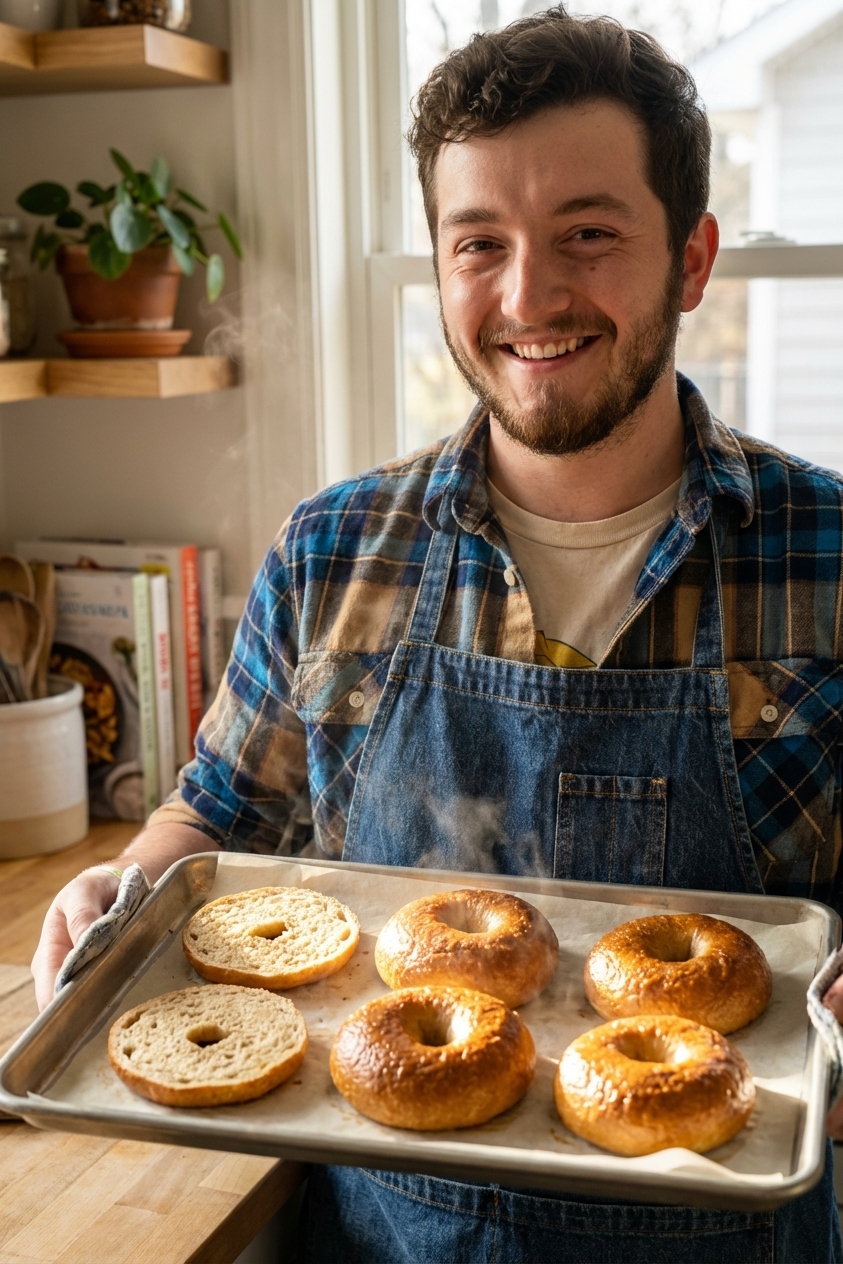
I used to think bagels were one of those “leave it to the pros” foods. Then I tried making them with discard, mostly because I hate throwing away something that still smells like potential.

The first time I nailed the boil, I pulled a batch from the oven with that glossy crust and the kind of chew that makes you slow down mid-bite. It felt like a tiny home-kitchen flex. Now when discard starts piling up, bagels are my favorite solution because they are practical, a little dramatic, and ridiculously satisfying.