
Mom's Best Recipes
Recipe

Sourdough Discard English Muffins

Classic griddle-cooked English muffins made with sourdough discard for subtle tang, crisp edges, and the kind of nooks and crannies that catch every drip of butter.

Author By Matt Campbell
4.8
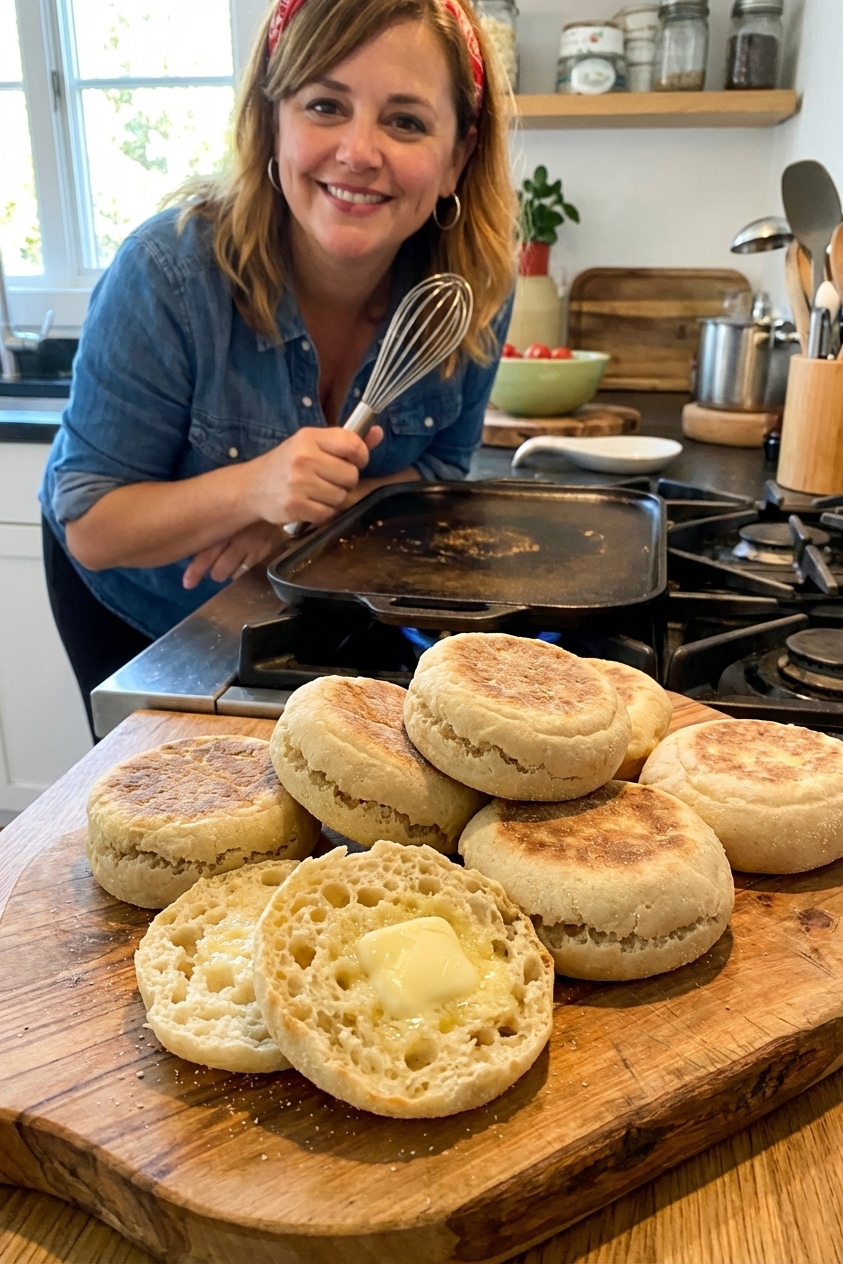
A stack of homemade sourdough discard English muffins on a wooden cutting board, one muffin split open to show a soft interior full of nooks and crannies, with a pat of butter melting nearby and a cast iron griddle in the background, warm natural kitchen light, photorealistic

If you keep a sourdough starter, you already know the weekly question: what am I doing with all this discard? These sourdough discard English muffins are my favorite answer because they feel like a real breakfast flex, but the process is honestly pretty chill. No oven. No fancy shaping. Just a simple dough, a rise, a quick roll and cut, then a slow griddle cook that builds that classic golden outside.

And yes, we're going for nooks and crannies. Not cake. Not bread rolls. The goal is that split-open interior that looks a little wild, toasts like a dream, and holds onto butter like it's getting paid for it. If you want eggs Benedict, breakfast sandwiches, or just a toasted muffin with jam that makes you pause mid-bite, you're in the right place.
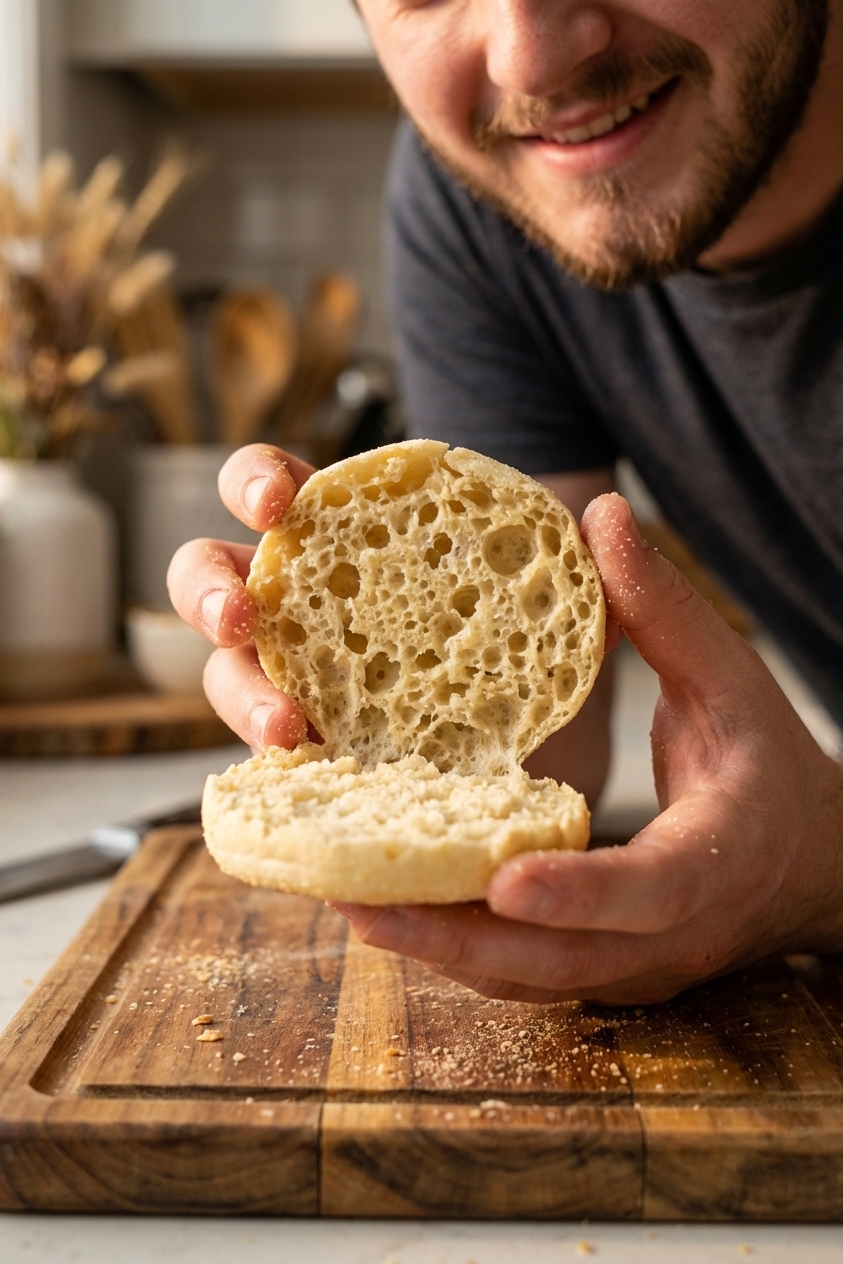
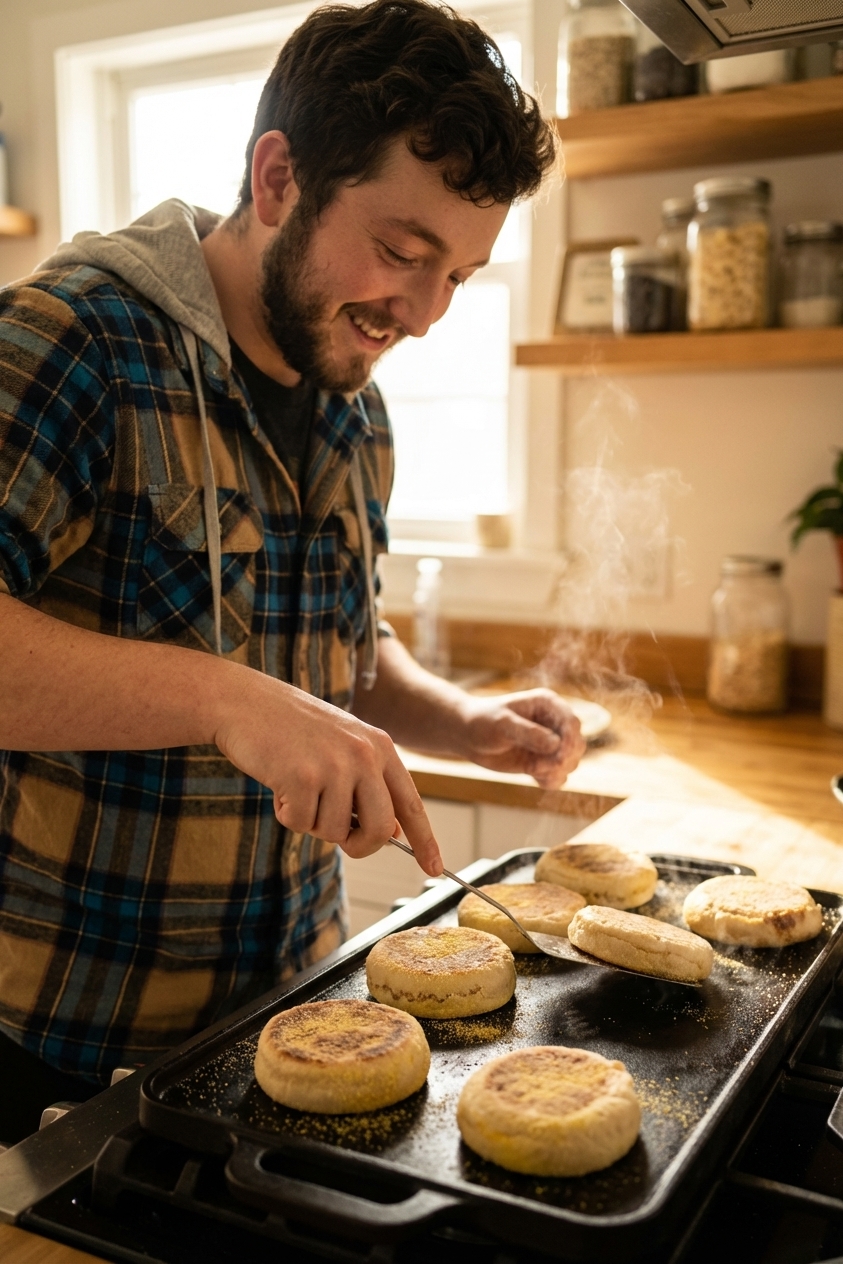
A close-up of an English muffin split open by hand, showing an airy interior with deep nooks and crannies, crumbs scattered on a cutting board, shallow depth of field, photorealistic

Why It Works

  • Discard adds flavor without extra fuss: You get a gentle tang and better browning, even though we're not relying on the discard alone for lift.
  • Combination of yeast and discard: A little instant yeast makes the timing reliable, so you get consistent rise and texture.
  • Soft dough plus gentle handling: Lightly patting and cutting preserves air pockets, which become those signature craters.
  • Low and slow griddle cooking: The exterior turns crisp and deeply golden while the inside cooks through and stays tender.
  • Steam finish option: A quick lid-on moment helps the centers cook without over-browning.

Pairs Well With

Storage Tips

How to Store Them

  • Room temperature: Cool completely, then store in an airtight container for up to 2 days. (Moisture is the enemy of crisp edges, so don't seal while warm.)
  • Refrigerator: Not my first choice because it can dry them out, but it works for up to 5 days. Toast to bring them back.
  • Freezer: Best option. Split them first, then freeze in a bag with parchment between layers for up to 2 months. Toast from frozen, no thaw needed.
  • Reheat: Always toast. If you want extra crisp, toast then hit the cut sides with a little butter in a skillet for 30 to 60 seconds.

Common Questions

Common Questions

Do I need active starter for this recipe?

Nope. This is built for sourdough discard. The discard brings flavor and tenderness, and a small amount of yeast handles the rise so the timing stays predictable.

What hydration discard are you using?

This recipe assumes 100 percent hydration discard (equal parts flour and water by weight). If yours is thicker or runnier, go by dough feel: soft, tacky, and it should hold its shape but slowly relax.

How do I get more nooks and crannies?

Three things: keep the dough soft, handle it gently, and split with a fork instead of slicing with a knife. Also, don't roll the dough thin. Aim for about 1/2 to 3/4 inch thickness.

Why cornmeal on the outside?

It keeps the dough from sticking and gives you that classic lightly crunchy bottom. If you don't have cornmeal, coarse semolina works great.

My muffins browned but the centers feel gummy. What happened?

Heat was too high. Griddle cooking is a low and slow situation. Next time, drop the heat to medium-low and consider covering the pan for part of the cook to help the centers set.

Can I make the dough ahead?

Yes. After the first rise, cover and refrigerate the dough overnight. Let it sit at room temp for about 30 to 60 minutes before shaping and cooking.

Can I use all whole wheat flour?

You can, but the muffins will be denser. If you want whole wheat, start with 50 percent whole wheat and see how you like the texture. You may need an extra splash of milk because whole wheat drinks more liquid.

I started making these on a week when my discard jar was getting a little too confident in the back of the fridge. Pancakes felt predictable, and I wanted something that made breakfast feel like a tiny event without turning my kitchen into a full-time job. The first batch was… fine, but a little too bready. Then I learned the real trick is patience: softer dough, gentler shaping, and a griddle heat low enough that you start questioning your life choices. Suddenly, the muffins went from “nice” to “wait, did I do this?” Now I keep a bag in the freezer specifically for emergency toasted-muffin situations.