Mom's Best Recipes
Recipe

Sourdough Discard Tortillas

Easy homemade flour tortillas made with sourdough discard for a gentle tang, tender chew, and flexible wrap-worthy texture. Stovetop and griddle methods included.

Author By Matt Campbell
4.8
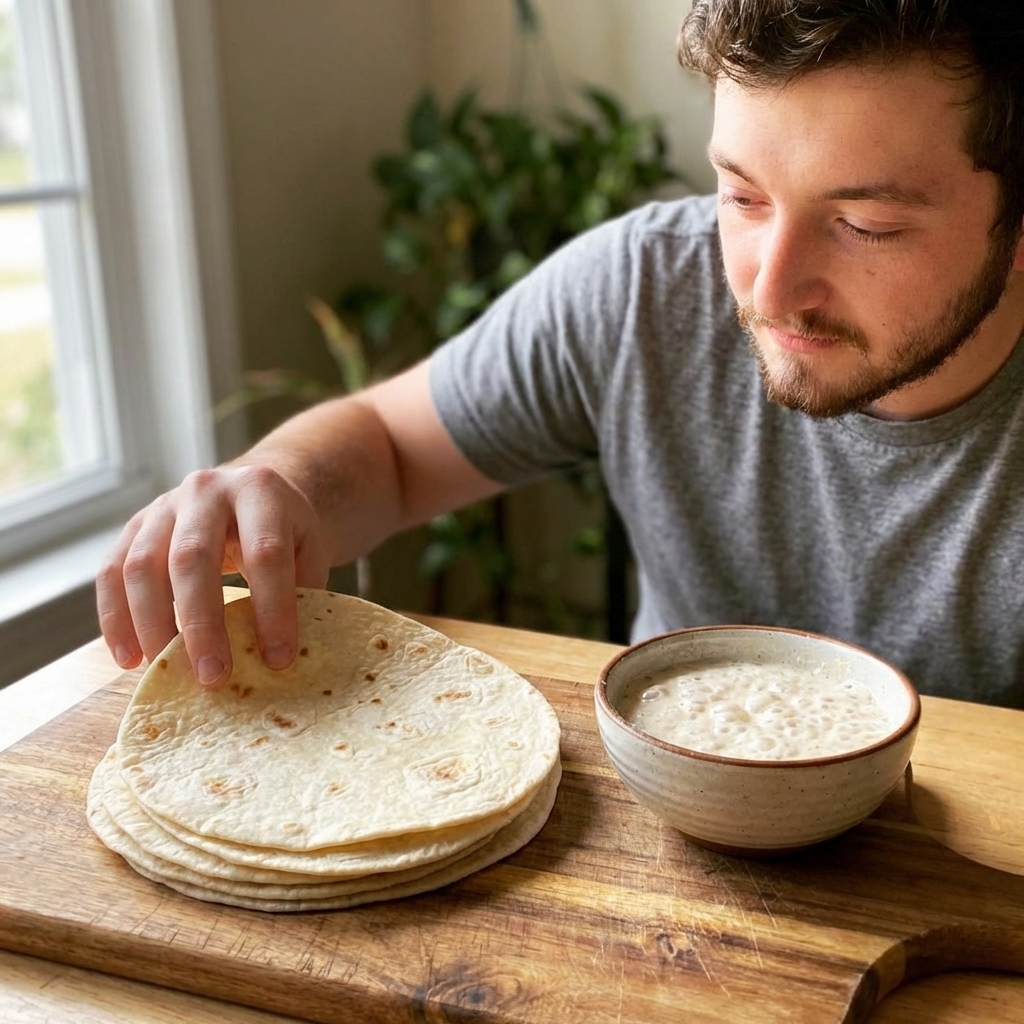
A stack of soft flour tortillas on a wooden cutting board with a small bowl of sourdough discard nearby, warm natural window light, shallow depth of field, photorealistic food photography

If you keep a sourdough starter, you know the routine: feed, bake, discard, repeat. And while crackers and pancakes get a lot of love, tortillas are the low-key best way to put discard to work. They are thin, quick, and wildly useful. Tacos tonight, breakfast wraps tomorrow, emergency quesadilla the next day. No drama.

These sourdough discard tortillas come out soft, pliable, and gently tangy, with a texture that feels a little more tender than your standard flour tortilla. No yeast, no rise time, no fancy equipment required. Just a bowl, a pan, and the important reminder that tortillas do best when you cook hot, cook fast, and let the dough rest.
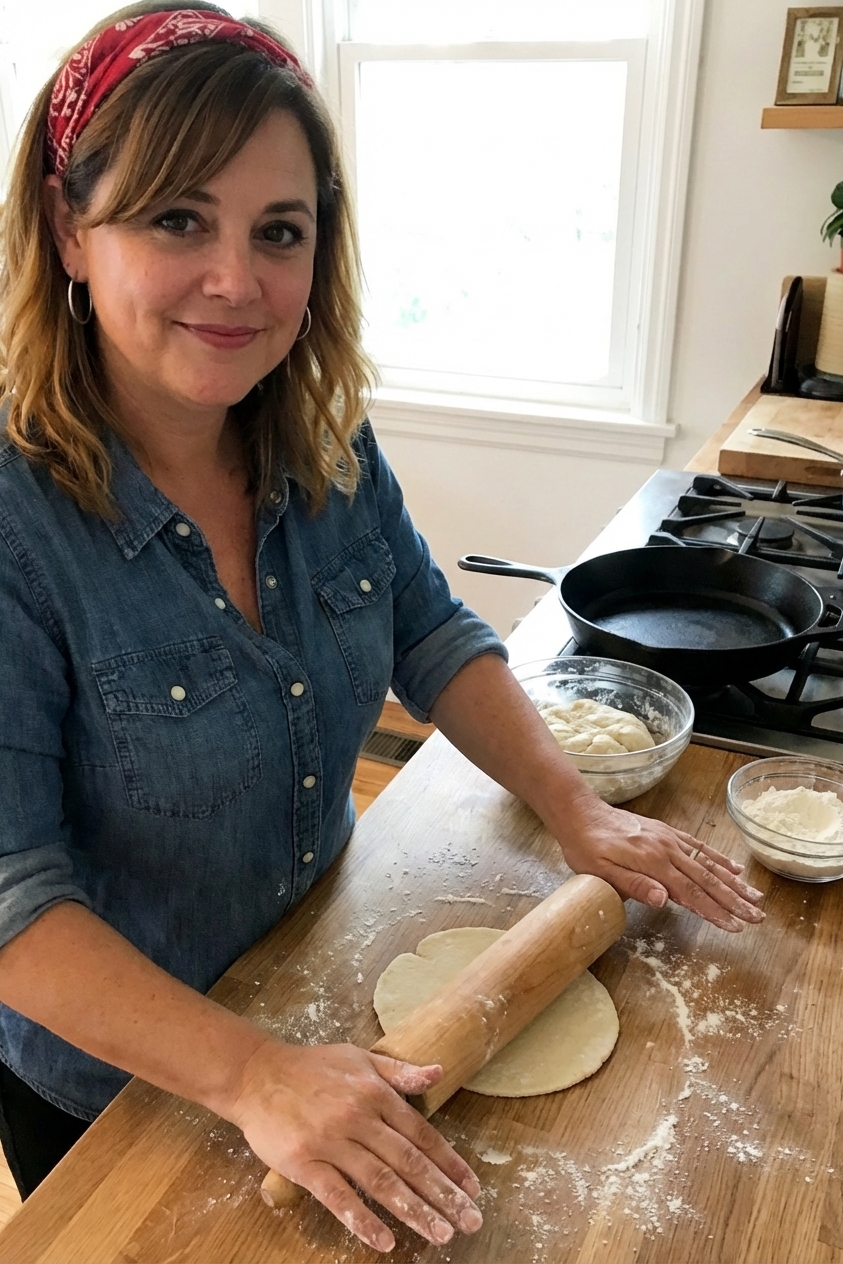
Hands rolling out a small round of tortilla dough on a lightly floured countertop with a rolling pin, simple home kitchen setting, photorealistic food photography

Why It Works

  • Discard can add tenderness: The acidity in sourdough discard may soften the dough a bit and gives you that subtle tang that plays nicely with savory fillings. How noticeable it is depends on your discard age and hydration.
  • Simple fat choice, big payoff: Oil keeps them soft and flexible. Butter gives flavor but can set firmer as it cools. Lard or shortening makes the most classic bendy tortilla texture.
  • Short rest, easier roll: Letting the dough rest relaxes gluten so you can roll thin without the dough snapping back.
  • Hot, fast cooking helps: A properly hot pan cooks quickly, which helps prevent drying while still giving those toasty brown freckles. Too hot, though, and you can scorch them, so adjust as needed.

Pairs Well With

Storage Tips

Keep Them Soft

Tortillas are at their best the day you make them, but you can absolutely store them without ending up with sad, crackly rounds.

Room temperature (best for 1 day)

  • Cool completely, then stack and store in a sealed bag or airtight container.
  • Slip a paper towel in the bag if your kitchen is humid.

Refrigerator (up to 4 days)

  • Stack tortillas with a small piece of parchment between every few if you want easy grabbing.
  • Reheat before using to bring back flexibility.

Freezer (up to 2 months)

  • Freeze in a flat stack with parchment between tortillas, then seal in a freezer bag.
  • Thaw at room temp for 20 to 30 minutes or warm straight from frozen in a covered skillet on low.

How to reheat without drying them out

  • Skillet: 10 to 20 seconds per side over medium heat, then stack under a towel.
  • Microwave: Wrap 4 to 6 tortillas in a damp paper towel, microwave 20 to 30 seconds.

Softness trick: As soon as each tortilla comes off the heat, tuck it into a clean towel or tortilla warmer. Steam is your friend here.

Common Questions

Common Questions

Do I need active bubbly starter for this?

Nope. This recipe is designed for sourdough discard. It can be unfed, less active, and straight from the fridge. If your discard is very acidic (strong smell), the tortillas will taste tangier. Still good, just bolder.

What starter hydration does this recipe assume?

This is written for a 100% hydration starter (roughly equal weights flour and water), which is the most common. If your discard is thicker, you may need a little more water. If it is thinner, hold back some water and add only if the dough feels dry. The dough feel matters more than the exact number.

Does cold discard change anything?

Cold discard is totally fine. It can hydrate a bit slower, so if the dough feels tight or dry after mixing, add water 1 teaspoon at a time and give it a minute to absorb before adding more.

Why are my tortillas stiff instead of pliable?

  • Your pan might be too cool, which dries them out before they blister.
  • You may have overcooked them. Tortillas should cook fast with light blistering and a few freckles, not a deep overall tan.
  • The dough may be too dry. Add water 1 teaspoon at a time until the dough feels soft and smooth.
  • You skipped the rest. Even 15 to 20 minutes helps.

Can I use whole wheat flour?

Yes. Start by swapping in 25 to 50 percent whole wheat. Whole wheat absorbs more liquid, so you may need an extra 1 to 3 tablespoons water.

What fat is best?

For the most classic soft bend: lard or vegetable shortening. For easy pantry mode: neutral oil. For flavor: melted butter, but expect them to firm up a bit as they cool.

Do I need a tortilla press?

No. A rolling pin is perfect for flour tortillas. A press is more helpful for corn tortillas. If you do press these, use parchment and still finish with a quick roll to get them thinner.

My tortillas shrink back when I roll them. What now?

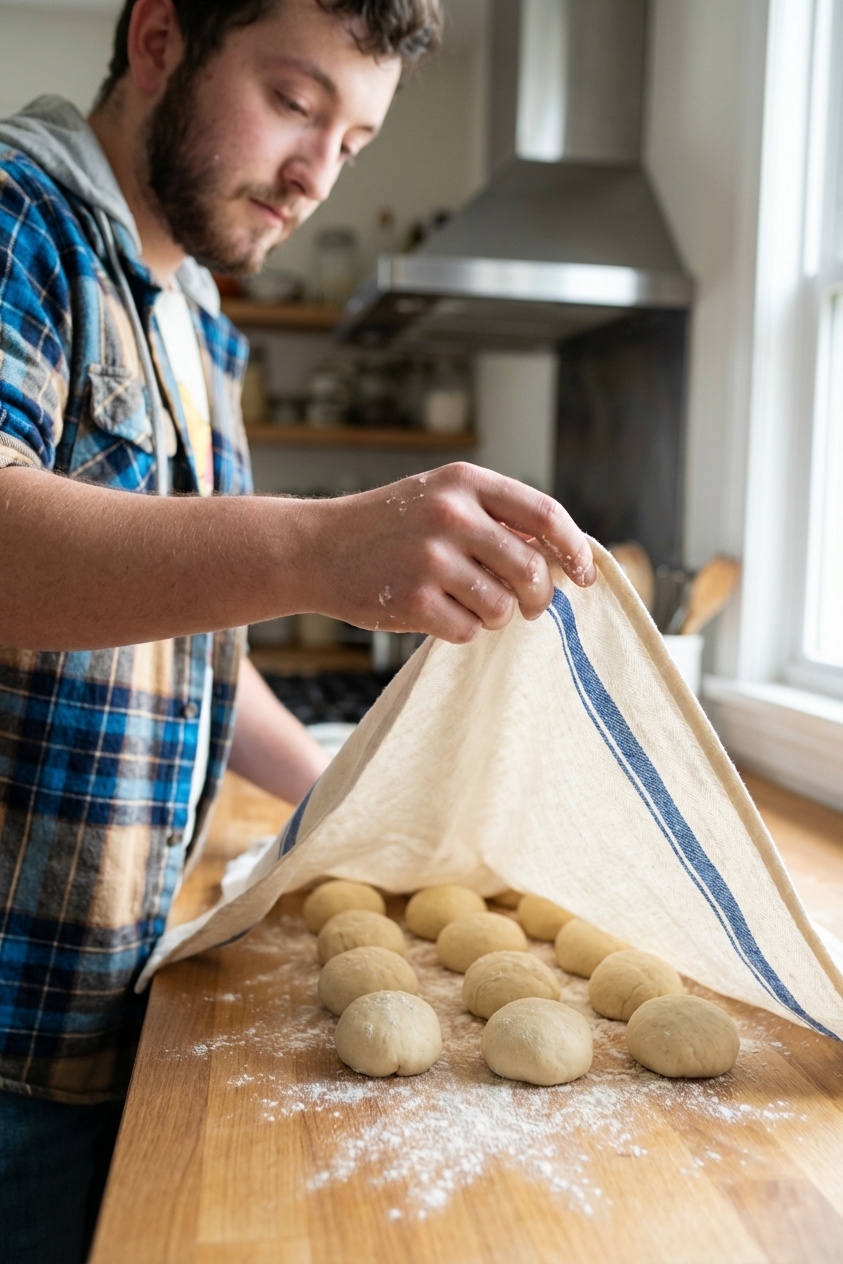
That is tight gluten. Cover the dough balls and let them rest 10 more minutes, then try again. Also make sure you are not over-flouring the surface, which can make rolling tougher.

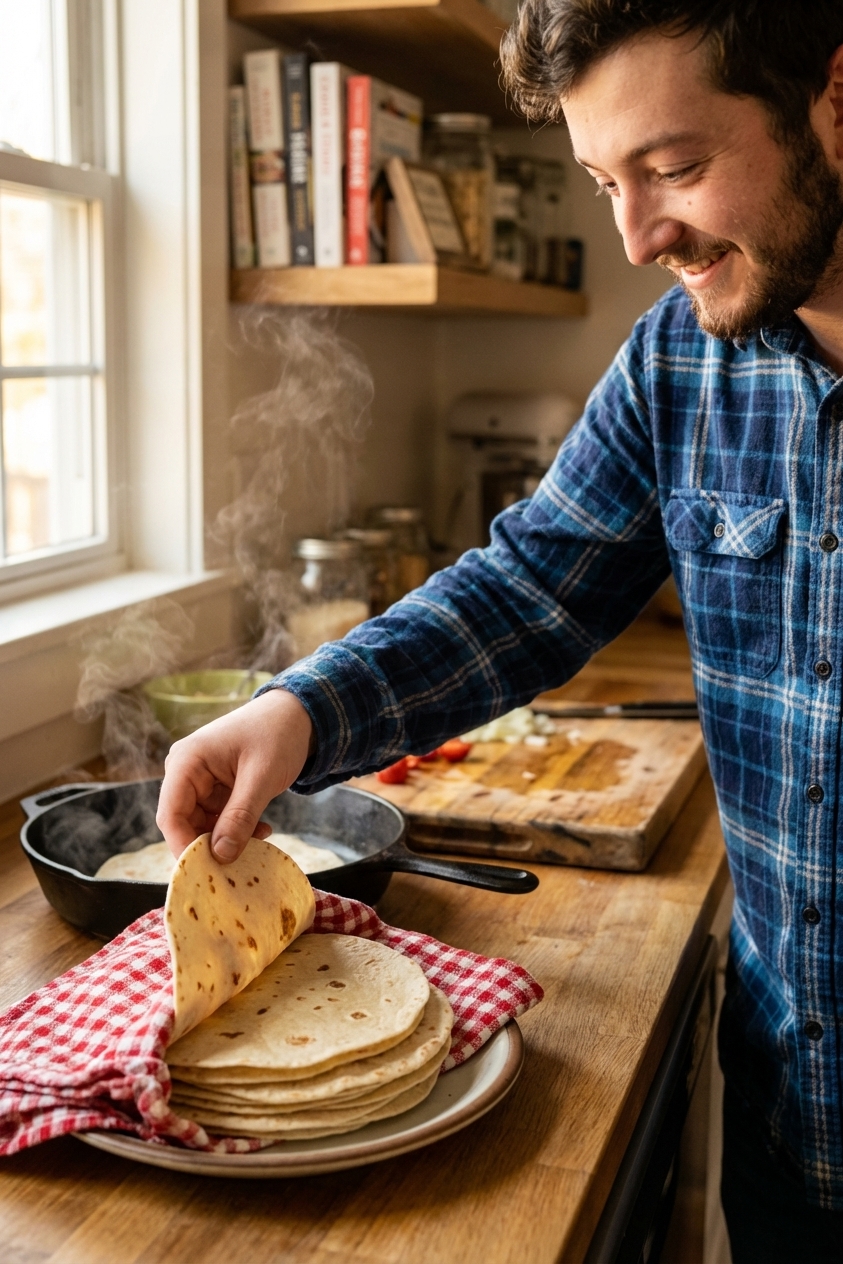
I used to treat tortillas like a store-only item, mostly because I thought homemade meant an afternoon project and a kitchen full of flour. Then I had a jar of discard in the fridge giving me the side-eye. One night, I mixed it into a quick dough, rolled out a few ragged circles, and cooked them in a screaming hot skillet.

The first one came off the pan with those little brown freckles and that faint sourdough aroma, and I immediately understood the hype. It felt like cheating. Five minutes later I was standing at the counter eating a warm tortilla plain, because honestly it did not need a filling to be convincing.