Mom's Best Recipes
Recipe

Southern Spoon Bread

A custardy corn spoon bread with a golden top, baked in a hot cast-iron skillet for crisp edges and a tender, spoonable center.

Author By Matt Campbell
4.8
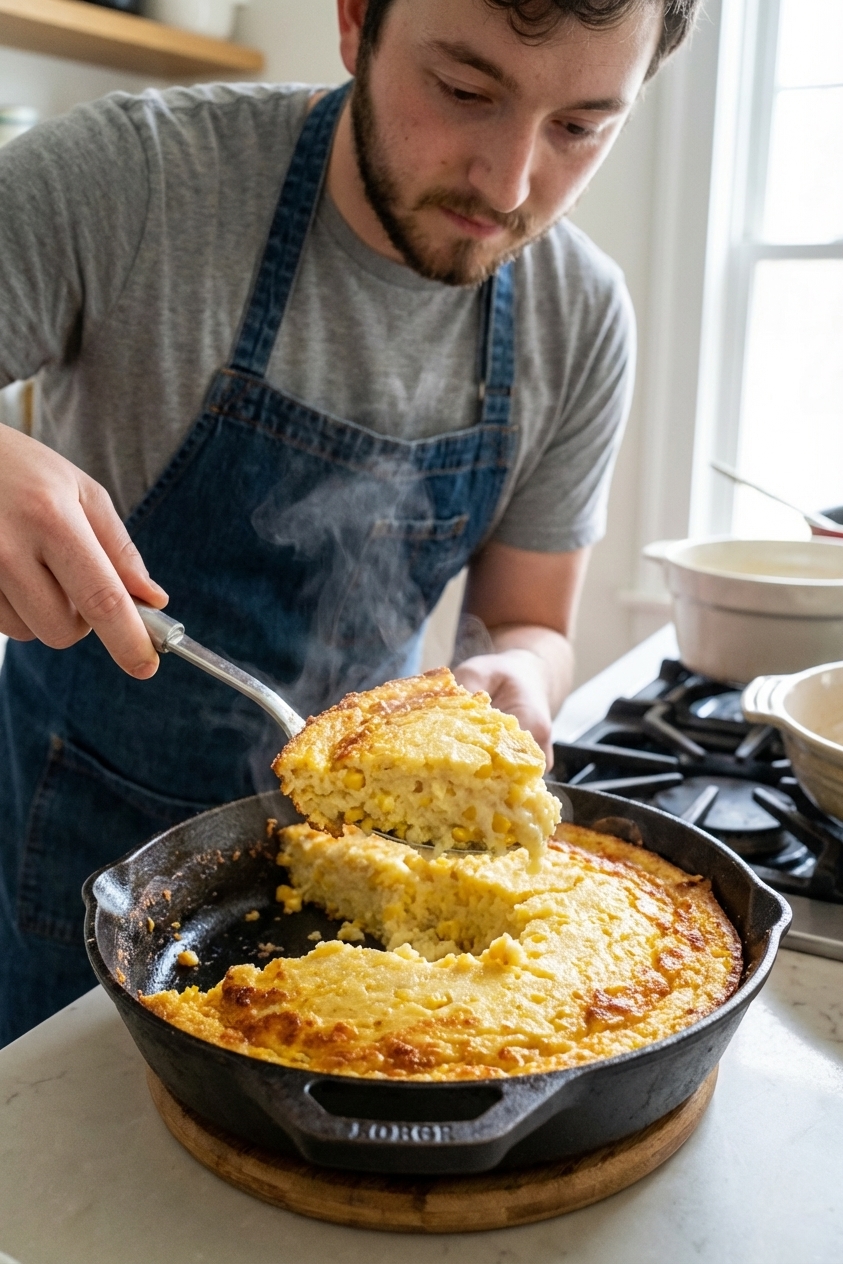
A golden-topped Southern spoon bread in a black cast-iron skillet on a rustic wooden table, with a spoon scooping out a custardy portion, natural window light

Spoon bread is what happens when cornbread decides to put on a cozy sweater and stop trying so hard. It’s soft, custardy, and deeply corny in the best way, like a cross between grits and a soufflé that actually wants to be your friend.

This Southern classic starts with a cooked cornmeal mush (don’t worry, it’s easy), then gets enriched with butter, buttermilk, and eggs. The goal is just set, a golden top with a center that stays tender enough to scoop.

If you’ve only had crumbly cornbread, consider this your gentle reminder that corn can also do silky, spoonable comfort. And yes, we’re using cast iron because it helps you get those crisp edges without turning the middle into a desert.

Heads up on yield: This fills a 10-inch skillet and serves about 6 to 8 as a side.

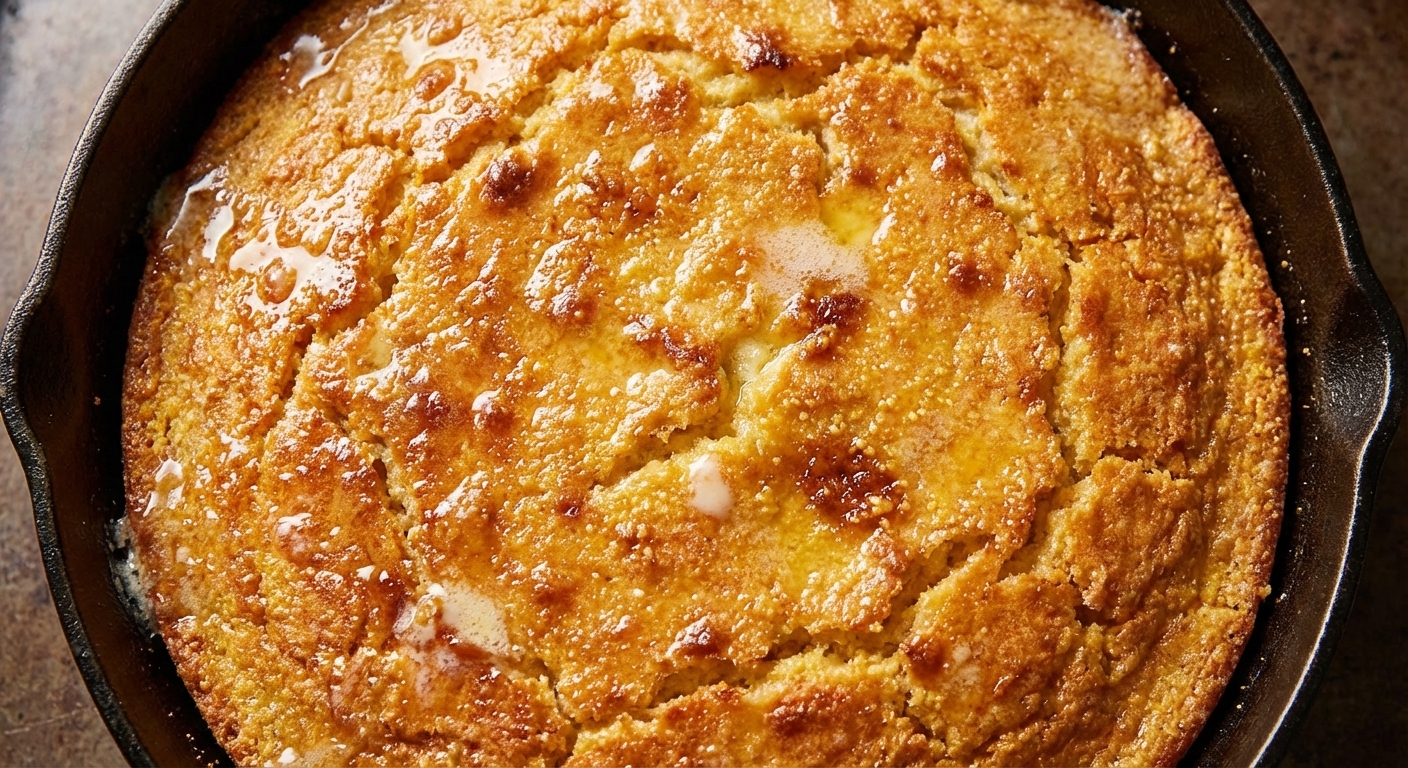
A close-up of a spoon bread surface showing a golden, lightly blistered crust with buttery sheen, baked in a skillet

Why It Works

  • Custardy texture, not cakey: Cooking the cornmeal first hydrates it fully so the bake turns silky instead of gritty.
  • Buttermilk brings the glow-up: It adds tang and tenderness, balancing the sweetness of corn.
  • Preheated cast iron helps with crisp edges: That hot skillet encourages browning around the rim while the center stays tender.
  • Eggs set and lift: Yolks add richness, whites add a little airy bounce, and the buttermilk plus baking soda gives a small boost, too.

Pairs Well With

Storage Tips

Spoon bread is best fresh, when the top is golden and the center is still gently custardy. That said, leftovers are absolutely worth saving.

Refrigerate

  • Cool completely, then cover tightly or transfer to an airtight container.
  • Store in the fridge for up to 3 days.

Reheat

  • Oven (best): 325°F, covered with foil, 10 to 15 minutes until warmed through. Uncover for the last 2 minutes if you want the top to perk back up.
  • Microwave (fast): Reheat in short bursts. It’ll stay soft but you’ll lose some edge crispness.

Freeze

  • You can freeze it, but the texture becomes more pudding-like after thawing.
  • Freeze tightly wrapped portions up to 2 months. Thaw overnight in the fridge and reheat covered in the oven.

Common Questions

What is spoon bread, exactly?

Spoon bread is a Southern side dish made from a cooked cornmeal base that’s enriched with eggs, butter, and milk or buttermilk, then baked until just set. It’s meant to be scooped, not sliced.

How is spoon bread different from cornbread?

Cornbread is a batter that bakes up sliceable and more crumbly or cakey. Spoon bread starts with a cooked cornmeal mush, so it bakes into a custardy texture closer to soft polenta or spoonable grits, with a little lift from eggs.

Do I have to use a cast-iron skillet?

No, but cast iron really helps. Preheating it encourages crisp edges and steady heat, which helps the center stay tender. If you use a baking dish instead, add 5 to 10 minutes to the bake time and expect softer edges.

Why is there baking soda if we’re whipping egg whites?

That pinch of baking soda reacts with the buttermilk to add a touch of lift and tenderness. The whipped whites add extra airiness. You can skip whipping the whites and still get great spoon bread, it’ll just bake up a bit more custardy and less lofty.

Why did my spoon bread turn out runny?

The most common causes are underbaking, not cooking the cornmeal base long enough, or using a larger pan that keeps the center thicker and slower to set. Bake until the center jiggles like set custard, not like liquid. If you like numbers, aim for about 190 to 200°F in the center.

Why did mine turn out dry?

Usually it’s baked too long or at too high a temp. Spoon bread wants to be pulled when the center is just set. Also make sure you measure cornmeal accurately. Too much cornmeal equals less custard.

Can I make it ahead?

You can cook the cornmeal base up to 1 day ahead and refrigerate it. Rewarm gently on the stove with a splash of buttermilk, then proceed with the eggs and bake right before serving.

Can I substitute for buttermilk?

Yes. For 1 1/2 cups buttermilk, mix 1 1/2 cups milk with 1 1/2 tablespoons lemon juice or white vinegar. Let it sit 5 minutes, then use it like buttermilk.

Does cornmeal grind matter?

It does. Medium grind is the easiest. Stone-ground or coarse cornmeal can take longer to soften on the stove, so cook the base a few minutes longer until it’s smooth and thick, not gritty.

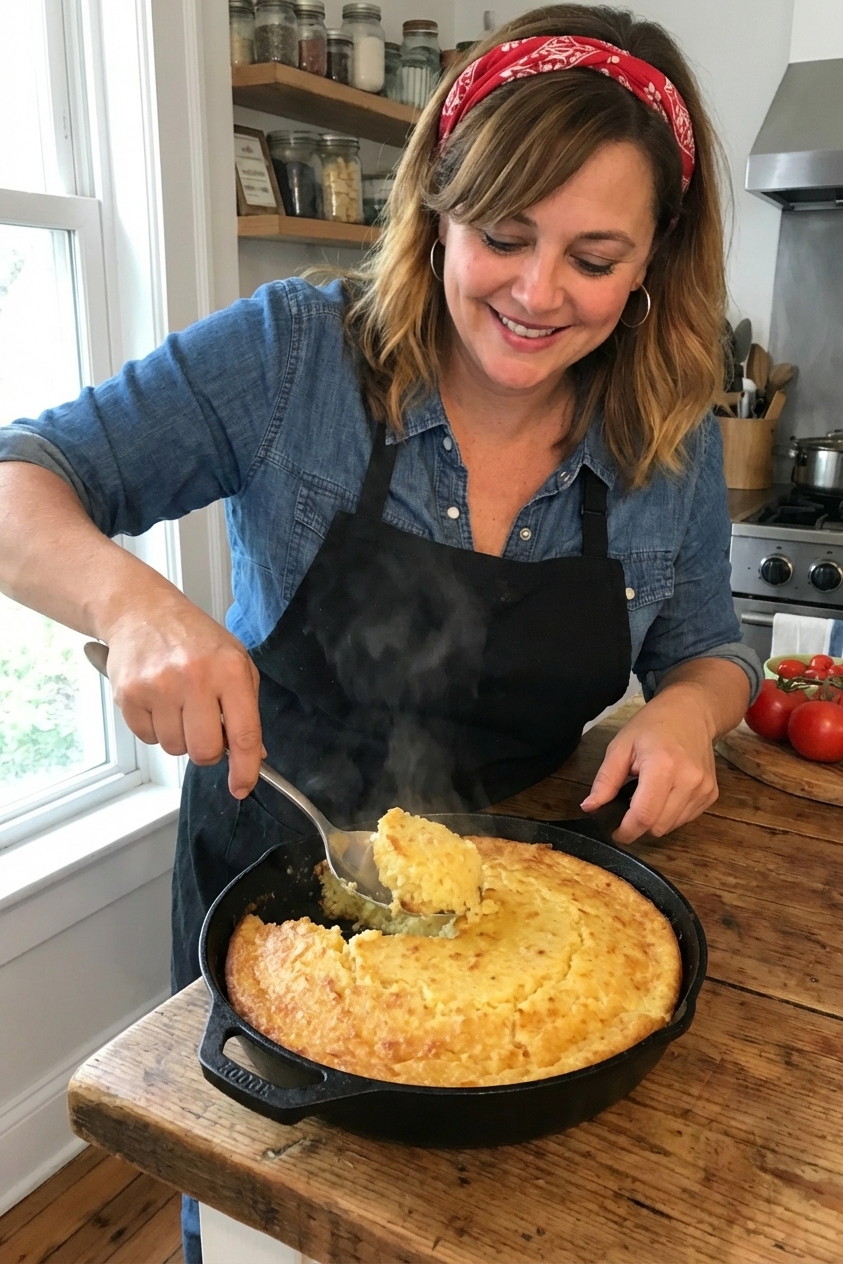
The first time I made spoon bread, I was expecting cornbread energy. You know, sliceable, crumbly, maybe a little dry if you blink at it too long. Instead, I pulled a skillet out of the oven that looked like cornbread but ate like a warm corn custard with a golden hat. I took one bite, then immediately took another, because that’s the rule when butter, corn, and buttermilk are doing this much teamwork. It’s the kind of side dish that makes the main course a little jealous.