
Mom's Best Recipes
Recipe

Spaghetti Aglio e Olio

A 15-minute, pantry-friendly pasta with sweet garlic, a little heat, and a glossy sauce made from olive oil and starchy pasta water.

Author By Matt Campbell
4.8
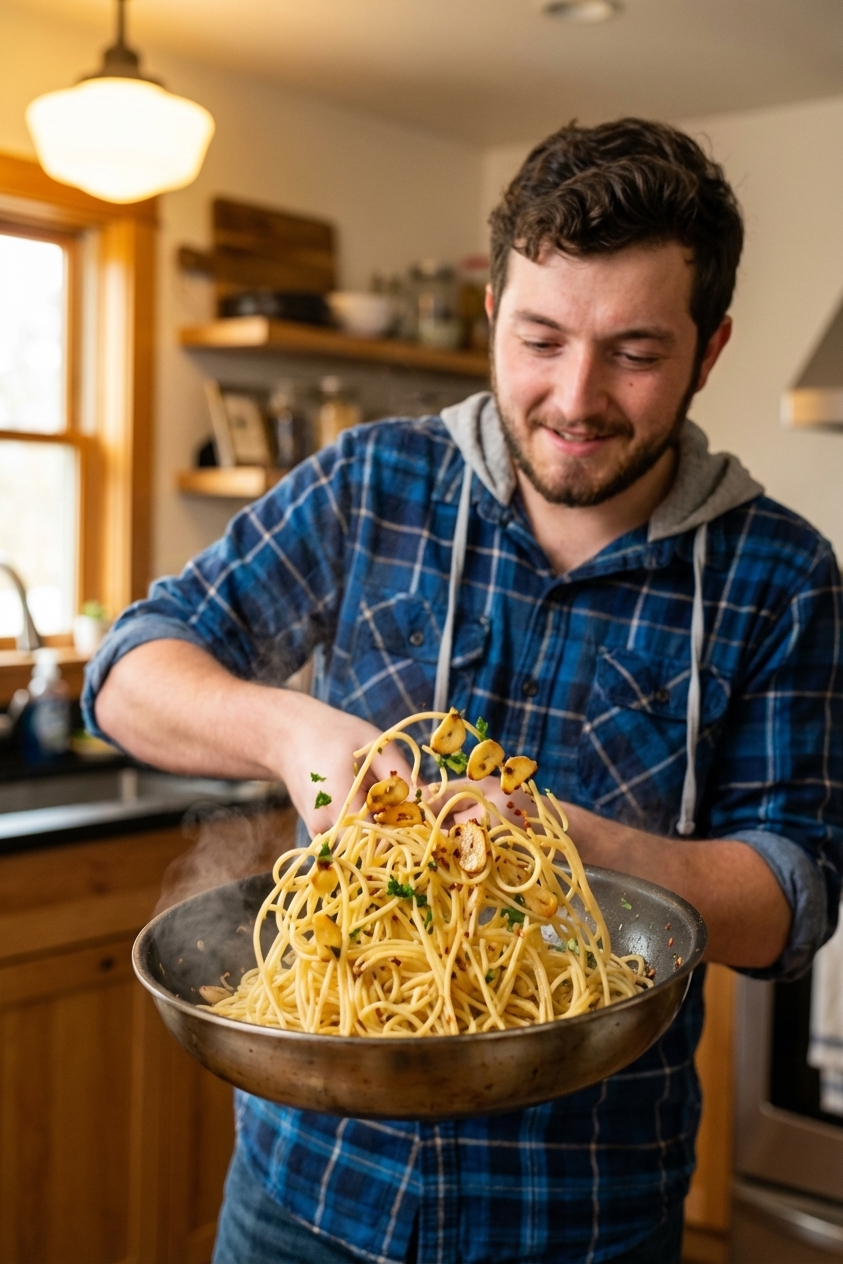
A real photograph of spaghetti aglio e olio being tossed in a skillet with golden sliced garlic, red pepper flakes, chopped parsley, and glossy olive oil, steam rising in warm kitchen light

Spaghetti aglio e olio is the kind of dinner that proves a point. You do not need a long ingredient list to make something that tastes like you actually tried. You need garlic treated with respect, decent olive oil, and one not-so-secret weapon: starchy pasta water.

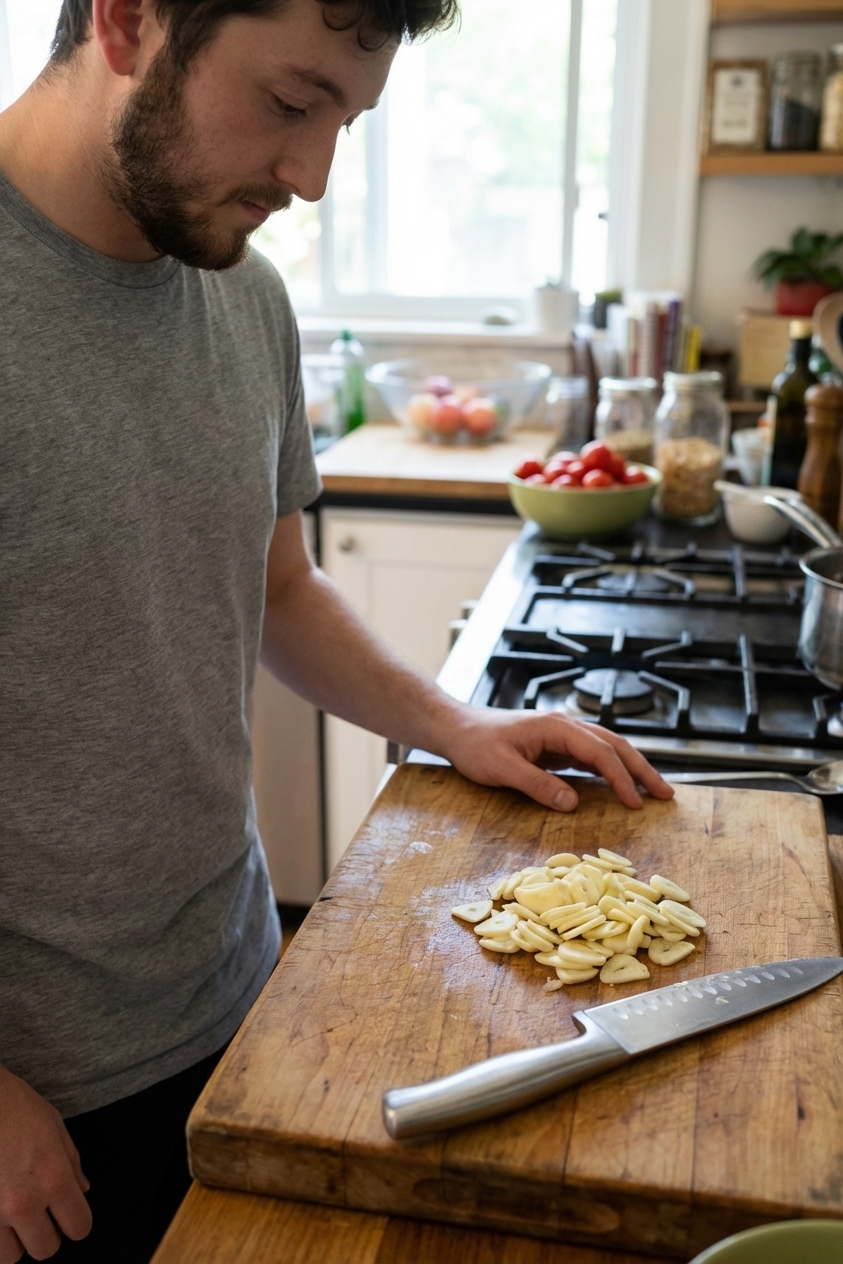
This is the technique-first version I wish someone had drilled into my head early on. We are going for sweet, golden garlic that perfumes the oil, not bitter garlic that bullies the whole plate. We are blooming red pepper flakes for quick heat, finishing with parsley for that fresh pop, and if you want extra cozy crunch, we are doing optional breadcrumbs. Lemon is optional too. It is not strictly classic, but it is very good.

Keep it relaxed. Taste as you go. And yes, you are allowed to eat a noodle straight out of the pot to “check for doneness.” That is called being responsible.
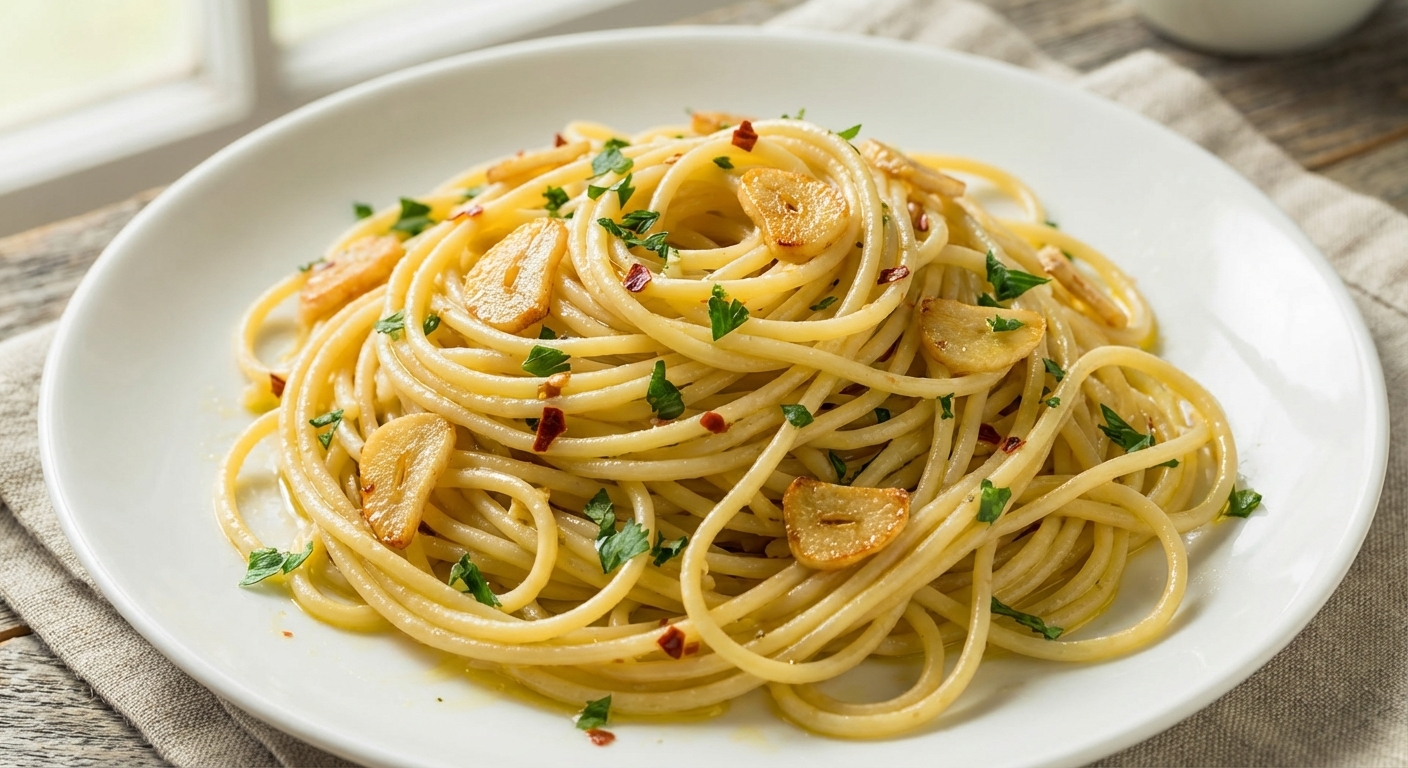
A real photograph close up of spaghetti aglio e olio on a white plate with visible sliced garlic, parsley, and tiny red pepper flakes in glossy olive oil

Why It Works

  • Gentle garlic infusion: Starting the garlic in cool oil and warming it slowly turns the flavor sweet and nutty instead of bitter and harsh.
  • Red pepper flake bloom: Brief heat wakes up the chili so the sauce tastes evenly spicy, not randomly hot.
  • Starchy pasta water emulsion: Pasta water plus oil plus tossing equals a silky, clingy sauce that coats every strand instead of pooling at the bottom.
  • Parsley finish: Added off-heat so it stays bright, not swampy.
  • Optional breadcrumbs: A budget-friendly way to add crunch and a “finished dish” vibe without needing cheese.

Pairs Well With

Storage Tips

Aglio e olio is best right away, when the sauce is glossy and the garlic is at peak. But leftovers can still be solid if you reheat them like you mean it.

How to store

  • Fridge: Cool completely, then store in an airtight container for up to 3 days.
  • Freezer: Not ideal. The texture turns soft and the oil can separate.

How to reheat without drying it out

  • Stovetop (best): Add pasta to a skillet with a splash of water, cover for 1 minute, then toss over medium heat until glossy again. Add a drizzle of olive oil at the end if needed.
  • Microwave (works): Sprinkle with water, cover loosely, heat in 30-second bursts, stirring each time. Finish with a small drizzle of olive oil and fresh parsley.

Pro tip: If the garlic got a little intense overnight, brighten the whole situation with lemon zest or a squeeze of lemon right before serving.

Common Questions

Why does my garlic turn bitter?

Two common reasons: the pan is too hot, or the garlic is cut too small and fries too fast. Keep the heat at medium to medium-low, start the garlic in cool oil, and pull the pan off the heat if it starts browning aggressively. Also note: garlic keeps darkening from residual heat, so aim for pale golden in the pan, not deep brown.

Do I have to use spaghetti?

Nope. Spaghetti is classic, but linguine, fettuccine, bucatini, or even short pasta like rigatoni works. The key is tossing hard with pasta water so the sauce emulsifies and clings.

How much red pepper flake should I use?

Start with 1/4 teaspoon for gentle warmth. Use 1/2 teaspoon for noticeable heat. If you like it spicy, go to 3/4 teaspoon, but bloom it briefly so it does not taste raw or burn.

Can I add cheese?

You can, even if the traditionalists side-eye you. Pecorino Romano or Parmigiano-Reggiano are great. Add it off heat and loosen with a splash more pasta water so it stays silky.

Why is my pasta greasy?

Usually it needs more tossing time and more pasta water. You want a sauce that looks creamy and glossy, not oily. Add pasta water a little at a time and keep tossing until it coats the noodles.

What are the optional breadcrumbs for?

They add crunch and a toasty, savory finish. They are often described as a “poor man’s Parmesan” in the way they add a salty, savory topper without needing cheese. Optional, but honestly? They make the dish feel special.

This is my go-to when I want dinner to happen fast but still feel like I cooked. I started making aglio e olio as a “I have pasta and vibes” meal, and for a while my garlic was either pale and sad or toasted into bitter little landmines. The fix was embarrassingly simple: slow down. Warm the garlic in the oil like you are making garlic-scented cologne, not garlic chips. Once I nailed the gentle infusion and the pasta-water toss, it turned into that dish I can cook half-asleep and still be proud of.