Mom's Best Recipes
Recipe

Spatchcock Roast Chicken with Lemon-Herb Butter

A faster, juicier whole roast chicken with crackly skin and a bright lemon-garlic herb butter tucked under the skin.

Author By Matt Campbell
4.8
A golden brown spatchcocked roast chicken on a rimmed baking sheet with crisp skin and visible herbs

If you have ever roasted a whole chicken and ended up with a perfect leg and a slightly sad, overcooked breast, spatchcocking is your new best friend. It is the same chicken, just laid out flat so the heat hits it evenly. The payoff is huge: faster cook time, juicier white meat, and skin that actually gets crispy all over.

This recipe is the whole-chicken counterpart to our spatchcock turkey method. Same idea, weeknight-friendly scale. We are going to butterfly the bird, slide a lemon-garlic herb butter under the skin, and roast it hot until the breast is juicy and the legs are properly done. No drama, no dry chicken, just a pan full of smells that make people wander into the kitchen “to check on things.”

Why It Works

  • Even cooking, no dry breast: Flattening the chicken helps the breast and dark meat finish closer together, so you are not choosing between juicy and done.
  • Crispier skin: More skin is exposed to the oven’s heat, which means more crackly edges and fewer pale, steamy spots.
  • Faster roast time: Most 4 to 5 pound chickens are done in about 40 to 55 minutes at high heat.
  • Lemon-herb butter under the skin: The butter bastes the breast as it roasts and perfumes everything without turning the skin soggy.
  • Built-in pan juices: Drippings plus lemon and garlic make an instant spoonable “sauce” for cozy carbs.

Pairs Well With

Storage Tips

Refrigerate: Cool leftovers within 2 hours. Store chicken in an airtight container for up to 4 days. Keep pan juices separate if you can, they reheat like magic.

Freeze: Pull meat off the bones, wrap well, and freeze up to 3 months. Freeze the carcass too if you want quick stock later.

Reheat without drying it out: Warm sliced chicken in a covered skillet with a splash of broth or leftover pan juices over medium-low heat. Or microwave gently at 50% power with a damp paper towel on top.

Best leftover move: Chop the meat, toss it with mayo, Dijon, celery, and a squeeze of lemon for chicken salad that tastes intentional.

Common Questions

What does spatchcock mean?

Spatchcocking (also called butterflying) means removing the chicken’s backbone so the bird can lay flat. Flat chicken cooks faster and more evenly because the thick and thin parts are closer to the same height.

Do I need to brine the chicken?

No, the herb butter and a good seasoning of salt go a long way. If you want extra insurance, dry brine it: salt the chicken all over (about 1 teaspoon kosher salt per pound) and refrigerate uncovered for 8 to 24 hours. That also helps the skin crisp.

What oven temperature is best?

I like 450°F for crisp skin and speed. If your oven runs hot, smokes easily, or you are using convection, you may want to roast at 425°F (or keep 450°F but start checking early). The butter and Dijon can brown fast at high heat, which is delicious, but it is another reason to watch the last 10 minutes.

How do I know it is safely cooked?

Use an instant-read thermometer. For safety, the chicken should reach 165°F in the thickest part of the breast. In practice, you can pull it at 160 to 162°F and let carryover heat bring it up to 165°F as it rests. Thighs are usually best at 175 to 190°F, which makes dark meat tender.

Why put butter under the skin instead of on top?

Butter on top can slow browning. Under the skin, the fat melts and bastes the meat while the skin stays drier and crispier.

Can I do this without kitchen shears?

You can use a sharp chef’s knife, but shears are safer and easier. If you are doing spatchcock turkey, you already know: shears earn their keep.

My pan juices taste bitter. Why?

Usually it is from too much lemon pith or scorched garlic. Use only lemon zest and fresh juice, and keep garlic tucked in the butter or under the chicken where it is protected.

Does adding broth or water to the pan change anything?

A little liquid helps prevent drippings from burning (and cuts down on smoke), but it also makes the pan juices less concentrated and can soften any bits touching the pan. It is optional, and it is a great trade if you value an easier cleanup and a calmer oven.

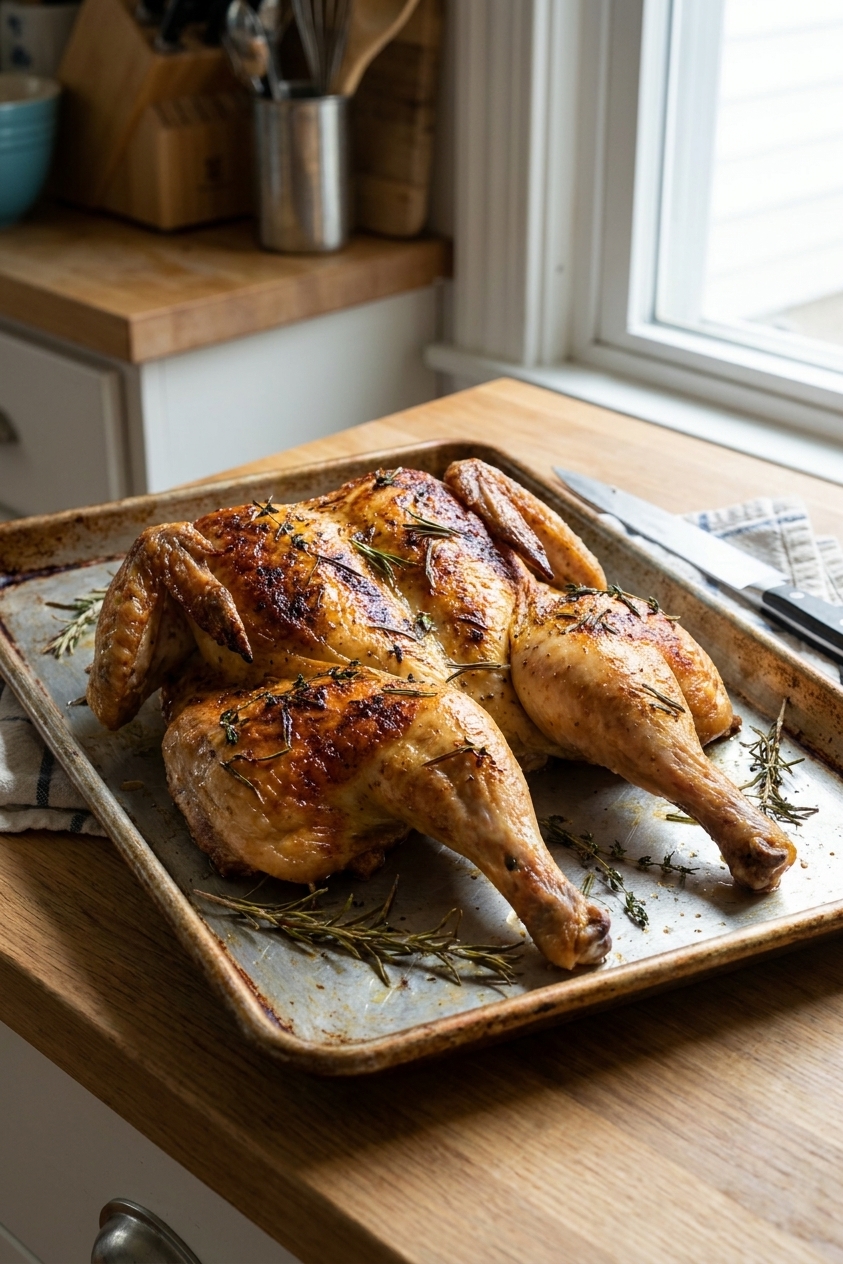
The first time I spatchcocked a chicken, it felt like a tiny act of kitchen rebellion. Same bird, same ingredients, but suddenly dinner was done faster and the skin was actually crispy in the places I wanted it to be. Now it is my go-to when I want “Sunday roast” vibes on a regular night. The lemon-herb butter is the part that makes me pause mid-bite. Bright, savory, and just rich enough to feel like you planned ahead, even if you absolutely did not.