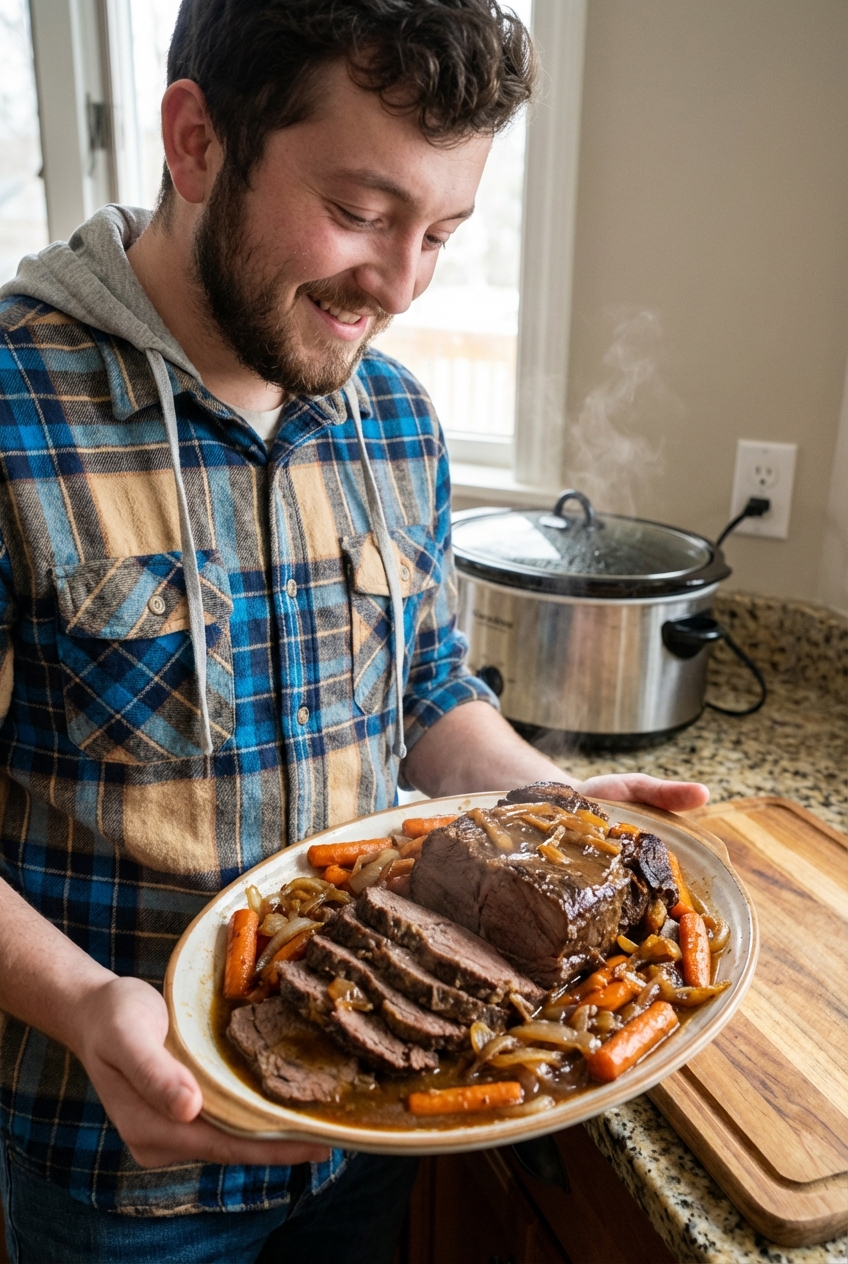
What cut of beef works best in the crockpot?
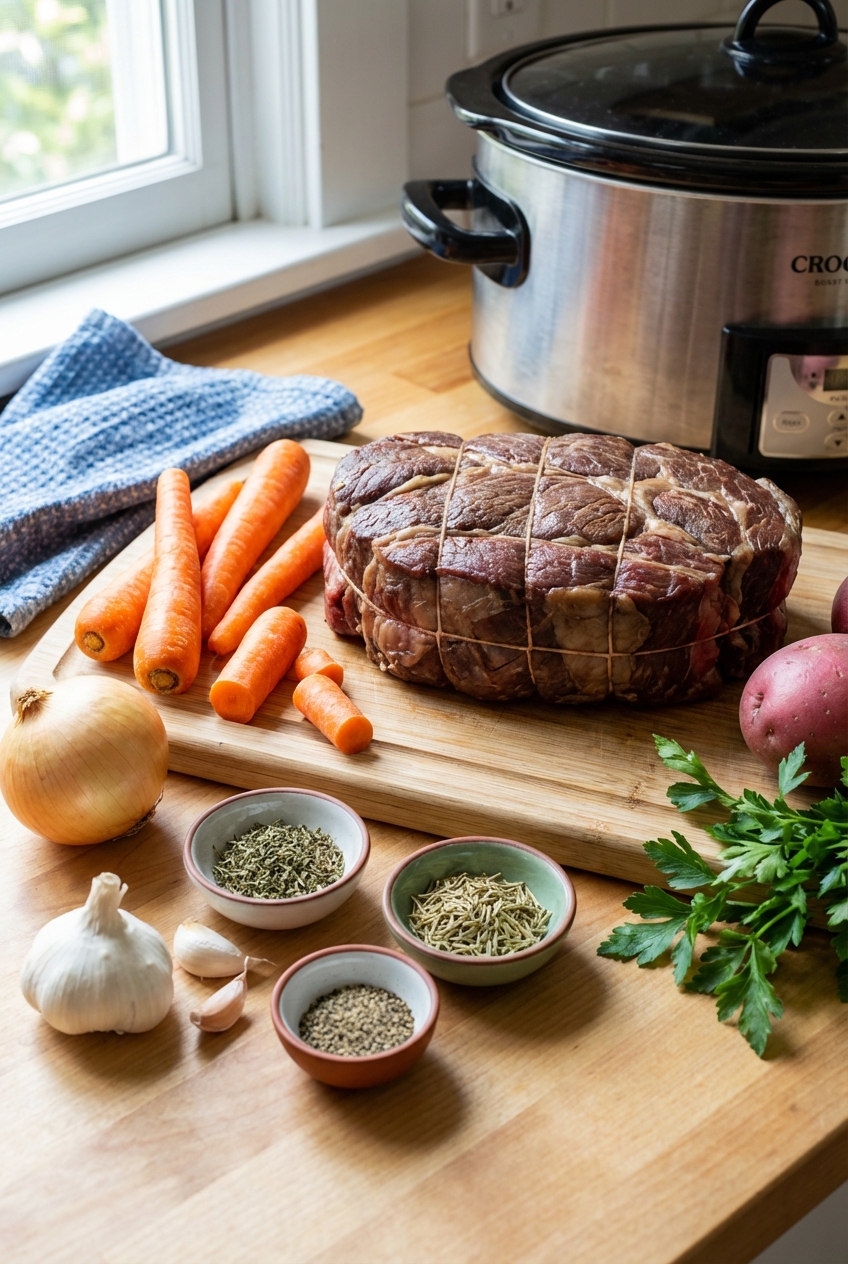
Chuck roast is the gold standard because it has enough fat and connective tissue to melt into tender, juicy bites. Brisket and bottom round can work, but round is leaner and can dry out if pushed too long.
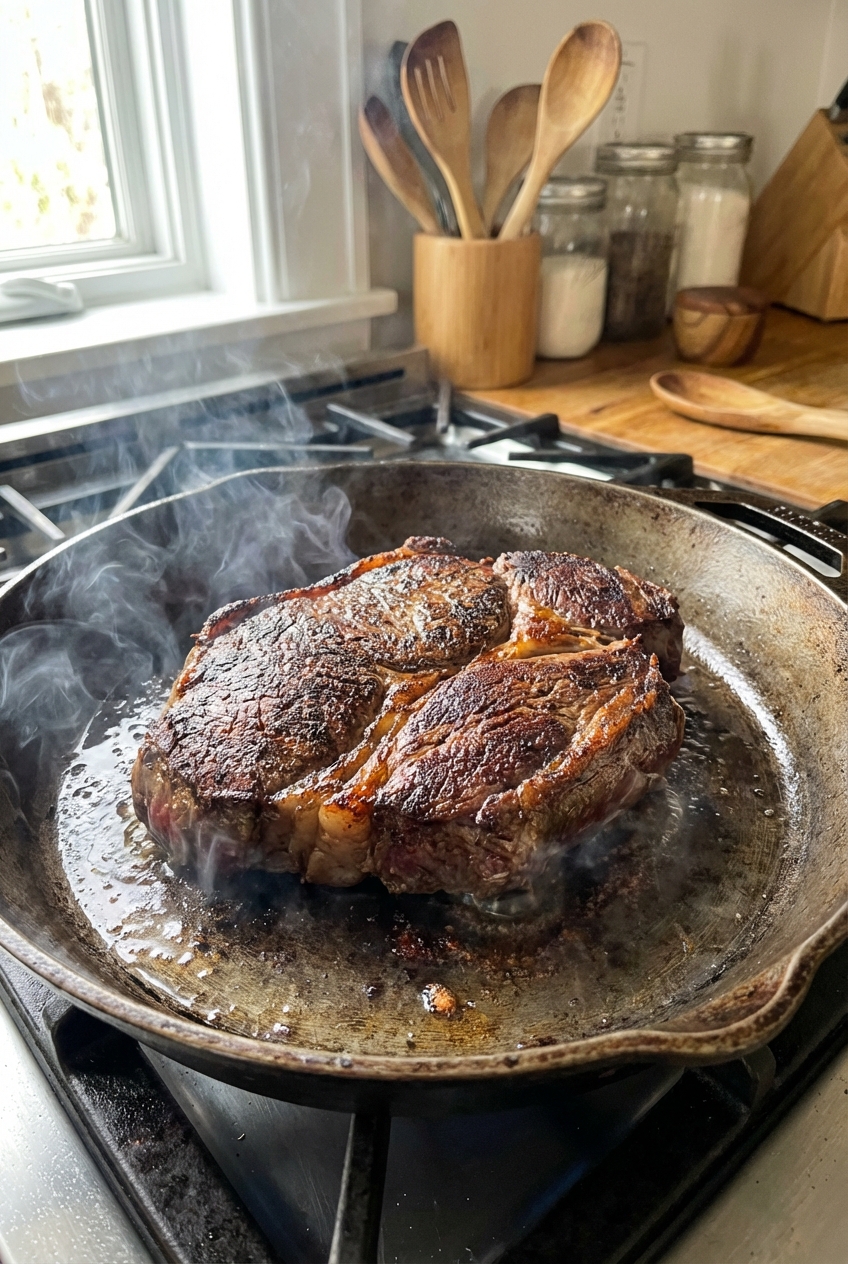
Do I have to sear the roast first?
No, but I recommend it if you have 8 to 10 extra minutes. Searing builds browned flavor that makes the gravy taste like it simmered all day, because it basically did.
Why is my roast tough even after hours?
Most of the time it is simply not done yet. Chuck gets tender when the collagen fully breaks down, and that can take longer than the clock says, depending on your slow cooker and the shape of the roast. Keep cooking until it is fork-tender and shreddable. If you like numbers, that usually happens around 195 to 205°F in the thickest part.
Cooking on HIGH is not automatically a problem, but it can get you to the finish line faster and with a smaller margin for error. The real goal is time-to-tender, not a specific hour count.
How do I make the gravy thicker?
Best method: remove the meat and veggies, then whisk a cornstarch slurry into the liquid and heat until it thickens. For some slow cookers, thickening works best if you turn to HIGH and cook uncovered for a few minutes, stirring, so it gets hot enough. If you want a guaranteed glossy gravy, pour the liquid into a saucepan and simmer on the stove, then whisk in the slurry.
Can I add potatoes?
Absolutely. Add 1 to 1 1/2 pounds of baby potatoes or chopped Yukon Golds at the start. If your crockpot runs hot and potatoes turn mushy, add them during the last 3 to 4 hours instead.
Does the liquid need to cover the roast?
Nope. This is a braise, not a soup. The liquid will come partway up the sides and the roast will baste itself as it cooks. It looks like not enough at first, and then it turns into gravy magic.
How much salt should I use if my kosher salt is different?
Kosher salt brands vary a lot. If you use Morton, start a little lighter. If you use Diamond Crystal, the full amount is usually right. Also, broth salt levels are all over the place, so aim for “seasoned but not salty” at the beginning and adjust at the end.