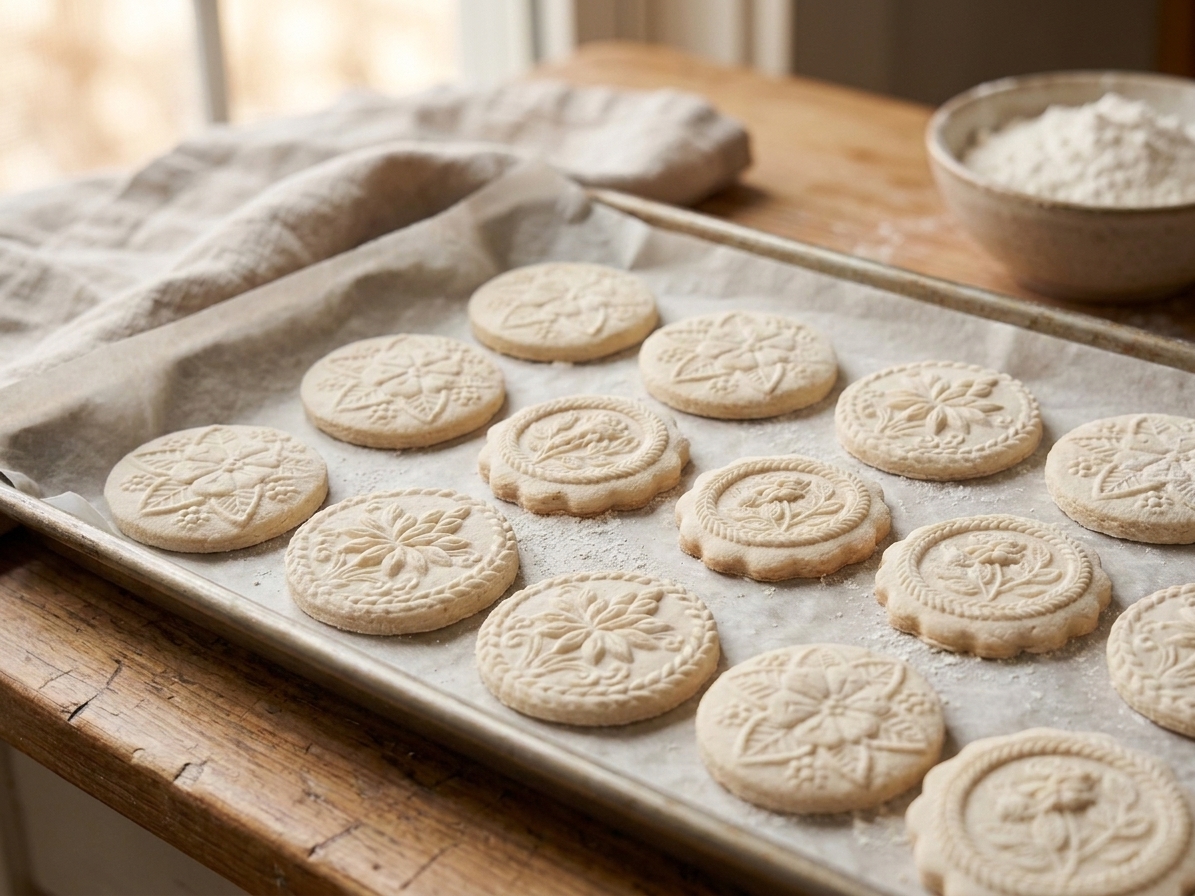
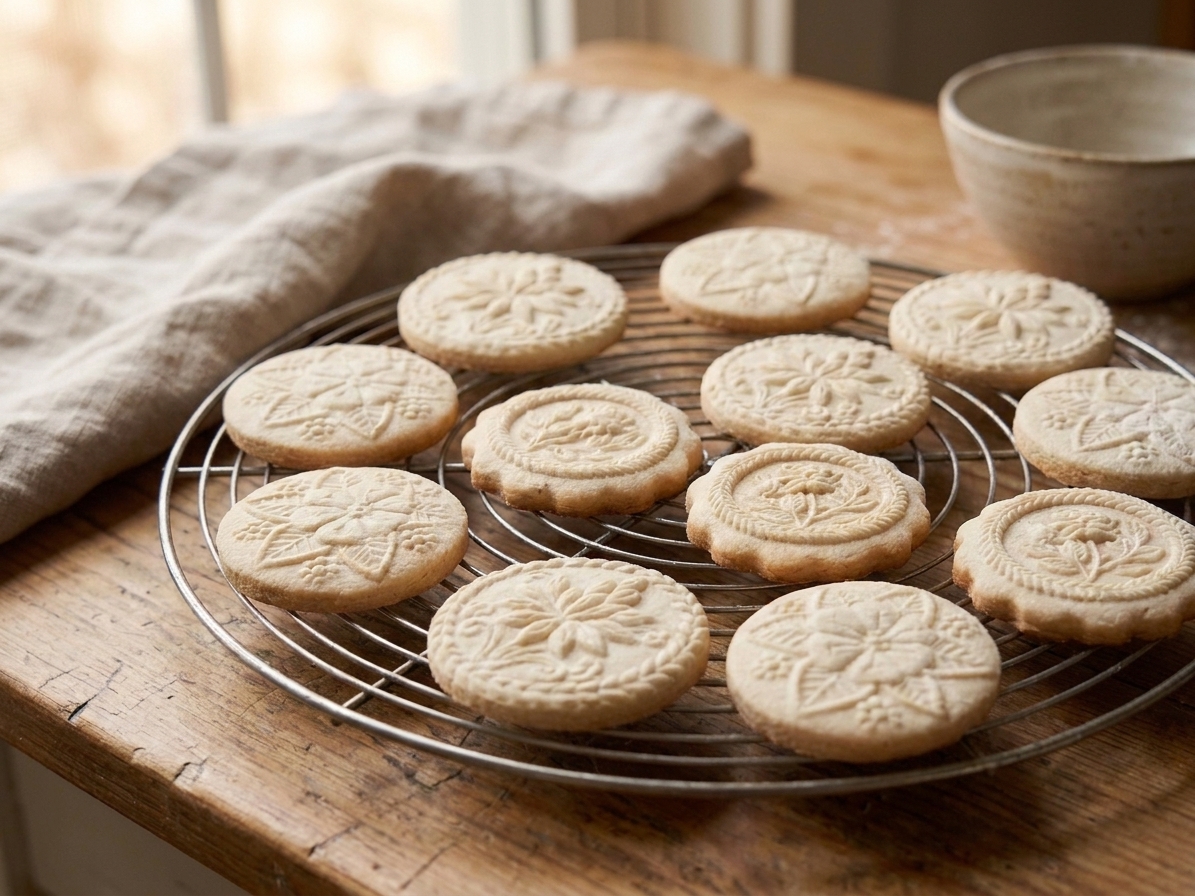
Do I really have to let springerle dry before baking?
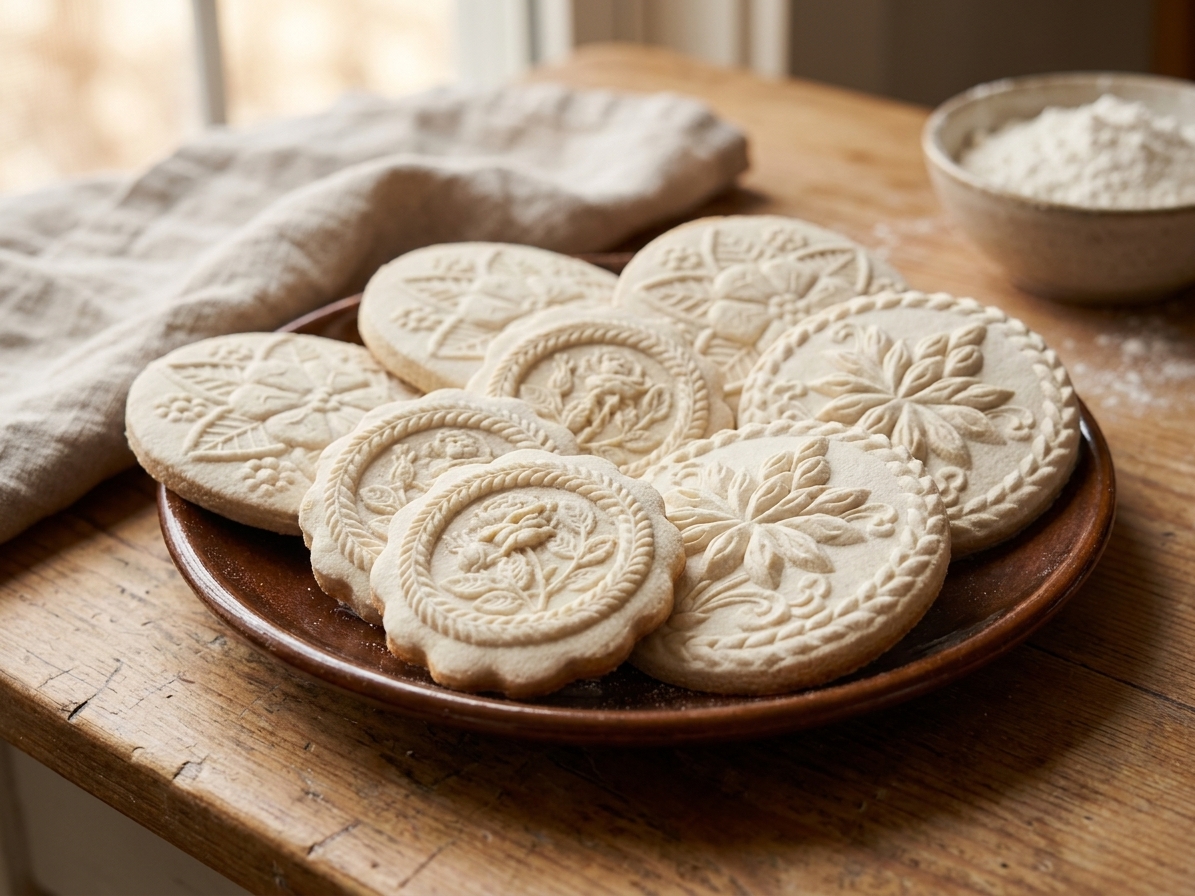
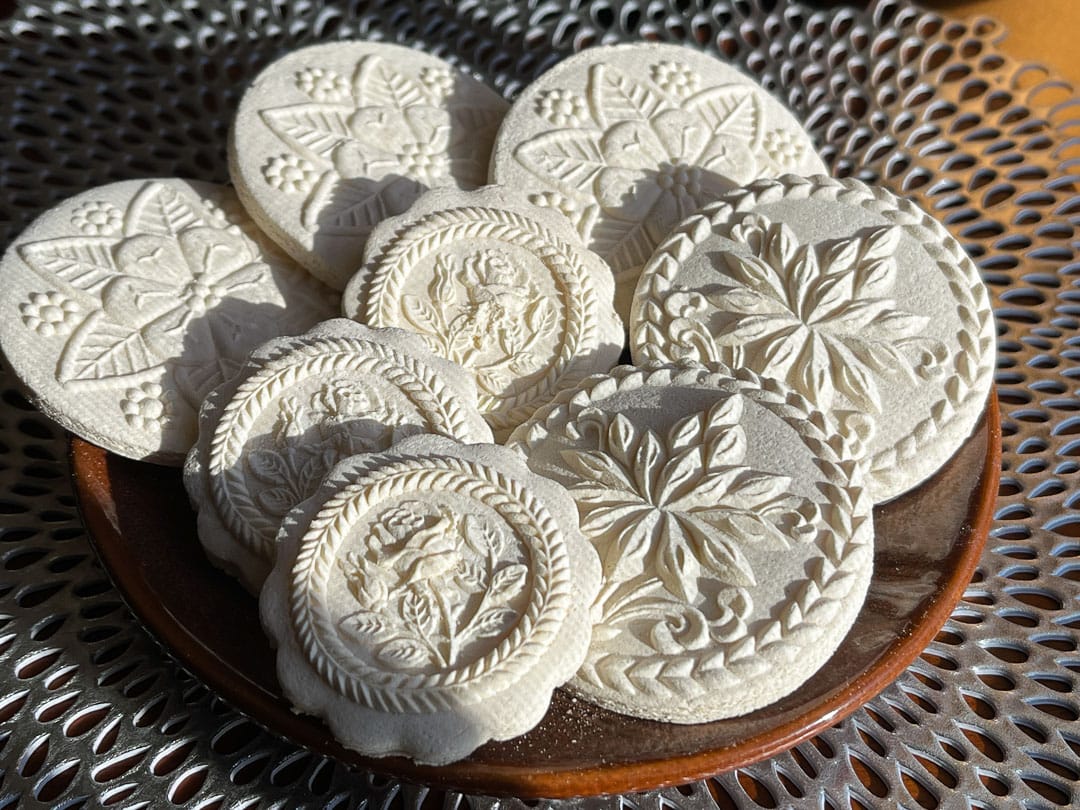
Yes. Drying is what sets the surface so the design stays crisp. Aim for 12 to 24 hours at cool room temperature. The tops should feel dry to the touch, while the bottoms are still slightly tacky.
Why did my design puff up and disappear?
Usually one of these: the cookies did not dry long enough, your oven ran hot, or you used too much leavener. This recipe uses baking powder as a modern shortcut, but too much lift can blur details. For sharper impressions, you can reduce the baking powder slightly, or skip it entirely for a flatter, more old-school look.
What mold or stamp works best?
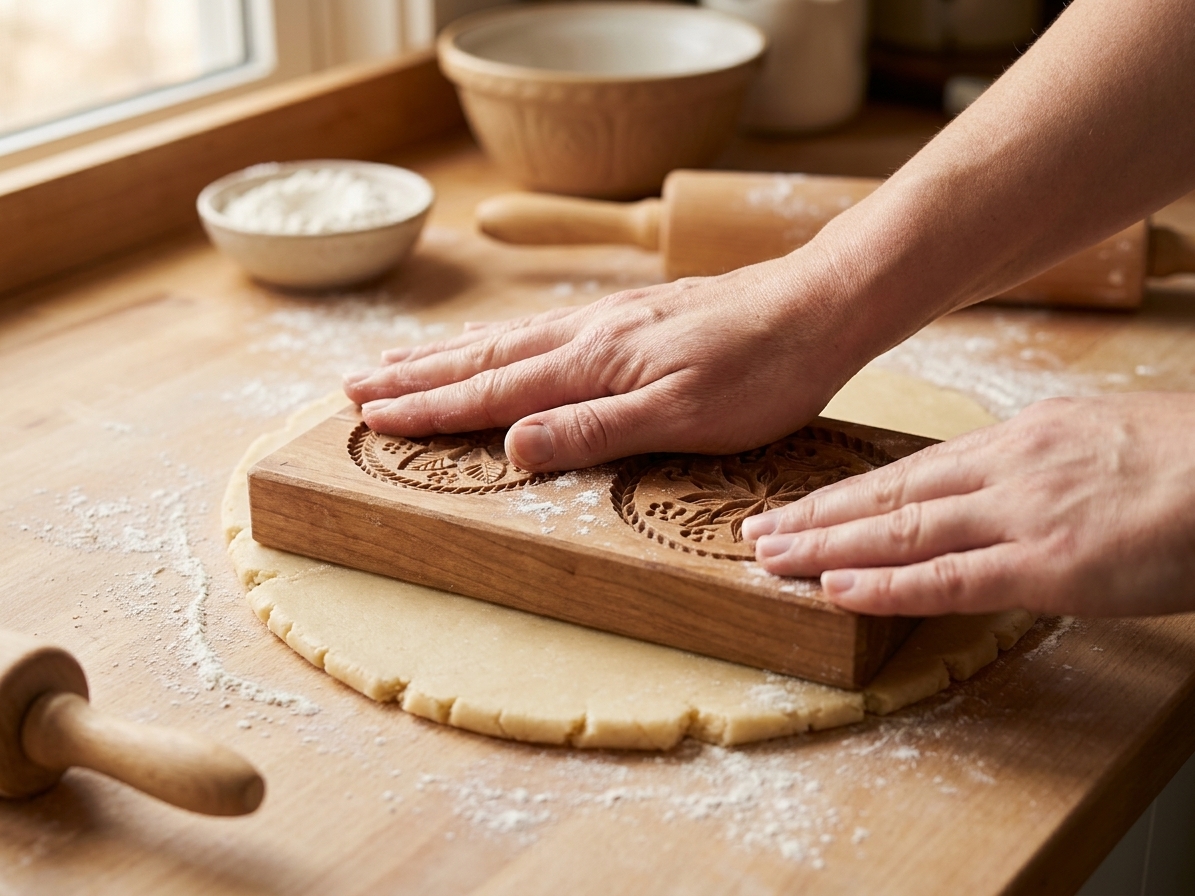
Traditional carved wooden springerle molds are great, and so are sturdy cookie stamps (wood or food-safe resin). The key is a clear, deep pattern and a firm, even press.
How do I stop the mold from sticking?
Dust the mold lightly with powdered sugar, tap off the excess, then press. If you are still sticking, your dough may be too soft. Add a tablespoon or two of flour, chill 10 minutes, and try again.
Can I make them without anise?
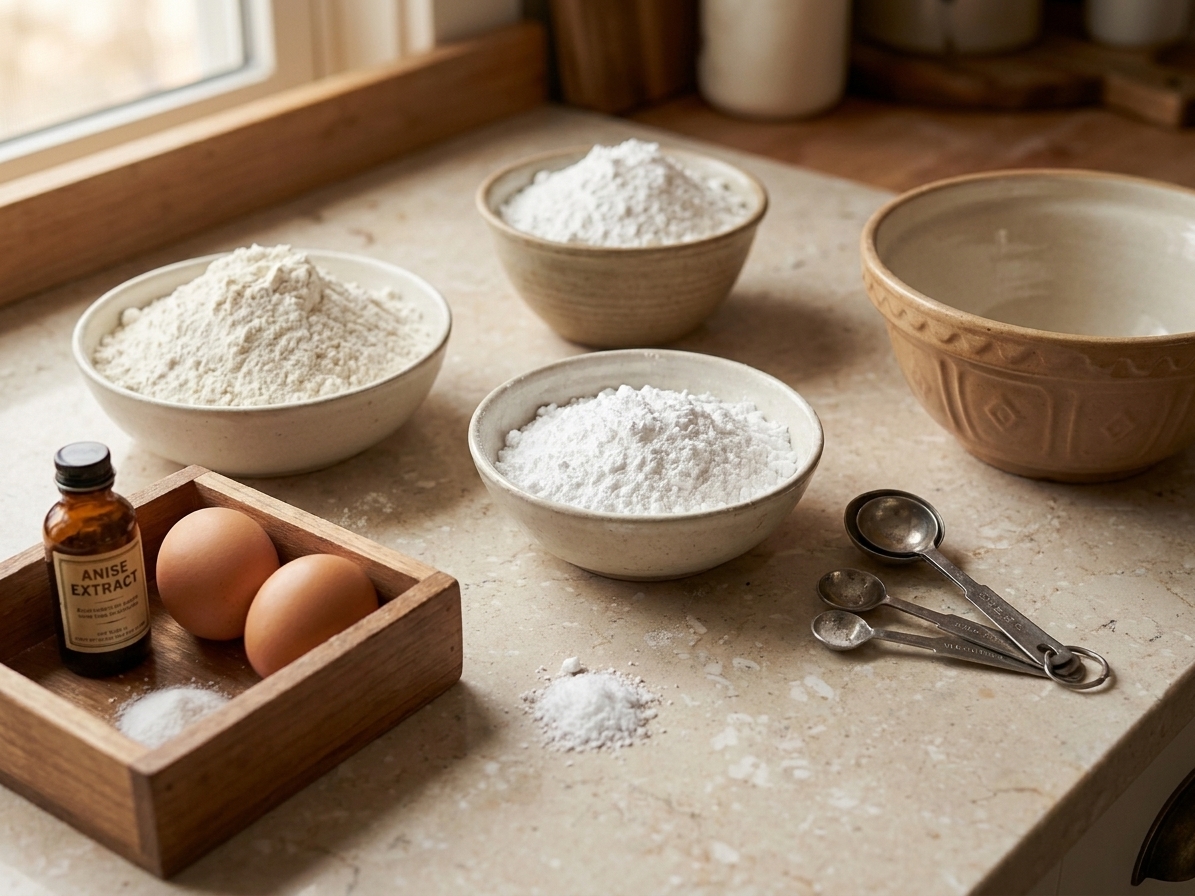
Absolutely. Swap anise extract for almond extract or lemon extract. You can also add finely grated lemon zest for a bright twist.
Should springerle be hard?
They are meant to be crisp and firm, not tooth-breaking. If they are overly hard, they may be overbaked or stored too dry for too long. Pairing with coffee or tea is the classic fix, and honestly a very good reason to make a mug.
Why did my springerle crack on top?
Cracking usually means the oven was a bit hot or the cookies dried in a spot that was too warm or drafty. Bake low and gentle, and let them dry at a cool, steady room temperature.
Help, my cookies are browning before the design sets
Your oven likely runs hot. Drop the temperature by 10 to 15 degrees, bake one pan at a time on the middle rack, and use an oven thermometer if this keeps happening. Pale tops are the goal.
Do I have to bake them on anise seeds or use baker’s ammonia?
Nope. Some traditional methods use anise seeds under the cookies, or baker’s ammonia (ammonium carbonate) for lift and that classic dry snap. This version keeps it simpler, but if you love tradition, you can explore those options later.