Common Questions
What cut of steak works best in a skillet?
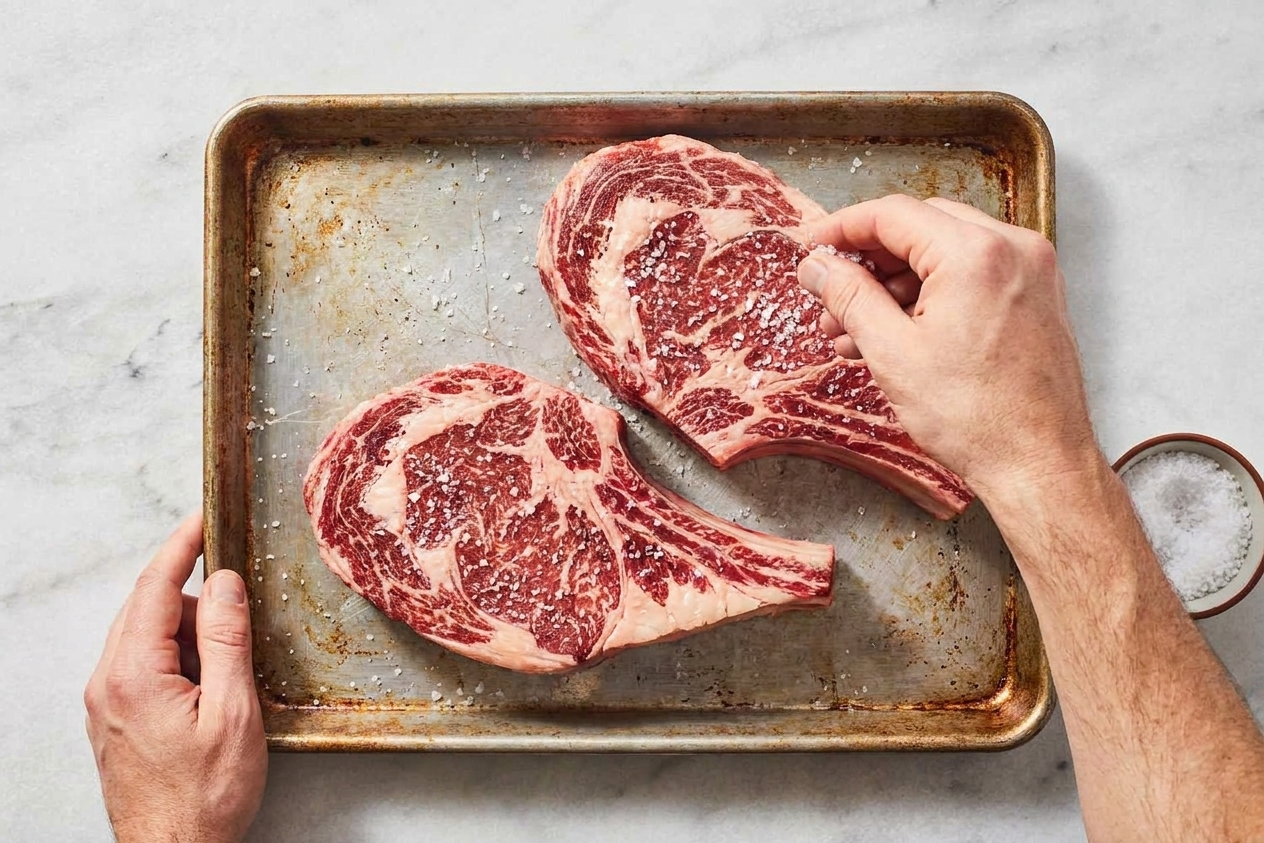
Ribeye, strip (New York strip), and sirloin are my easiest picks. Aim for 1 to 1.5 inches thick for a great crust without overcooking. Filet works too, but it is lean, so it benefits from a little extra butter love.
Do I really need to let the steak come to room temperature?
Not fully. I like 20 to 30 minutes on the counter while you prep. It helps the steak cook a bit more evenly, but the bigger difference-makers are drying the surface and using a hot pan.
How do I know when it is done without a thermometer?
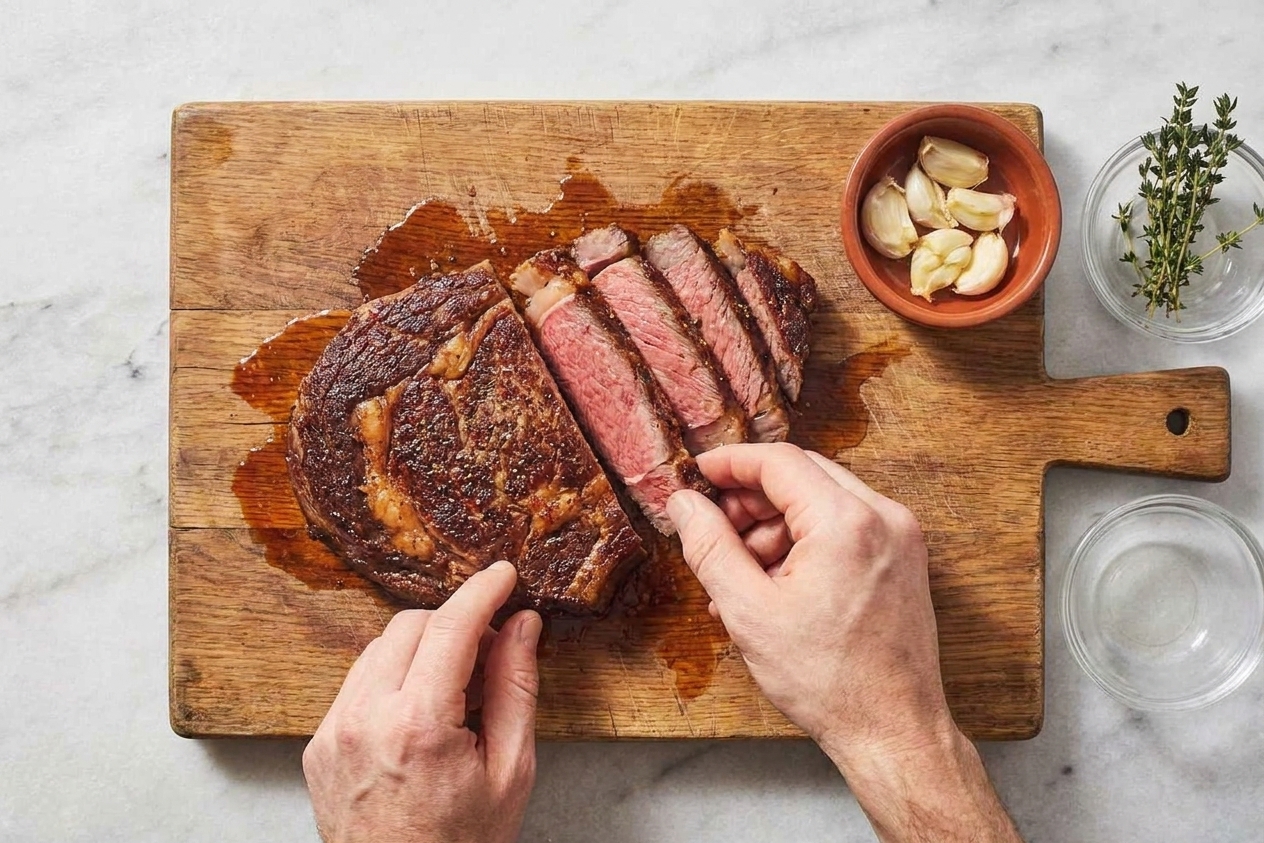
You can use the finger test, but a thermometer is the least dramatic way to get it right. If you are going no-thermometer, pull it a little earlier than you think and rest it. The steak keeps cooking off-heat.
What internal temperature should I aim for?
- Rare: pull at 120°F, rest to about 125°F
- Medium-rare: pull at 125 to 130°F, rest to about 130 to 135°F
- Medium: pull at 135°F, rest to about 140 to 145°F
- Medium-well: pull at 145°F, rest to about 150°F
- Well-done: pull at 155°F, rest to about 160°F (not my favorite, but it is your steak)
Quick note: carryover cooking depends on thickness and whether your steak is bone-in. Thicker steaks tend to climb more as they rest.
Why is my steak not browning?
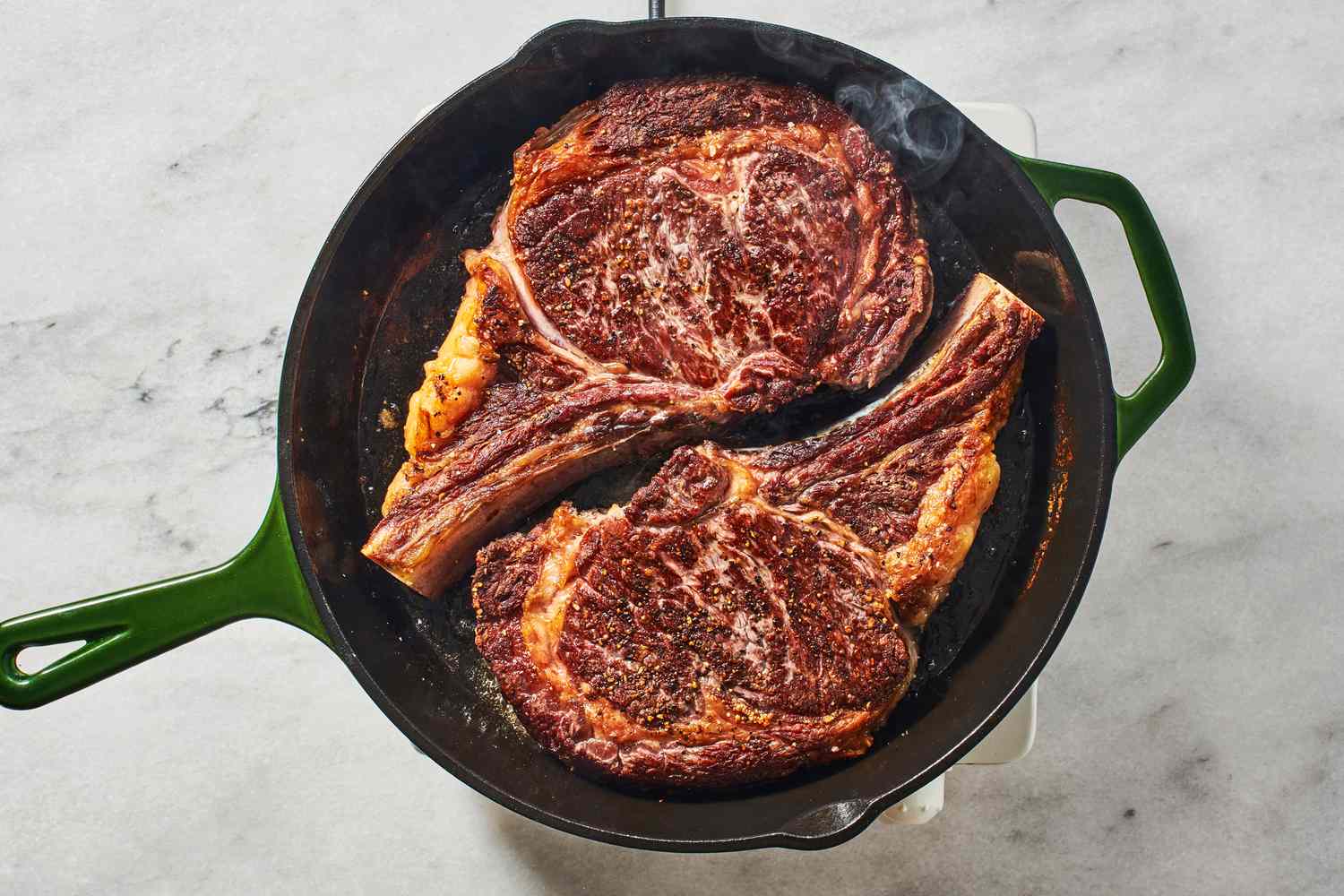
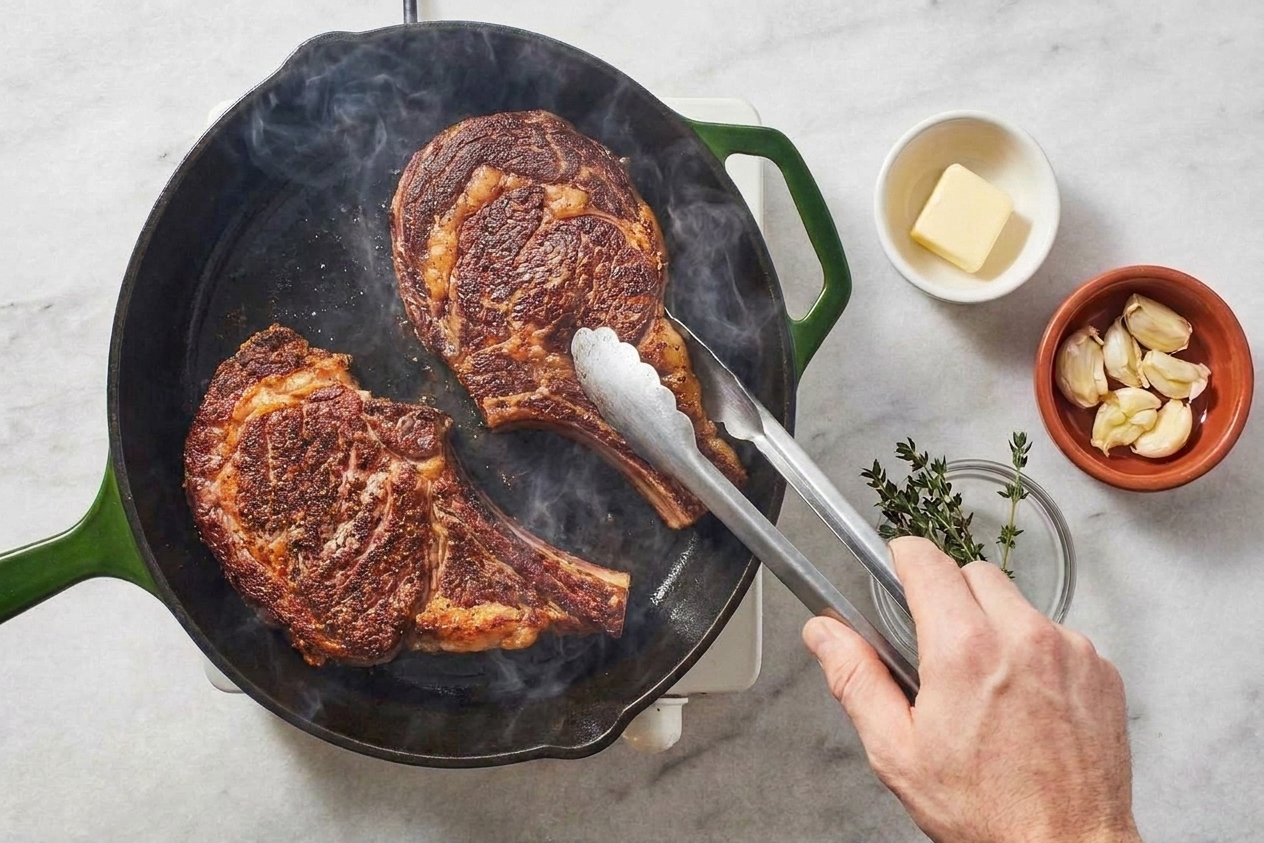
Usually one of three things: the steak is wet, the pan is not hot enough, or the pan is crowded. Pat it dry, preheat longer, and cook one steak at a time if needed.
Can I use olive oil?
Yes, but use a light olive oil, not extra-virgin, since we are searing hot. Avocado, canola, grapeseed, or vegetable oil are all great here.
How do I keep the smoke under control?
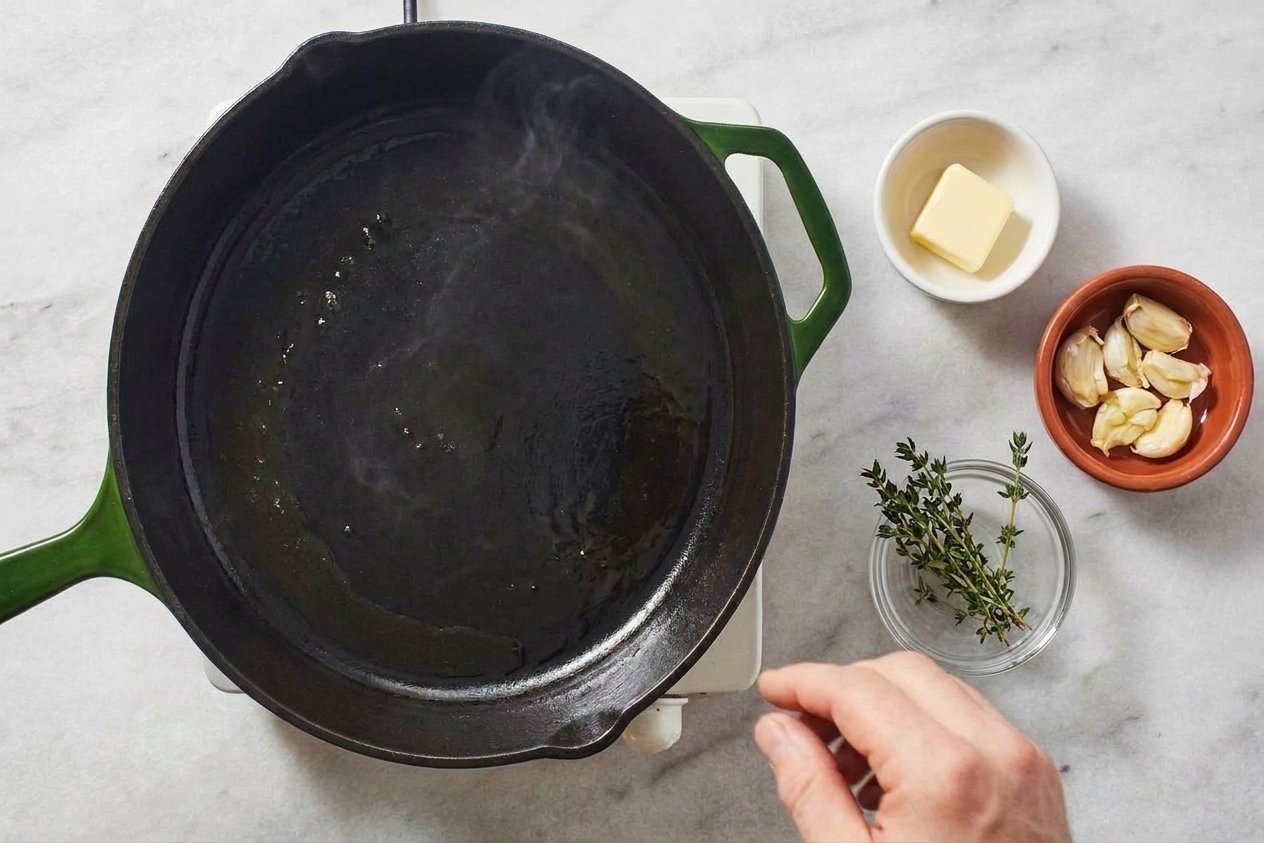
This is a high-heat situation. Turn on the hood fan, crack a window, and consider a splatter screen. If your kitchen is getting smoky fast, back the heat down slightly and give the pan a minute to settle before continuing.