Mom's Best Recipes
Recipe

Steak au Poivre

Peppercorn-crusted steak with a silky cognac cream sauce, all built in one pan for maximum flavor and minimal drama.

Author By Matt Campbell
4.8
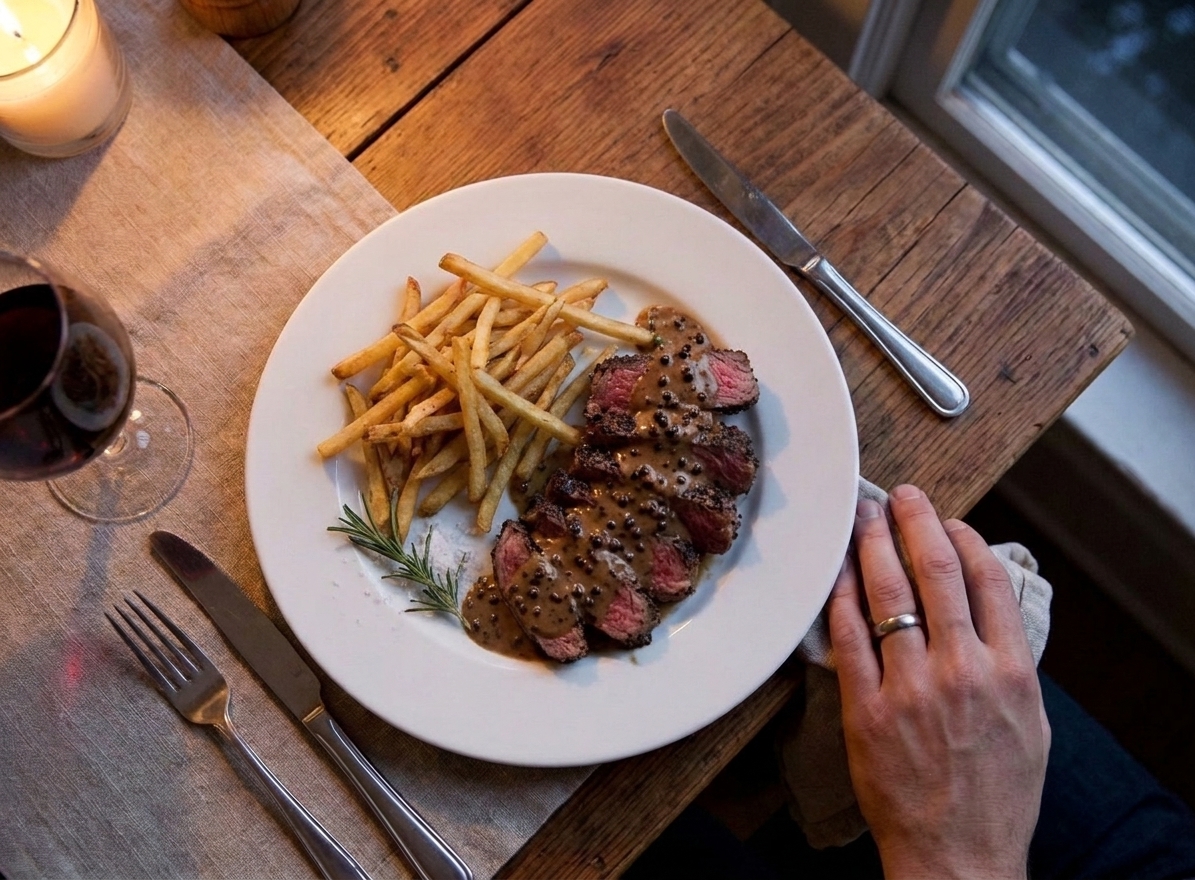
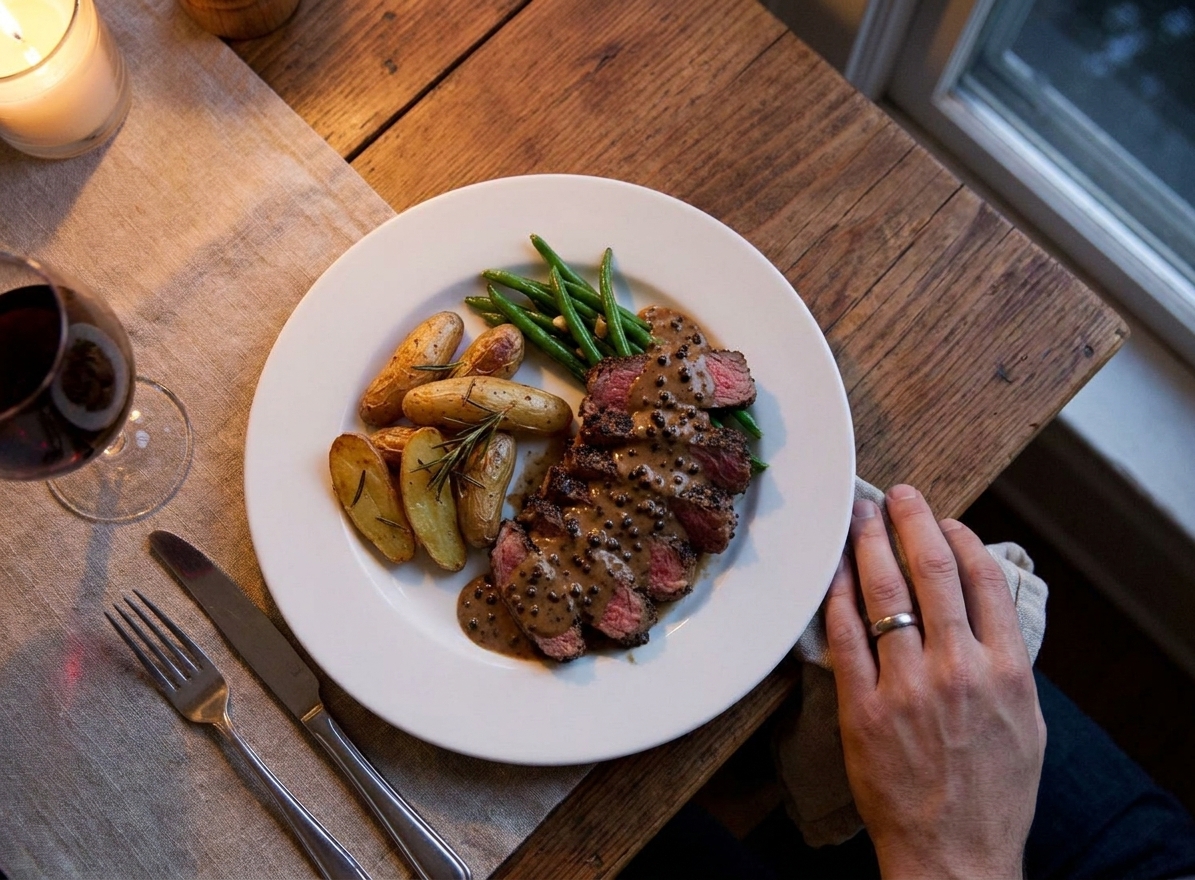
A plated steak au poivre sliced and fanned out, coated in creamy peppercorn sauce, with a simple side of fries on a warm dinner table

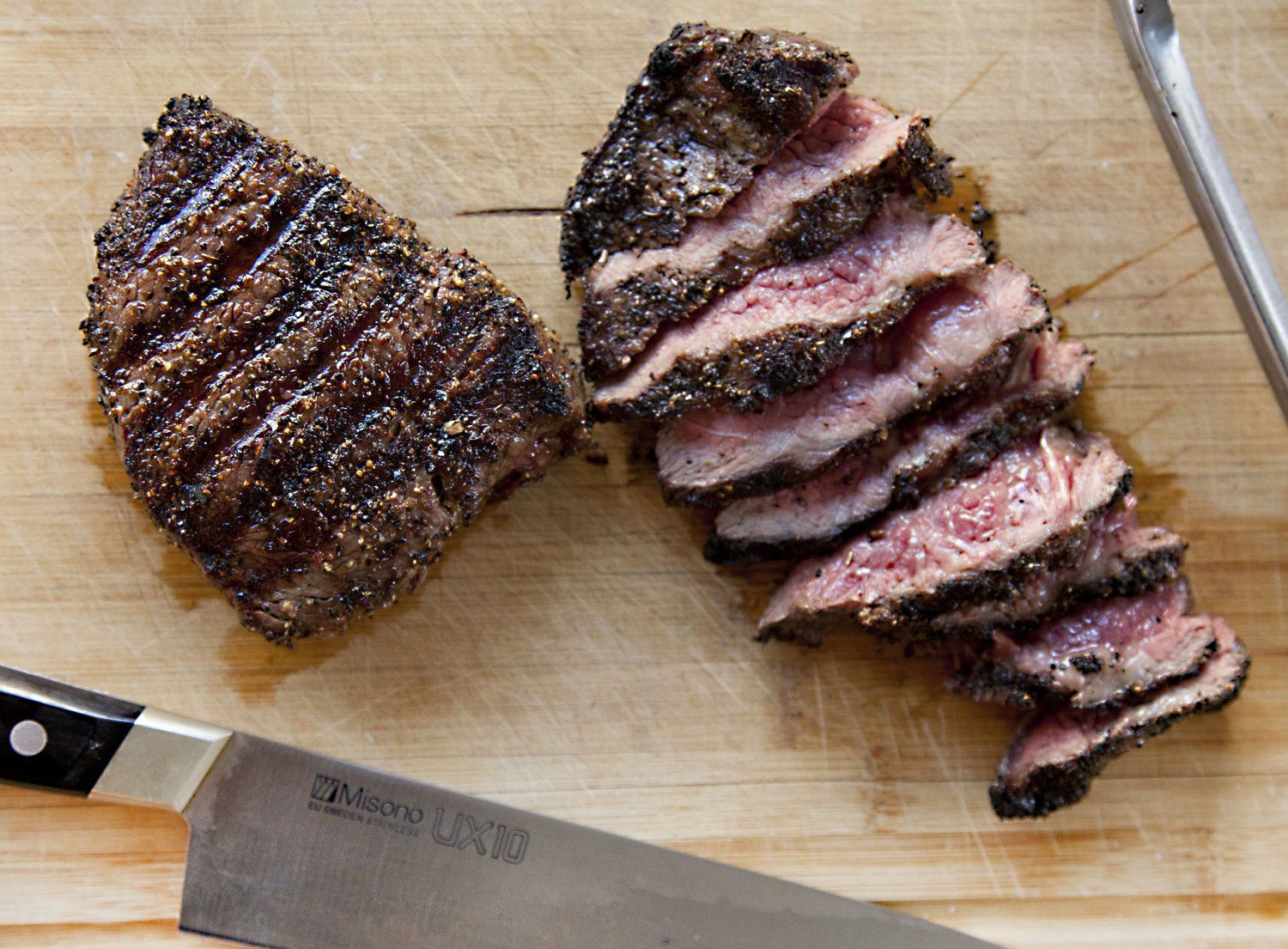
Steak au poivre is one of those dishes that feels fancy on purpose, like you should have a reservation and a tiny candle at the table. In reality, it is just a great steak, aggressively seasoned with cracked peppercorns, and finished with a pan sauce that tastes like you did something deeply impressive.

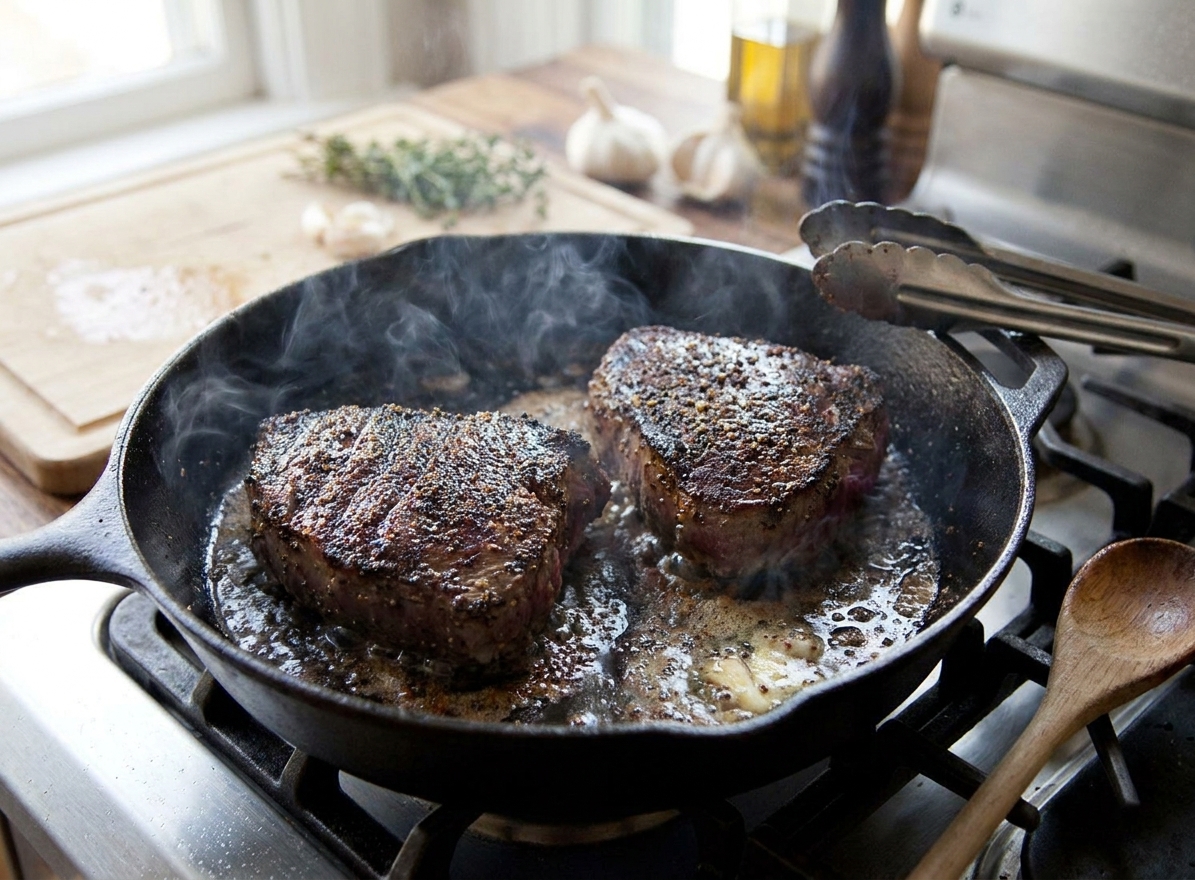
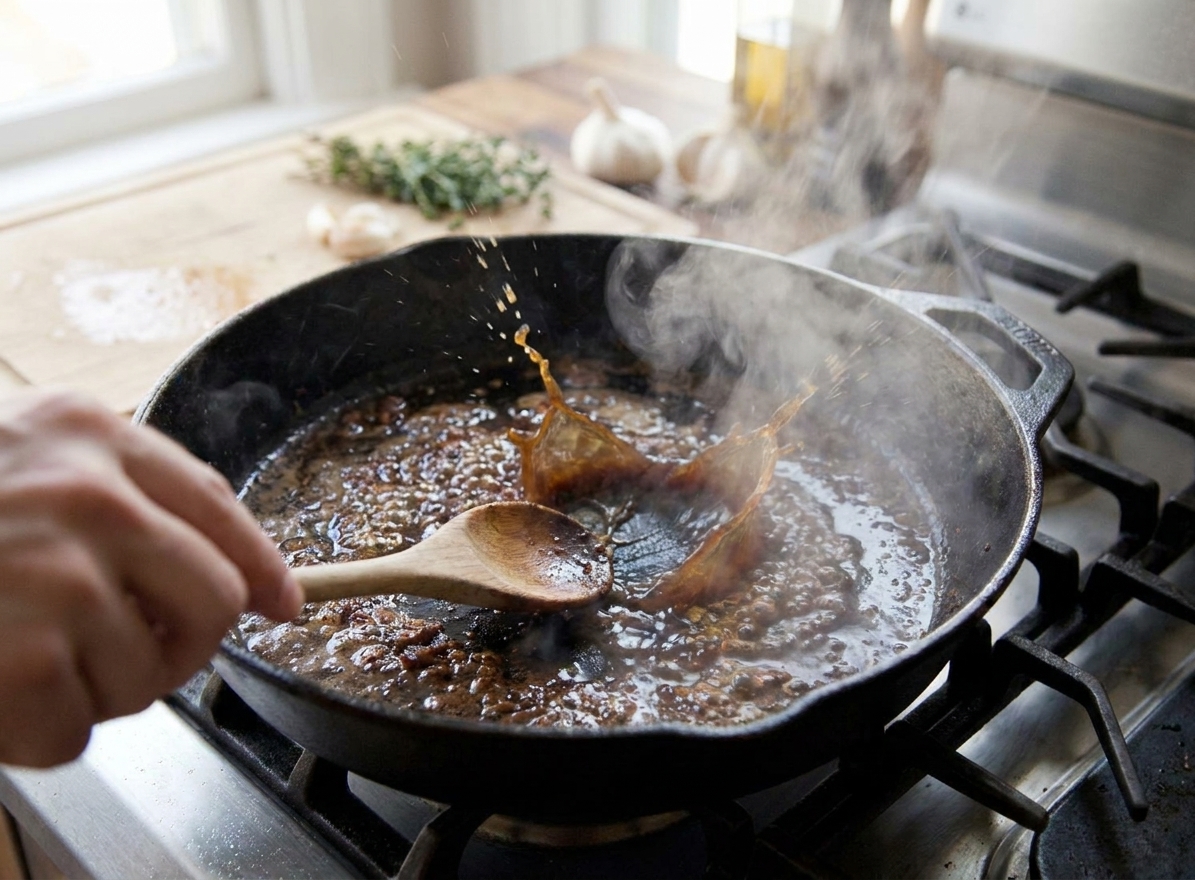
The secret is not secret at all. You build flavor in layers: sear the steak hard so the pepper turns fragrant, not bitter, deglaze the pan, then turn the whole thing into a glossy, creamy sauce that clings to every slice. It is bold, cozy, and a little chaotic in the best way.

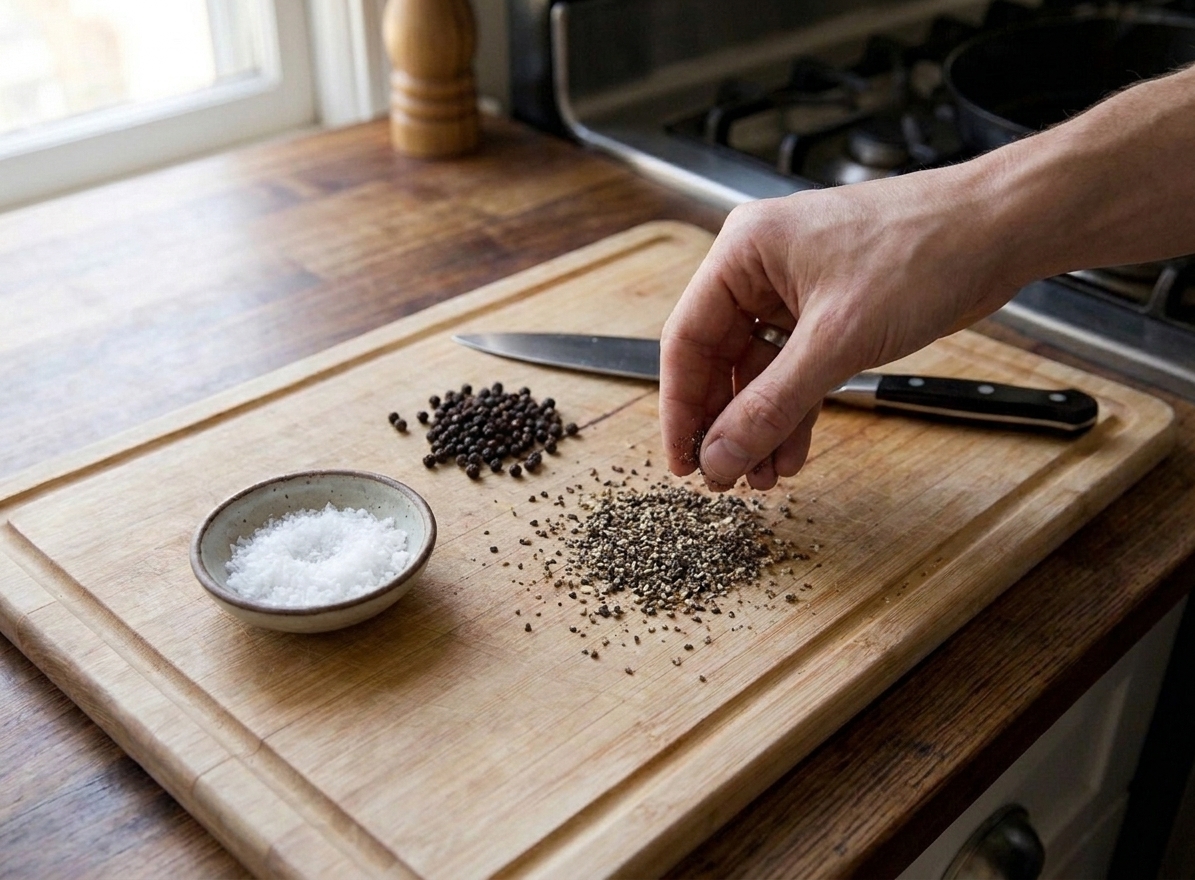
Whole black peppercorns and coarsely cracked pepper on a wooden cutting board beside a chef knife and a small bowl of salt

Why It Works

  • Crisp edges, juicy center: A hot pan and a dry steak give you that bistro sear without overcooking.
  • Pepper that pops, not burns: Coarsely cracked pepper toasts on the steak during searing, turning fragrant instead of bitter.
  • A real pan sauce: Deglazing lifts all the browned bits, then cream rounds everything out into a silky peppercorn blanket.
  • One pan, big payoff: Steak rests while the sauce comes together in minutes.

Pairs Well With

Storage Tips

Steak au poivre is best fresh, but leftovers can still be very, very good if you reheat gently.

Refrigerate

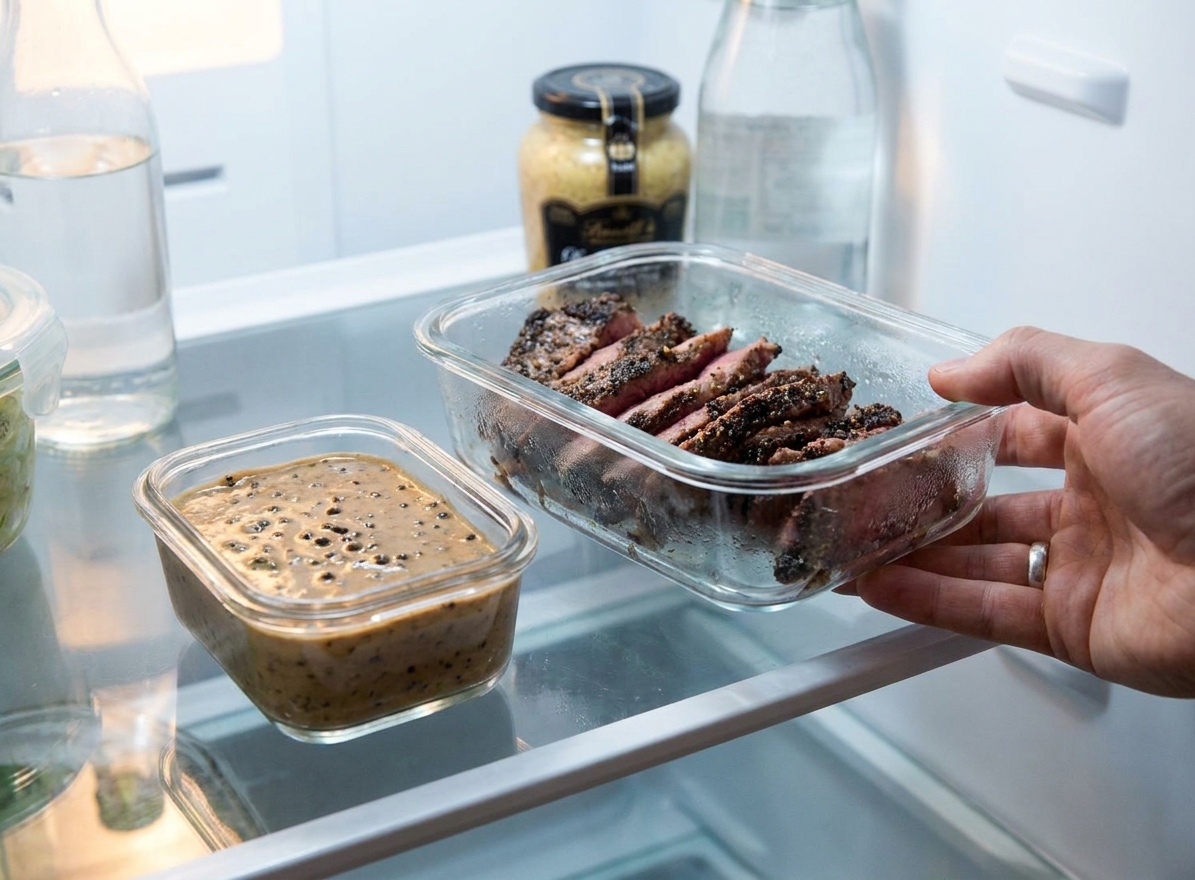
  • Store steak and sauce in separate airtight containers if you can. If not, it is fine together.
  • Refrigerate up to 3 days.

Reheat (best method)

  • Stovetop: Warm the sauce in a small saucepan over low heat with a splash of cream or broth to loosen. Add sliced steak just long enough to heat through.
  • Microwave: Use 50% power in short bursts. Steak goes from perfect to sad fast if you rush it.

Freezing

  • I do not love freezing cream sauces because they can separate. If you must, freeze the steak plain and make a quick fresh sauce later.

Sliced leftover steak stored in a glass meal prep container with a small separate container of peppercorn sauce on a refrigerator shelf

Common Questions

What cut of steak is best for steak au poivre?

Classic is filet mignon because it is tender and cooks evenly. That said, I also love strip steak for more beefy flavor. Ribeye works too, just expect more fat in the pan, which is not a problem, it is a feature.

Do I have to use cognac?

No. Cognac is traditional, but brandy works great, and bourbon is a fun twist. If you want alcohol-free, use extra beef broth plus a small splash of apple cider vinegar or lemon juice at the end to wake the sauce up.

How do I crack peppercorns without a pepper mill?

Put peppercorns in a zip-top bag and crush with a skillet or rolling pin, or pulse a few times in a spice grinder. You want coarse pieces, not pepper dust.

My sauce tastes too peppery. Can I fix it?

Yes. Add a little more cream, then taste. A small pinch of salt also helps the pepper feel less sharp. If it still feels loud, add a teaspoon of butter to soften the edges.

How do I keep the pepper crust from burning?

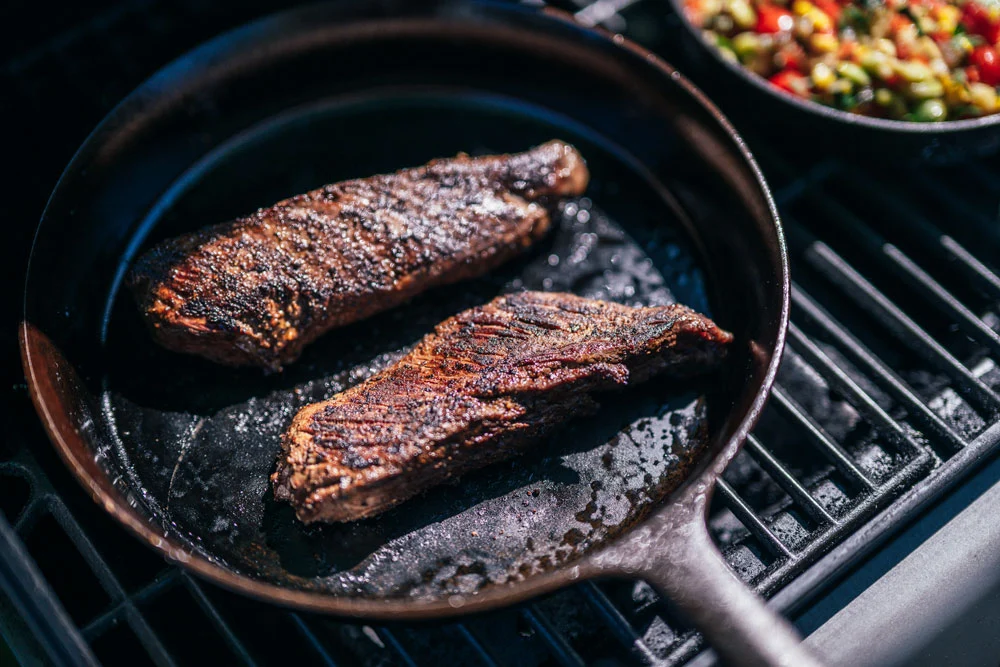
Coarse crack, dry steak, hot pan, then chill out. Use a coarse crack (not powder), pat the steak very dry, and sear over medium-high just until the crust is deep brown. If your pepper starts smelling sharp or looks very dark, lower the heat a notch and flip. Once the steaks are out, keep the sauce at a gentle simmer so any peppery bits in the pan mellow instead of scorching.

Can I make it without cream?

You can make a lighter version with more broth and a tablespoon of butter at the end for gloss. It will be less plush, but still delicious and very steakhouse-adjacent.
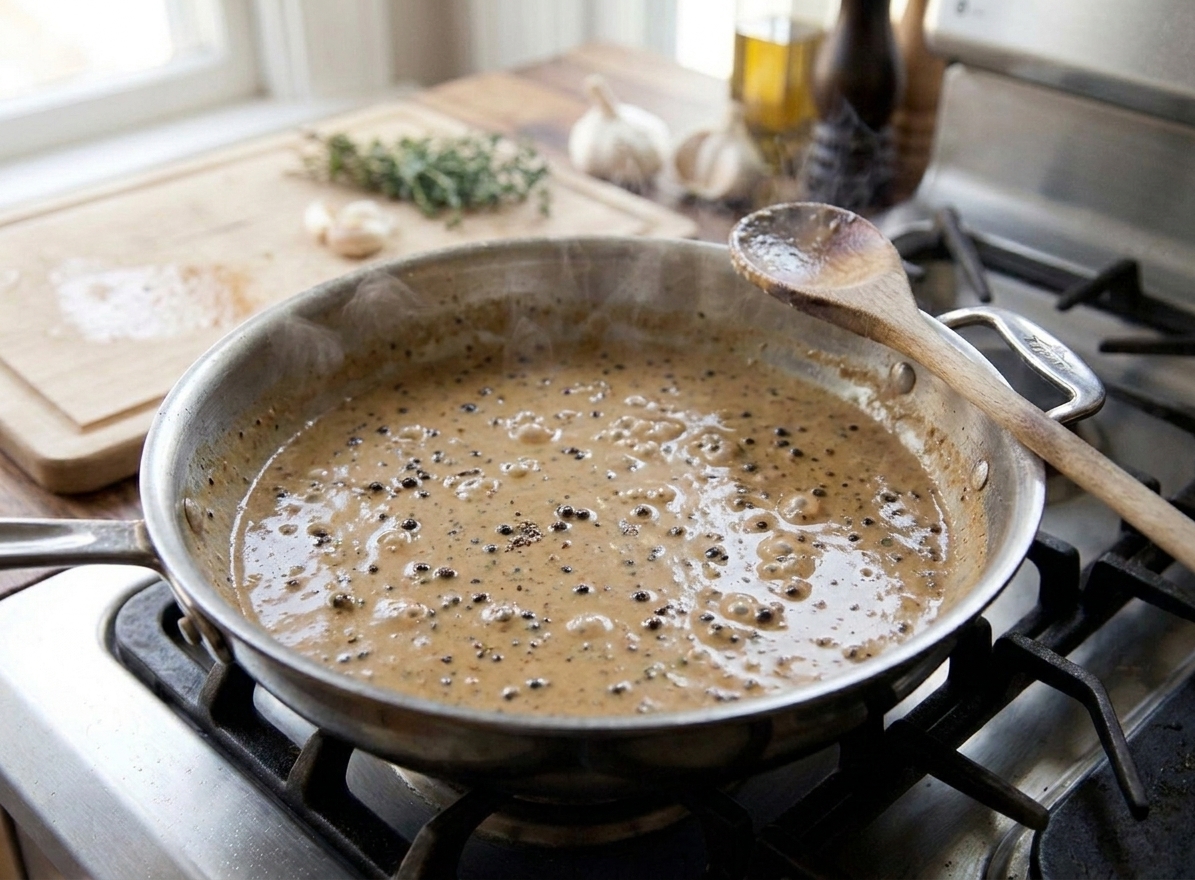

Peppercorn cream sauce gently simmering in a stainless steel skillet with a wooden spoon resting on the rim

The first time I made steak au poivre at home, I treated it like a high-wire act. I was hovering, overthinking, and basically negotiating with the pan. Then I realized the whole dish is built for real life: you sear, you deglaze, you swirl in cream, you taste, you adjust. It rewards confidence, but it also forgives you if you are a little messy, which is exactly my kind of cooking. Now it is my go-to when I want dinner to feel like an occasion without turning my kitchen into a full production.