Common Questions
Do steamed eggs peel easier than boiled eggs?
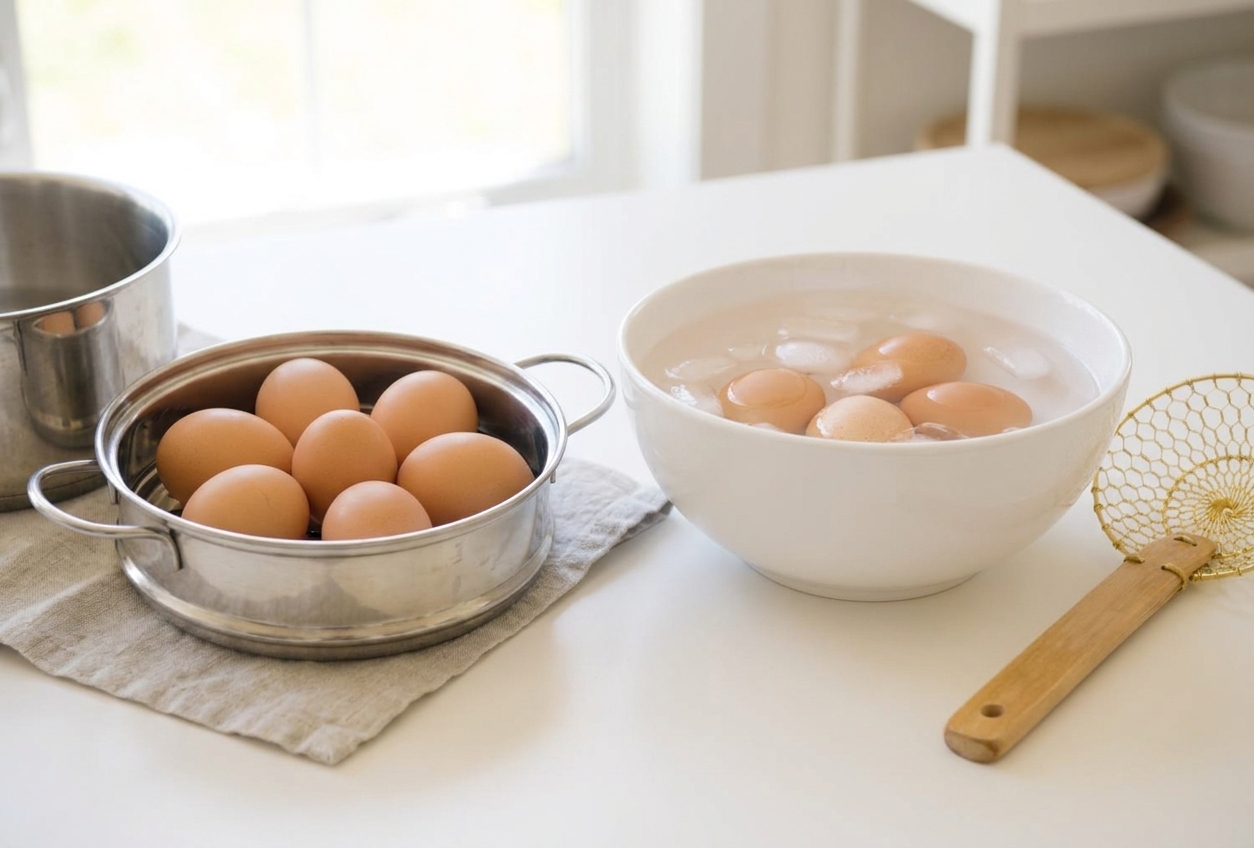
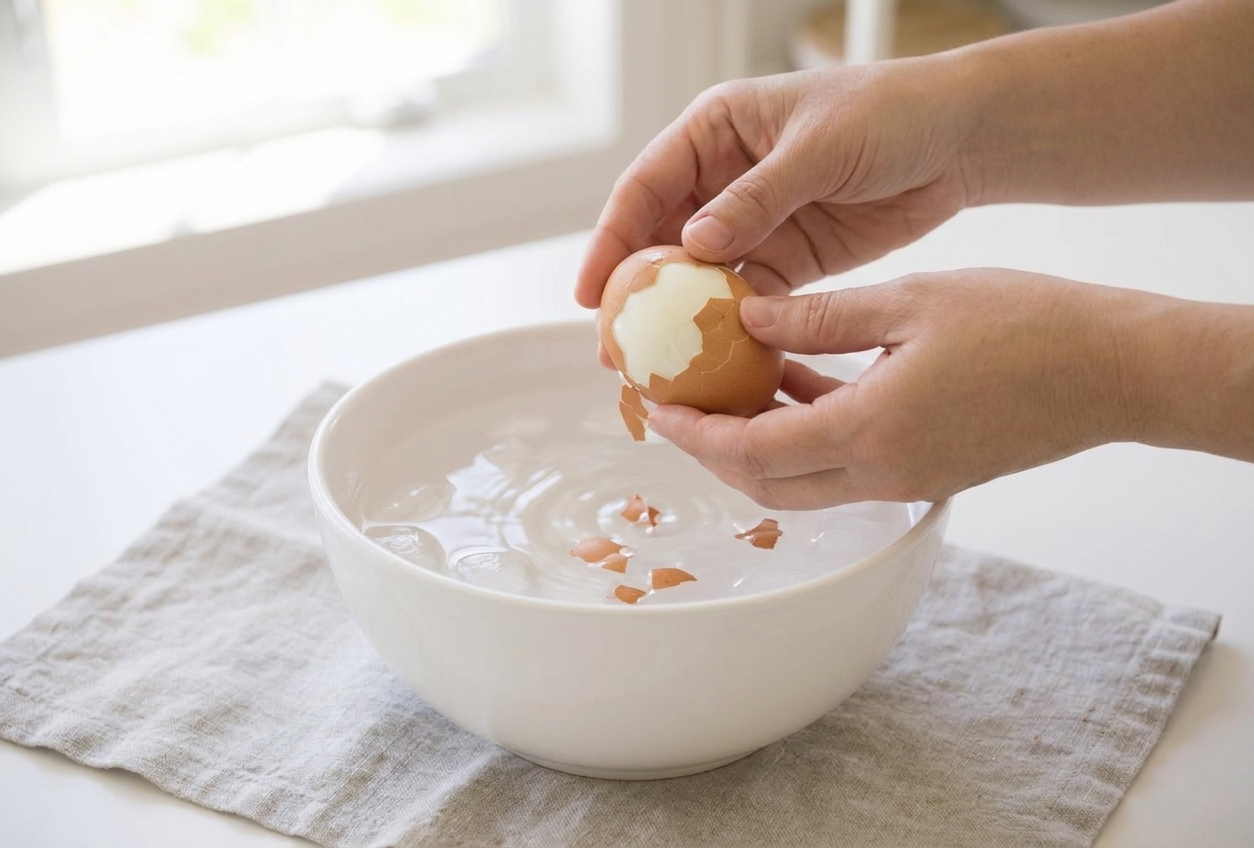
Often, yes, but it is not a guarantee. Peeling success is heavily influenced by egg age (slightly older eggs usually peel easier) and how quickly you chill them. The steamer-to-ice-bath jump can help the membrane release more cleanly, which is why this method tends to be low drama.
How much water do I need to steam eggs?
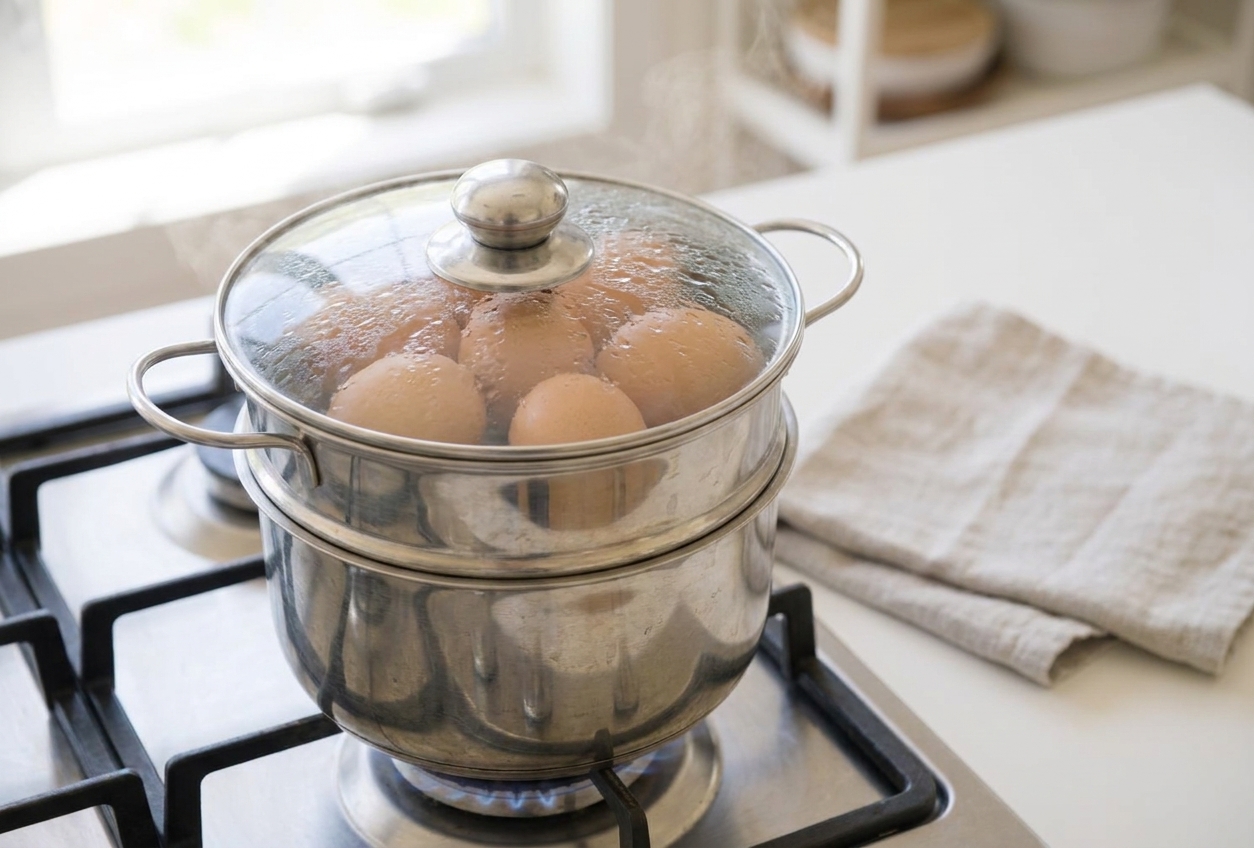
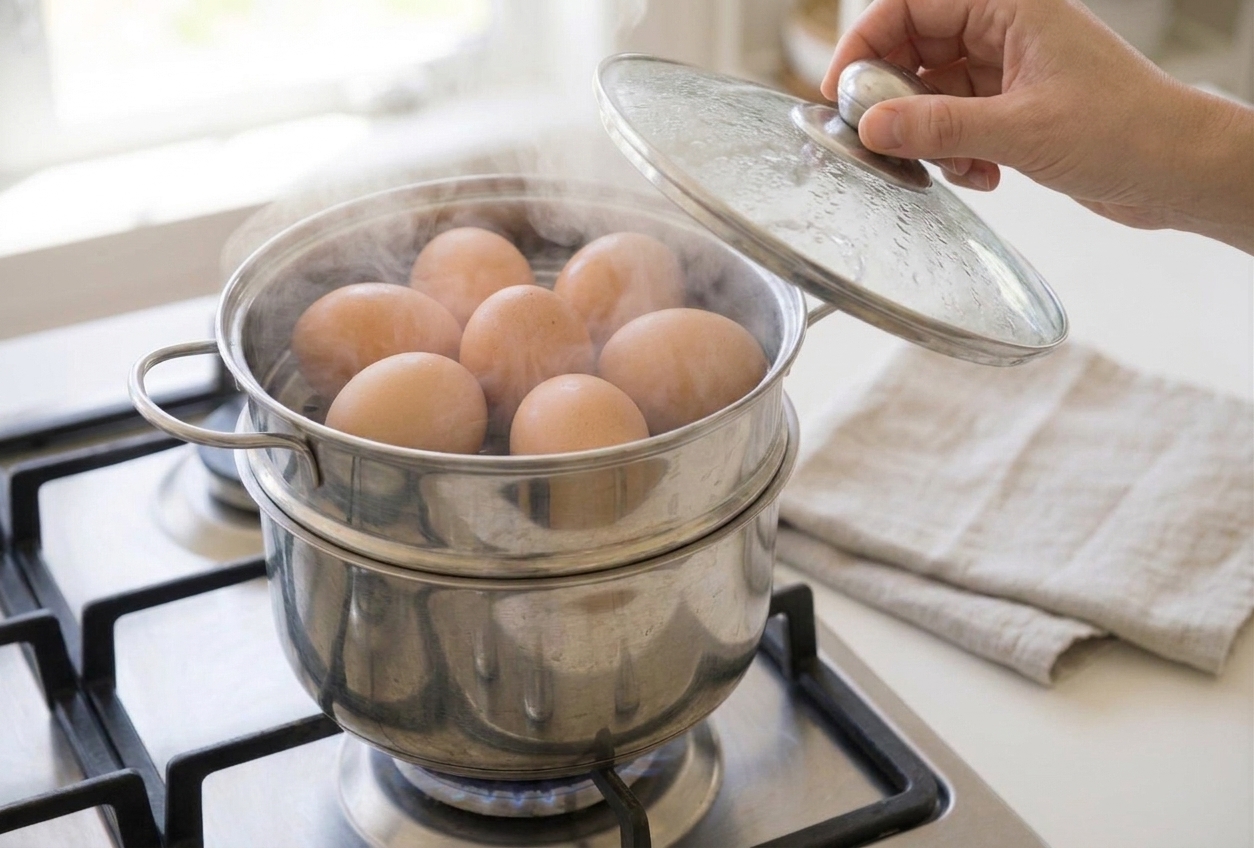
About 1 inch of water in a saucepan is plenty. You want it boiling under the steamer, not touching the eggs.
Do I need a steamer basket?
It helps, but you can improvise. A metal colander, a steaming rack, or even a few crumpled balls of foil under the eggs can work as long as the eggs sit above the water and the lid fits snugly.
Why did my eggs crack while steaming?
Usually from a rough drop into a hot basket, or eggs straight from the coldest part of the fridge. Set them in gently. A tiny crack is not the end of the world. You may lose a little white, but the egg will still taste great.
How do I avoid the green-gray ring around the yolk?
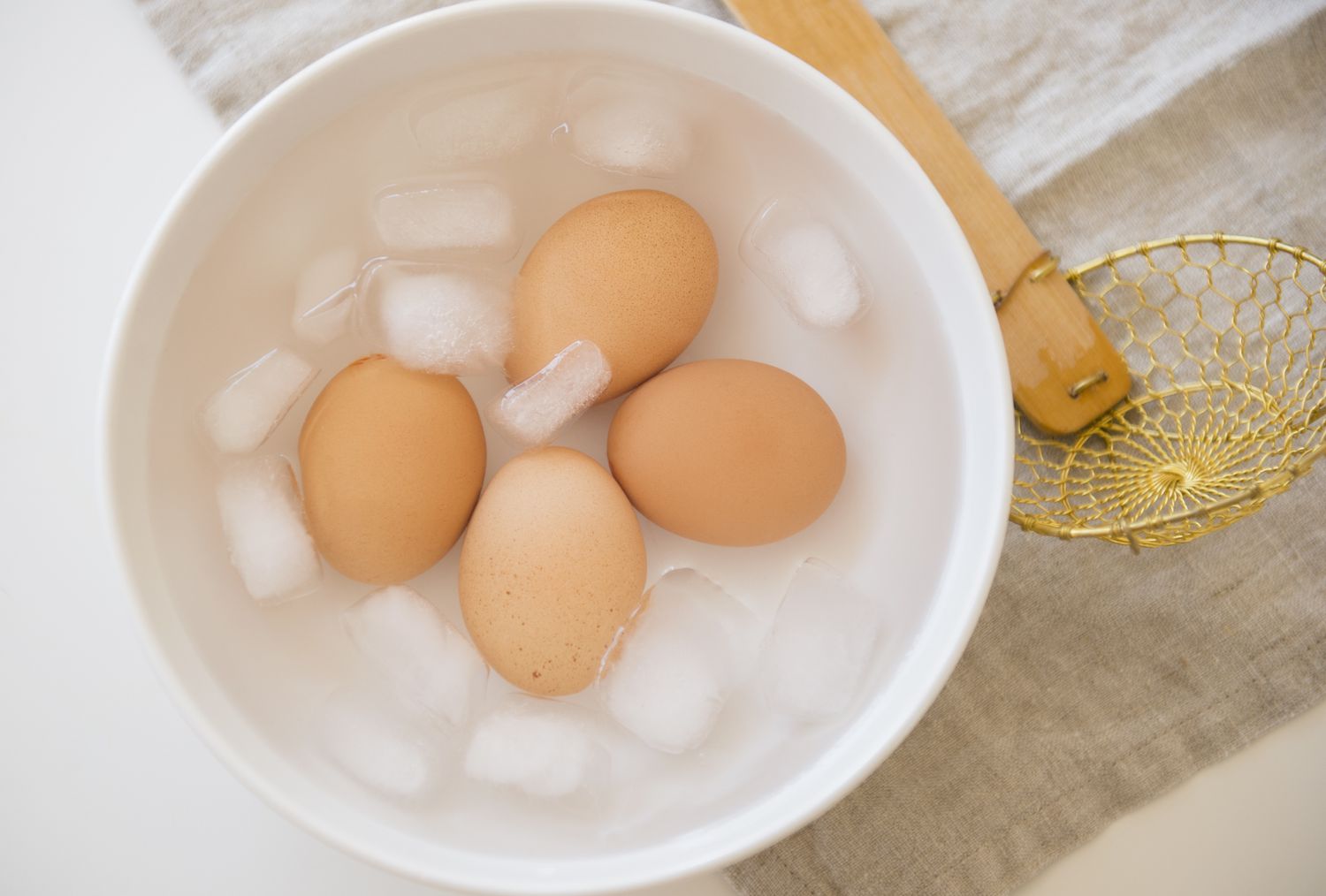
That ring is from overcooking and slow cooling. Use the timing you want, then move the eggs straight into an ice bath for at least 5 minutes.
Can I steam eggs for deviled eggs?
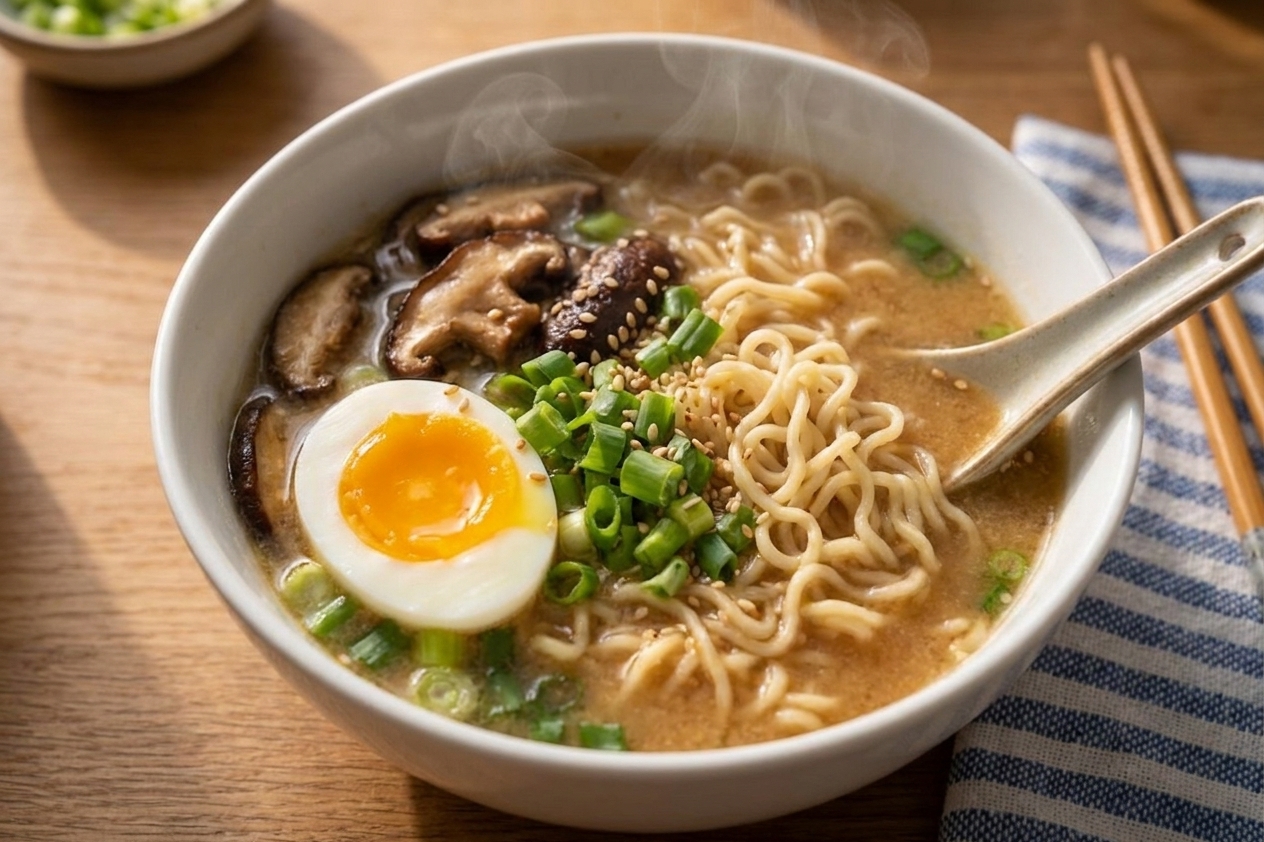
Absolutely. Steam them to a firm doneness, chill well, then peel. For classic deviled eggs I like 13 minutes for large eggs from the fridge at sea level, then a full ice bath.
Do I need to adjust for egg size, temperature, or altitude?
Sometimes, yes. Extra-large eggs, very cold eggs, a gentler simmer, or higher altitude can all push timing a bit. If you are not sure, start with the chart, then adjust by plus or minus 1 minute next time based on how your first batch turns out.