Common Questions
Is this authentic bulgogi?
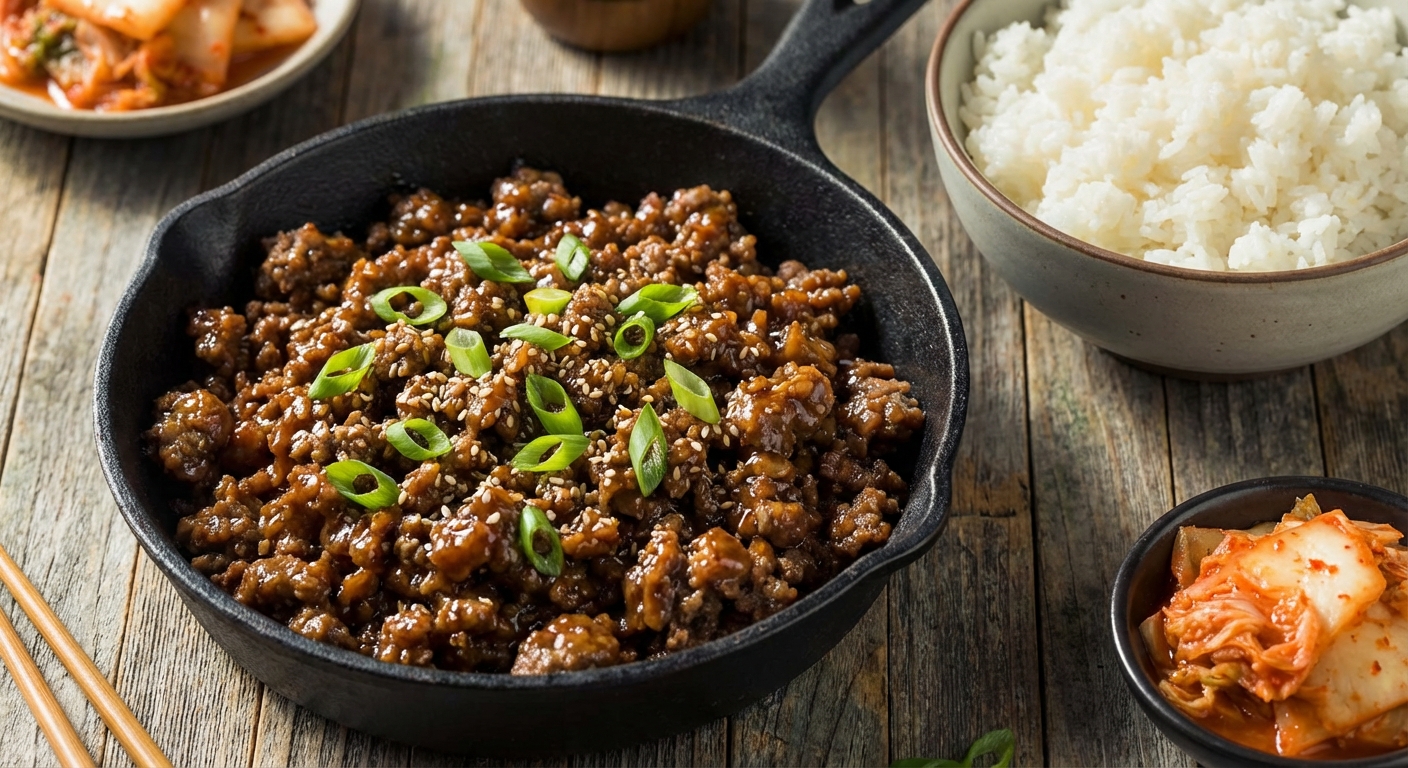
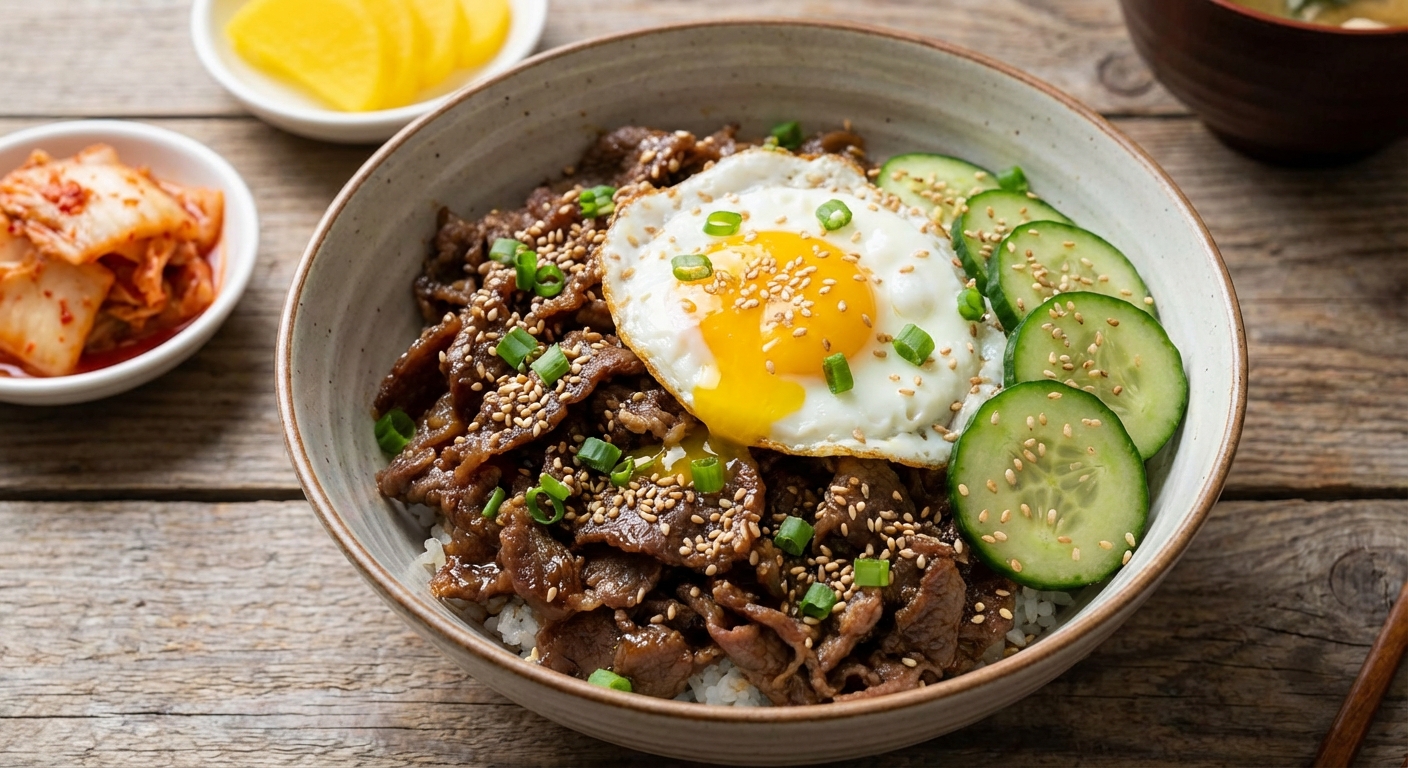
It is bulgogi-style in flavor, but not a traditional bulgogi method. Classic bulgogi uses thinly sliced beef (often sirloin or ribeye) marinated and cooked quickly, and the marinade commonly includes garlic, soy sauce, sesame, and a fruit element like pear or apple for sweetness and tenderness. This version uses ground beef for speed and weeknight ease.
Can I make it less sweet?
Yes. Start with 2 tablespoons brown sugar, then add more to taste. You can also balance sweetness with a little extra rice vinegar or lime juice at the end.
What if I do not have gochujang?
No problem. Use crushed red pepper flakes or a small spoon of sriracha. The flavor will be different but still delicious. If you have miso, a teaspoon of miso plus pepper flakes makes a nice savory substitute.
How spicy is gochujang?
It varies a lot by brand. If you are spice-sensitive, start with 1 tablespoon, taste after simmering, then add more if you want extra heat.
Can I use turkey or chicken instead of beef?
Absolutely. Use dark meat ground turkey if possible for better flavor. Add 1 to 2 teaspoons of neutral oil when browning because lean meats can dry out.
How do I keep the beef from getting watery?
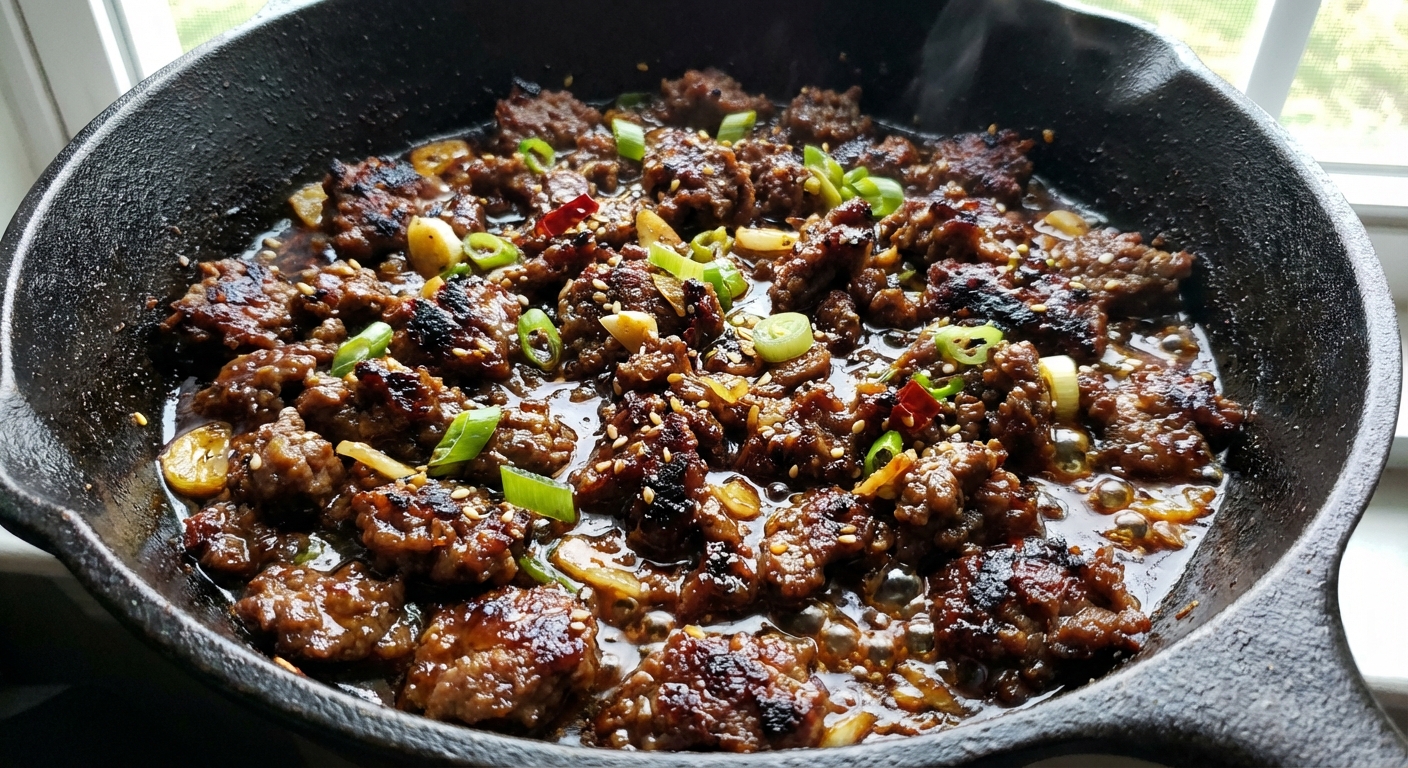
Use a hot pan and do not overcrowd. Let the beef brown before stirring too much, then drain excess fat if needed. Also, add the sauce after you have some caramelized bits going.
My sauce tastes salty. What now?
Even low-sodium soy sauce can vary. If it tastes too salty, stir in a splash of water, add more rice, or add a quick veggie like shredded cabbage to spread the seasoning out. Next time, start with a little less soy sauce and add to taste.
What should I serve with it?
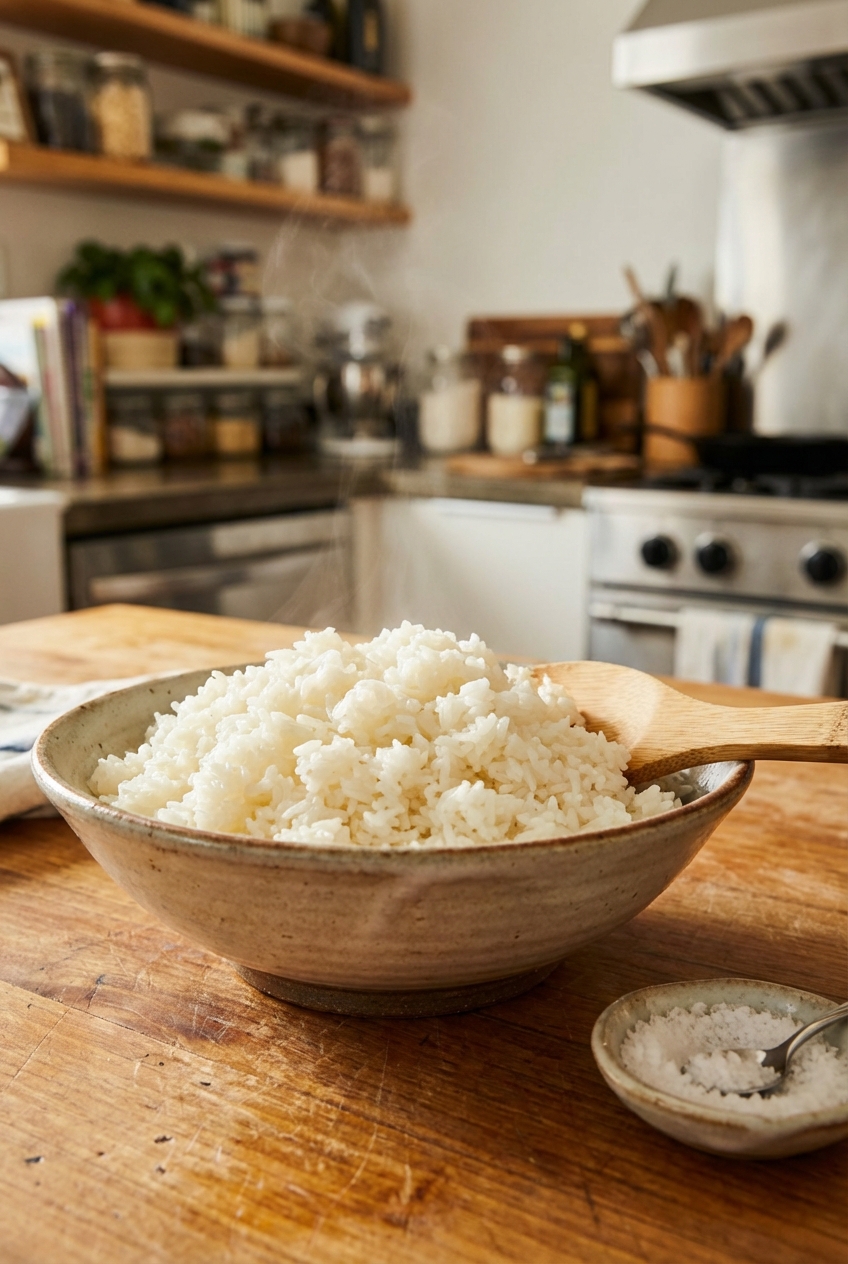
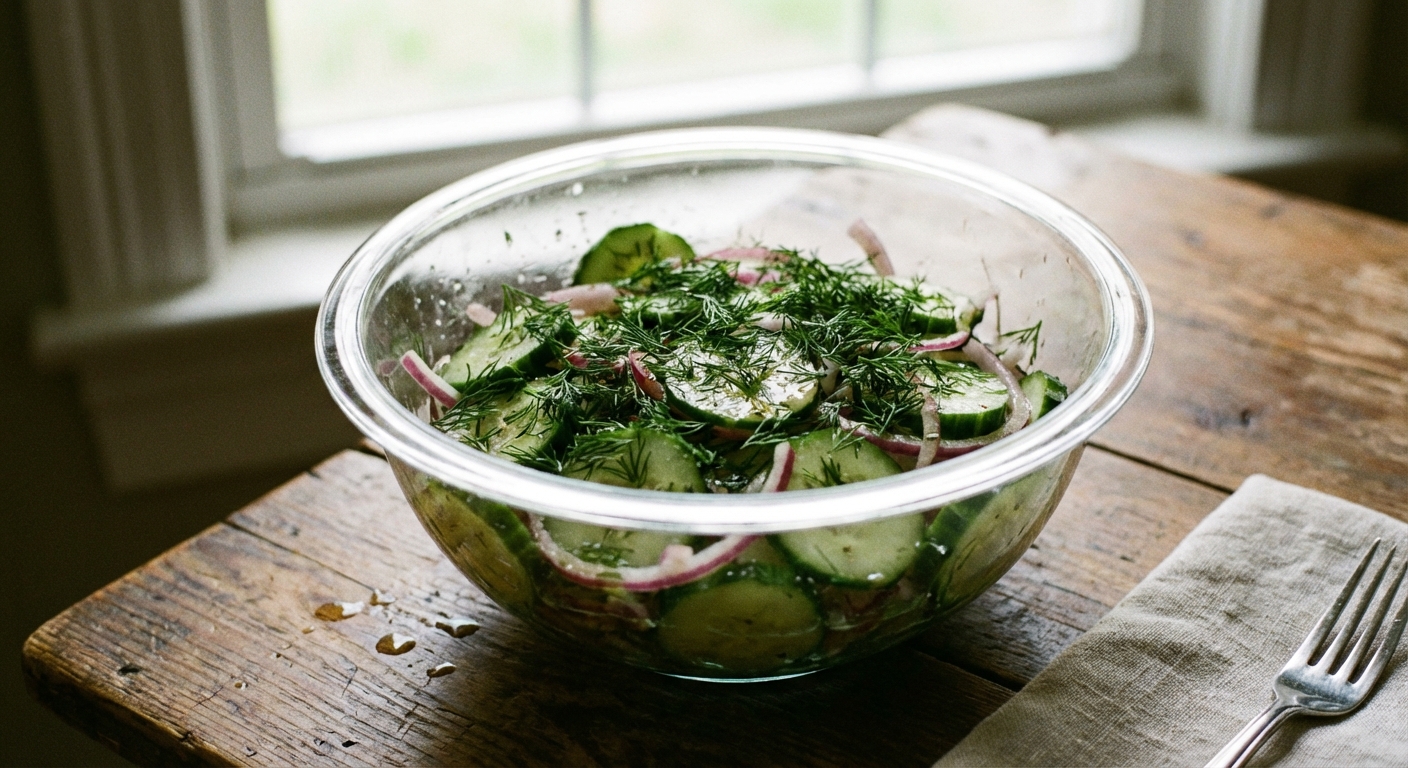
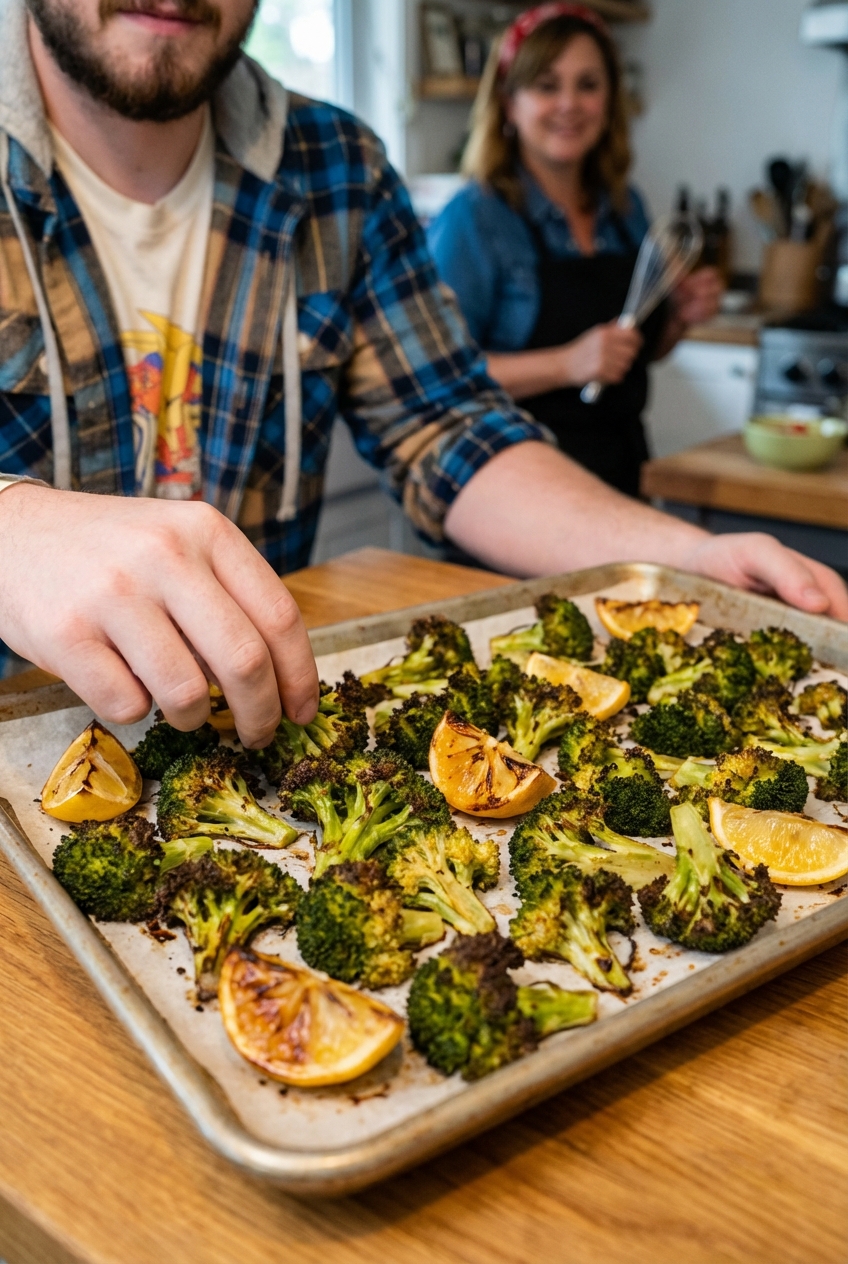
Steamed rice (about 3 to 4 cups cooked for 4 servings), shredded cabbage, cucumber salad, kimchi, roasted broccoli, or a fried egg. Also, this is excellent in lettuce cups with crunchy veggies.