Mom's Best Recipes
Recipe

Sweet Glazed Yams

Tender sweet potatoes baked until silky, then coated in a glossy brown sugar butter glaze with cinnamon and vanilla. Classic holiday vibes, easy weeknight energy.

Author By Matt Campbell
4.8
A baking dish filled with sliced sweet potatoes coated in a shiny brown sugar butter glaze, with caramelized edges and a spoon resting on the side

Let’s clear the air: if you grew up calling these candied yams, you are not wrong. If you call them sweet glazed sweet potatoes, you are also not wrong. If you call them “that dish I eat directly from the casserole dish while pretending I’m just cleaning up,” you are extremely correct.

This recipe is my no-drama version: tender sweet potatoes, a buttery brown sugar glaze that turns glossy and caramel-kissed in the oven, and just enough warm spice to make the whole kitchen smell like you are a person who has their life together.

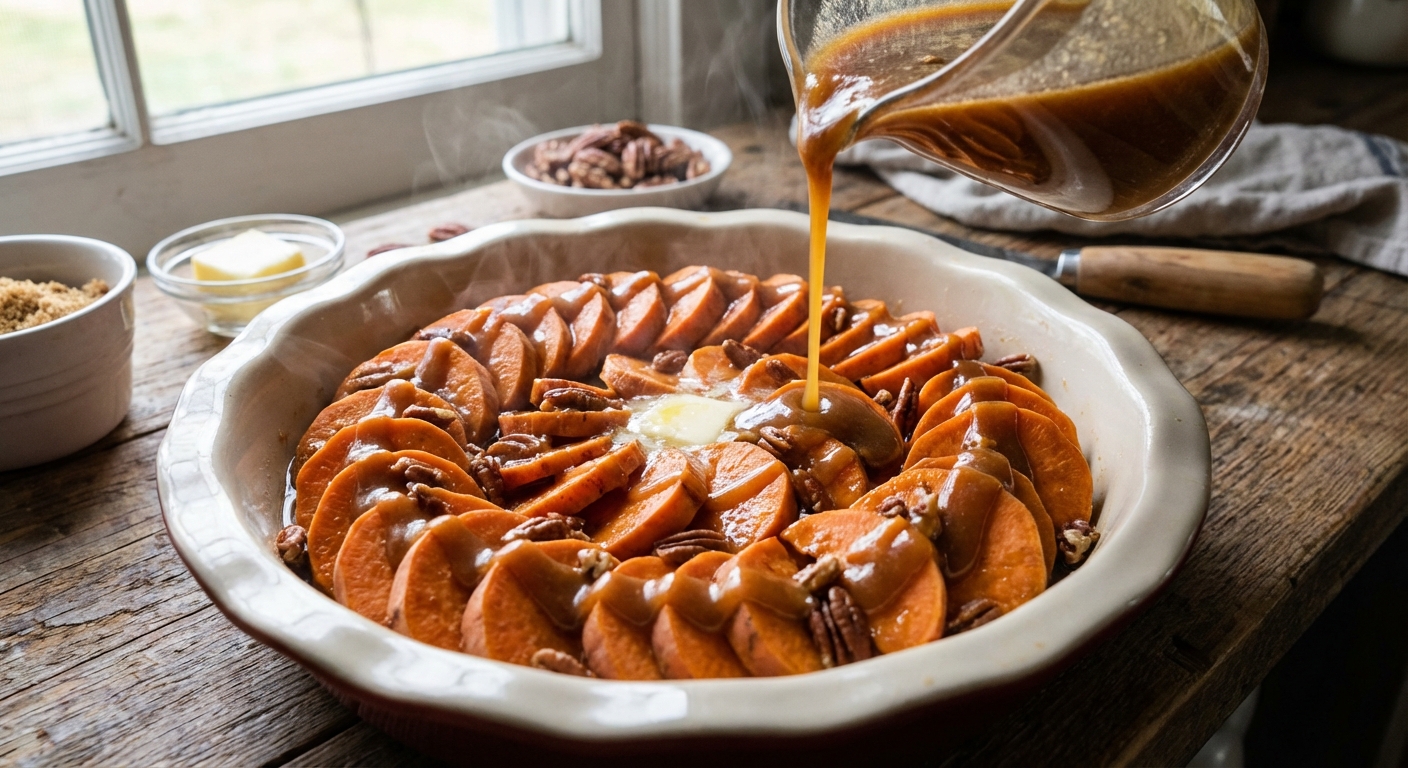
Sliced sweet potatoes arranged in a baking dish with a buttery brown sugar glaze being poured over the top before baking

Why It Works

  • Silky centers, caramelized edges: We cover to soften first, then uncover to let the glaze thicken and cling.
  • A real glaze, not a puddle: Butter, brown sugar, and a splash of liquid make a sauce that reduces into shiny syrup instead of watery sweetness.
  • Balanced flavor: Salt, vanilla, and cinnamon keep it cozy without tasting like dessert cosplay.
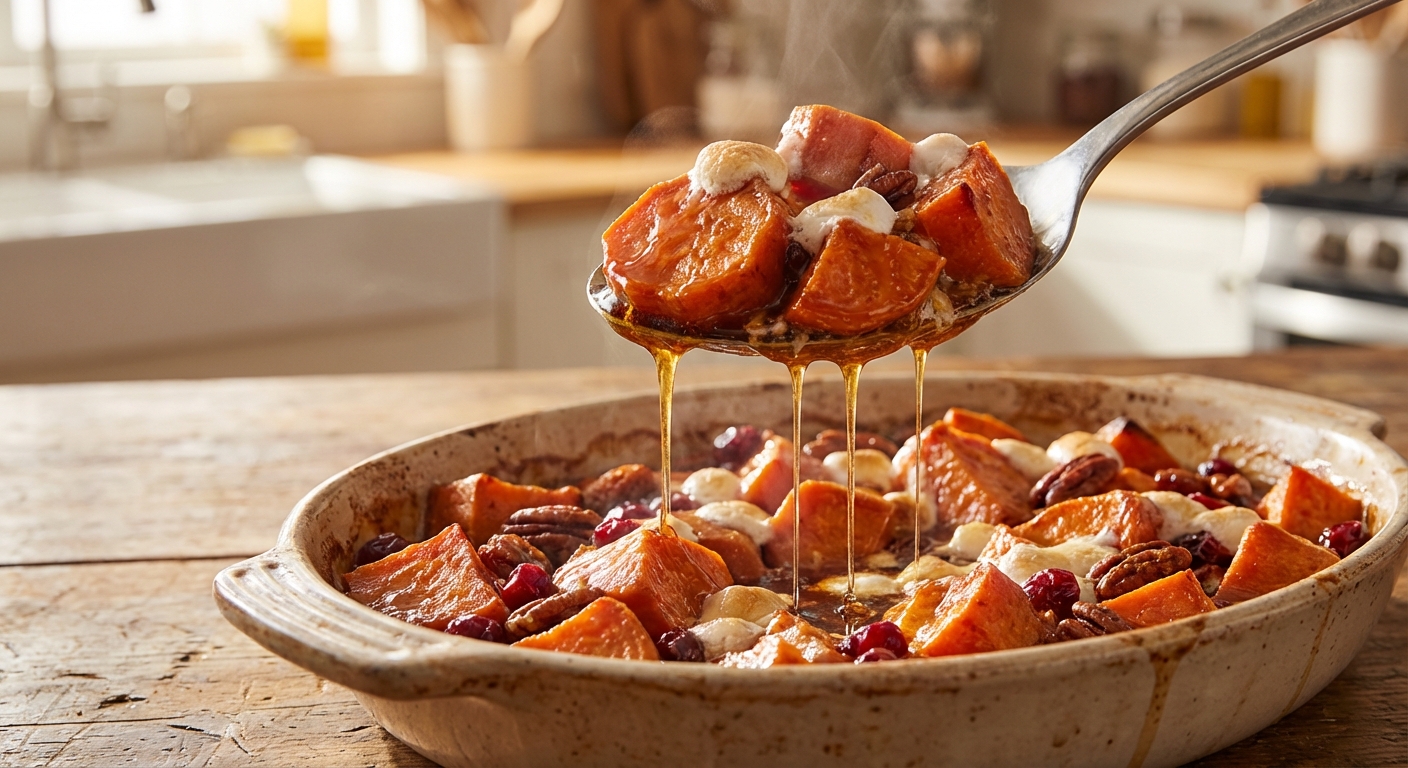
  • Flexible: Add pecans, marshmallows, orange zest, bourbon, or none of the above. You are the boss of your yams.

Storage Tips

Refrigerate: Cool completely, then store in an airtight container for up to 4 days.

Reheat: Warm in a 350°F oven, covered, for 15 to 25 minutes until hot throughout (aim for 165°F in the center if you like to check). If you want the glaze to look freshly glossy, uncover for the last 5 minutes. Microwave works too, but the oven keeps the edges happier.

Freeze: You can freeze them, but the texture softens more after thawing. Freeze in a freezer-safe container up to 2 months. Thaw overnight in the fridge and reheat covered in the oven.

Leftover upgrade: Chop and crisp in a skillet with a little butter, then top with a fried egg. Breakfast is now wearing a fancy coat.

Common Questions

Are yams and sweet potatoes the same?

In many US grocery stores, orange-fleshed sweet potatoes are often labeled as “yams”. True yams are starchier, drier, and less sweet, and they are more common in international markets. This recipe is written for the sweet potatoes most people buy in US stores.

Should I boil the sweet potatoes first?

Not necessary here. Baking them in a covered dish makes them tender without waterlogging the flavor. If you are in a hurry, you can microwave whole sweet potatoes until just tender, then slice and glaze, and bake uncovered to caramelize.

Can I make these ahead?

Yes. Bake them fully, cool, and refrigerate. Reheat covered at 350°F until hot throughout. If the glaze looks tight, add 1 to 2 tablespoons water or orange juice before reheating.

How do I keep the glaze from getting gritty?

Keep the heat at medium-low and stir until the sugar is fully dissolved and the glaze looks smooth with no visible granules. Avoid a rapid boil, which can encourage crystallization. If you still see graininess, take it off the heat and keep stirring for a minute, it often smooths out.

Can I reduce the sweetness?

Absolutely. Cut the brown sugar to 1/3 cup and keep the salt. You will still get that glossy finish, just less candy-shop.

Marshmallows, yes or no?

Yes if you love them, no if you do not. If using, add them at the end so they toast instead of melting into a sweet fog.

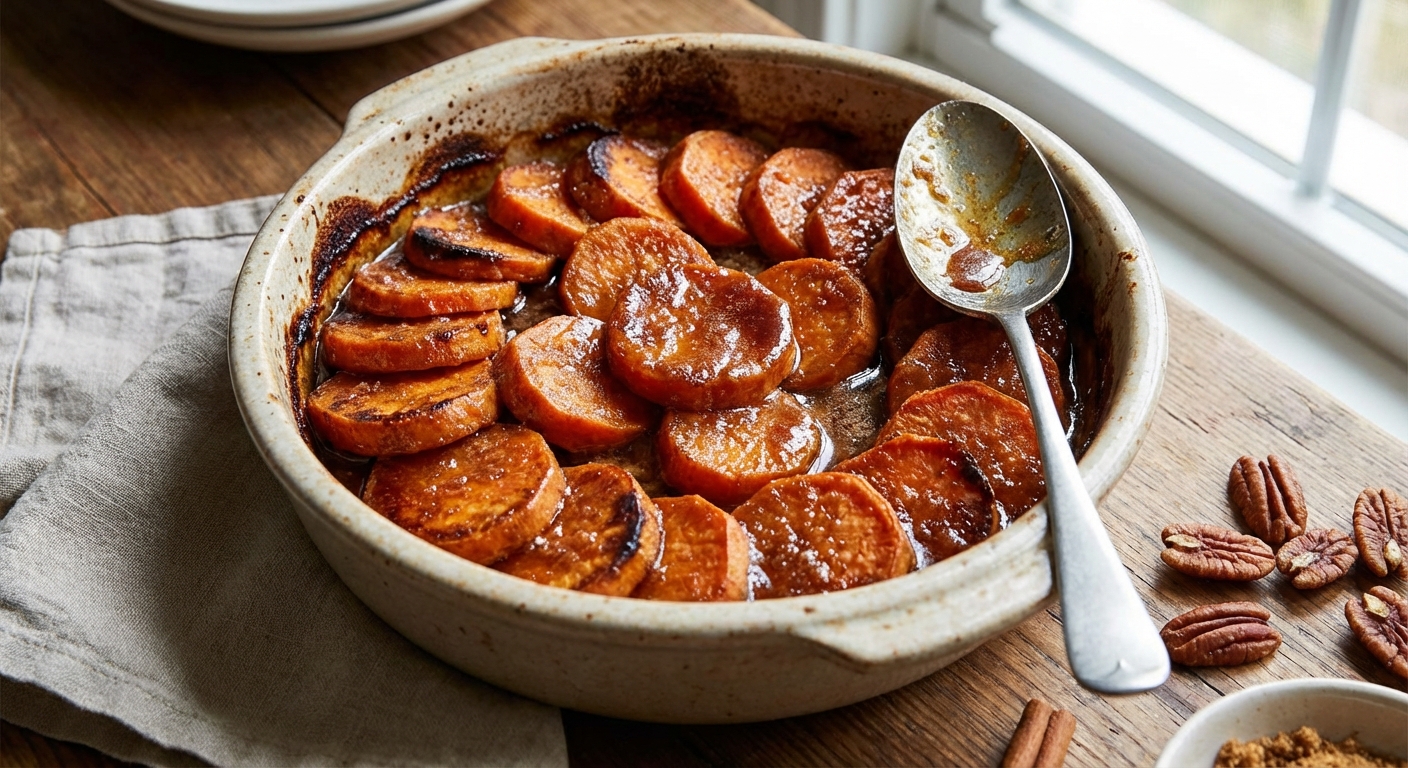
I started making sweet glazed yams when I realized I was treating them like a once-a-year holiday formality, even though they are basically sweet potatoes wearing a butter sweater. Now they show up whenever I need an easy win. The glaze smells like cinnamon and vanilla and good decisions, and the edges get just crisp enough to make you “taste test” three times while putting the table together. It is not my fault the spoon keeps returning to the dish. Science is complicated.