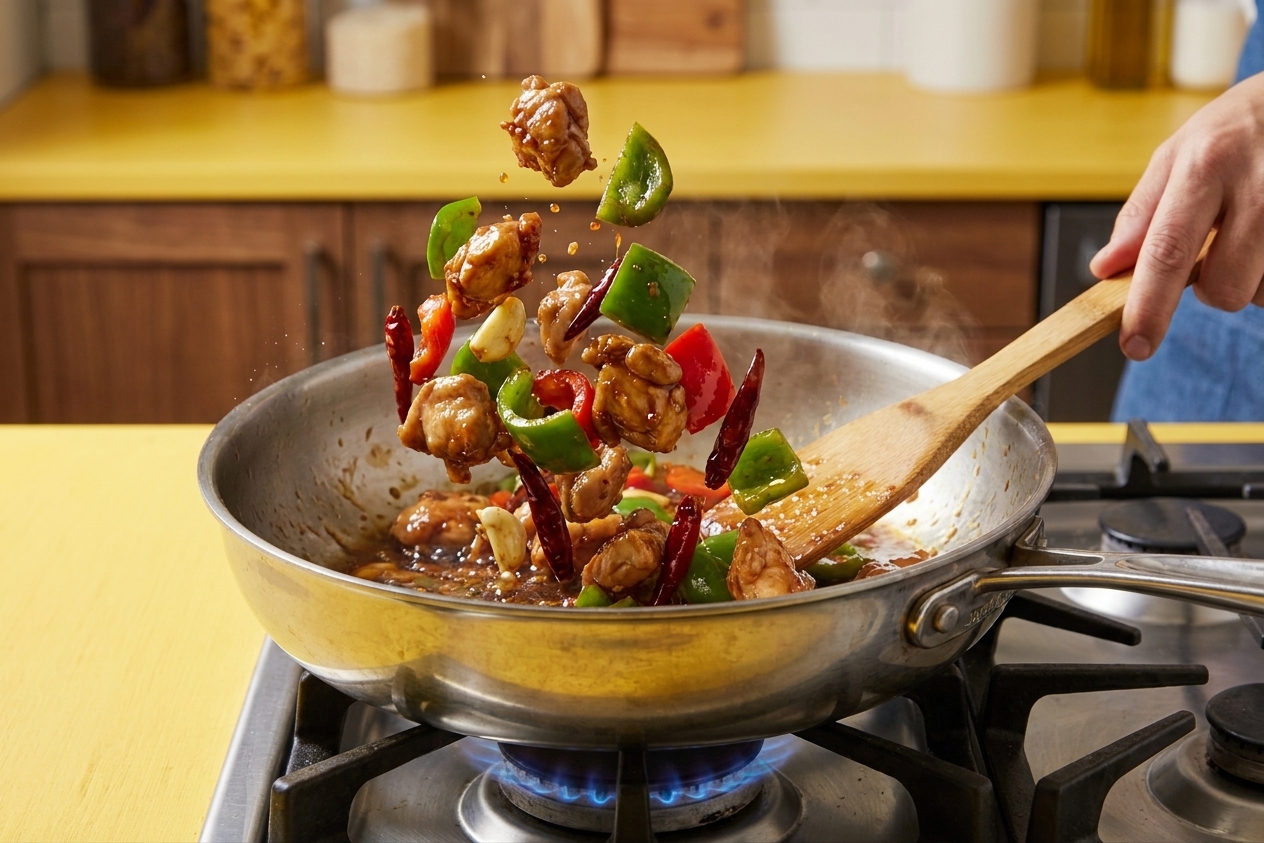
Is Szechuan chicken very spicy?
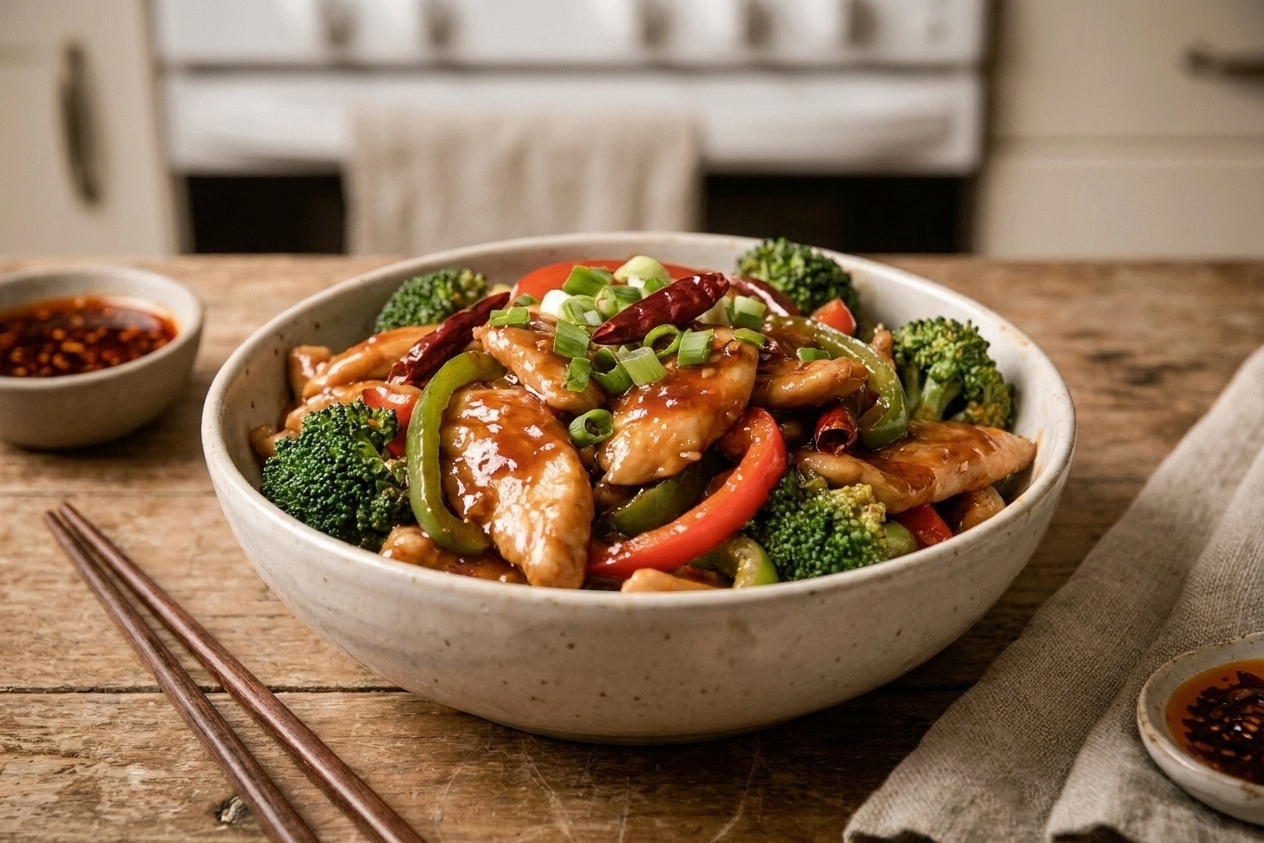
It can be. This version is medium-hot as written. Use fewer dried chiles for less heat, and keep the Szechuan peppercorns in for the tingle. Heat and tingle are different, and you can control them separately.
Are you supposed to eat the dried red chiles?
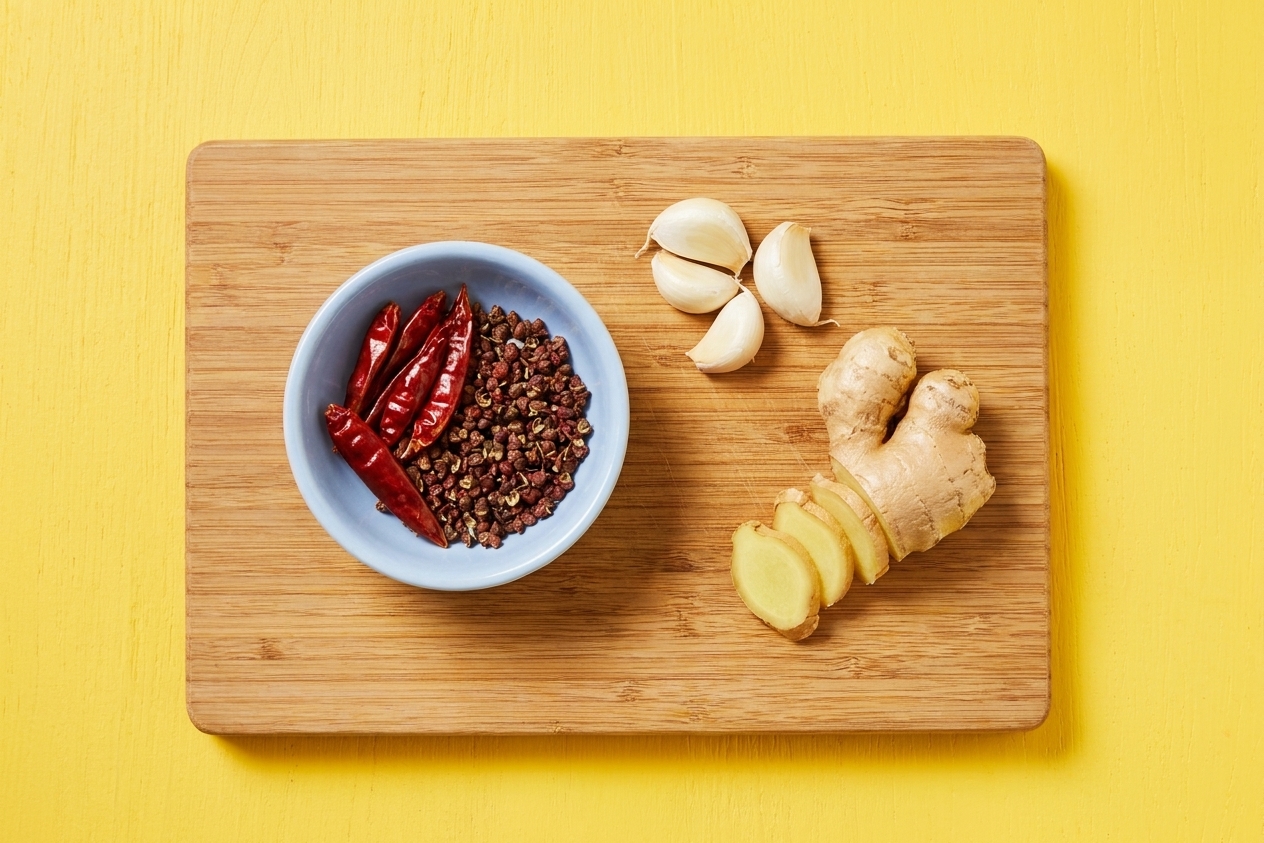
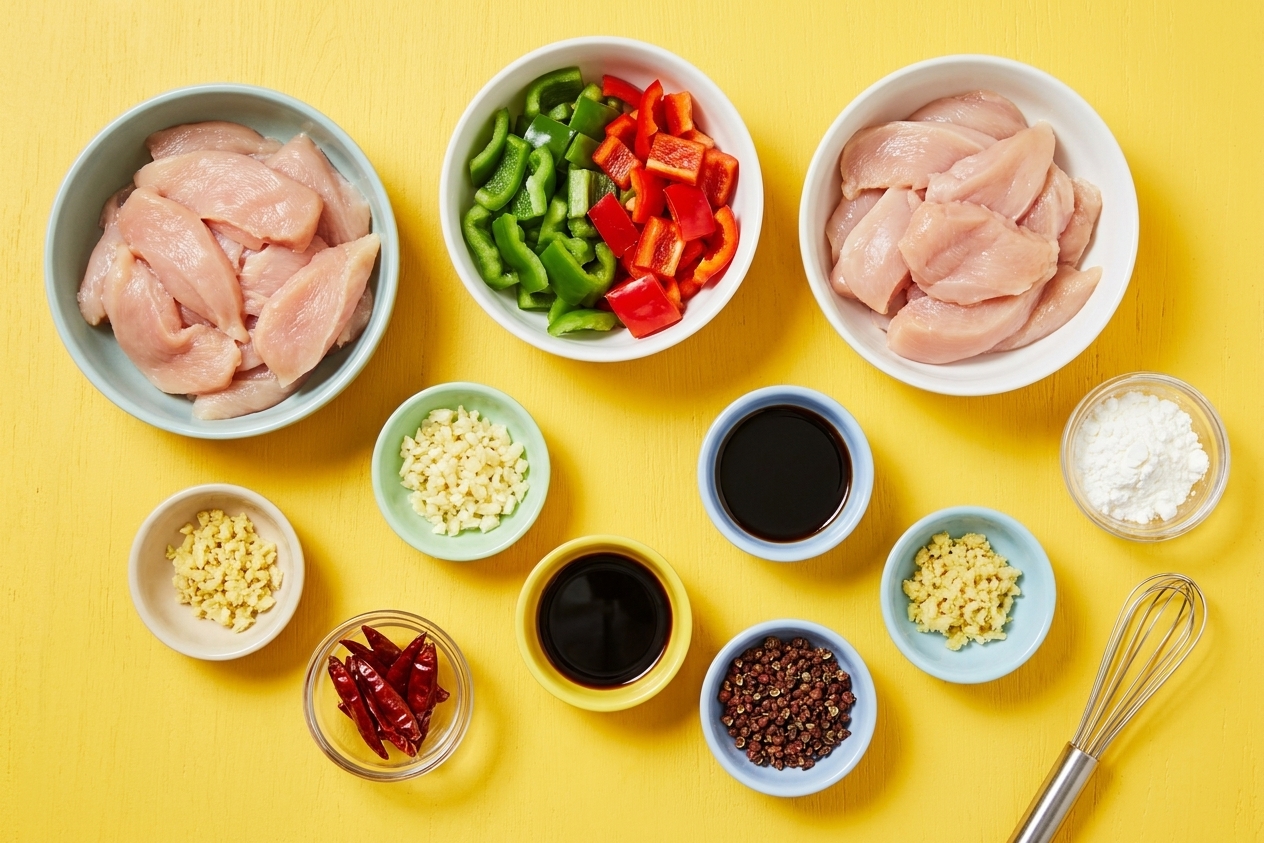
Not usually. In a lot of Szechuan-style stir fries, the dried chiles are there to perfume the oil, not to be eaten whole. Leave them whole for gentler heat, then pick them out as you eat (or remove a few before serving if you want).
What do Szechuan peppercorns taste like?
They are citrusy, piney, and lightly floral with a numbing, buzzing sensation. If you have ever eaten something that made your lips feel like they were humming, that is the vibe.
What is doubanjiang and can I skip it?
Doubanjiang is fermented chile bean paste (often made with broad beans), and it brings the deep, savory backbone that makes Szechuan-style dishes taste legit. Some brands include wheat, so check the label if you need it gluten-free. If you cannot find it, the closest pantry approximation is 1 tablespoon gochujang plus 1 teaspoon miso. Taste the sauce and add a little extra soy sauce or a pinch of salt if it needs more depth. For more heat, it is better to add extra chile or chile flakes to taste since dried chiles vary a lot.
How do I keep the chicken from getting dry?
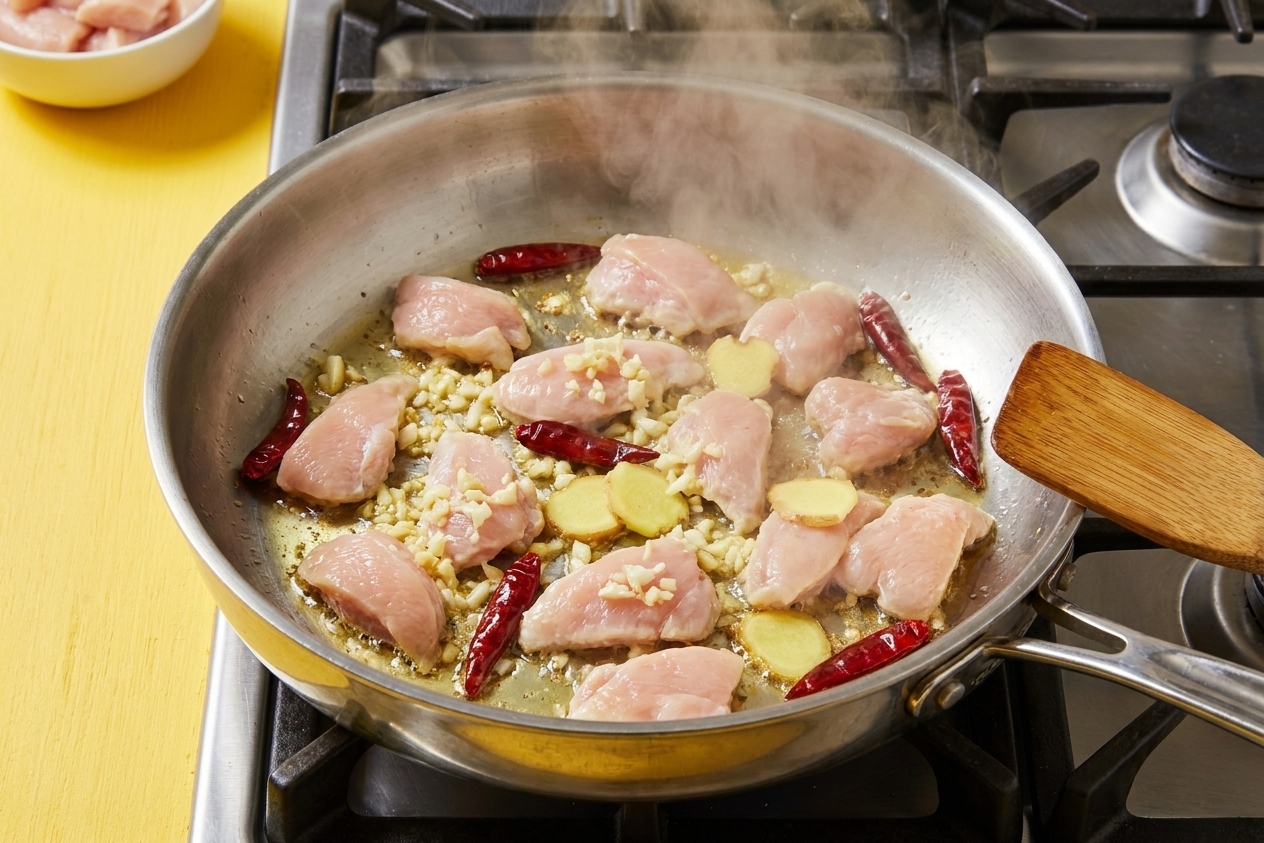
Slice it evenly, marinate with cornstarch, and do not overcook in the first sear. Pull it when it is about 80 to 90% done, then let it finish in the sauce for a minute. Final doneness is 165°F/74°C.
Can I use chicken thighs?
Yes. Thighs stay juicy and are very forgiving. Just trim excess fat and slice into bite-size pieces.
Is this gluten-free?
It can be. Use tamari instead of soy sauce, and make sure your doubanjiang (some contain wheat) and broth are labeled gluten-free.