Do I need to rinse brown rice?
You do not have to, but I recommend it. Rinsing removes dust and some loose surface starch so the rice cooks up cleaner and less sticky. Rinse in a fine-mesh strainer until the water runs mostly clear.
Why is my brown rice still crunchy?
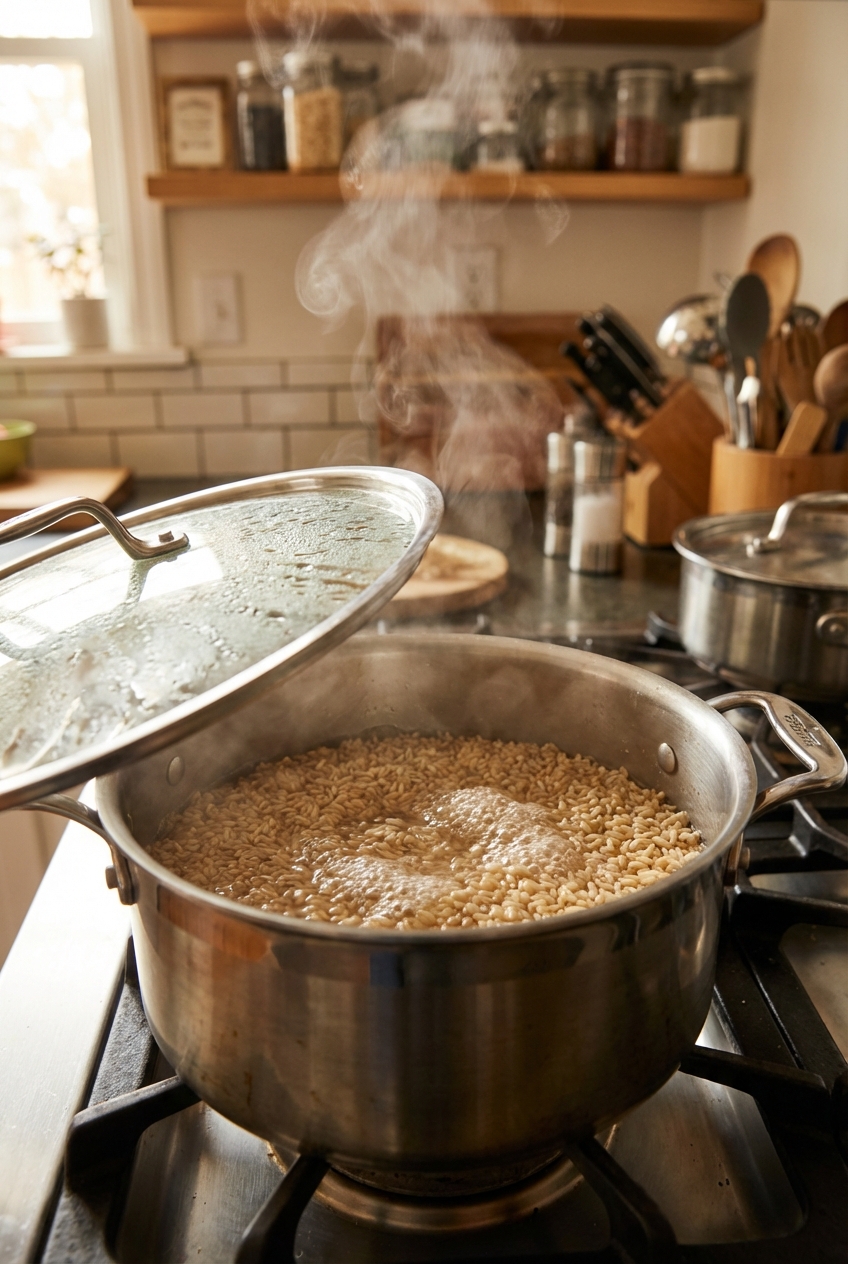
Usually one of three things: not enough water for your specific brand, the simmer was too high and it evaporated too fast, or it needed a longer rest. If it is almost done but still firm, add 2 to 3 tablespoons water, cover, and steam on low for 5 to 10 minutes. Then rest off heat.
Can I make this in a rice cooker?
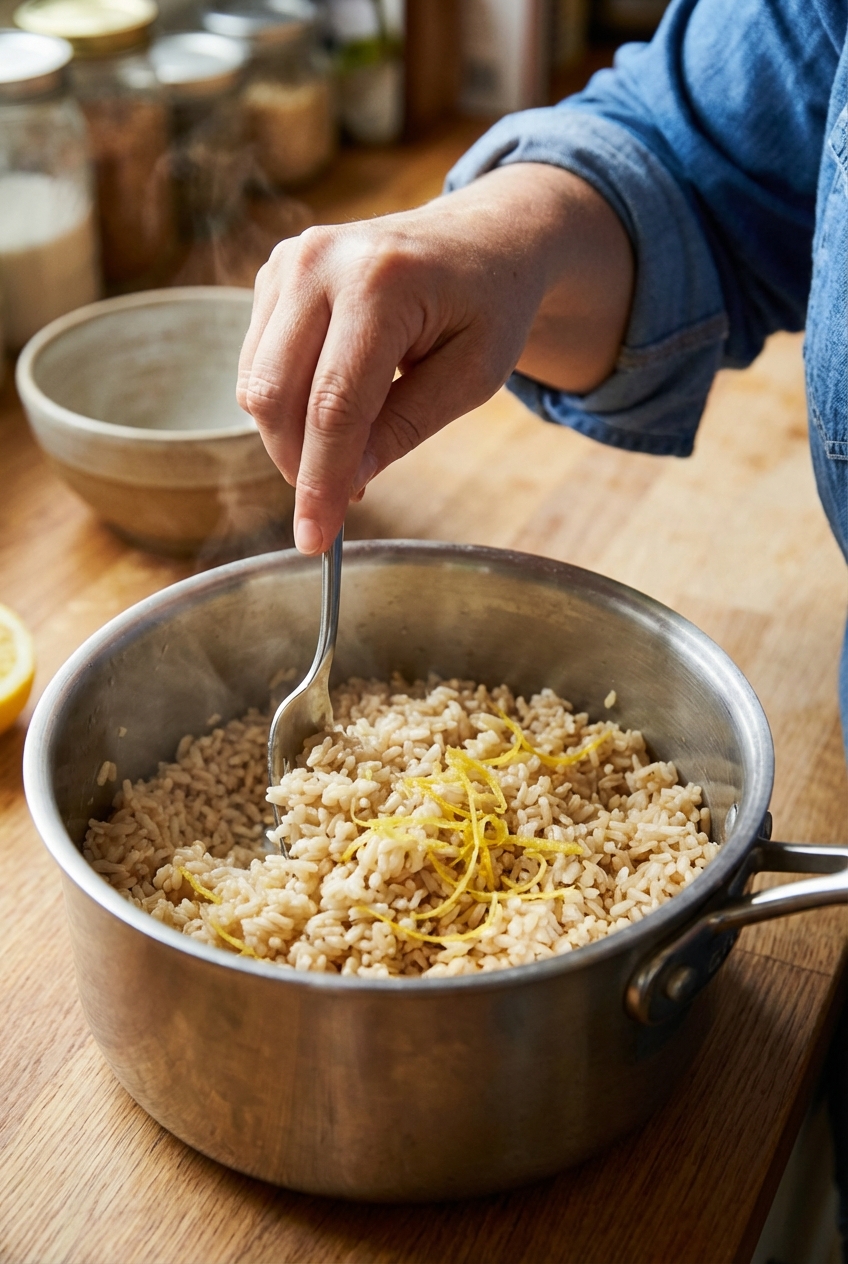
Yes, though check your manufacturer’s instructions because some sealed rice cookers retain more moisture and can need slightly less water. Start with the ratio listed below, but if your cooker tends to make brown rice soft, reduce the water by 2 to 3 tablespoons. Once it is done, let it sit on “warm” for 10 minutes, then fold in the lemon, vinegar, olive oil, and mix-ins.
What makes it tangy?
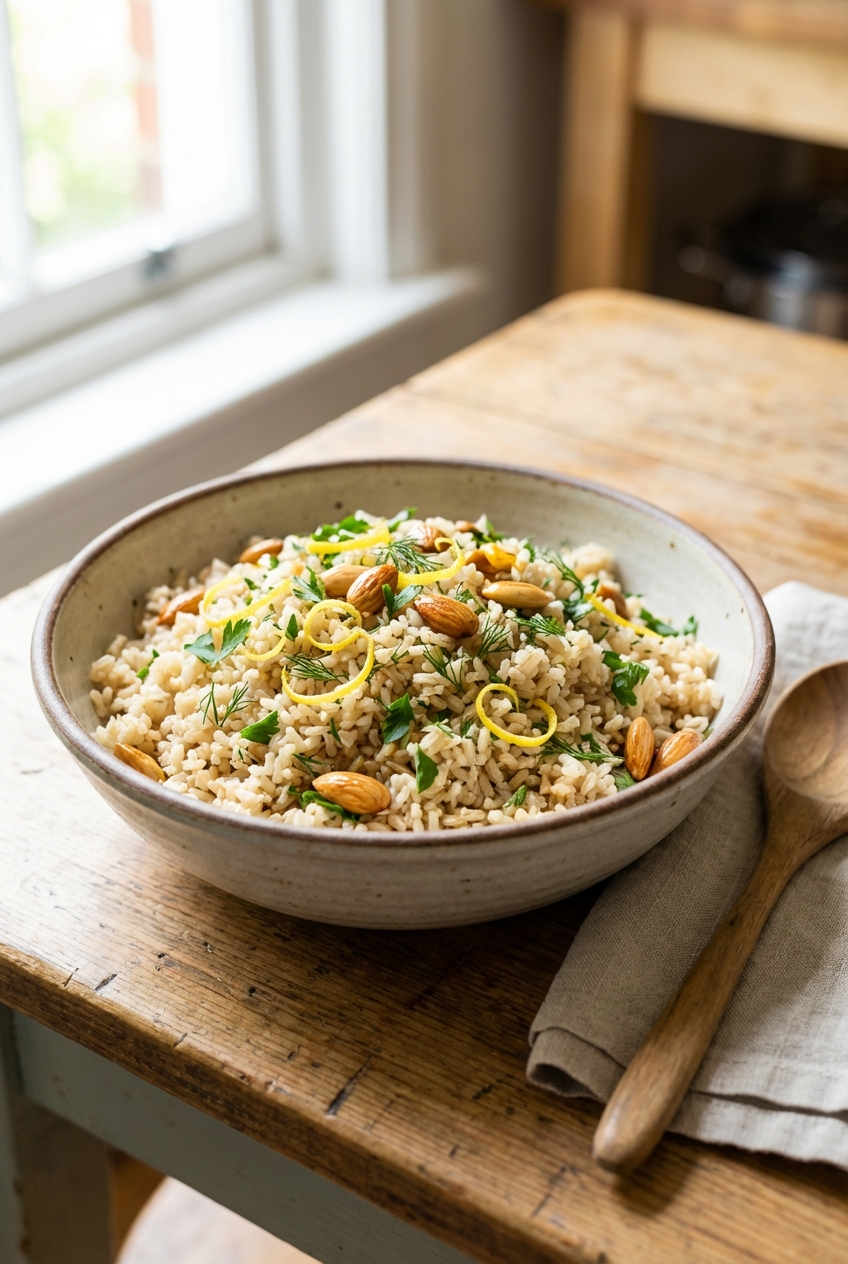
Two things: lemon zest and juice for fresh brightness, plus a small splash of apple cider vinegar (or white wine vinegar) for a clean, savory tang that keeps the rice from tasting flat.
Can I use broth instead of water?
Absolutely. Use low-sodium broth so the final seasoning stays in your control. This recipe is already bright and punchy, so broth makes it extra cozy.
Does the water ratio ever change?
Yes. Brown rice varies a lot by brand and type. This ratio is for long-grain brown rice. If your rice is consistently extra chewy, add 1/4 cup more water next time (or follow your package and adjust from there). Short-grain brown rice and quick-cooking brown rice can behave differently.