Mom's Best Recipes
Recipe

Three Sisters Stew

A one-pot, family-friendly stew with squash, beans, and corn in a gently smoky tomato broth. Cozy, filling, and perfect for make-ahead dinners.

Author By Matt Campbell
4.8
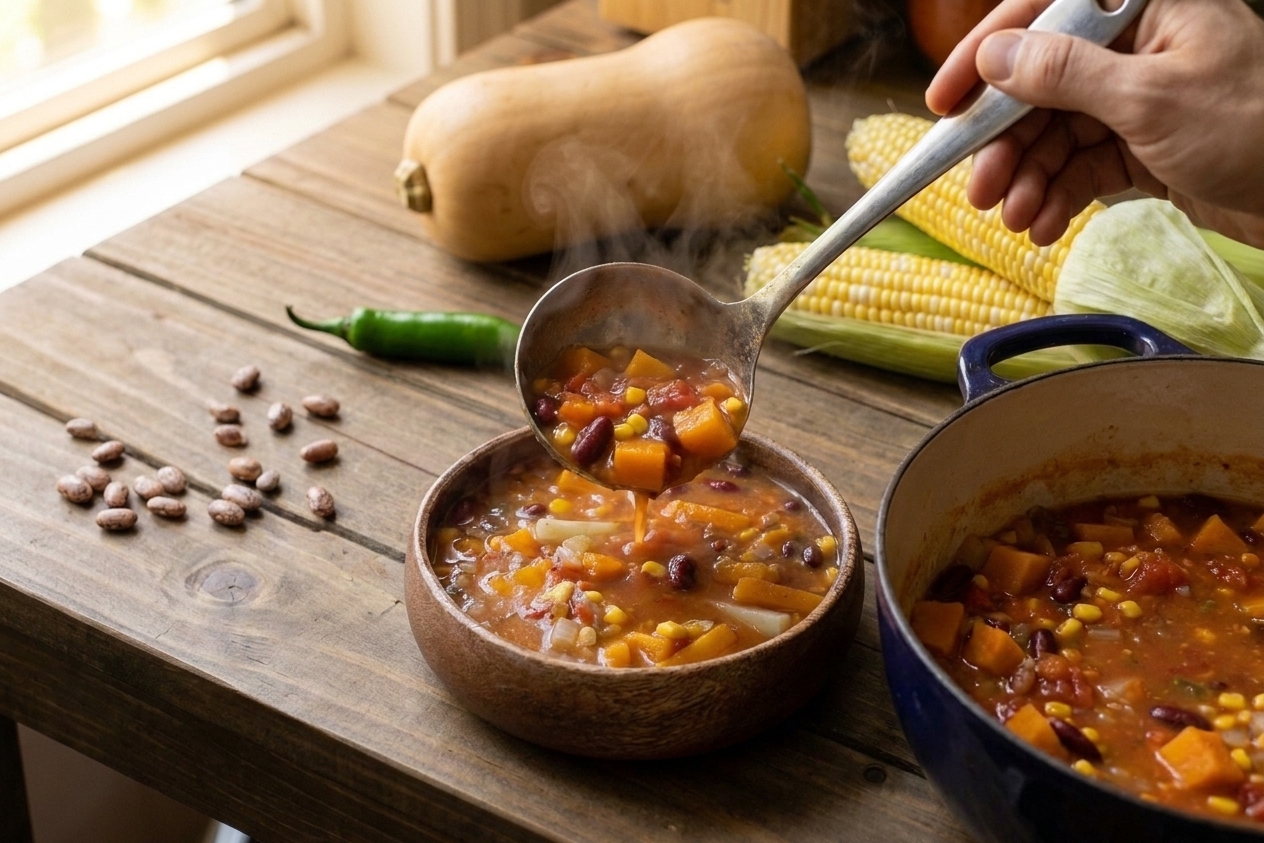
A steaming bowl of Three Sisters stew with chunks of squash, beans, and corn in a tomato-red broth, set on a wooden table with a simple spoon and napkin

Let’s make a pot of comfort that actually does something. This Three Sisters Stew is built around squash, beans, and corn, a trio often called the “Three Sisters.” You get creamy beans, sweet pops of corn, and tender squash that turns the whole pot cozy and a little velvety. It is the kind of dinner that makes you slow down for a second, even if the rest of the night is chaos.

A quick note, because it matters: Native American food traditions are not one single thing, and they are not frozen in time. “Three Sisters” is a broad concept connected to Indigenous agriculture and foodways across many communities. There is not one single, definitive “Three Sisters stew,” either. This version is a home-cook friendly take that leans on modern pantry staples (like tomato paste and smoked paprika) while trying to treat the core idea and ingredients with respect. If you have access to Indigenous cookbooks or local voices sharing their own recipes, that is always worth seeking out.

Yield: Makes about 8 to 9 cups, which is roughly 6 servings (about 1 1/3 cups each), depending on how brothy you like it.
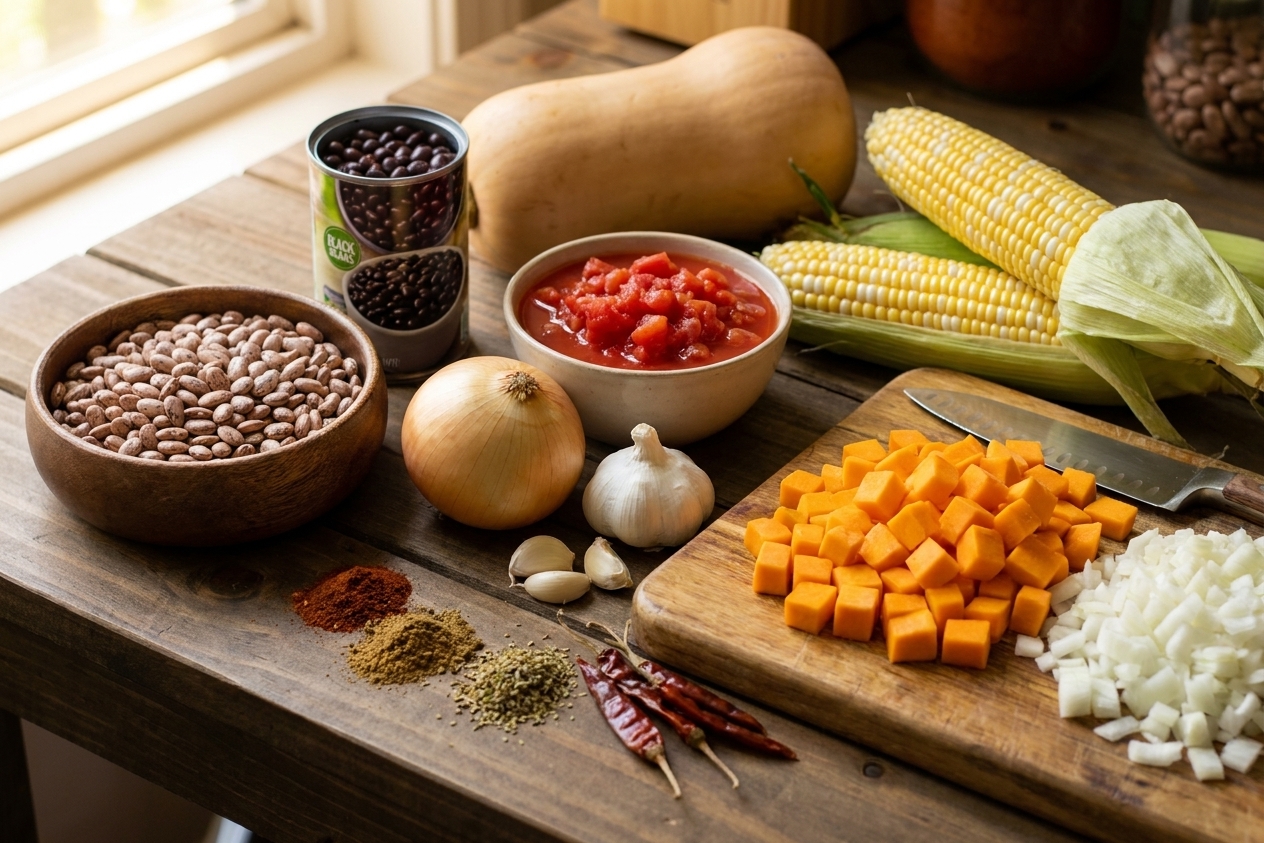

Butternut squash, dried or canned beans, corn, onion, garlic, tomatoes, and spices arranged on a clean kitchen counter with warm natural light

Why It Works

  • Big flavor from simple pantry stuff: tomato, garlic, cumin, and a little smoked paprika build a warm, savory base without a long simmer.
  • Texture that keeps you interested: squash goes tender, beans go creamy, corn stays bright.
  • Flexible by design: use butternut, acorn, or kabocha; pinto, kidney, or cannellini; fresh, frozen, or canned corn.
  • Leftovers are elite: it thickens overnight and somehow gets better, like it learned something while you slept.

Pairs Well With

Storage Tips

Refrigerate: Cool the stew, then store in an airtight container for up to 4 days.

Freeze: Freeze in portioned containers for up to 3 months. Leave a little headspace because stew expands.

Reheat: Warm on the stove over medium-low with a splash of broth or water to loosen. Microwave works too, but stir halfway so the squash warms evenly.

Best leftover move: Thicken it into a “stew bowl” by simmering uncovered for 5 to 8 minutes, then top with crushed tortilla chips or toasted pepitas.

Quick comfort tip: If beans are not your best friend, rinse canned beans really well, and start with a smaller portion. This stew is still delicious the next day, and some people find beans treat them more kindly after the first round.

Common Questions

Is Three Sisters stew spicy?

Not inherently. This version is gently smoky and warm, not hot. If you want heat, add minced jalapeño with the onion, or finish bowls with hot sauce.

Can I make it vegetarian or vegan?

Yes. For vegetarian, use vegetable broth (or chicken broth if you eat it). For vegan, use vegetable broth and choose maple syrup (not honey), or skip the sweetener altogether.

Is this a traditional Indigenous recipe?

It is a home-cook friendly stew inspired by the Three Sisters ingredients (corn, beans, and squash), which are deeply connected to Indigenous agriculture and foodways across many communities. There is not one single, canonical “Three Sisters stew” across nations. Ingredients like tomato paste and smoked paprika are modern pantry additions that make this version weeknight-friendly, not a claim of historical authenticity.

What kind of squash works best?

Butternut is the weeknight MVP because it peels easily and cooks predictably. Kabocha is amazing too, a little sweeter and denser. Acorn works, just cube it small so it softens in time.

Can I use dried beans?

Yes, but cook them first. Use about 3 to 3 1/2 cups cooked beans total (drained) to replace the two cans. This recipe is designed around canned beans for speed, because we are not trying to turn Tuesday into a project.

How do I thicken it?

Simmer uncovered for a few minutes, or mash about 1 cup of the beans and squash against the side of the pot and stir back in. That trick makes it feel creamy without adding dairy.

I love recipes that feel bigger than the ingredient list. The first time I made a Three Sisters style stew at home, I was trying to clean out a random pile of pantry cans and a lonely squash. It turned into this quietly genius dinner: hearty, colorful, and forgiving. Now it is one of my go-to pots when I want something nourishing that still tastes like I tried. Also, it makes the house smell like someone responsible lives here, which is a fun illusion to maintain.