Mom's Best Recipes
Recipe

Tomatillo Salsa

A bright, tangy green salsa you can make raw for fresh zip or roasted for deeper flavor.

Author By Matt Campbell
4.8
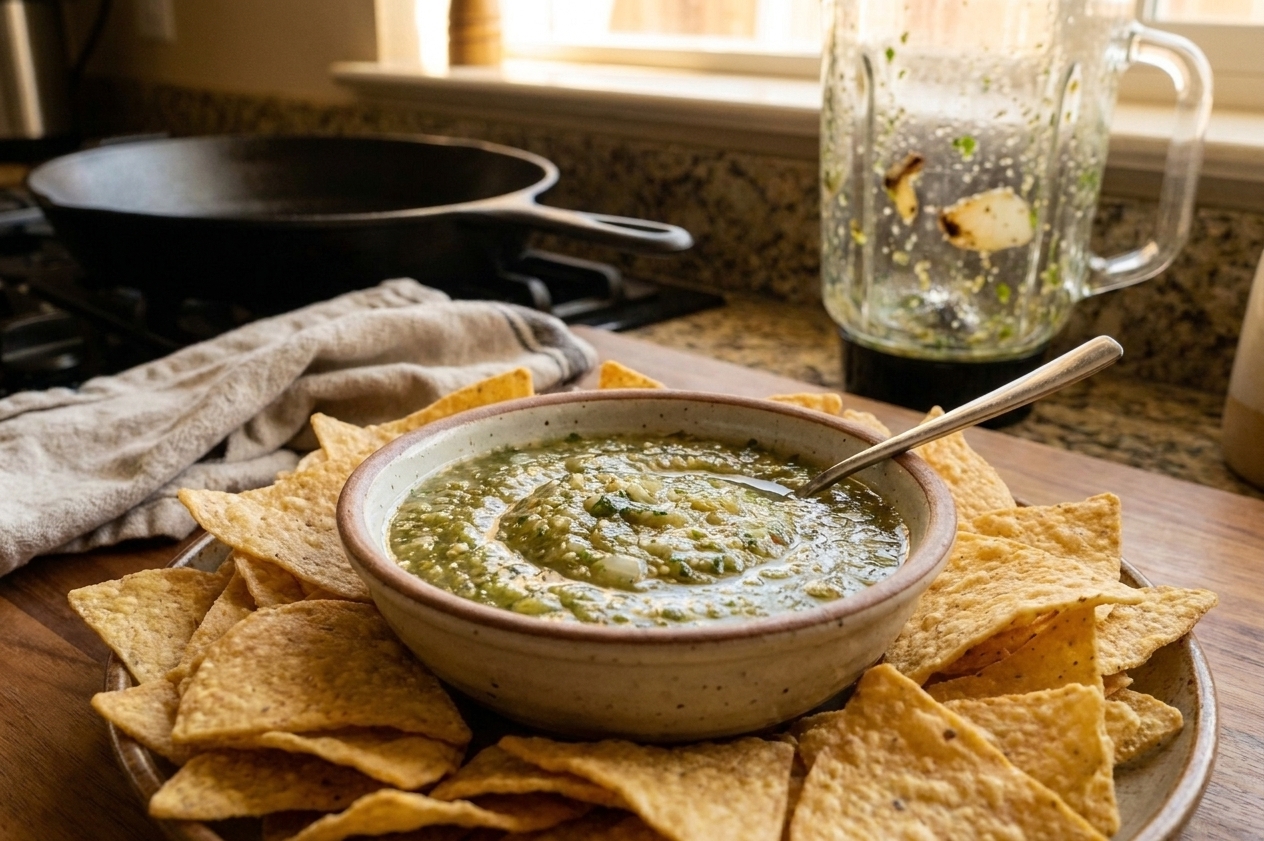
A bowl of vibrant green tomatillo salsa on a wooden kitchen counter with tortilla chips and chopped cilantro nearby, natural window light

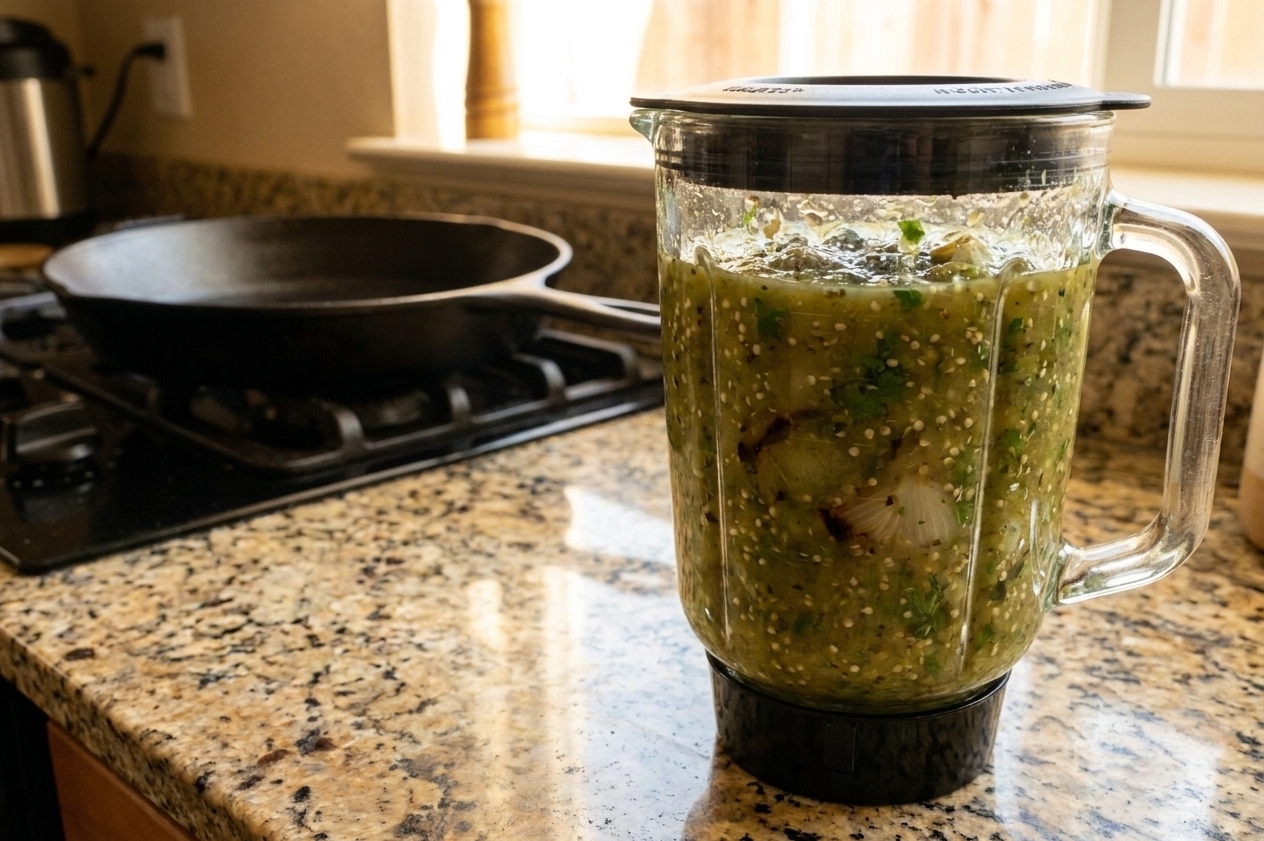
Tomatillo salsa is the kind of kitchen sidekick that makes dinner feel planned even when it absolutely was not. It is tangy, a little citrusy, and built to wake up anything from tacos to scrambled eggs. My version keeps the ingredient list simple and the flavor big, with two options: raw for that fresh, snappy bite, or roasted when you want deeper, slightly smoky vibes.

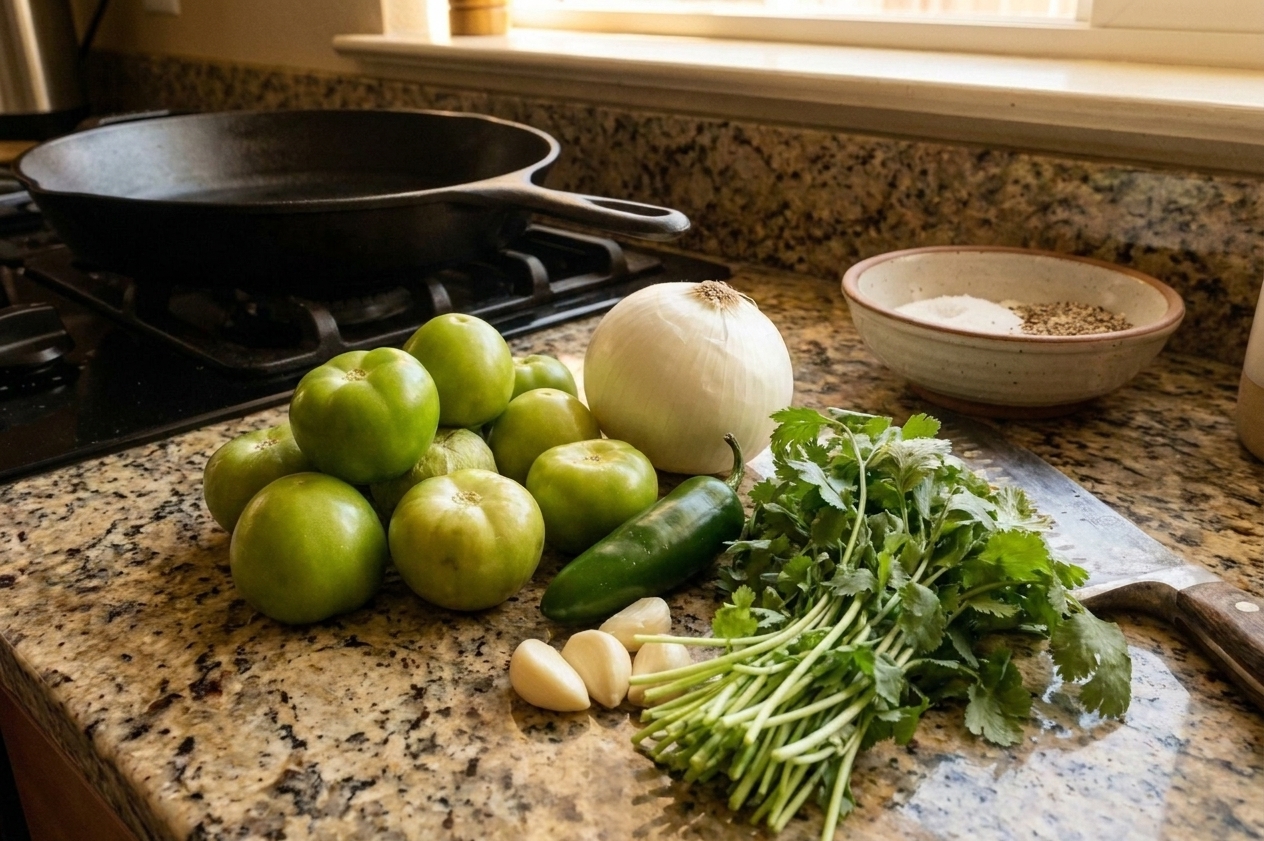
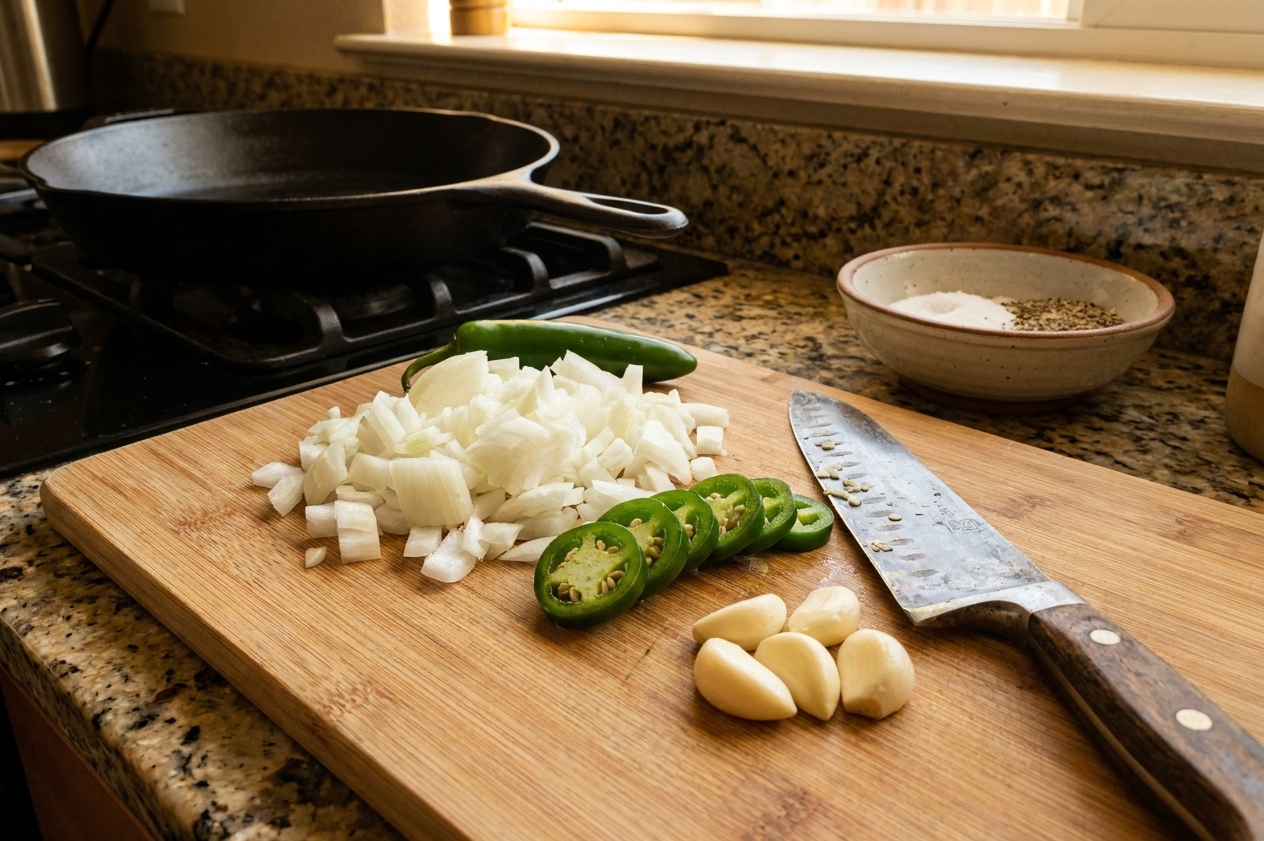
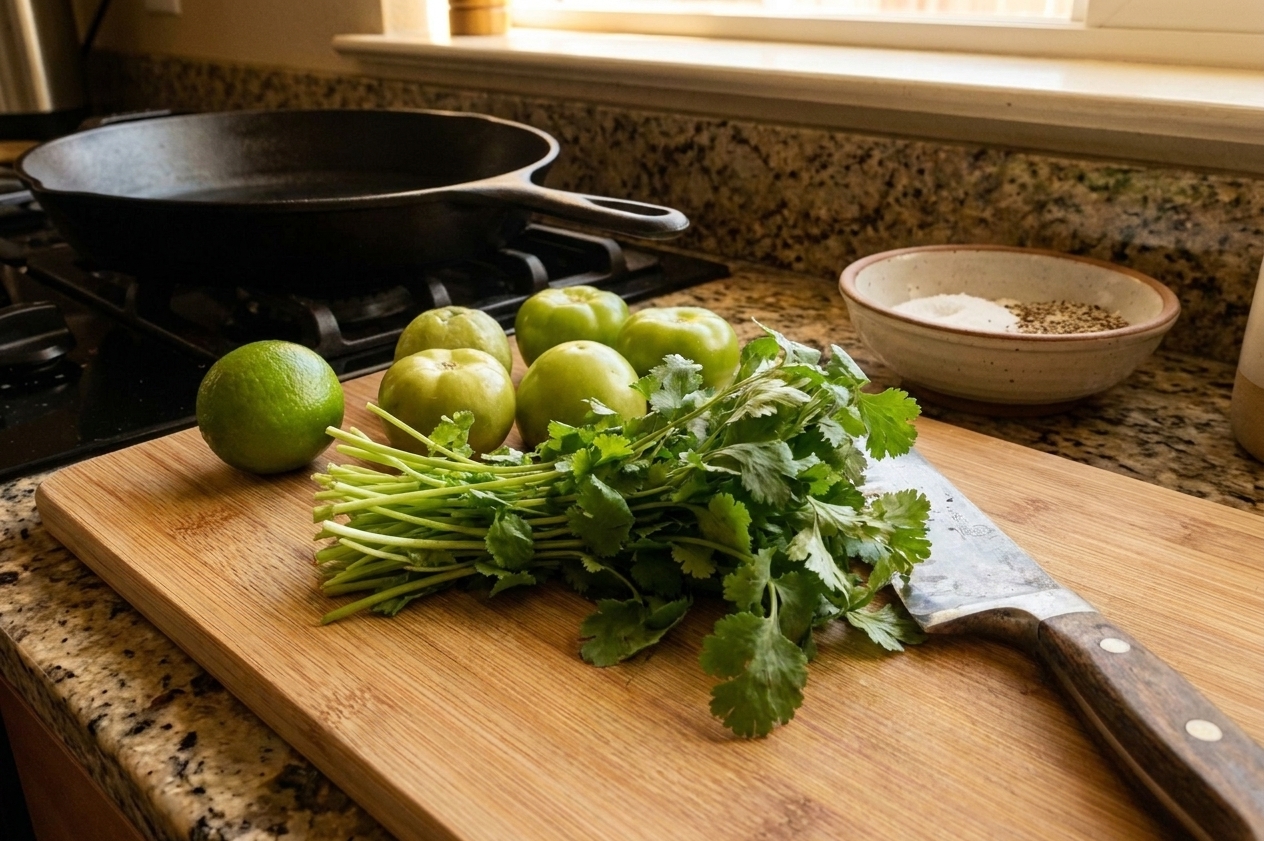
Fresh tomatillos with husks removed, a white onion, a jalapeno, garlic, and cilantro arranged on a clean kitchen counter

Taste as you go, adjust the heat, and do not stress the texture. Chunky is charming. Smooth is classy. Either way, it disappears fast.

Why It Works

  • Bright, balanced flavor: tangy tomatillos + lime + salt, with a little sweetness from onion.
  • Choose your vibe: keep it raw for crisp freshness or roast for deeper, rounder flavor.
  • Blends in minutes: no fancy techniques, just a few smart steps.
  • Flexible heat: mild, medium, or spicy depending on how you treat the jalapenos or serranos.

Pairs Well With

Storage Tips

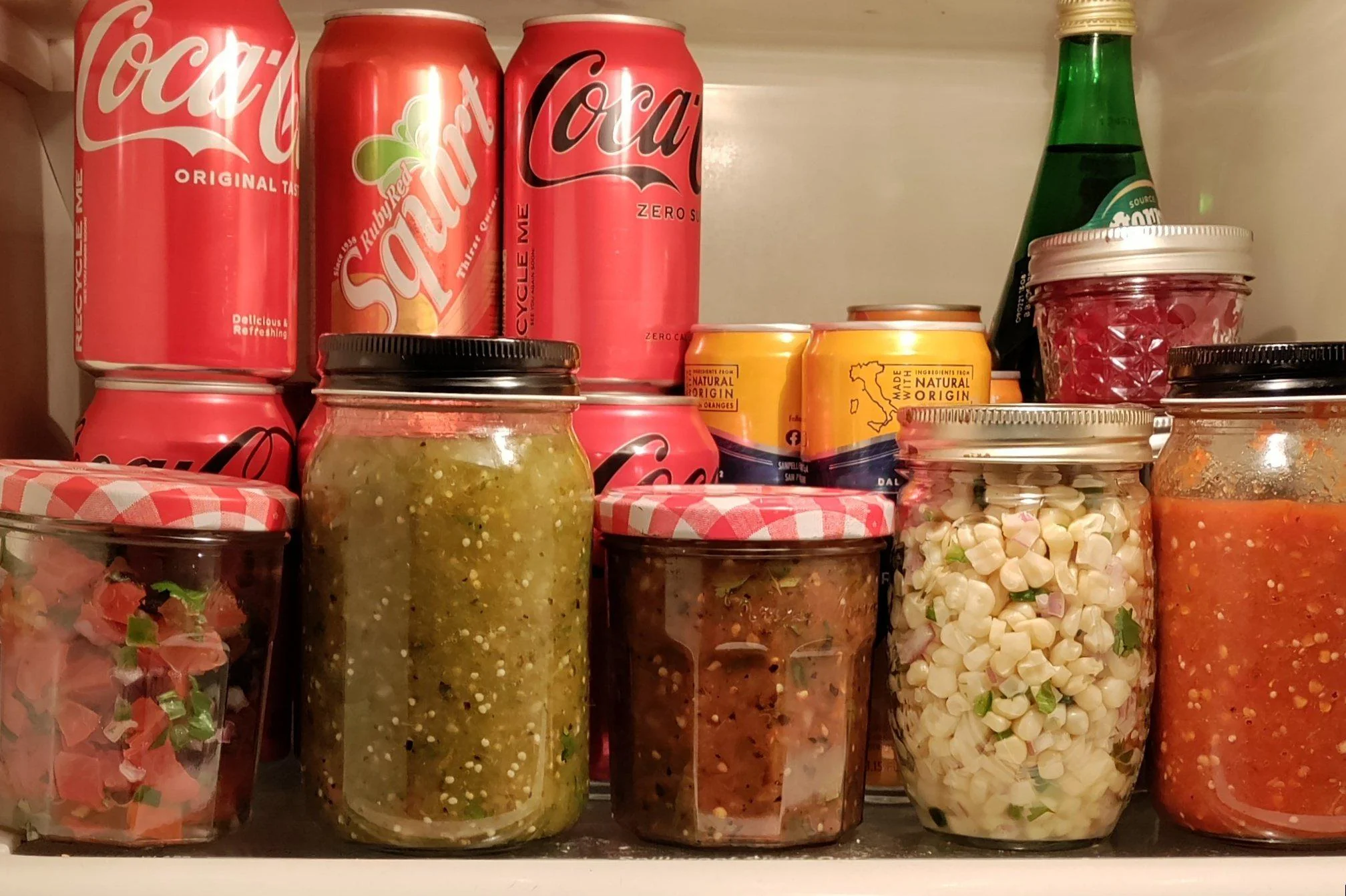
Refrigerate: Store salsa in a sealed container for about 4 to 5 days. Keep it refrigerated and use clean utensils so you are not introducing extra bacteria. The color may darken slightly over time, which is normal.

Keep it fresh: Press a piece of plastic wrap directly onto the surface before sealing the lid to slow browning.

Freeze: You can freeze tomatillo salsa for up to 2 months. Thaw in the fridge overnight and stir well. Texture may loosen a bit, but the flavor is still great for tacos, chili, or marinades.

A glass jar filled with green tomatillo salsa on a refrigerator shelf next to a lime and a small container of chopped cilantro

Common Questions

Do I have to peel tomatillos?

Yes, remove the papery husk. After that, give them a good rinse. Tomatillos have a natural sticky coating, and washing it off helps the salsa taste cleaner and brighter (and can prevent a slightly bitter edge).

Raw vs roasted, which is better?

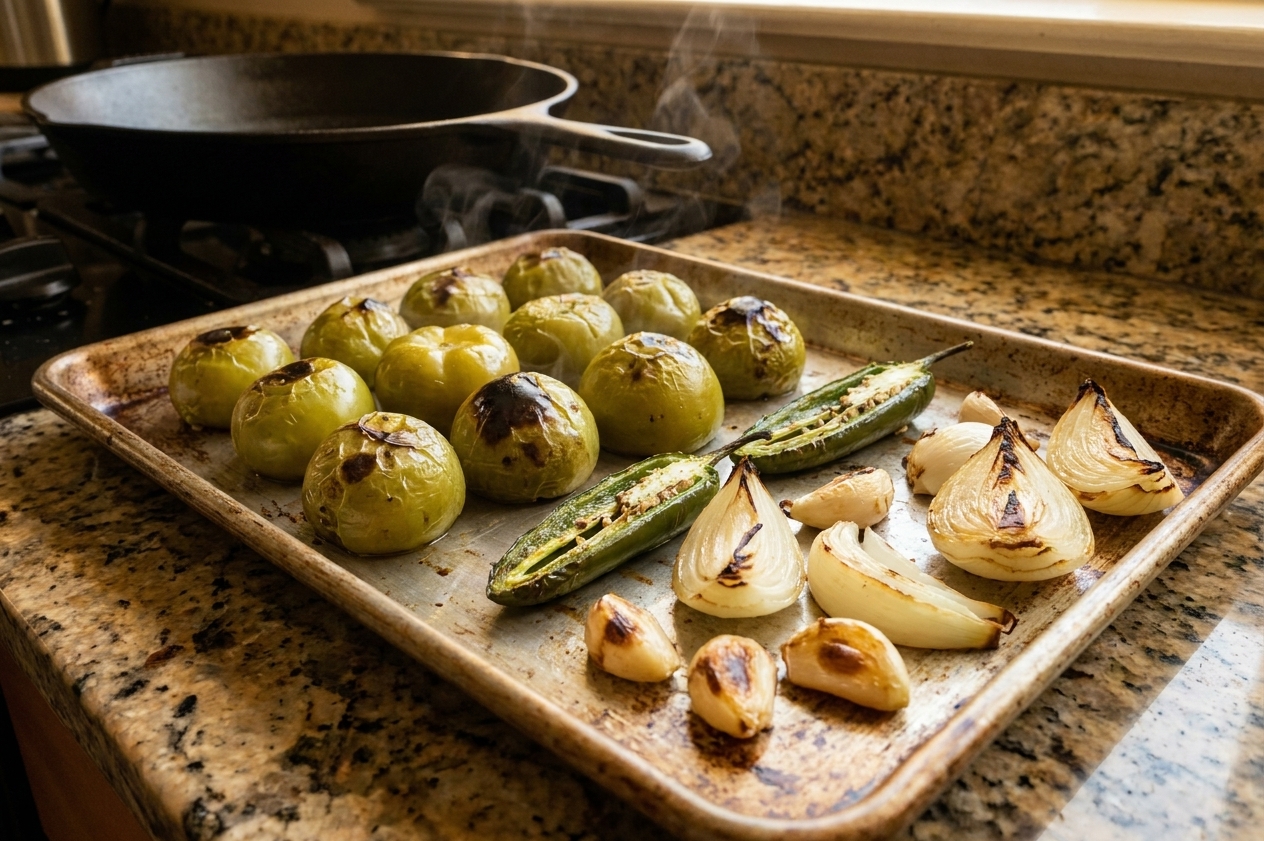
Raw salsa is brighter and sharper, perfect for chips and light meals. Roasted salsa is mellower and slightly smoky, and it plays really well with grilled meats, beans, and cheesy dishes. If you are not sure, roast just half the tomatillos and blend with the raw ones for a best-of-both-worlds situation.

How do I make it less spicy?

Use 1 jalapeno (or 1 serrano) and remove the seeds and ribs. You can also blend in extra tomatillo or a bit more onion, then re-salt to taste.

Why is my salsa bitter?

Usually it is one of a few things: tomatillos not rinsed well, older tomatillos, very mature chiles, or too much char (especially on garlic). Garlic can also read harsh and overpowering if it is too strong. Fix it by adding more lime juice, a pinch of salt, and if needed, a tiny pinch of sugar or a bit more onion.

Can I make it without cilantro?

Absolutely. Swap in parsley, or skip herbs entirely and lean on lime zest for a fresh lift.

How long does homemade tomatillo salsa last?

About 4 to 5 days in the fridge if kept cold and handled with clean utensils. If it smells off, looks moldy, or tastes funky, toss it.

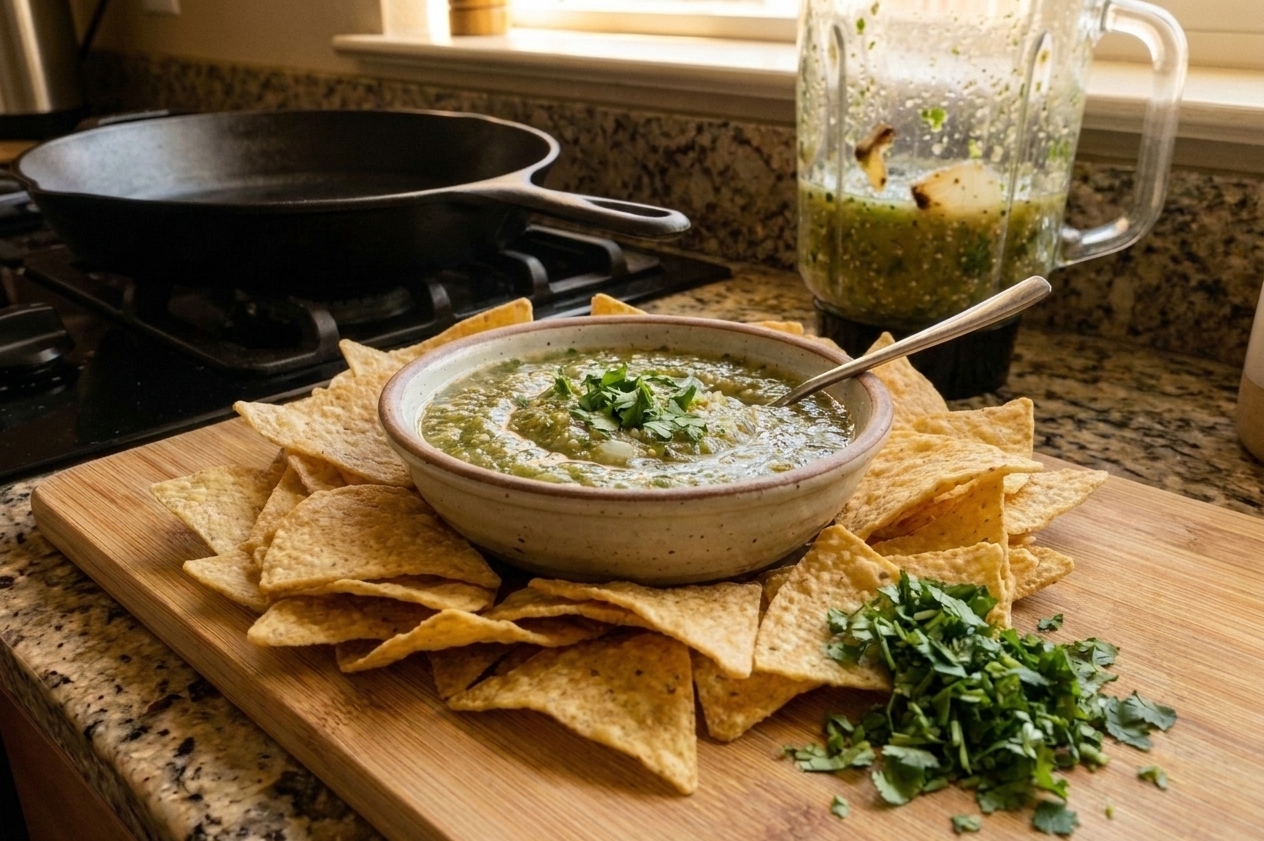
When I was learning to cook more by doing than by sitting in a classroom, salsa was one of those “instant feedback” recipes. Blend, taste, adjust, repeat. Tomatillo salsa became my go-to because it is forgiving and loud in the best way. If dinner feels a little flat, a spoonful of this fixes it. If dinner is already great, a spoonful of this makes it feel like you meant to impress someone.