Mom's Best Recipes
Recipe

Weeknight White Bread

A classic, traditional loaf with a soft crumb and golden crust, made hands-off in the bread machine using everyday pantry staples.

Author By Matt Campbell
4.8
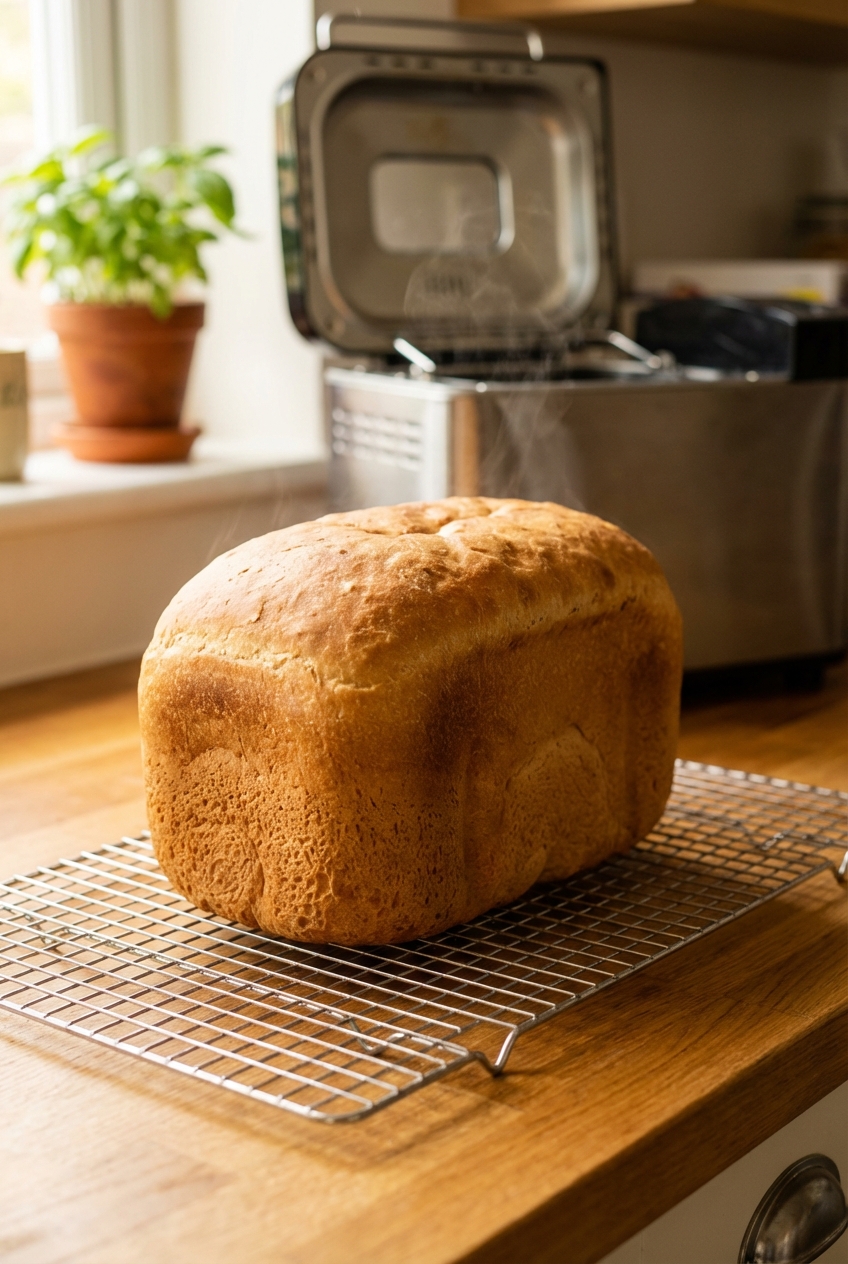
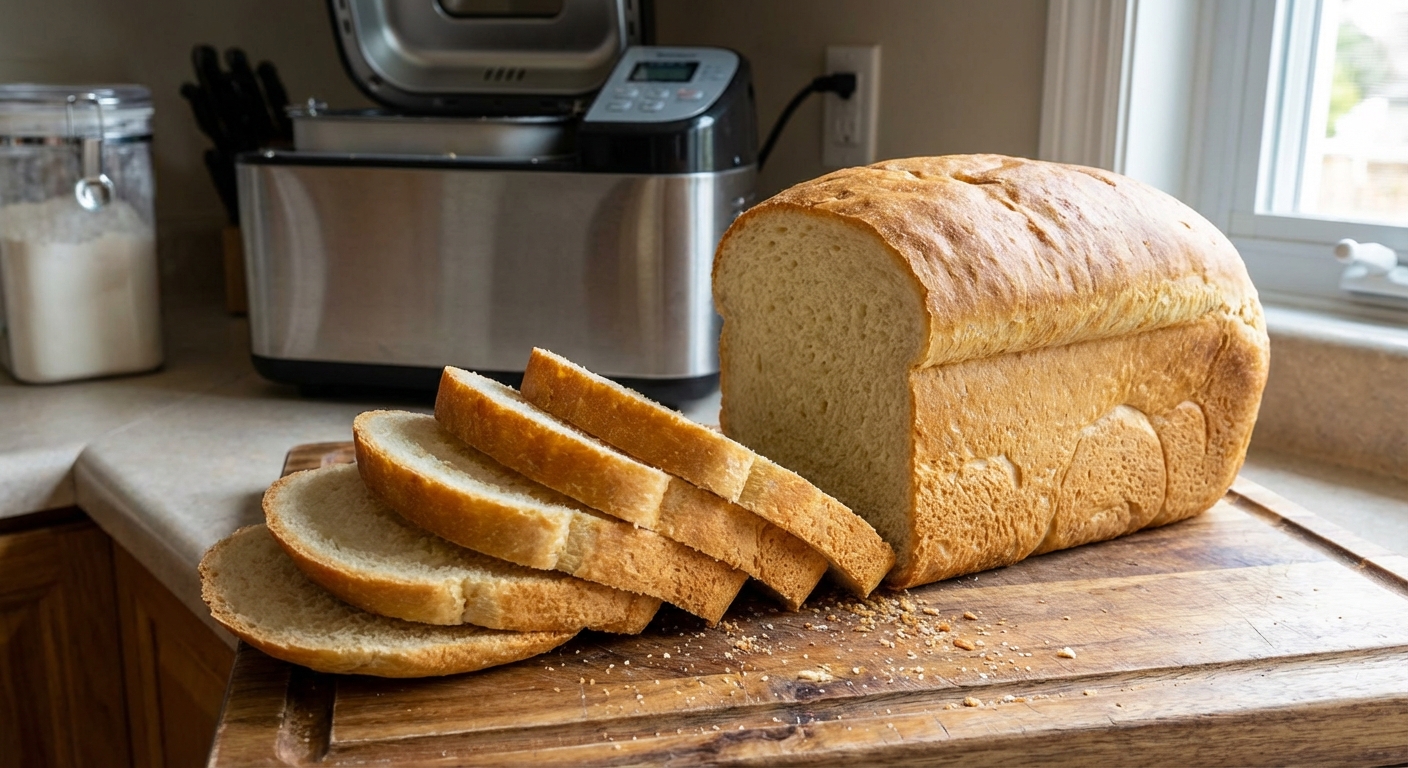
A golden loaf of homemade white bread sliced on a wooden cutting board with a bread machine in the background

There is something wildly comforting about real-deal homemade bread on a random Tuesday. Not a fussy, all-day situation. Just a warm loaf that makes the kitchen smell like you have your life together, even if you ate cereal for lunch.

This is my weeknight-friendly bread machine recipe for a traditional white loaf: soft but not squishy, sliceable for sandwiches, and sturdy enough for toast. The ingredient list is short, the steps are calm, and the results taste like the bread you grew up with, only better because you made it.

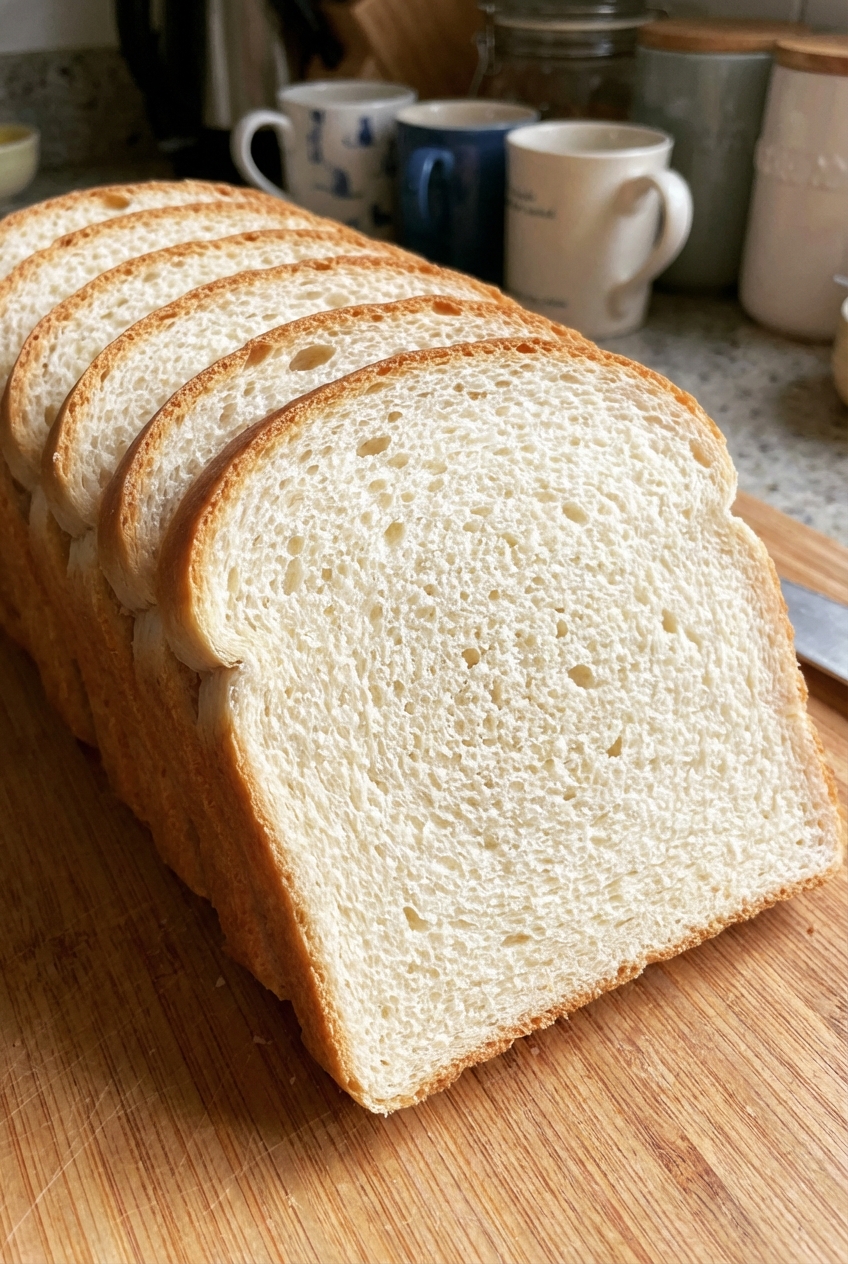
Close-up of a sliced white bread loaf showing a soft, even crumb

Why It Works

  • Classic flavor, real texture: Slightly sweet, lightly buttery, and balanced with enough salt to taste like bread, not cotton.
  • Reliable results: Works well in many standard 1.5 to 2 lb bread machines, especially if you do the quick dough check.
  • Weeknight ease: Add ingredients, press start, then go live your life. The machine does the kneading and proofing.
  • Flexible for your schedule: Pick your crust shade, and choose the slice-friendly Basic setting. If you want to use delay, use the water plus dry milk swap for food safety.

Pairs Well With

  • Tomato soup with a swirl of cream
  • Chicken salad or egg salad sandwiches
  • Garlic butter and a big green salad
  • Peanut butter and honey for late-night toast

Storage Tips

Cool completely first. Give the loaf at least 1 hour on a rack before slicing. Cutting too early traps steam and turns the crumb gummy.

  • Room temperature (best for 2 to 3 days): Store in a bread bag or zip-top bag with as much air pressed out as possible. Keep it out of direct sun and away from the stove.
  • Freeze (best for 2 to 3 months): Slice the whole loaf, then freeze in a freezer bag. Grab slices as needed and toast straight from frozen.
  • Revive a slightly stale loaf: Toast it, or warm slices briefly in a skillet with a touch of butter for crisp edges and instant redemption.

Common Questions

What bread machine setting should I use?

Use the Basic or White cycle. Choose the closest loaf size your machine offers (many machines call this “2 lb,” but this recipe also behaves beautifully in 1.5 lb machines). Pick your crust color. Medium is the most classic.

What order should I add ingredients in?

Many bread machines prefer liquids first, then flour, then yeast, but not all. Follow your manufacturer’s recommended order if it differs from what is written here.

Can I use the delay timer with this recipe?

Only with a small safety tweak. Because this version uses fresh milk, I do not recommend the delay timer (milk should not sit at room temperature for hours). If you want to use the delay timer, swap the milk for 240 g (1 cup) water plus 1 tablespoon dry milk powder. Then load ingredients with the yeast kept dry on top of the flour.

Do I have to use bread flour?

Bread flour gives a slightly higher rise and a chewier, more classic sandwich texture. All-purpose flour works too. The loaf may be a bit softer and slightly less tall, but still very good.

Why did my loaf sink in the middle?

Most often it is too much liquid, too much yeast, or the dough rose too aggressively. Measure carefully and do the dough check during the first knead. If the dough looks loose or smears on the walls instead of forming a soft ball, add flour 1 tablespoon at a time.

How do I know the dough is the right texture?

During the first knead, you want a smooth, slightly tacky dough ball that clears the sides of the pan. If it is dry and crumbly, add water 1 teaspoon at a time. If it is wet and smearing on the walls, add flour 1 tablespoon at a time.

Should my liquids be warm?

For most standard 3-hour bread machine cycles, room temperature liquid is the safest bet. Many machines warm the pan during a preheat phase, so starting warm can kick the yeast into overdrive and increase the chance of a collapse.

Can I use active dry yeast instead of instant bread machine yeast?

Yes. In most machines, you can use the same amount and place it on top of the flour away from the salt and liquid. If your kitchen runs cold or your loaf rises slowly, try adding 1/4 teaspoon more yeast next time or stick with the Basic cycle (skip Rapid).

Can I make this dairy-free?

Swap the milk for unsweetened oat milk or water, and replace butter with neutral oil. The flavor will be a bit less rich, but the loaf will still be sliceable and soft.

I was originally the kind of cook who thought bread had to be an all-afternoon commitment, like you needed a playlist, a towel that mattered, and the emotional stability to babysit yeast. Then I started chasing practical skills, the kind that actually get dinner on the table, and a bread machine became my little weeknight cheat code.

This loaf is the one I come back to when I want something traditional and reliable. It is not trying to be trendy. It is trying to make your Tuesday sandwich way better, and it absolutely nails the job.