Common Questions
Do I have to use duck fat?
For true confit, yes. Duck fat is the traditional choice and the flavor is the point. If you are short on fat, you can top up with a neutral fat like lard, but keep at least some duck fat in the mix for that signature taste.
How much duck fat do I need?
Enough to (ideally) fully submerge the legs. In a snug Dutch oven, about 3 cups often works for 4 legs, but plan on 3 to 4 cups depending on your pot. Pack them tight and you will need less. If the tops are just peeking out, that is still fine as long as the pot is covered and the cooking stays gentle.
Is it safe to “cook in fat” at low temperature?
Yes, when you keep it in a low oven and cook until the duck is fully tender. For safety, cook until the duck reaches at least 165°F internally. In practice, confit tenderness usually lands closer to 185°F to 195°F, so you are well past the safe zone.
Do I really need to cure overnight?
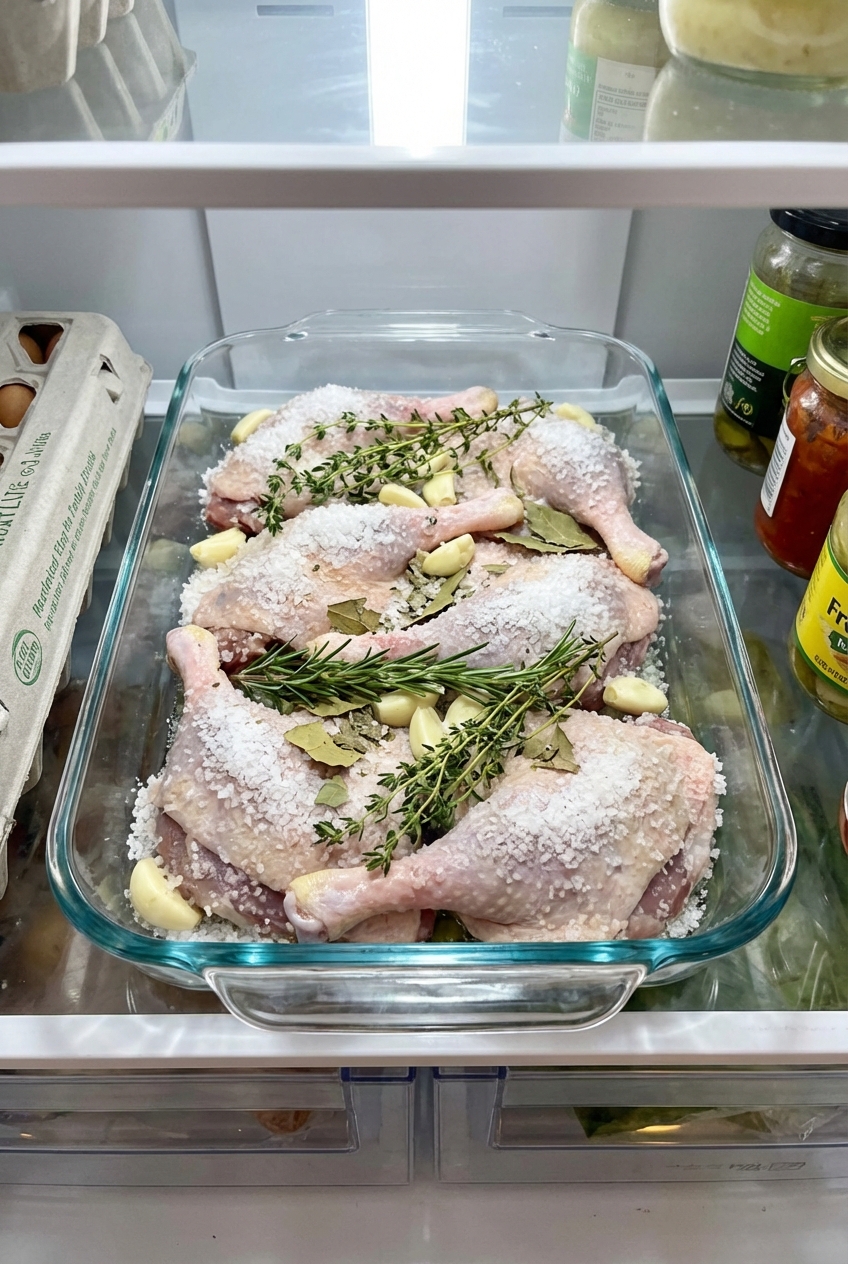
Overnight is ideal for seasoning and texture. If you are in a rush, do at least 8 hours. Shorter than that and it tastes like roasted duck, not confit.
Why is my confit salty?
Usually it is either too much cure time, too much salt, or not rinsing and drying well. Rinse thoroughly, then pat very dry. Also, use kosher salt and pay attention to the brand or weight. (Morton’s is denser than Diamond Crystal, so the same spoonful is saltier.)
Can I make this ahead for a dinner party?
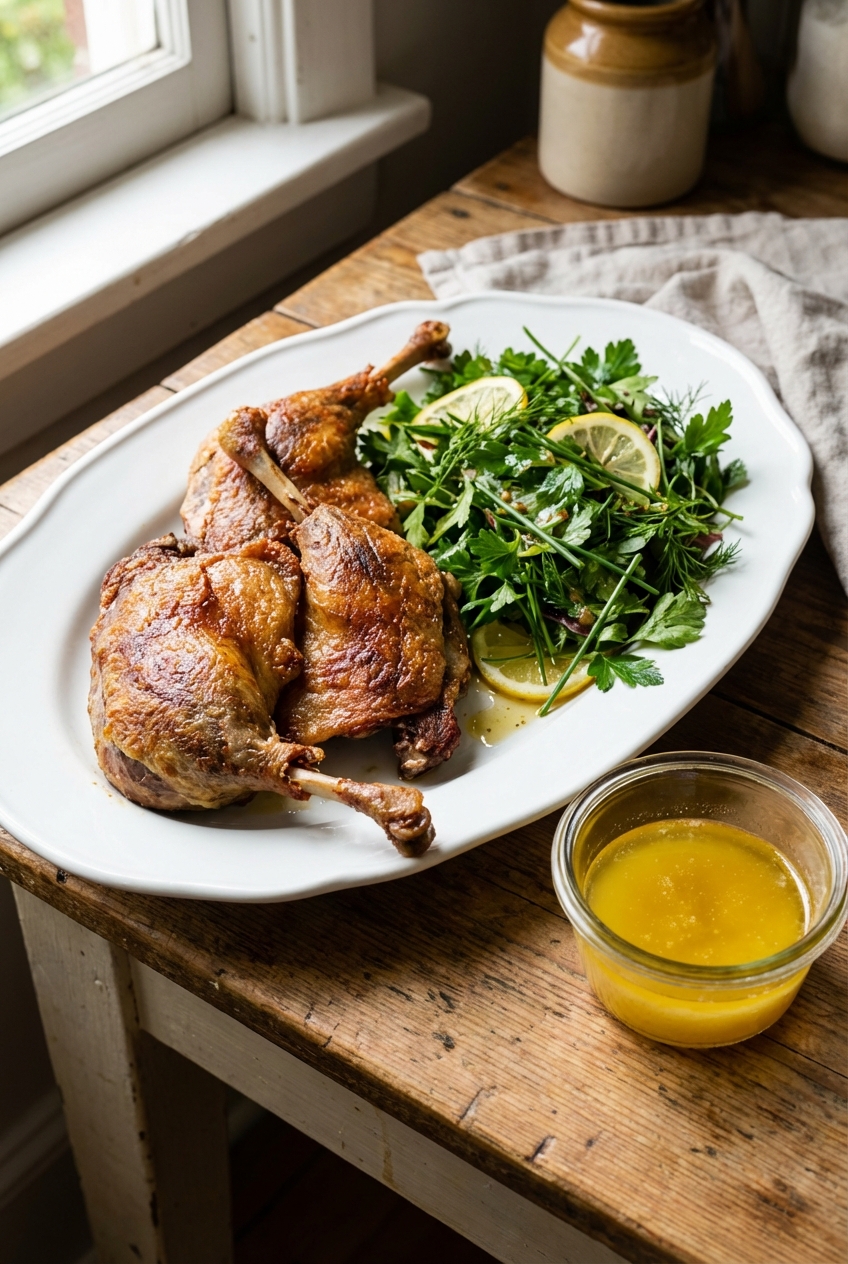
Absolutely. Cook the confit ahead and keep it submerged in fat. Crisp right before serving so it hits the table with that snap.