Mom's Best Recipes
Recipe

Traditional-Inspired Bolognese Sauce

Slow-simmered meat sauce with wine, milk, and warm spices for a rich, glossy ragù that clings to pasta and tastes even better tomorrow.

Author By Matt Campbell
4.8/5
A pot of traditional bolognese sauce gently simmering on a stovetop with a wooden spoon resting inside

Bolognese is not a quick “dump a jar and hope for the best” situation. It is a slow, cozy, kitchen-scenting commitment that pays you back with every bite. This version is traditional-inspired with a soffritto base, wine, a little milk, and a low simmer that turns humble ingredients into something deep and velvety.

But because I cannot leave well enough alone, we are going spiced and aromatic in a way that still feels classic: a whisper of nutmeg, a bay leaf, and a tiny pinch of cinnamon that you will not identify, you will just miss when it is not there. Think warm background notes, not holiday potpourri.

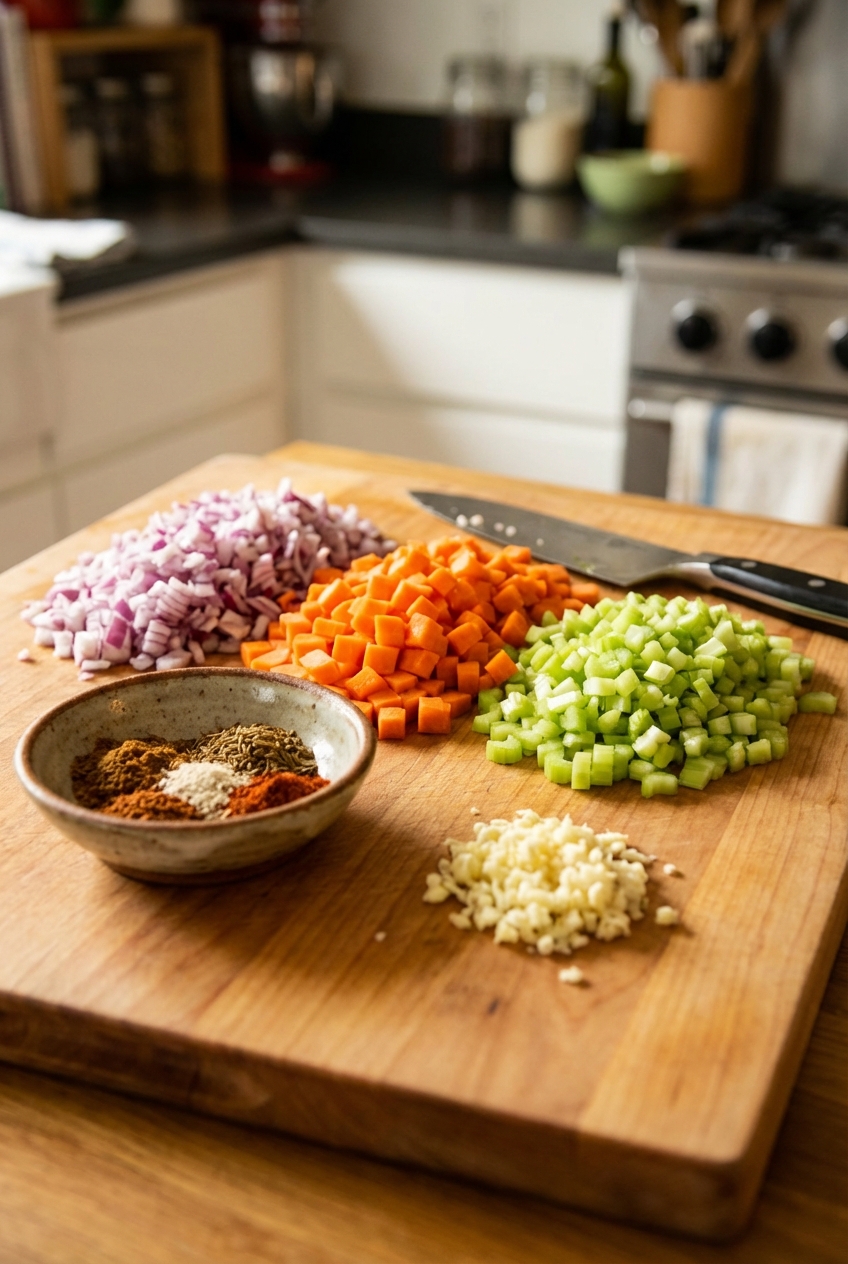
A cutting board with finely chopped onion, carrot, and celery next to minced garlic and a small bowl of spices

If you want a sauce that clings, coats, and makes you pause mid-bite like, “Okay, wow,” this is it.

Why It Works

  • Built-in depth from the start: We sweat the soffritto until sweet and soft, which gives the whole pot a richer backbone than just sautéing onions for 2 minutes.
  • Silky, not soupy: Tomato paste plus a long, gentle simmer concentrates flavor and gives that glossy ragù texture that actually sticks to pasta.
  • Tender meat, crisp edges: We brown the meat properly, then let it relax into the sauce so you get both roasted notes and melt-in tenderness.
  • Aromatic warmth: Nutmeg and a pinch of cinnamon round out the sauce and make it taste restaurant-y without tasting like dessert.
  • Milk does magic: A classic move that softens and balances the finish.

Pairs Well With

Storage Tips

How to Store Leftover Bolognese

  • Fridge: Cool completely, then store in an airtight container for up to 4 days.
  • Freezer: Freeze in portioned containers or zip-top freezer bags (flatten bags for fast thawing) for up to 3 months.
  • Reheat: Warm gently in a saucepan over medium-low, adding a splash of water, broth, or milk if it looks tight. Stir often so the bottom does not scorch.
  • Pasta tip: Store sauce and pasta separately when you can. If they are already mixed, add a tablespoon of water before reheating to loosen.

Common Questions

Common Questions

Is this authentic Bolognese?

It is traditional-inspired in method and structure (soffritto, meat, wine, milk, slow simmer), with a slightly more tomato-forward lean than some classic Bologna versions. The spice additions are subtle and meant to support, not hijack. If you want ultra strict, skip the cinnamon and stick to nutmeg and bay.

Why add milk to a meat sauce?

Milk rounds the sauce and helps with tenderness and texture, giving you a smoother, silkier finish. It can also soften the sharp edges of tomato, but think of it more as balance than a guaranteed acidity eraser.

When do I add the milk?

This version adds milk near the end for a glossy, mellow finish that does not get “cooked out.” If you are used to adding it earlier, that works too, but late-in-the-game milk is my favorite for texture.

Can I use all beef?

Yes. You will still get a great sauce. Using a mix of beef and pork adds sweetness and richness, but it is not mandatory.

What pasta is best for bolognese?

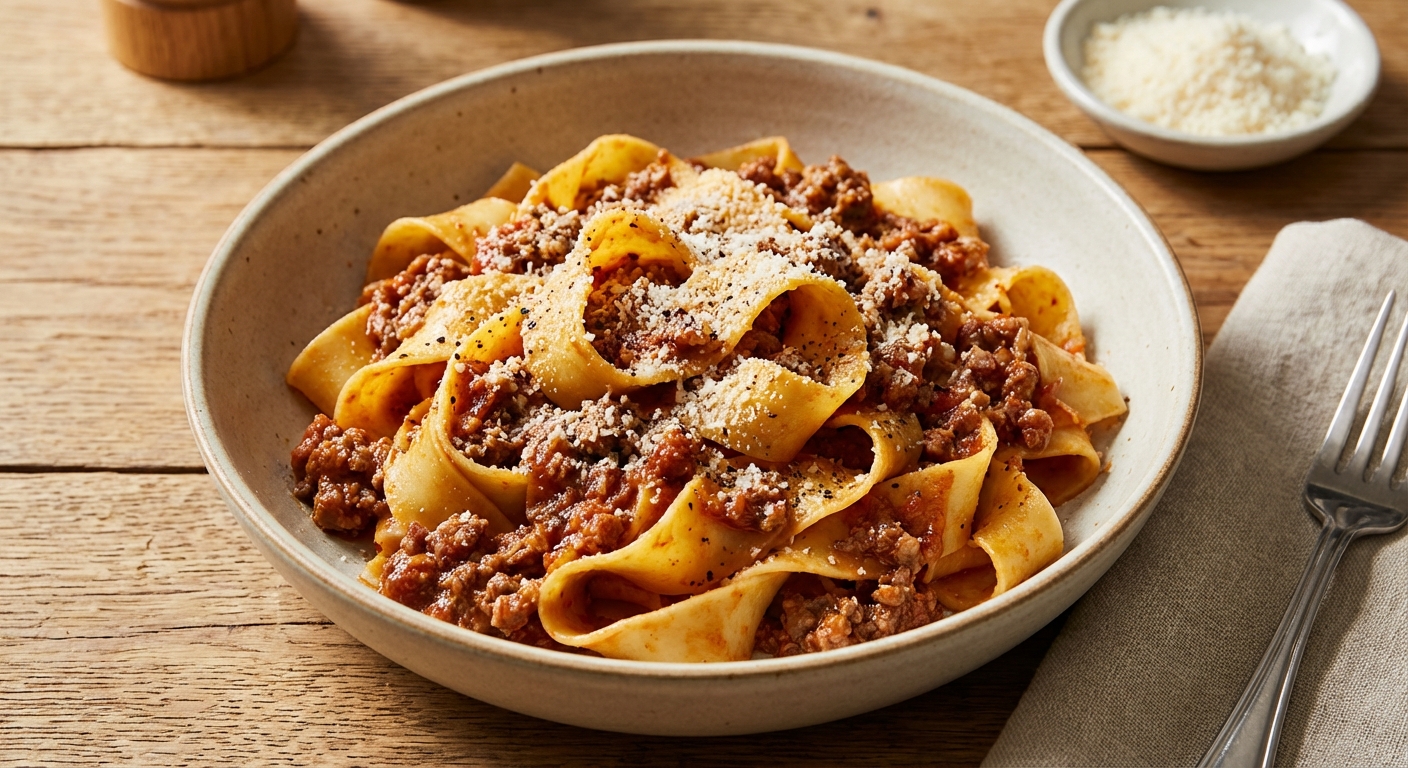
Wide noodles win. Think tagliatelle, pappardelle, or fettuccine. Rigatoni also works if you like sauce tucked inside the tubes.

How much pasta for this batch?

For about 8 cups of sauce, plan on 1 to 1 1/2 pounds pasta, depending on how saucy you like it.

Can I make it in a slow cooker?

You can, but do the browning and soffritto steps on the stove first. Then simmer on low 6 to 8 hours. Keep the lid slightly ajar the last hour if you need it thicker.

How do I thicken bolognese if it is too loose?

Uncover and simmer gently, stirring more often, until it reduces. Avoid blasting the heat. High heat makes it taste hard-cooked instead of slow and rich.

How do I fix it if it tastes too acidic?

Add a splash more milk, a small knob of butter, or an extra pinch of salt. If tomatoes are unusually aggressive, a tiny pinch of baking soda can help, but go easy.

What can I use instead of wine?

Swap the wine for broth plus 1 to 2 teaspoons red wine vinegar or lemon juice. You will still get the deglazing effect and a bit of brightness without the alcohol.

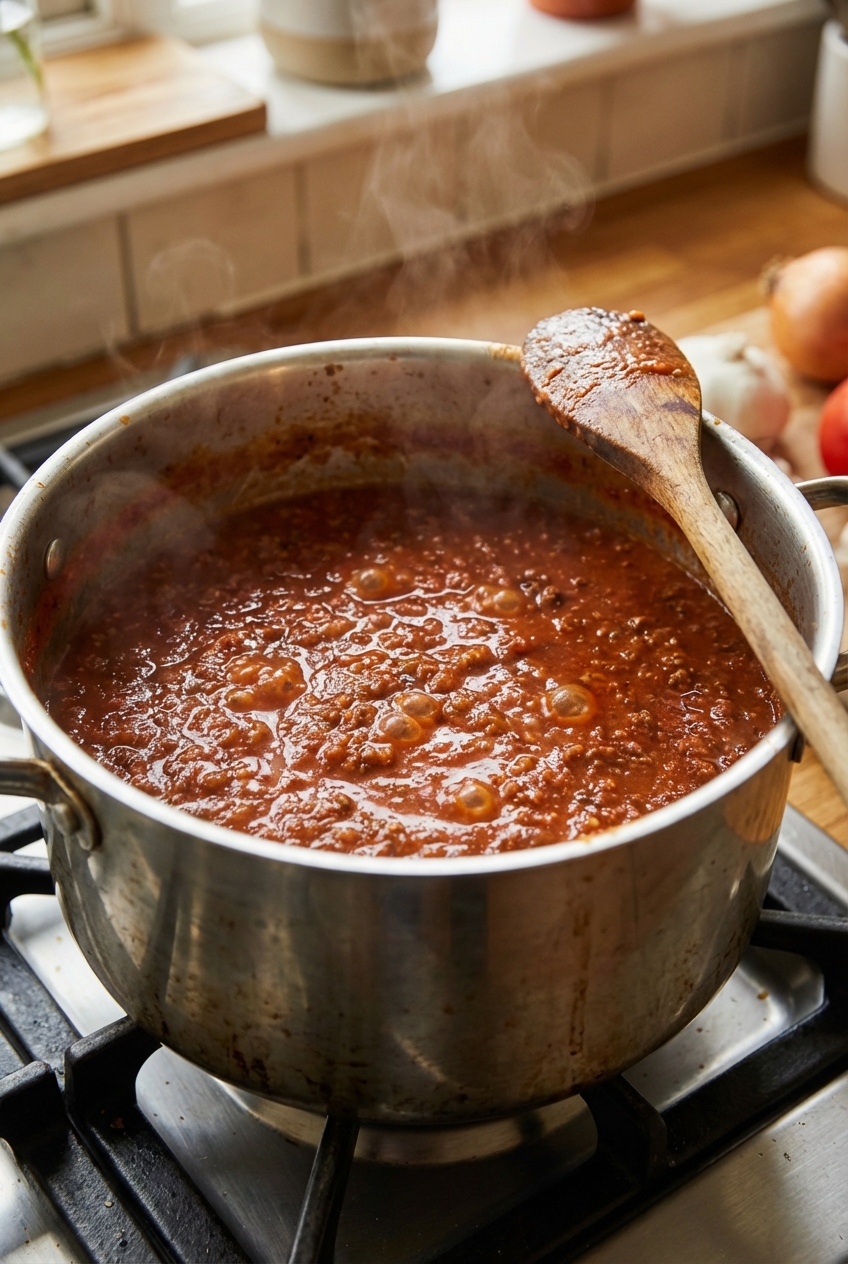
I used to think bolognese was just “spaghetti sauce that takes longer.” Then I started paying attention to the small stuff: how long you let the vegetables sweat, what happens when the wine actually reduces, how milk changes the whole vibe, and how a pinch of nutmeg makes the sauce taste like it has a secret.

This is the pot I make when I want my kitchen to feel like a warm place to land. It is not flashy. It is not fussy. It is just patient. Also, I always make a double batch, because nothing says future happiness like bolognese in the freezer.