What kind of cream should I buy?
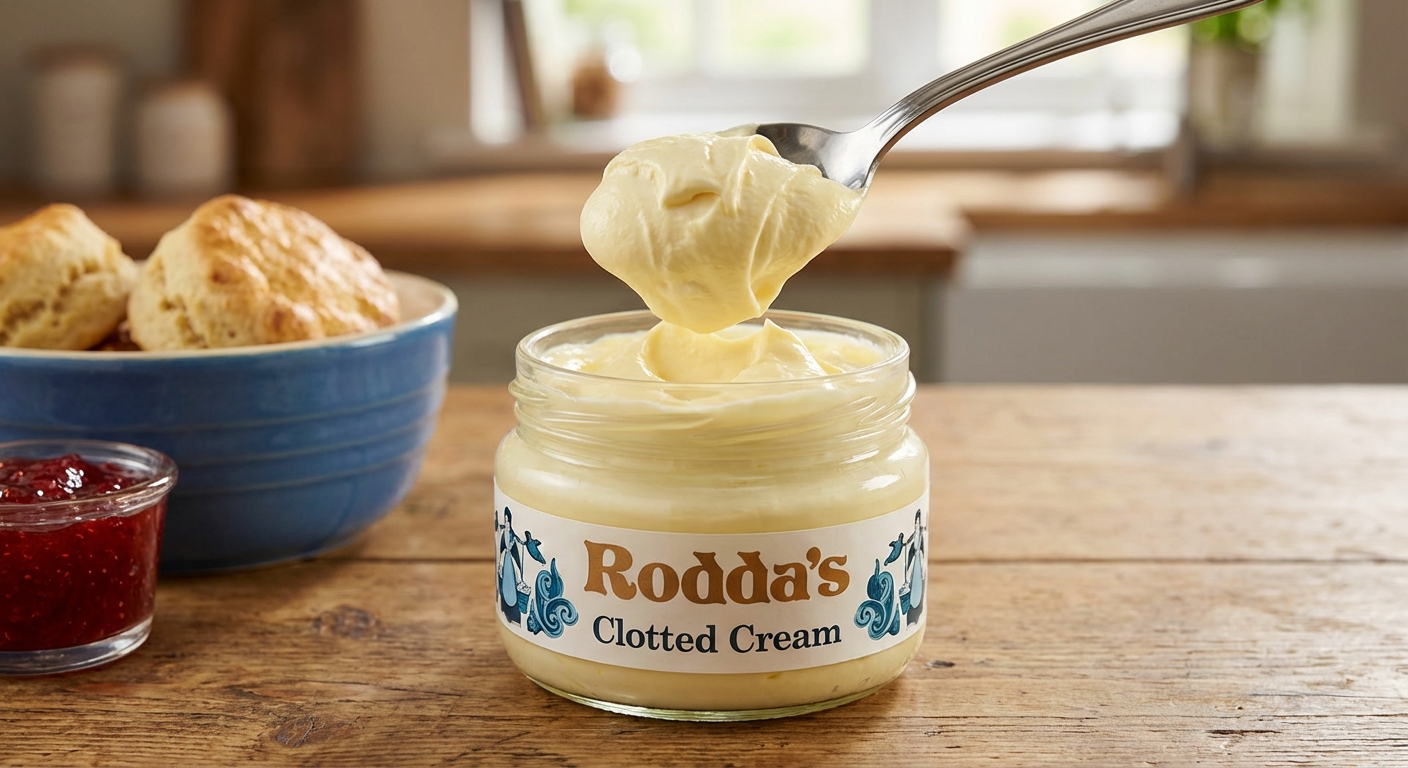
Use heavy cream with at least 36% milkfat. The higher the fat, the better the yield and texture. If you can find non-ultra-pasteurized, it often clots more readily, but many people still get good results with ultra-pasteurized cream.
Why did my clotted cream turn out thin?
The usual culprits are cream that is too low in fat, the cream layer being too shallow, the oven running hot, or not chilling long enough. Aim for about 1 inch depth (up to 2 inches in a smaller dish), hold the oven around 170 to 180°F, and chill a full 8 to 12 hours.
What should it look like when it is done?
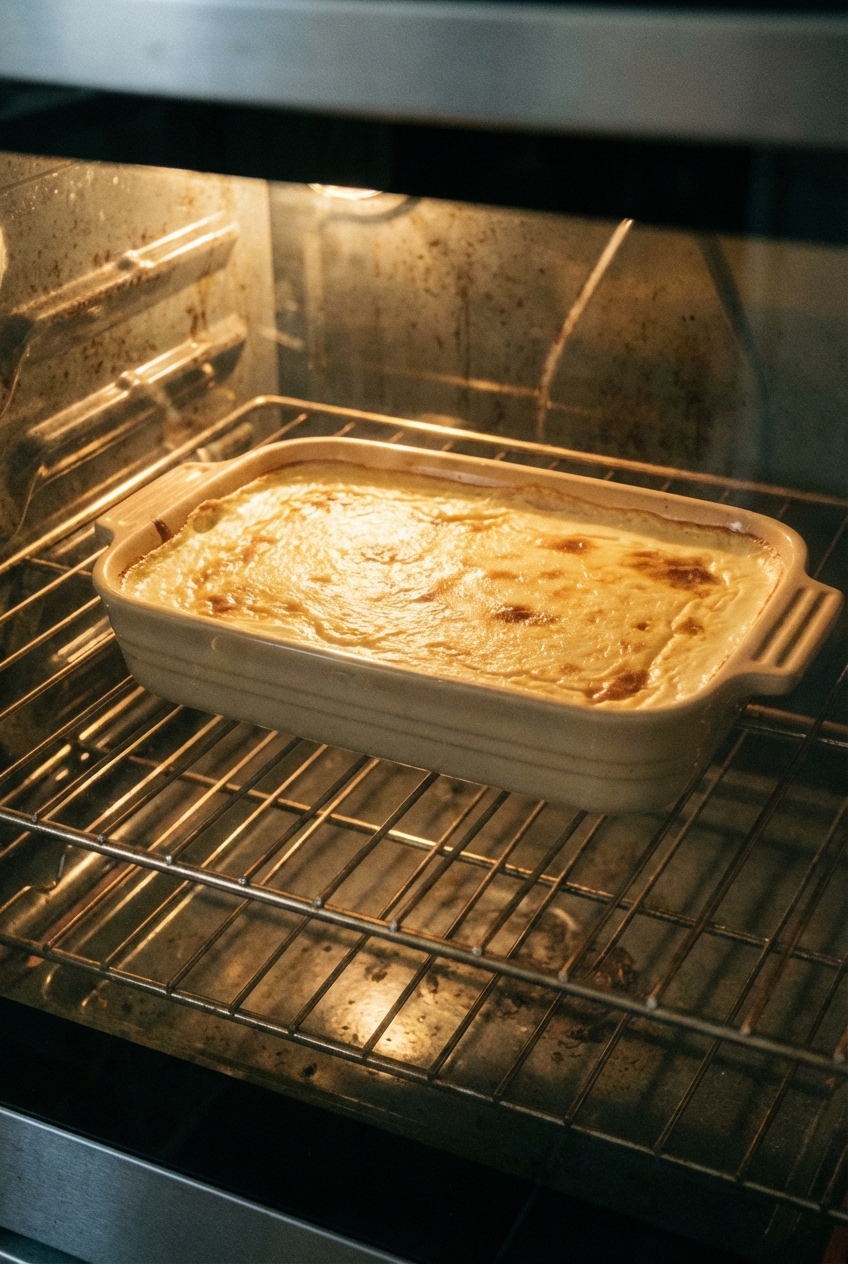
Look for a thick skin that is pale gold to light amber, slightly wrinkled at the edges, and set enough that it does not ripple when you gently tilt the dish. Underneath should still be pale and liquid.
Is clotted cream the same as whipped cream or butter?
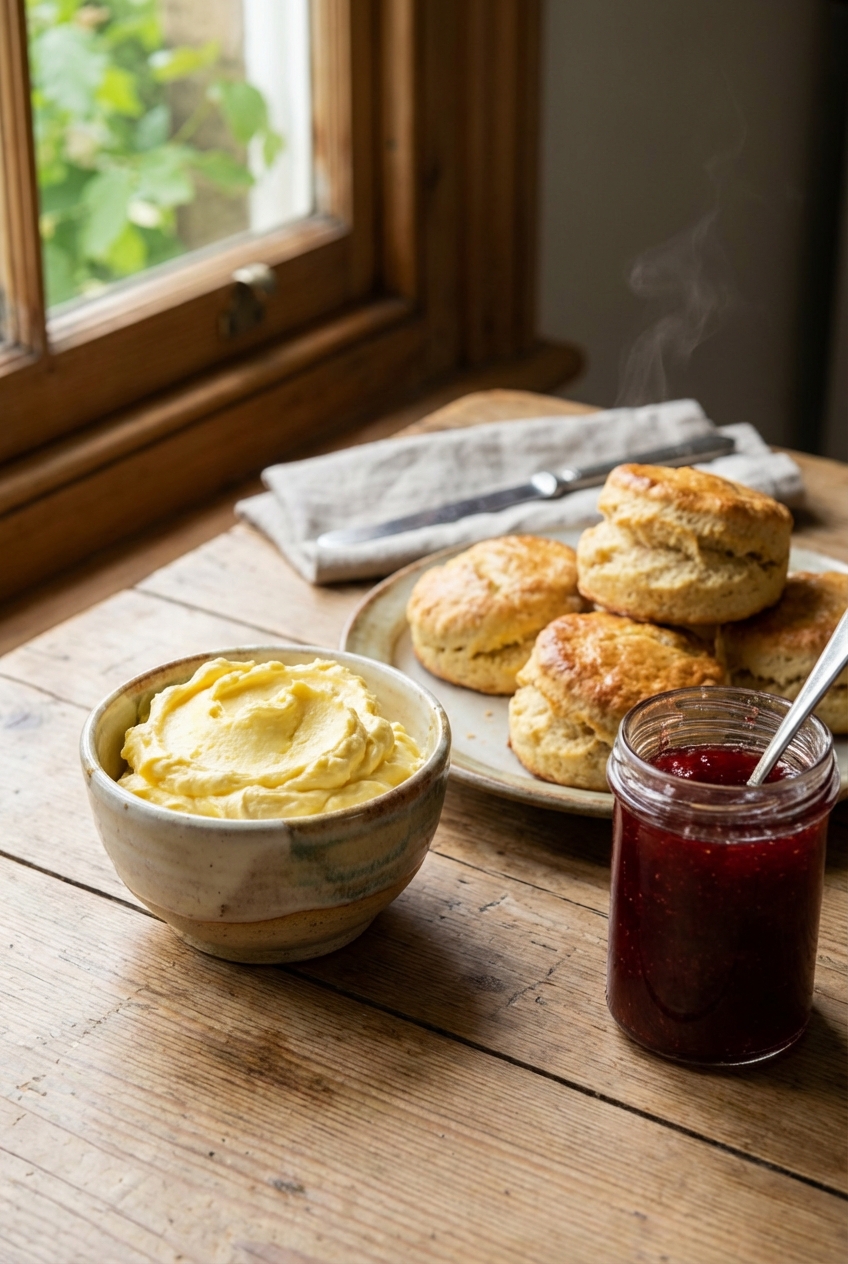
Not quite. Clotted cream is heat-set and skimmed, so it is denser than whipped cream and softer than butter. Think: spoonable, rich, and gently sweet without added sugar.
Why did mine turn grainy or buttery?
This usually means the cream got too hot or cooked too long. Use conventional bake (skip convection if you can), check oven temperature with a thermometer, and keep the cream in the 170 to 180°F zone.
Can I make it faster at a higher temperature?
You can, but you risk breaking the cream or getting a grainier texture. Low and slow is the whole point here.
Is it safe to leave cream in the oven for hours?
It is generally considered safe when made with pasteurized cream, kept at a low oven temperature (about 170 to 180°F), and then cooled and refrigerated promptly. Keep the room-temp cooling to no more than 1 hour. If you are pregnant, immunocompromised, or serving someone who is, stick with pasteurized cream and be extra strict about chilling.