Is turmeric milk the same as golden milk?
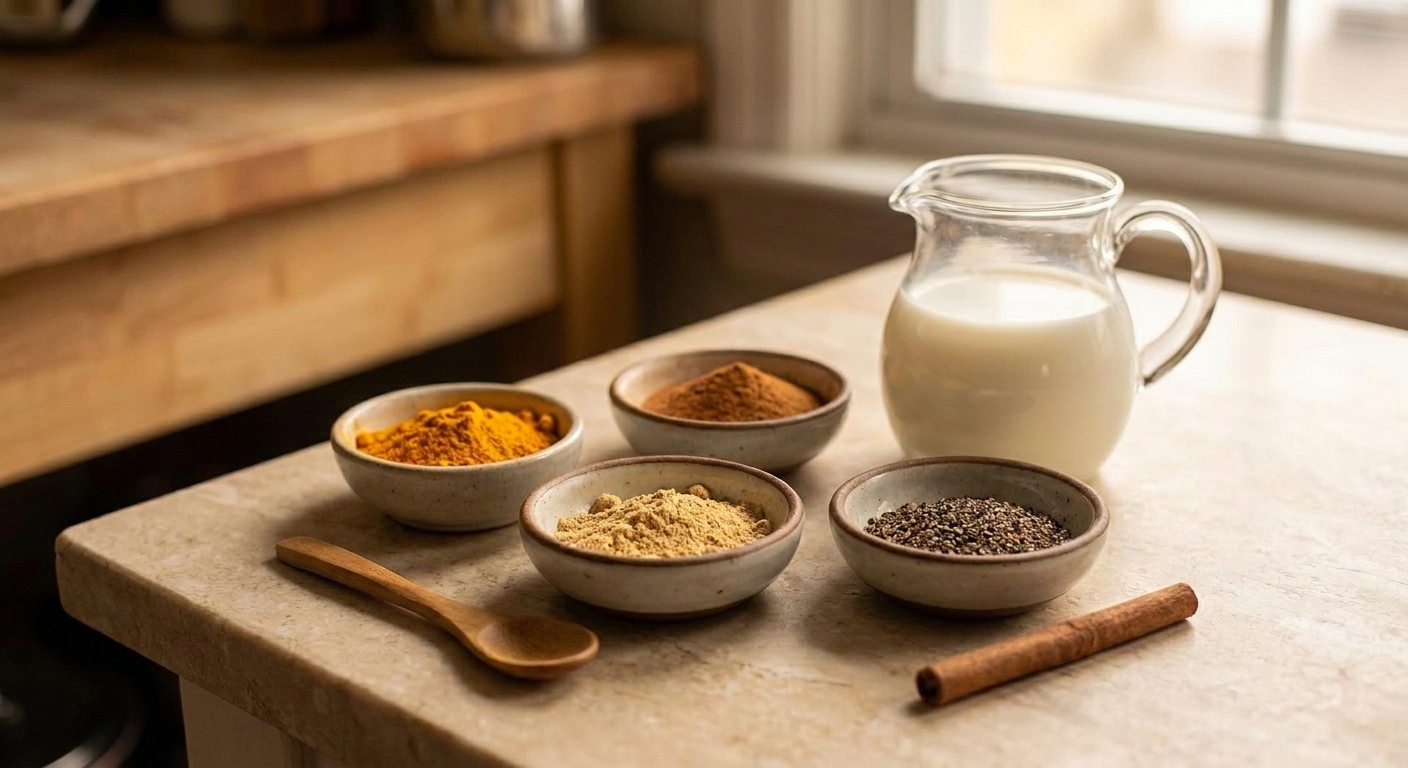
Pretty much. Golden milk is a popular name for turmeric milk, usually with warming spices like cinnamon and ginger, and often a little sweetener. Recipes vary by household, though. Some people add cardamom or cloves, and some add a bit of fat (like ghee or coconut oil) for extra richness.
Do I need black pepper?
No, but a tiny pinch can be helpful. Black pepper contains piperine, which may help your body absorb curcumin (the key compound in turmeric), especially in supplement-style contexts. Flavor-wise, keep it subtle. If you can taste “peppery,” you went a bit heavy.
Why does mine taste gritty?
That is usually undissolved ground turmeric and spices. Whisk well while warming, and if you want it extra smooth, strain through a fine-mesh sieve before serving. Using a milk frother at the end also helps.
Can I make it dairy-free?
Absolutely. Oat milk is especially cozy and naturally sweet. Almond milk is lighter. Coconut milk is rich and tastes more tropical. Choose unsweetened if you want control over sweetness.
Can I drink turmeric milk every day?
For most people, a daily mug in normal food amounts is fine, but everyone’s body is different. If you are pregnant, have gallbladder issues, take blood thinners, or have questions about supplements and interactions, check with your clinician.
Can I make it without sweetener?
Yes. Try adding a splash of vanilla and using a naturally sweet milk like oat milk to keep it pleasant without honey or maple.
Can I use fresh turmeric or fresh ginger?
Yes, and it is lovely. Use 1 to 2 teaspoons finely grated fresh ginger instead of ground. For fresh turmeric, start with 1 teaspoon finely grated (it is potent), whisk it in while warming, then strain before serving for the smoothest mug.