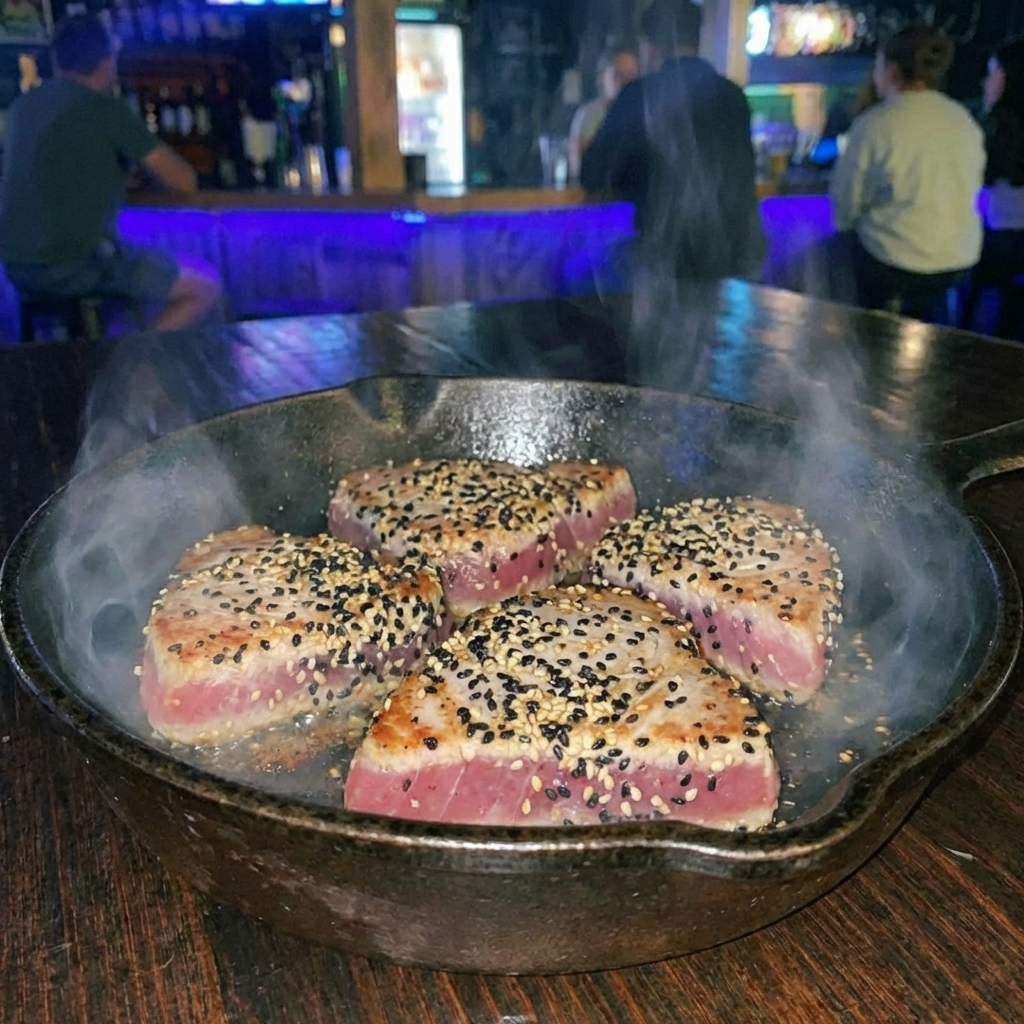
What is the best doneness for ahi tuna steak?
Medium-rare is the sweet spot for ahi: seared outside, cool to warm and rosy inside. If you cook it to medium or well-done, it can get dry and a little chalky.
If you like numbers, pull the tuna around 115 to 125°F for rare to medium-rare (it can climb a few degrees as it rests). Thickness and pan heat matter, so use this as a guide, not a rule.
How hot should the pan be?
Hot enough that the oil shimmers and the tuna audibly sizzles the second it touches the pan. For sesame-crusted tuna, I like medium-high heat so the seeds toast instead of scorch. If your tuna is quietly sitting there, your pan is not hot enough, and you will miss that crisp sear.
Can I grill ahi tuna instead of pan-searing?
Yes. Use a clean, well-oiled grill grate over high heat. Grill about 60 to 90 seconds per side for a 1 inch steak, watching closely so the sesame does not burn. Then slice and drizzle with the sauce.
Is it safe to eat ahi tuna medium-rare?
Many people eat ahi tuna lightly cooked. For best safety, buy from a reputable source, keep it cold, and use it promptly. It also helps to buy tuna that has been previously frozen (often done to reduce parasite risk). Note that “sushi-grade” is a marketing term in the U.S., not a regulated label, so trust the source more than the sticker.
If you are pregnant, immunocompromised, serving young kids, or serving someone who needs to avoid undercooked fish, cook it through.
Also worth knowing: tuna can be higher in mercury. If you are pregnant or feeding small children, follow your clinician’s guidance on tuna intake.
Can I make this without sesame seeds?
Absolutely. Skip the crust and just season the tuna well with salt and pepper. The sauce will still carry the dish.
Why is my tuna sticking to the pan?
Usually it is one of three things: the pan was not hot enough, you did not use enough oil, or you tried to flip too early. Give it 60 to 90 seconds to form a crust, then it releases more easily.