Is Chilean sea bass actually bass?
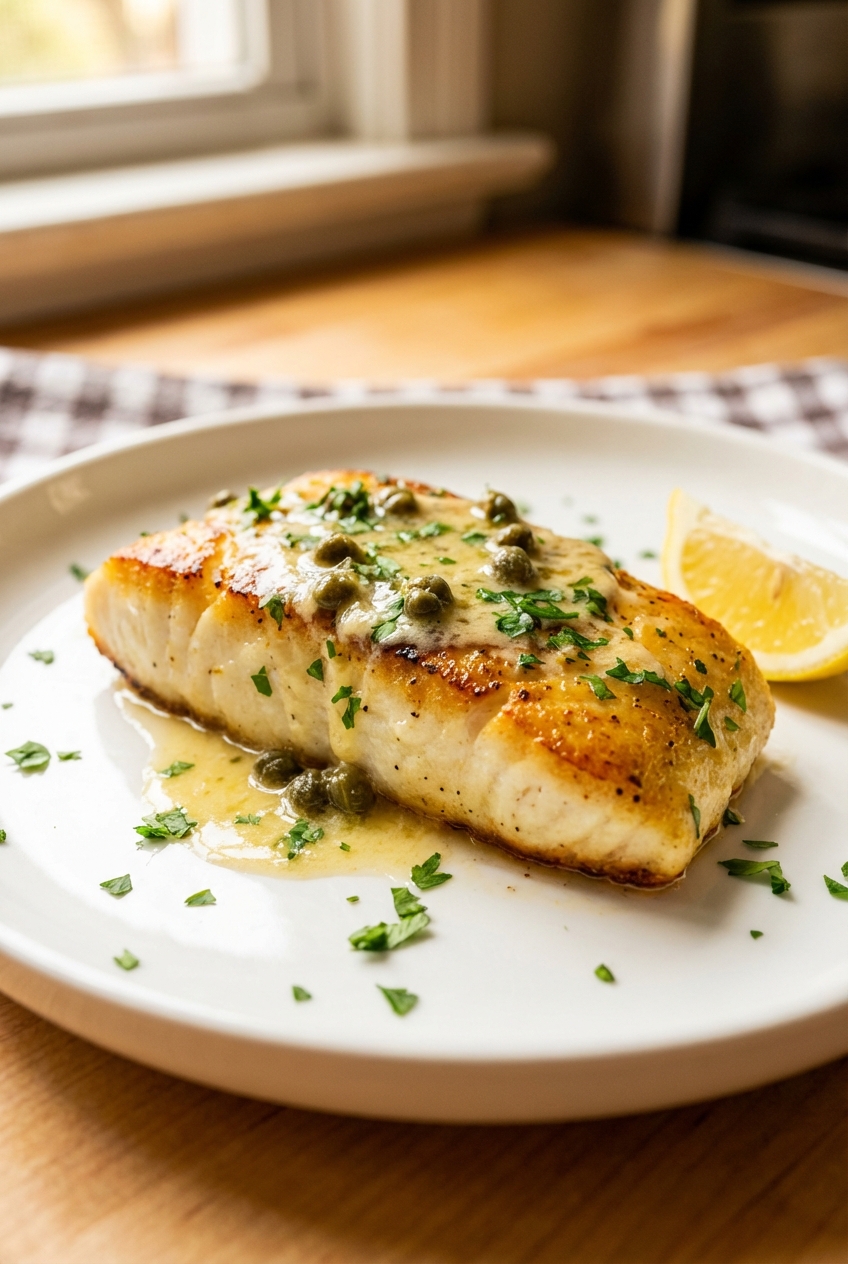
Not exactly. Chilean sea bass is a market name used primarily for Patagonian toothfish (Dissostichus eleginoides) and sometimes Antarctic toothfish (Dissostichus mawsoni), depending on origin. Either way, it is prized for its high fat content, which makes it naturally rich and forgiving to cook.
How do I know when sea bass is done?
Look for opaque flesh that flakes easily with a fork. If you use a thermometer, you have two good targets depending on the finish you want: 125°F to 130°F for a juicy, restaurant-style result (the center may still look just slightly translucent), or 145°F for FDA guideline doneness. The temperature will climb a bit as it rests.
Can I bake it instead of pan-searing?
Yes. You will miss some crust, but it is still delicious. Bake at 425°F until it flakes, usually 10 to 15 minutes depending on thickness. You can still make the sauce in a small saucepan.
What if I cannot find Chilean sea bass?
Use another thick, mild white fish: black cod (sablefish) is the closest in richness, then halibut or cod. For leaner fish, reduce cook time and baste well.
Do I need to remove the skin?
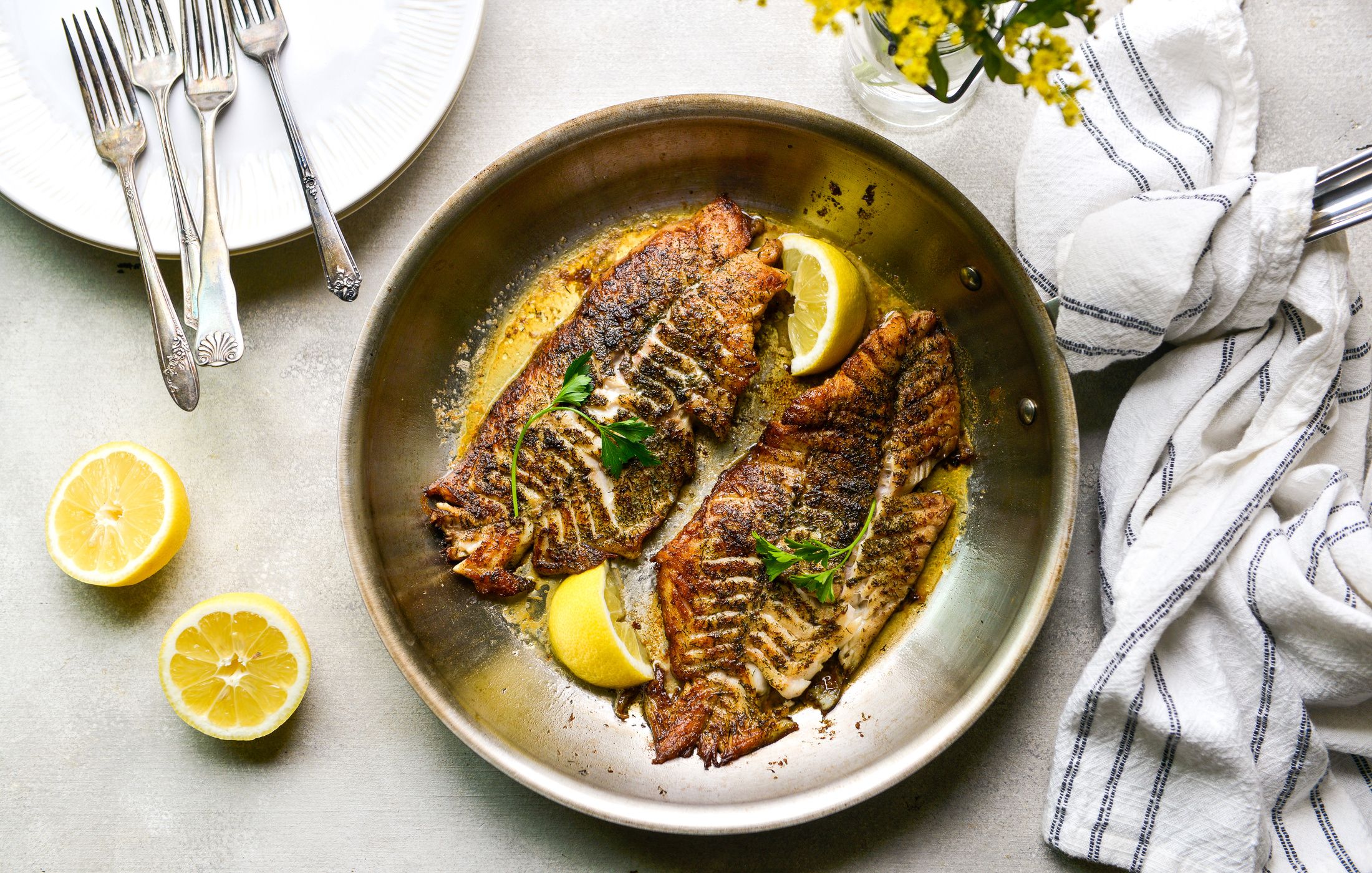
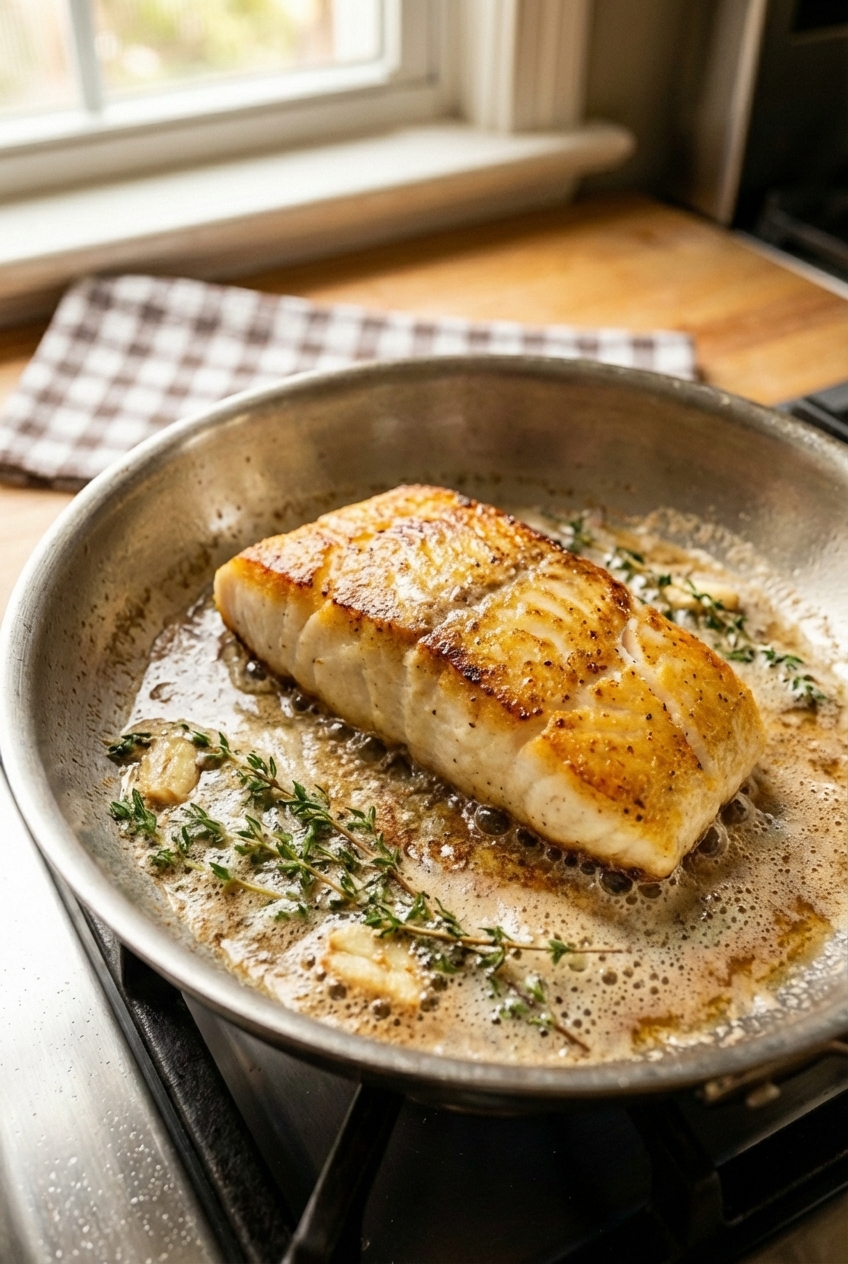
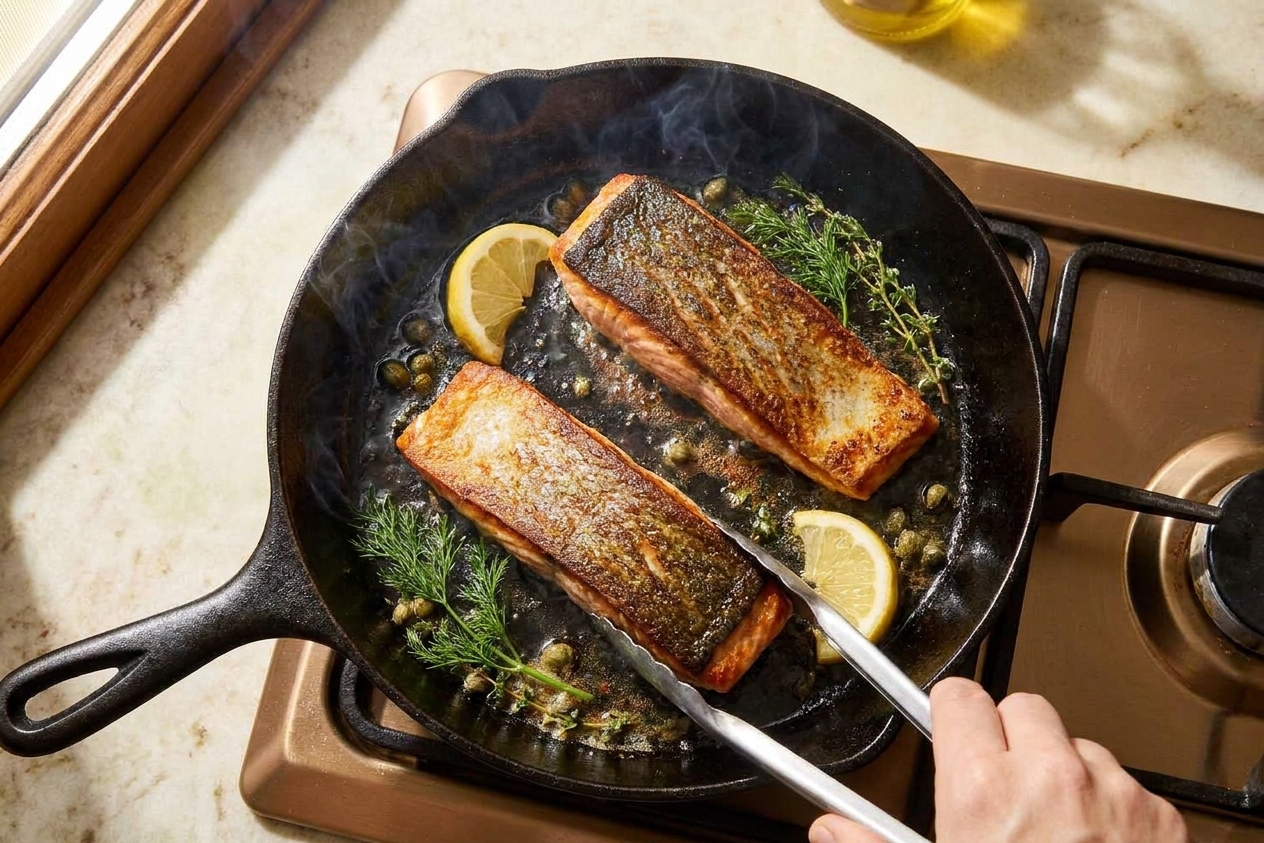
Most sea bass is sold skinless, but if yours has skin you can cook it either way. For the best texture, start skin-side down and press gently for the first 30 seconds so it does not curl.