Mom's Best Recipes
Recipe

Ultimate Gluten Free Bread Recipe

A rich, savory gluten free loaf with a tender crumb and crisp edges, built for sandwiches, toast, and soup-dunking.

Author By Matt Campbell
4.8
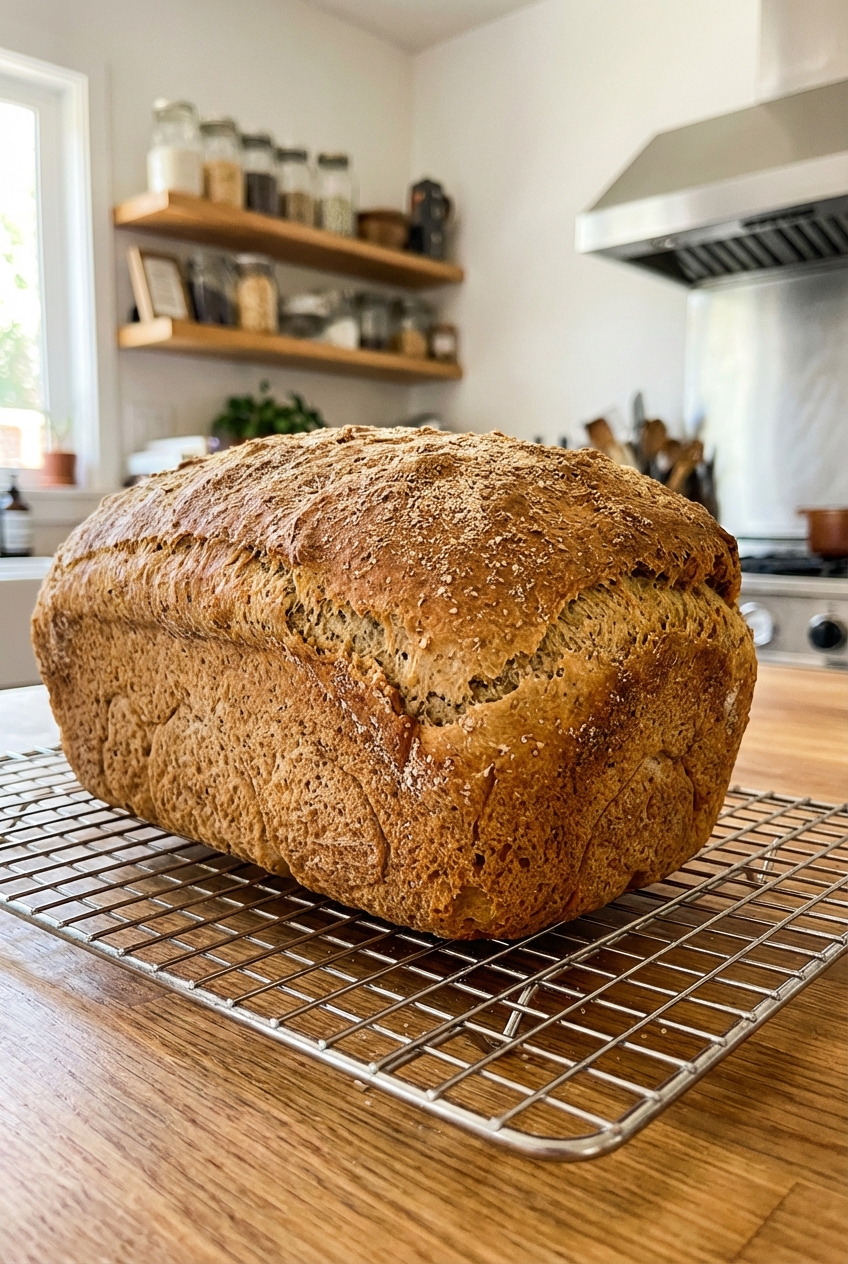
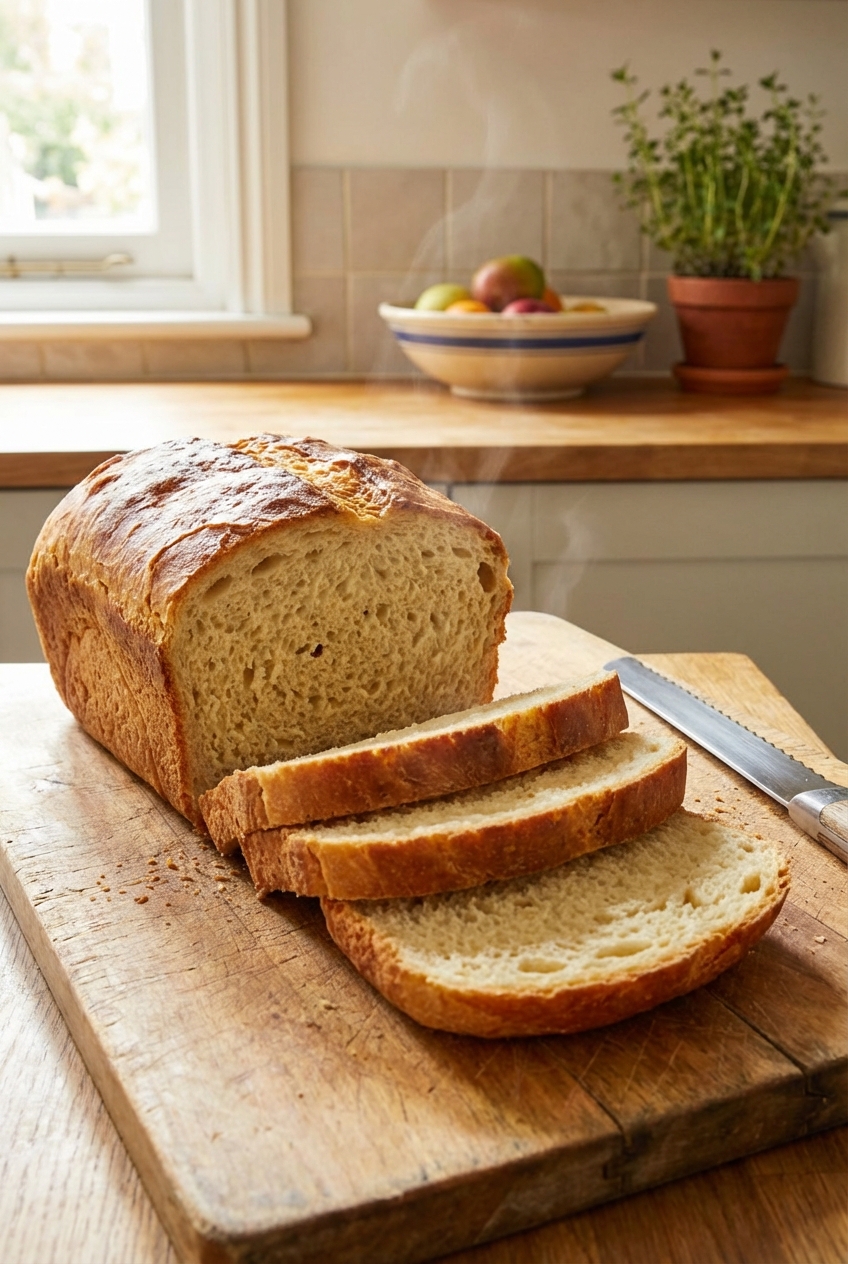
A freshly baked gluten free bread loaf on a wooden cutting board with a few slices cut, showing a tender crumb and golden crust in a bright home kitchen

If you have ever baked gluten free bread and thought, this tastes fine but it feels like a sponge, welcome. We are fixing that. This is my go-to rich and savory loaf that slices clean, toasts like a champ, and actually smells like real bread while it bakes.

The vibe here is cozy carbs with a little swagger: olive oil for softness, a touch of honey for balance, and a smart flour blend plus psyllium for structure. No weird ingredients you have to special order at midnight. Just a solid loaf you can make on a weekend and lean on all week.

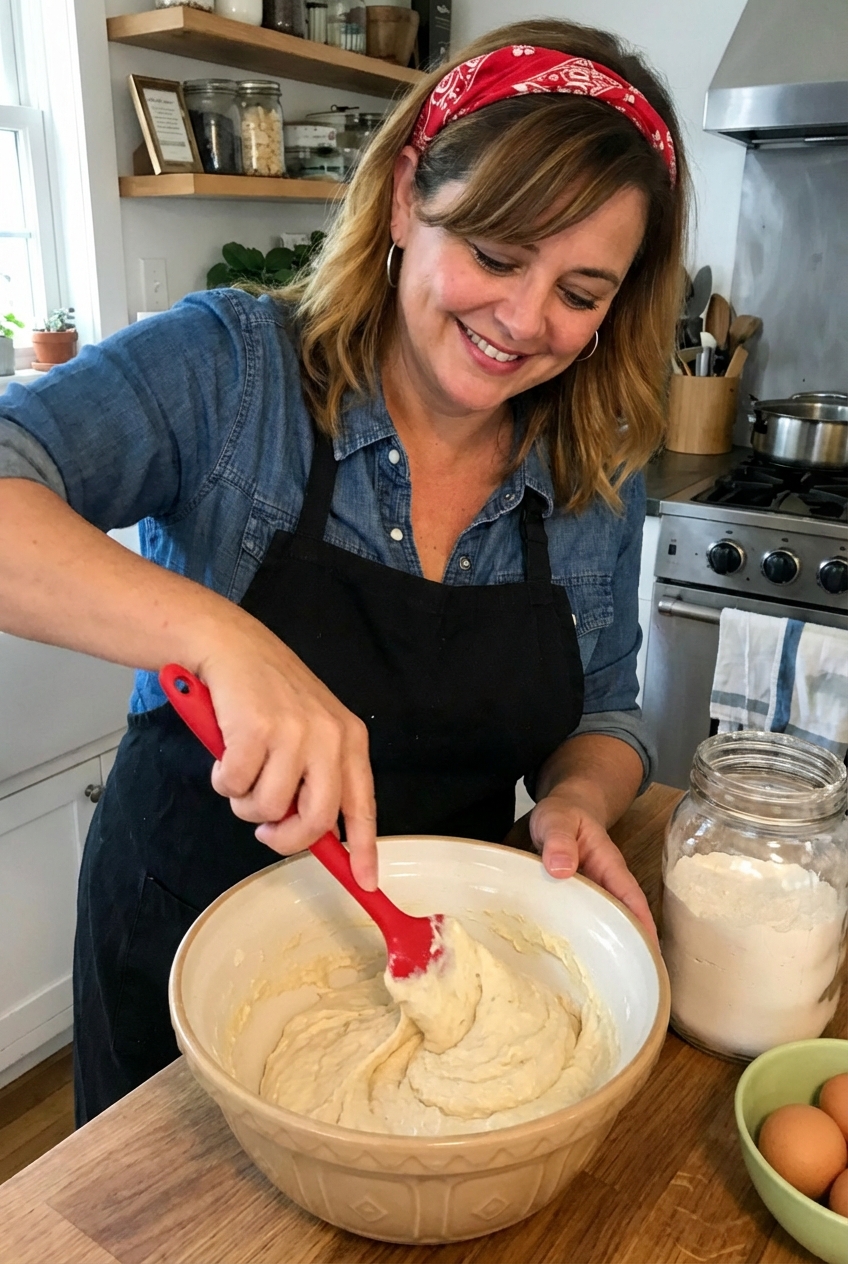
A mixing bowl with gluten free dough being stirred with a silicone spatula on a countertop

Why It Works

  • Balanced structure, not crumbles: Psyllium husk and eggs give the loaf elasticity and a sliceable crumb without gritty heaviness.
  • Real bread flavor: A mix of whole-grain style flours (oat and sorghum) plus a little vinegar helps condition the dough and adds that subtle bakery tang.
  • Crisp crust, tender middle: A steamy start in the oven and a finish to 208°F to 212°F internal temp helps you land that golden crust and fully baked center.
  • Savory, not bland: Garlic powder, rosemary, and flaky salt on top make this bread taste seasoned, even plain.

Pairs Well With

Storage Tips

This loaf is at its best the day it is baked, then it becomes a toasting superstar for the rest of the week.

Cool first

Let the bread cool completely before slicing. Warm gluten free bread can seem gummy if you cut too early, even when it is baked through.

Counter storage (1 to 2 days)

Wrap in parchment or a clean kitchen towel, then place in a bread bag or container. Avoid sealing it airtight while still slightly warm.

Refrigerator (not my favorite, but doable)

The fridge can dry bread out quickly. If you must, slice it first and toast slices straight from cold.

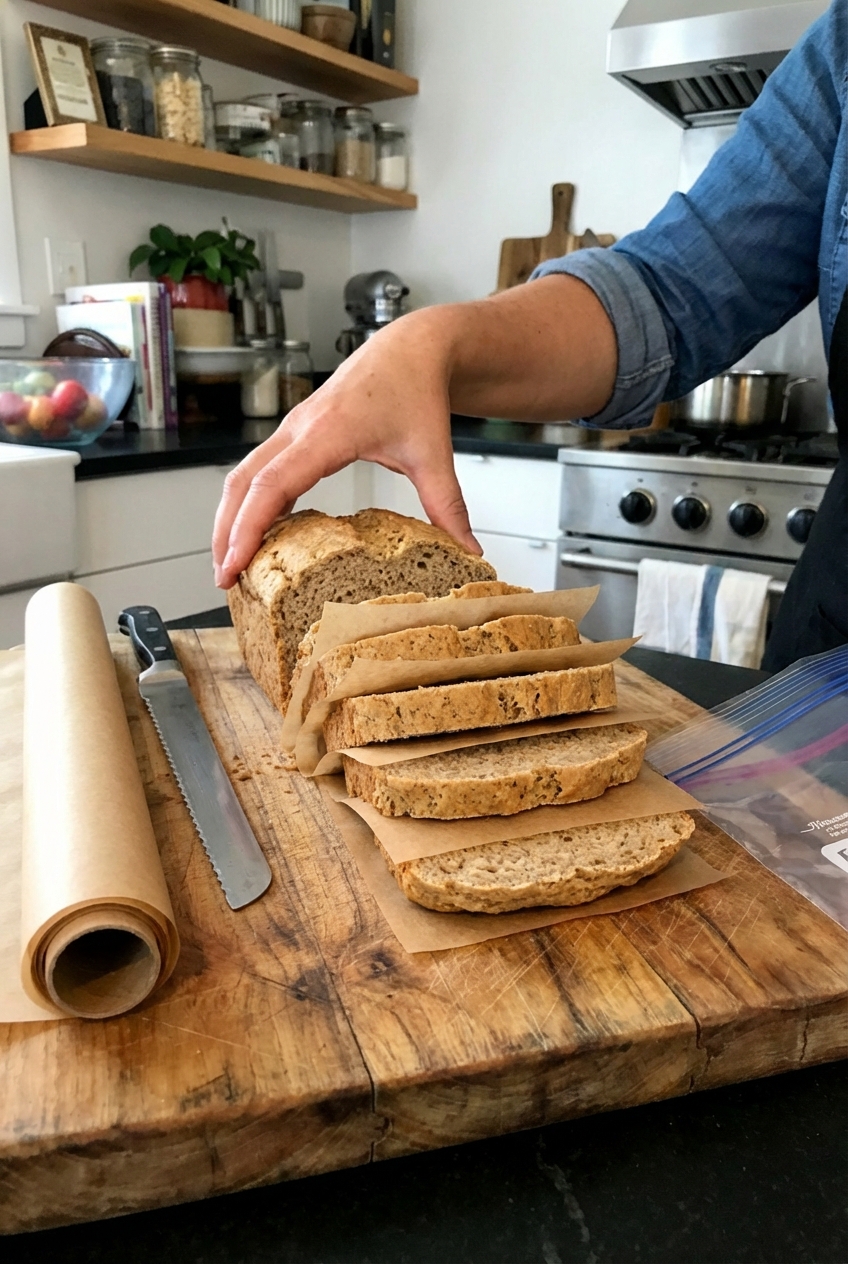
Freezer (best option)

  • Slice the cooled loaf.
  • Place parchment between slices.
  • Freeze in a zip-top bag for up to 3 months.
  • Toast from frozen, or thaw at room temp.

Sliced gluten free bread stacked with parchment paper between slices on a cutting board, ready to freeze

Common Questions

Do I need xanthan gum?

Not for this recipe. Psyllium husk does most of the heavy lifting for structure. If your flour blend contains xanthan gum already, it will still work, but the crumb may be slightly tighter.

Can I make this dairy free?

Yes. This recipe is naturally dairy free as written. Just confirm your yeast and flours are certified gluten free.

Can I make it egg free?

Eggs matter here for lift and tenderness. You can experiment with a liquid egg replacer, but results vary a lot. If you need egg free, I recommend using a recipe designed specifically for that.

Can I swap the starches?

Potato starch: You can usually swap in arrowroot or cornstarch by weight. Texture may be a little less tender. Tapioca starch: It is harder to replace because it brings stretch and chew. Arrowroot can work in a pinch, but expect a slightly more crumbly slice.

Why didn’t my loaf rise much?

  • Your yeast may be old, or the water was too hot or too cool.
  • The dough was too dry. Gluten free dough should look like thick batter, not a kneadable ball.
  • Your kitchen was cold. Aim for a warm proofing spot around 75°F to 85°F.

How do I know it is done baking?

Use a thermometer if you can. The center should read 208°F to 212°F (a bit higher is often better for psyllium-based gluten free loaves). Also, the loaf should feel light for its size and sound hollow-ish when tapped underneath. After a full cool, the crumb should not feel tacky or gummy.

Can I bake it in a loaf pan instead of a Dutch oven?

Yes. Use a 9 x 5-inch loaf pan and create steam by placing a sturdy metal pan on a lower rack (not the oven floor) and adding boiling water when the bread goes in. The crust will be slightly less dramatic than a Dutch oven loaf, but still great.

My loaf has a gummy line at the bottom. What happened?

Usually one of three things: it needed a few more minutes in the oven, it was sliced before it fully cooled, or your oven runs cool. Next time, bake to temp (aim for 208°F to 212°F), and cool at least 2 hours before slicing.

Why did my bread turn purple or gray?

Some psyllium brands can tint the crumb. It is harmless, just not cute. If it bugs you, try a different brand of psyllium husk powder.

How can I tell if I overproofed it?

If the surface looks weak, very bubbly, or starts to flatten or concave instead of gently doming, it has likely gone a bit far. Bake as soon as it looks puffy and aerated.

I used to chase gluten free bread like it was a mythical creature. I wanted a loaf that could handle a grilled cheese moment without collapsing into sad crumbs. After a lot of “close, but no” experiments, I landed on this formula: accessible flours, psyllium for that bread-like chew, and enough seasoning to make a slice with butter feel like a plan. It is the loaf I make when I want my kitchen to smell like I know what I am doing, even if I am still cleaning flour off the counter later.